Battery Solution for Mining Communication and Tracking
As a Senior lithium battery Engineer at Horizon Power, I have spent the better part of a decade designing pack platforms that have to survive places most electronics never see. Few environments are harder on a cell than an active underground mine. When a site asks me for a battery solution for mining communication and tracking, the conversation is never “just give us cells.” You are powering life-safety infrastructure: leaky-feeder amplifiers, Wi-Fi mesh nodes, gas detectors, and the wearable tags that tell the control room exactly where every person is when the lights go out. If that battery dies, you do not lose a video stream — you lose situational awareness during a rescue.
I have personally watched a single undersized node battery take an entire level of a copper mine offline for six hours during a ventilation trip. Nobody was hurt, but the lost production and the shaken confidence in the system were real. That experience is why I insist on specifying from the physics of the site first. Communication and tracking are not optional luxuries underground; in most modern mines they are the only way the surface knows the workforce is safe. The battery behind them deserves the same rigor you would give the primary haulage equipment.
Why Mining Comms and Tracking Demand a Purpose-Built Battery Solution
Underground mines are a perfect storm for batteries. Ambient temperature swings from a cool 12°C intake airway to 45°C and beyond near the working face. Relative humidity sits near saturation. There is conductive dust everywhere — coal fines, silica, metallic ore — that finds its way into every seam. The vibration from haul trucks and roof bolters is constant and brutal. A generic consumer pack will not last a month down there.
A proper battery solution starts from the duty cycle, not a catalog part number: how many watts the radio draws, how long the node must run between maintenance windows, and what happens when a scheduled recharge is skipped. I treat mining communication and tracking as a mission-critical load, because that is exactly what it is.
Cell Chemistry and Capacity Choices for Underground Duty
For fixed comms nodes I almost always specify LFP (LiFePO4). The chemistry is intrinsically safer than NMC, it tolerates high operating temperature far better, and it delivers 3,000–6,000 cycles at 80% depth of discharge — critical when a node is expected to run unattended for years. For the wearable tracking tags issued to each miner, energy density matters more than cycle life because the unit rides on the body, so a smaller high-energy cell in a sealed, certified enclosure is often the right call.
The key engineering decision is matching the cell to the role rather than forcing one chemistry across the whole site. When a customer asks for a custom battery solution that covers both roles, we usually split it into two platforms and integrate them under one BMS reporting standard so the control room sees everything in a single dashboard.
Mechanical and Environmental Sealing
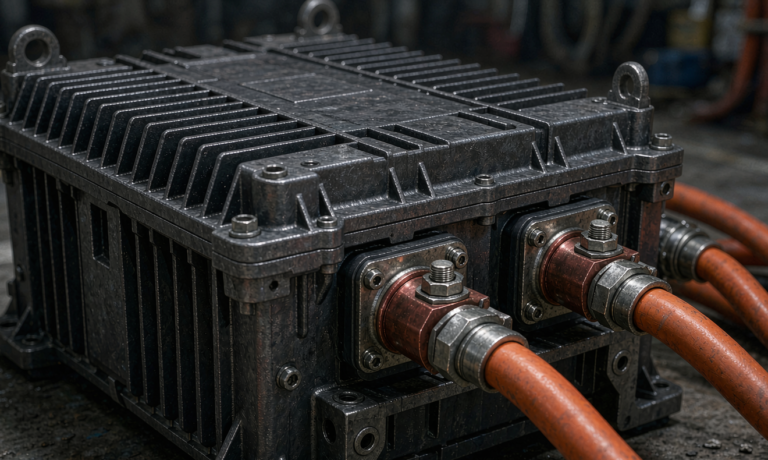
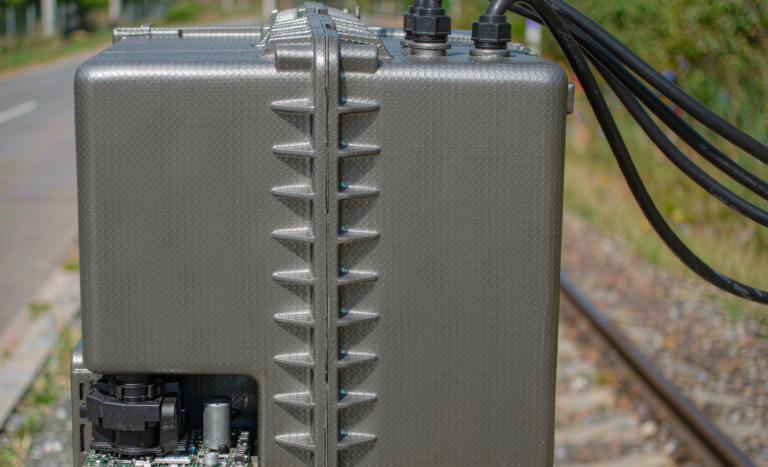
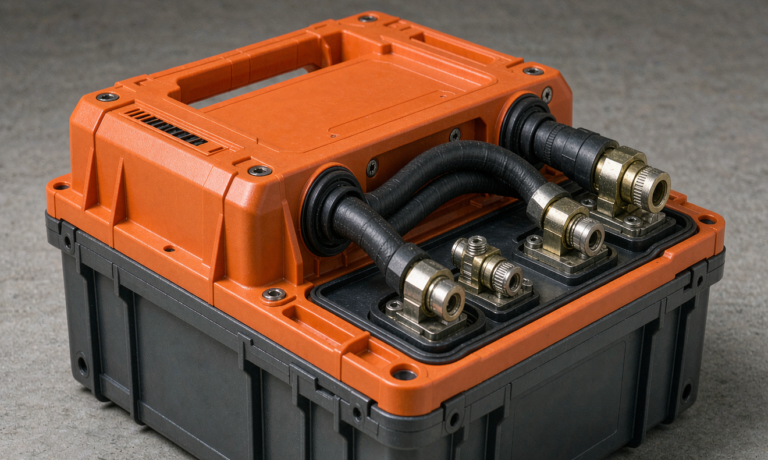
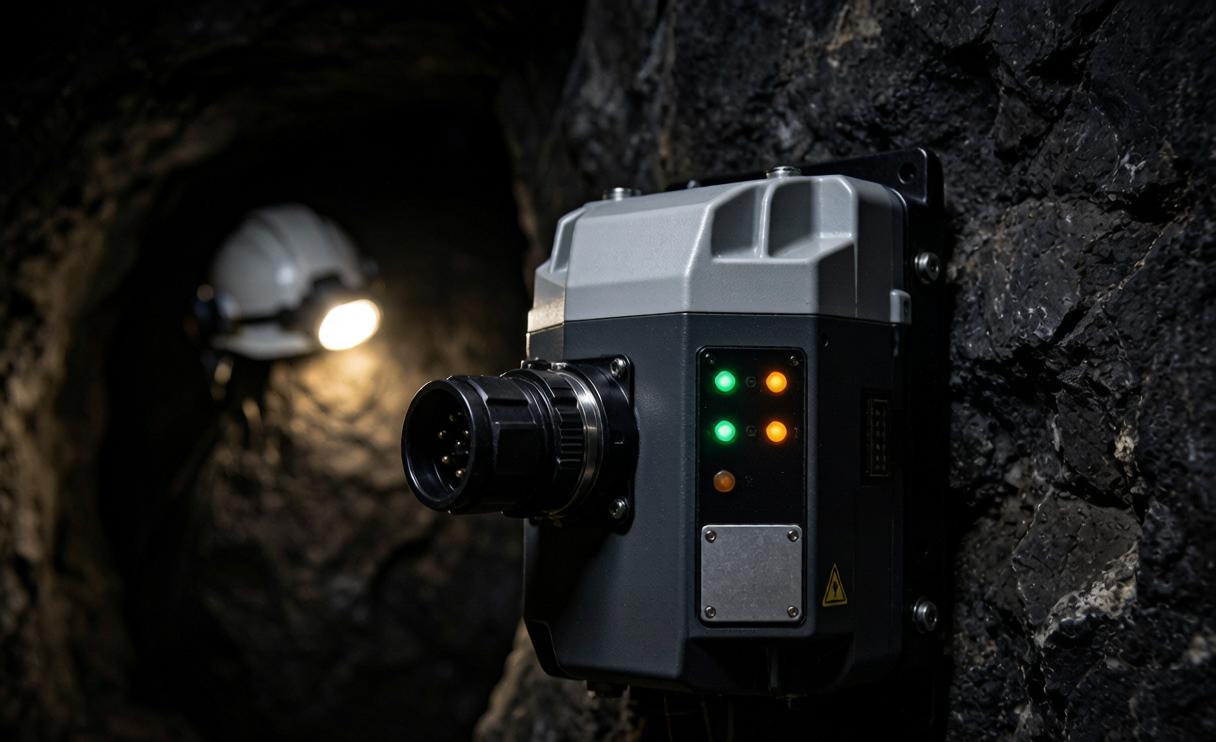
Ingress protection is not a box to tick; it is the difference between a two-year deployment and a two-week failure. For tunnel-mounted nodes I specify a minimum of IP65, and for areas with direct water ingress risk — face spray, drainage channels — IP67 with pressure-equalization vents. The enclosure is typically die-cast aluminium or glass-filled nylon with gasketed cable glands rated to the same class.
Connectors are sealed industrial types. We have standardized on heavy-duty circular locking connectors that can be mated by gloved hands in the dark. A good battery solution treats the mechanical seal as part of the electrical design, not an afterthought bolted on at the end.
Certification and Safety: UN38.3 and IEC 62133
Any lithium battery shipped to a mine still has to clear transport and product-safety baselines. UN38.3 is non-negotiable for air and ground transport of the cells and packs into the site. For the finished pack I design to IEC 62133 — the international standard covering short-circuit, overcharge, forced discharge, and crush.
In many mining jurisdictions the site also demands ATEX or IECEx certification for intrinsic safety in potentially gassy zones, so the enclosure and energy limits are engineered to stay below the ignition threshold. I treat these standards as the floor, then build margin on top: every pack we ship carries the test documentation a safety officer can audit.
BMS, Telemetry and Remote Health Monitoring
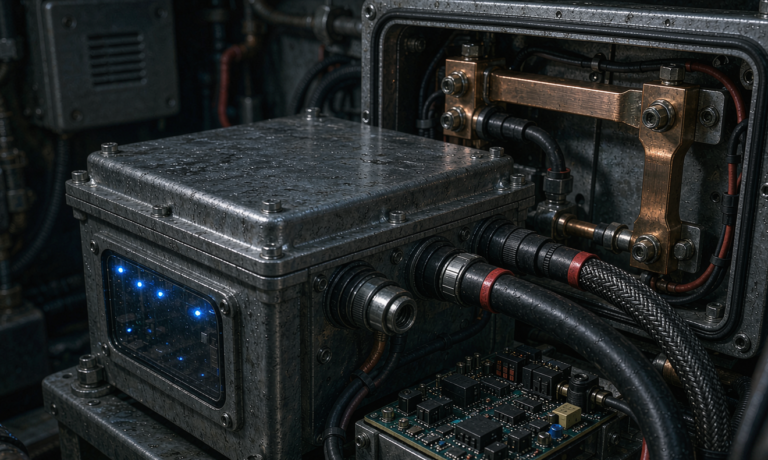
The single biggest reliability gain in a mining battery solution is not better cells — it is a smarter BMS with telemetry. Our packs report state of charge, cell-level voltage, internal temperature, and cycle count over the mine’s existing network, often a Modbus or CAN bridge into the leaky-feeder system. That lets the control room see a node drifting out of spec before it fails.
For tracking tags the BMS is minimal but still protected against over-discharge, because a dead tag is a missing person on the map. Remote health data turns battery maintenance from “replace when it dies” into “replace the three units trending bad next shift.”
Deployment Topology: Fixed Nodes vs Portable Tags
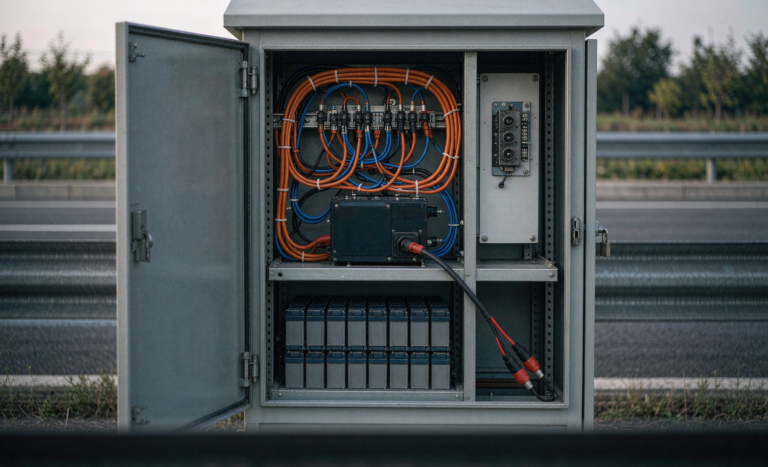
Practically, the solution splits into two layers. The fixed layer is the backbone: sealed battery packs on repeaters, sensors, and gateways, sized for 24–72 hours of autonomy so a power outage does not blind the network. The portable layer is the person: a lightweight tracked cap lamp or belt-worn tag with its own small lithium battery, typically 8–16 hours of shift life with a hot-swap spare at the lamp room.
A well-designed battery solution makes both layers hot-swappable and lets the site standardize on one charger type to simplify logistics across hundreds of units.
Thermal Management in Hot, Deep Mines
Deep mines get hot. The geothermal gradient plus machinery can push working faces past 50°C. A battery platform has to either shed that heat or tolerate it. For sealed nodes we use aluminium enclosures as heat spreaders with internal conduction pads to the cells, and we derate capacity honestly in the spec sheet rather than promising lab-temperature performance.
I have seen competitors claim 100 Ah at 25°C and deliver 70 Ah at the face; that gap is a comms blackout waiting to happen. Honest thermal derating is part of the engineering discipline I build into every pack we deliver.
Real-World Sizing Example
A recent coal operation asked us to back up 40 comms nodes plus 600 tracking tags. The nodes drew about 18 W average; we sized 100 Ah LFP packs giving roughly 60 hours of autonomy. The tags used 1,500 mAh cells rated for 12-hour shifts. We delivered it as one custom battery solution program with shared BMS reporting, and the site’s lost time from comms blackouts dropped to zero over the first six months. Numbers like that are why I push clients to spec from the duty cycle, not from a part number.
Charging, Swap and Site Logistics
Even the best pack fails if the charging workflow is chaos. I design the program so lamp-room staff swap a tired tag or node in under a minute, and so a single intelligent charger family services every unit. Battery health trends are logged automatically, which turns a once-a-year inspection into a continuous process. That logistics discipline is what keeps a battery solution for mining communication and tracking running long after the installation team has left site.
Engineering Takeaway for Specifiers
If you are writing the RFQ for a mining communication and tracking rollout, do not lead with capacity. Lead with the duty cycle, the ambient envelope, and the certification zone. Then ask your supplier how they prove it: test reports, derating curves, and a BMS that actually talks to your network. A credible battery solution arrives with documentation, not just a box. At Horizon Power we treat the pack, the seal, the certification, and the telemetry as one connected system — because underground, they are.
Frequently Asked Questions
What battery chemistry is best for underground mining communication nodes?
For fixed nodes, LFP is my default because of its thermal stability and long cycle life in hot, humid tunnels. For body-worn tracking tags where weight dominates, a higher-energy cell in a sealed, certified enclosure is usually better. The right battery solution often uses both chemistries in an integrated program.
Do mining battery packs need intrinsic safety certification?
If the zone is potentially gassy, yes — ATEX or IECEx intrinsic safety is typically required on top of UN38.3 and IEC 62133. Even in non-gassy sections I recommend designing to those limits so the pack is safe to service anywhere on site.
How long should a mining comms node battery last between charges?
I size for 24–72 hours of autonomy so a grid outage or charging delay never blinds the network. The exact figure comes from the node’s watt draw and the site’s maintenance window, which is why every battery solution starts with a duty-cycle audit.
Can one battery solution cover both fixed nodes and wearable tags?
Yes, but it is almost always two integrated platforms under one management standard rather than a single pack. Splitting by role lets you optimize energy density for tags and cycle life for nodes while keeping one reporting dashboard for the whole mine.
How do you monitor mining battery health remotely?
Through a BMS that reports state of charge, cell voltage, temperature, and cycle count over the site network. The control room sees units trending bad before they fail, which is the difference between planned swaps and emergency outages.