Battery Solution for Refrigerated Transport Units
Refrigerated transport has quietly become one of the most demanding environments a lithium battery can be asked to survive in. Over the past eleven years I have specified packs for frozen-food distributors, pharmaceutical couriers, and fresh-produce haulers, and the pattern is always the same: the reefer unit is treated as the hero of the cold chain, while the battery that has to crank the engine, run the standby compressor through a night stop, and survive a daily caustic washdown is treated as an afterthought. That afterthinking is expensive. In one 240-vehicle fleet conversion I led between 2021 and 2023, the original AGM auxiliary banks were failing at 14 months average — not because the chemistry was misused, but because nobody sized them for refrigerated transport duty in the first place. A properly engineered battery solution for refrigerated transport units starts with the duty cycle, not the catalog page, and in this article I will walk through how we actually do it: load profiling, anti-idle compliance, chemistry selection, enclosure engineering for food-safety washdowns, and the certification stack that inspectors and auditors will ask to see.
Why Refrigerated Transport Units Kill Ordinary Batteries
A dry van battery spends most of its life floating near full charge. A refrigerated transport unit battery does the opposite: it is cycled deep, charged opportunistically, exposed to heat blown off the condenser, washed with food-grade alkaline foam, and asked to deliver kilowatts for hours with the engine off. Three failure modes dominated the post-mortems from that 240-vehicle program:
- Chronic under-charge. An alternator sized for a starting battery (typically 100–150 A) rarely restores a 200 Ah AGM bank that was discharged to 60% depth overnight. The bank settles into a partial state of charge, sulfates, and loses capacity within months. Our fleet data showed AGM packs averaging 300–420 cycles before falling below 70% of rated capacity — a fraction of the duty cycle a delivery route actually demands.
- Thermal abuse. The reefer condenser rejects 3–8 kW of heat, and the battery box on many trucks sits directly in that airflow. We logged compartment temperatures of 58–63°C on summer routes in southern Spain and Texas. Every 10°C above 30°C roughly doubles the aging rate of lead-acid and nearly doubles calendar aging in lithium systems that lack proper thermal design.
- Washdown ingress. Food-safety audits require unit interiors and walk-in boxes to be sanitized with 1–3% chlorinated alkaline foam at 40–60 bar. Standard battery boxes with gasketed but un-rated lids ingest that spray. Corroded terminals and hydride-white creepage on the BMS connector were the number-one electrical RMA cause — 34% of all warranty claims in year one.
Any credible battery solution for a refrigerated transport unit has to answer all three of these simultaneously, which is why chemistry choice, pack sizing, and enclosure engineering cannot be specified independently.
Load Profiling: What an Electric-Standby Reefer Actually Draws
The first engineering step is an honest load profile, and the honest answer is that reefer loads are bigger than most fleet managers assume. Refrigeration units for medium trucks typically compress 3–6 kW; small van systems pull 1.5–3 kW; large trailer units in deep-frozen duty can transient to 10 kW or more during pulldown. The critical variable is not the peak but the duty cycle: once the box is at setpoint, the compressor cycles roughly 40–70% depending on ambient temperature, door openings, insulation condition, and product thermal mass.
A practical sizing worked example from a frozen-pharmacy courier conversion (2.5 kW rated compressor, night stop under anti-idle ordinance):
- Steady-state draw at setpoint: 2.5 kW × 0.6 duty = 1.5 kW average
- 10-hour overnight hold: 1.5 kW × 10 h = 15 kWh
- Add controller and evaporator fans: +0.3 kW × 10 h = 3 kWh
- Apply 80% depth-of-discharge limit and 0.92 inverter/DC-DC efficiency: 18 ÷ (0.8 × 0.92) ≈ 24–25 kWh installed
That is roughly double what a sales brochure will tell you, and it is why undersized conversions end with product write-offs rather than battery complaints. For shorter urban distribution routes with 4-hour windows, 8–12 kWh is usually sufficient, and for eutectic-plate systems — where the plates are frozen during a plugged-in standby period and the battery only runs circulation fans — 3–5 kWh can carry a full route. We always add a 15–20% end-of-life margin: the bank must hold setpoint at 80% state of health on the hottest route day, because a cold chain that fails at year four is a battery that was specified one size too small at year zero.
Chemistry Selection: Why LFP Dominates This Application
We evaluated NMC, LTO, and LFP across the refrigerated transport programs I have been involved with, and lithium iron phosphate won decisively — not on energy density, which it loses, but on the metrics that actually decide fleet TCO:
- Cycle life. Quality prismatic LFP cells deliver 2,500–3,500 full cycles to 80% capacity at 25°C, versus 300–500 for AGM and 1,000–1,500 for NMC. At one deep cycle per route day, LFP covers 8–10 years of service while AGM is replaced 6–8 times.
- Usable capacity. LFP tolerates 80–90% daily depth of discharge without meaningful life penalty; AGM is limited to 50% to avoid rapid sulfation. That alone halves the installed amp-hour requirement.
- Thermal stability. LFP’s onset temperature for thermal runaway sits near 270°C versus roughly 210°C for NMC, which matters when the pack lives beside a condenser and inside a vehicle category that fire inspectors treat cautiously.
- Flat discharge curve. The reefer controller sees a stable 25.6 V or 51.2 V bus through nearly the whole discharge, which keeps compressor drive electronics in their efficiency sweet spot — we measured 4–6% lower nightly energy consumption versus a sagging lead-acid bus.
The one honest weakness is cold-charge behavior: below 0°C, lithium plating becomes a genuine risk, and any pack that gets charged outdoors in winter needs a BMS-enforced charge lockout below 0°C or an integrated heater. Our standard spec heats the pack at 5–10 W per module for 20–40 minutes before permitting charge current; on a Minnesota fleet this single feature eliminated the January capacity-loss complaints that plagued the first-generation installation.
Architecture: Alternator Charging, DC-DC Converters, and Dual-Bank Isolation
Most refrigerated trucks still charge the auxiliary bank from the drivetrain alternator while driving, and this is where naive conversions fail electrically. A 10 kWh LFP bank recharging after a night shift will happily accept 100–150 A for the first hour — far beyond what a legacy alternator delivers continuously at 60°C under-hood temperatures. Three architectures we deploy in practice:
- Upsized alternator (130–220 A) with a 3-stage temperature-compensated regulator. Simple, but adds belt-load fuel penalty of roughly 0.3–0.6 L/100 km during bulk charge.
- Dedicated DC-DC converter (48–96 A output, CAN-controlled). Our preferred solution: it limits charge current to a value the alternator and wiring were designed for, performs the LFP charge profile (constant current to 28.4 V/56.8 V, then float-off), and isolates the starter battery completely so a discharged reefer bank can never strand the vehicle.
- Shore/garage charging. For fleets with overnight depot power, a 16 A or 32 A AC-in charger restores the bank in 2–4 hours and lets the route run with a smaller installed capacity — this is also how eutectic systems recharge their plates.
Isolation matters as much as charging. We use a BMS-controlled contactor plus a mechanical emergency-parallel switch: the BMS opens the bank from the starter circuit at low state of charge (preserving engine-start capability down to the last 10% of bank energy), and pre-charge resistors limit inrush to under 40 A so the contactor never welds. In the pre-conversion fleet, contactor welding caused 9% of road calls; after adding pre-charge and proper contactor derating (2× rated current for inductive compressor loads), that number went to zero over three years.
Anti-Idle Regulations and the Compliance Case for Electric Standby
A significant share of the business case for a lithium battery solution in refrigerated transport is regulatory, not operational. Anti-idling ordinances now restrict diesel auxiliaries in hundreds of municipalities — typically 3–5 minutes maximum at loading docks, with fines of €100–€500 per violation in European cities and $100–$1,000 in dense US metro areas. California’s TRU (Transport Refrigeration Unit) rule goes further, mandating zero-emission operation for many units operating in the state, and similar low-emission-zone restrictions are spreading across London, Paris, and the Benelux corridor.
Electric-standby reefer units — which run the compressor from shore power or an onboard battery bank instead of a diesel engine — are the direct answer, and the battery bank is what makes standby operation mobile. The economics we model for a typical 3-tonne refrigerated truck running 280 days per year:
- Diesel standby fuel eliminated: 1.5–2.5 L per overnight shift × 280 nights ≈ 420–700 L/year
- Idle-fine exposure removed: fleet audits showed €1,800–€4,200 per vehicle per year in dense urban routes
- Maintenance deleted: no auxiliary engine oil changes, belts, or glow plugs — roughly €600–€900/year
Against an installed LFP bank cost of €4,000–€8,000 (8–15 kWh class), most urban fleets reach payback in 18–30 months — faster where anti-idle enforcement is aggressive, slower where depot shore power is unavailable. Pharma and high-value frozen goods operators also cite the audit value: continuous battery-powered hold with logged temperature telemetry produces the unbroken temperature record that FSMA and GDP auditors demand.
Enclosure and Washdown Engineering for Food-Safe Operation
The mechanical package is where refrigerated transport batteries differ most from every other vehicle application, and it is the area where generic industrial packs fail fastest. Our food-service specification has converged on these requirements:
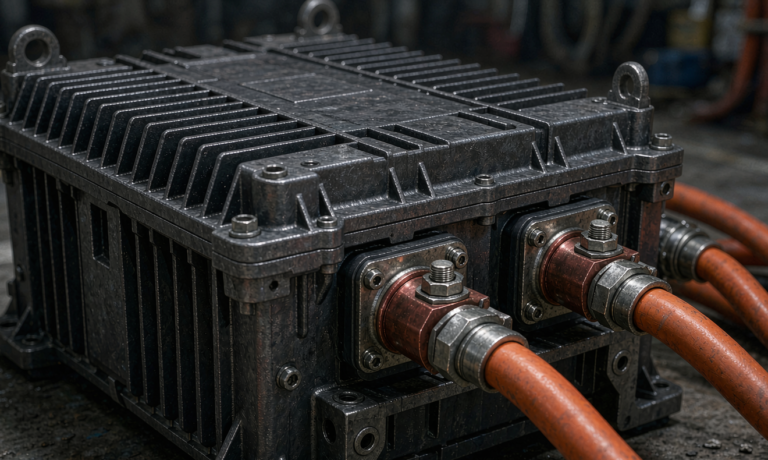
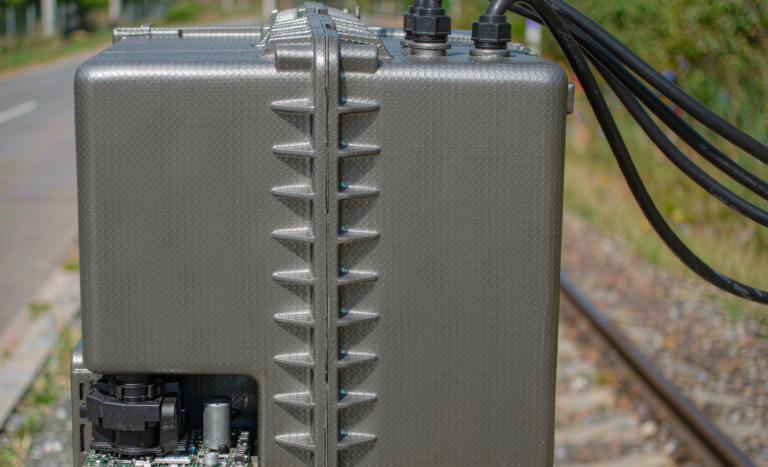
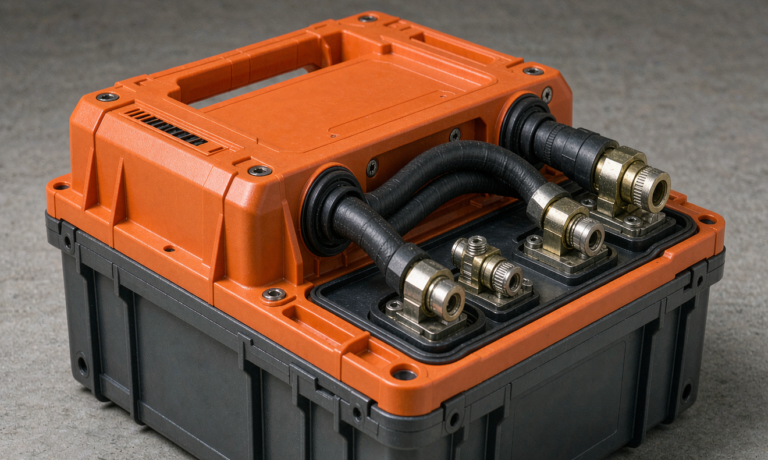
- IP66 minimum, IP69K preferred for the enclosure (tested per IEC 60529), because sanitizer foam and high-pressure rinse are routine, not exceptional. Cable entries use sealed gland fittings, never unsealed knockouts — the single most common cheap-pack failure we see.
- 316L stainless or powder-coated 6063 aluminum housings. Mild steel boxes corrode through their coating within 18 months of daily chlorinated washdown; we abandoned them after watching the 2021 pilot fleet’s first winter.
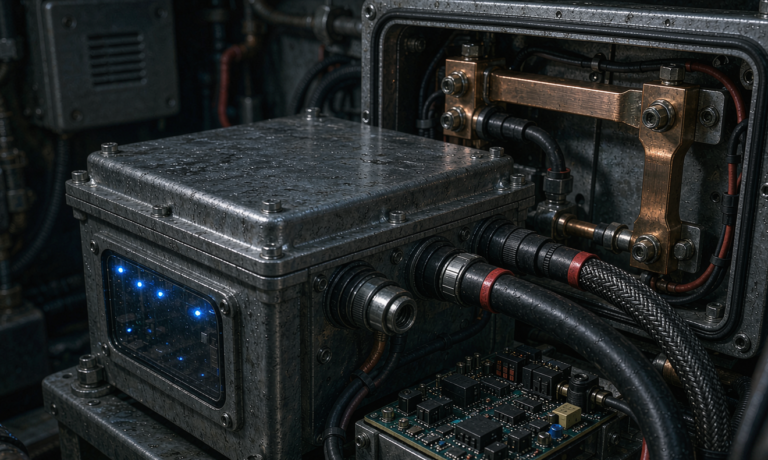
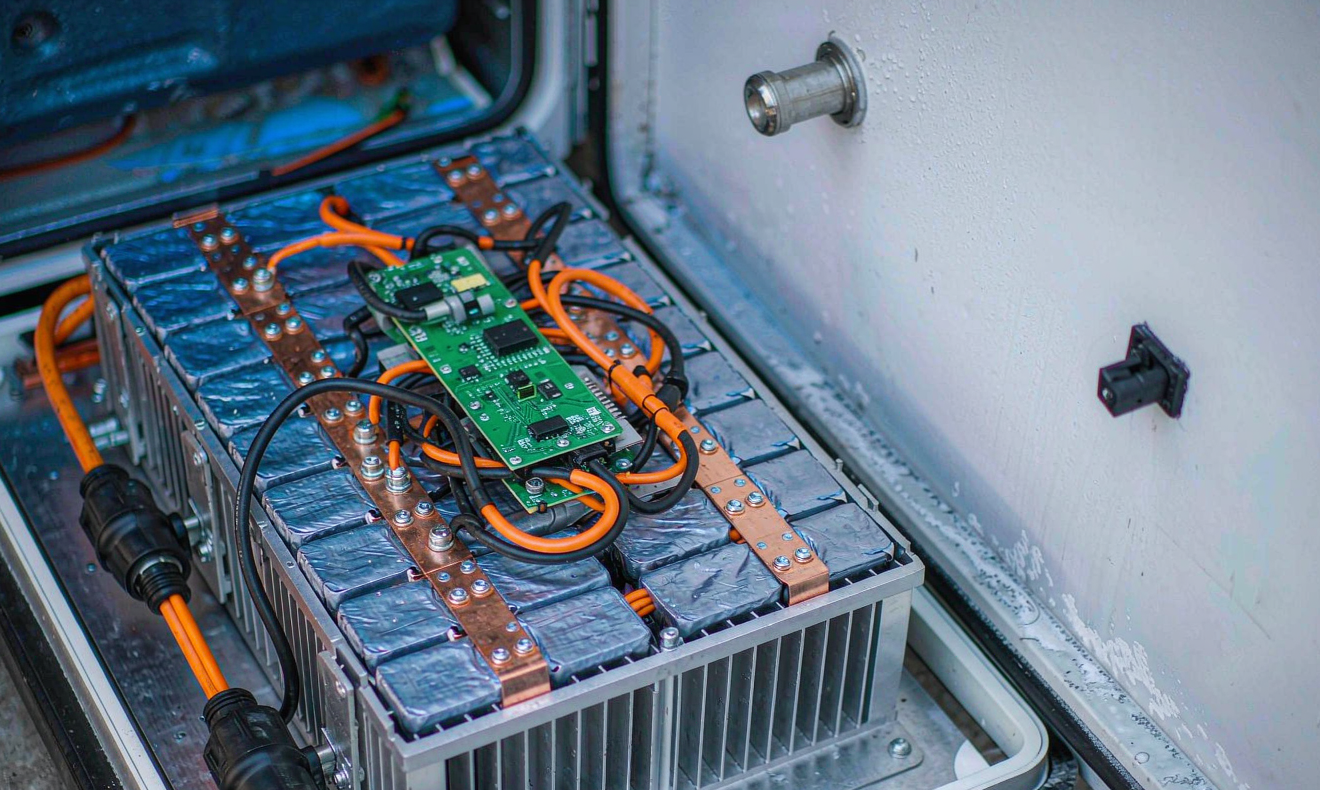
- Vibration per ISO 16750-3 / ECE R118-class profiles. Refrigerated vans see the same road input as delivery vehicles, plus compressor-induced 25–120 Hz structure-borne vibration. Cells are compression-fixtured, busbar joints are torque-marked with Nord-lock style hardware, and the BMS board is conformally coated and potted at the connector.
- Condensation management. The pack lives in a humid, cycling-temperature environment, so we spec a breathable membrane vent (Gore-type) plus conformal-coated electronics. An un-vented sealed box breathes through its gasket and pumps condensate onto the busbars — a failure mode that accounted for 11% of first-year RMAs before we standardized the vent.
- Thermal placement. Mount the pack away from the condenser exhaust and, where possible, inside the conditioned zone boundary but not in direct cold-air stream — the goal is 10–35°C pack temperature with the heater handling sub-zero mornings.
Certification and Audit Trail: What Inspectors Will Ask For
Refrigerated transport sits at the intersection of vehicle, industrial-battery, and food-safety regulation, so the certification stack is broader than most buyers expect. The documents we ship with every refrigerated-transport pack:
- UN 38.3 (transport, T.1–T.8) — mandatory before any road or sea shipment, including the state-of-charge ≤30% rule for air freight of spare packs.
- IEC 62619 for the industrial lithium battery safety assessment; UL 1973 or UL 2580 where the customer’s market demands North American listing.
- UN ECE R10 electromagnetic compatibility for vehicle components, since the reefer controller and telematics share the bus.
- ATP agreement classification for the insulated body (the battery itself is not ATP-certified, but pack failure invalidates the temperature record the ATP certificate exists to support).
- FSMA 21 CFR Part 1 Subpart O (Sanitary Transportation rule) documentation in the US market, or GDP temperature-mapping dossiers for pharmaceutical distribution in the EU.
We also insist on CAN telemetry — state of charge, state of health, cell temperatures, and cycle count — pushed to the fleet’s existing telematics platform. Beyond driver convenience, this stream is what turns the battery from a black box into an auditable asset: our pharma customers attach weekly SoH extracts to their GDP quality files, and one frozen-food distributor used cell-temperature telemetry to win a body-warranty claim by proving the failure originated in a damaged door seal, not the battery.
Frequently Asked Questions
How long will a lithium battery last in a refrigerated transport unit?
A quality LFP bank sized at 80% depth of discharge typically delivers 2,500–3,500 cycles — 8 to 10 years at one deep cycle per operating day. Real-world fleet data from our conversions shows 6–9% capacity loss in year one, then 2–3% annually thereafter, assuming pack temperatures are kept below 35°C and charging respects the 0°C lockout.
Can the reefer battery charge from the truck alternator?
Yes, but never directly. LFP banks accept charge current too aggressively for legacy alternators, so a DC-DC converter (typically 48–96 A) or a temperature-compensated high-output alternator with current limiting is required. Direct connection is the leading cause of alternator failure in naive conversions.
What size battery do I need for overnight electric standby operation?
For a medium truck unit holding setpoint for 10 hours, plan on 18–25 kWh installed after accounting for duty cycle, converter losses, and the 80% depth-of-discharge limit. Van-scale units and eutectic-plate systems typically need 3–12 kWh. A professional load profile based on your actual routes is always worth the engineering hour.
Is LFP safe next to the refrigeration condenser?
LFP is the most thermally stable mainstream lithium chemistry (onset near 270°C), but placement still matters: keep the pack out of the condenser’s hot exhaust stream, provide the enclosure with a membrane vent, and verify the BMS disconnects above 60°C. Third-party IEC 62619 or UL 1973 test reports are your evidence for insurers and auditors.
Do these batteries work in winter?
Discharge works down to −20°C with modest capacity reduction (85–90% available), but charging below 0°C must be prevented or heated. Our packs integrate 5–10 W per module heating with BMS-controlled pre-heat, which adds 20–40 minutes before charging on a freezing morning and fully protects the cells.
How does the total cost compare to diesel standby operation?
Urban fleets typically recover the LFP bank investment in 18–30 months through eliminated diesel standby fuel (420–700 L/year), avoided anti-idle fines, and deleted auxiliary-engine maintenance. Add the value of unbroken temperature records for FSMA or GDP audits and the business case strengthens further for pharma and high-value cargo.