Battery Solution for Traffic and Toll Infrastructure: Uptime Guide
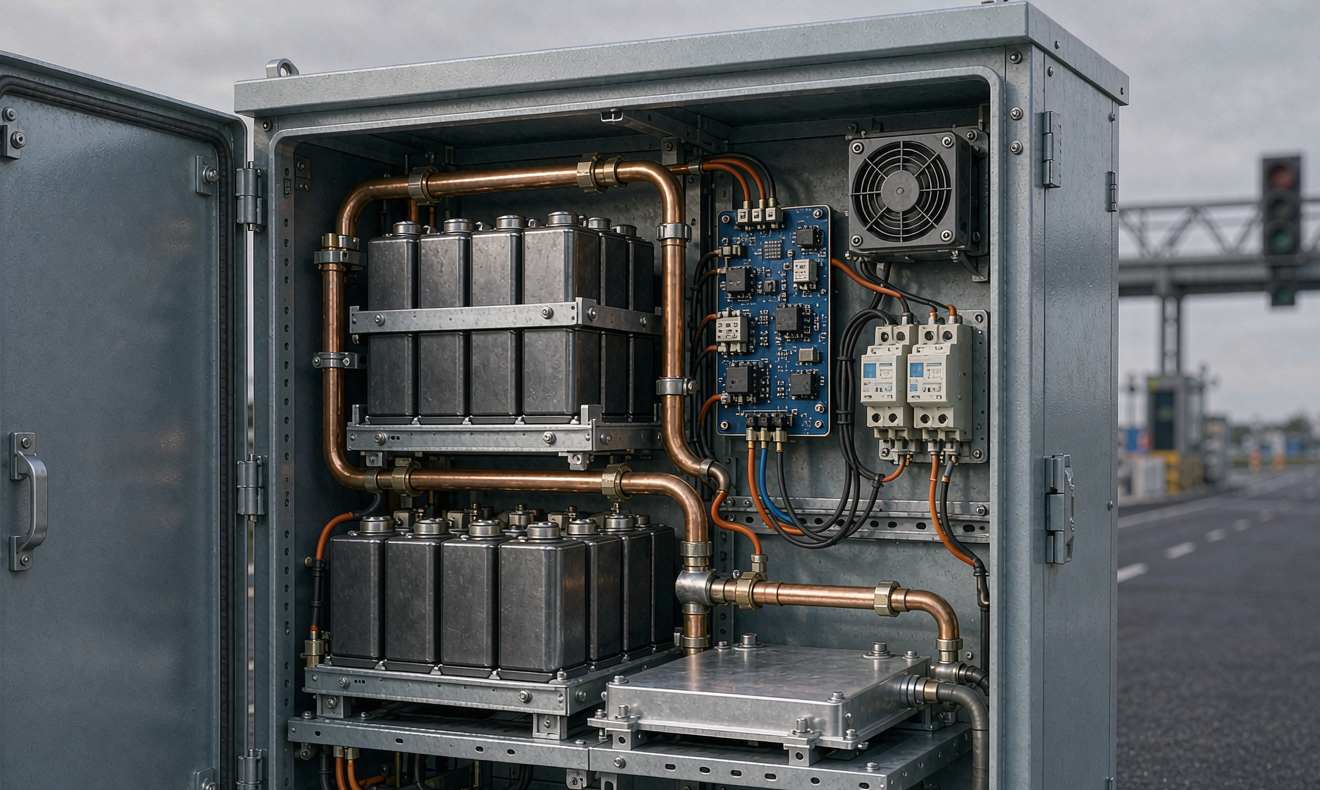
A toll lane that goes dark stops collecting revenue the second it fails. A signalized intersection that loses power turns a controlled crossing into a negotiation between strangers driving two-ton vehicles. I have spent a good part of the last decade designing battery systems for exactly these roadside cabinets, and the pattern is always the same: the grid feed is the least reliable part of the installation, and the battery is expected to quietly absorb that failure for eight to twelve hours without anyone noticing.
This guide is written for traffic engineers, toll system integrators and procurement teams specifying a battery solution for traffic and toll infrastructure. It covers load profiling, sizing math, chemistry selection, the thermal and mechanical reality of a cabinet bolted next to a live highway lane, and the compliance paperwork you should demand before anything ships. Everything here comes from designs I have taken from spreadsheet to field commissioning.
Why Roadside Sites Need a Dedicated Battery Backup
Roadside infrastructure sits at the end of long, exposed distribution feeders. A single vehicle hitting a pole can drop a whole corridor; a summer heat event can brown out the same feeder for hours. What makes traffic and toll loads unforgiving is not their size but the consequence of their loss. Lane controllers, RFID and DSRC antennas, automatic vehicle classification loops, overhead lane status signals, barrier gates, CCTV and variable message signs all have to survive the same outage together, and a partial failure is often worse than a full one because drivers cannot read what the lane wants them to do.
Generators solve the long-duration problem but not the first ten seconds. A genset takes 8 to 20 seconds to start, transfer and stabilize, and that gap is exactly the window in which lane controllers reboot, gate drivers lose position and cameras drop off the network. A properly engineered battery application solution carries the load through the transfer seamlessly, then keeps carrying it if the generator fails to start at 3 a.m. in a snowstorm. In practice I treat the battery as the primary ride-through element and the generator as the extended-duration option.
Load Profile: What a Toll Lane Actually Draws
Sizing starts with an honest load audit, not a nameplate. A typical all-electronic toll lane breaks down roughly like this:
- Lane controller and host computer: 80 to 150 W continuous
- RFID/DSRC reader and antenna assembly: 40 to 90 W continuous, 150 W during transmit bursts
- Automatic vehicle classification and axle sensors: 20 to 40 W
- Overhead lane status signal and violation enforcement strobe: 25 to 60 W continuous, 300 W strobe peak
- Barrier gate drive: 300 to 600 W peak for 1.5 to 3 seconds per vehicle, low average duty
- CCTV cameras (2 to 4 units): 15 to 35 W each, plus 20 W if IR illuminators are used
- Variable message sign, full-matrix LED: 150 to 400 W per square meter at full brightness, and most sign faces are 2 to 5 m²
- Communications (fibre terminal, LTE router, switch): 30 to 70 W
Add it up and a single lane with a small VMS lands somewhere between 600 W and 1.2 kW of continuous critical load, with transient peaks two to three times that when a gate cycles while the sign is bright. A signalized intersection cabinet is usually lighter: with modern LED signal heads at 10 to 20 W per head (against 100 to 150 W for the incandescent heads they replaced), a twelve-head intersection plus controller, detection and comms typically runs 250 to 600 W.
The distinction matters because motor and strobe loads are peaky. I always run a 15-minute rolling average through the audit and then size the inverter or DC-DC stage for the peak, not the average. Undersizing the power stage is the single most common field failure I get called about: the battery had plenty of energy and the electronics simply could not deliver the inrush when three gates fired at once.
Sizing the Pack: From Critical Load to Nameplate kWh
Here is the arithmetic I use, with a worked example. Take a toll lane with 850 W of continuous critical load and a required eight-hour runtime. Usable energy is 850 W x 8 h = 6.8 kWh. That is not the pack you buy. You then divide by three real-world derates:
- Depth of discharge: 0.90 for LFP in cyclic standby service. Shallow cycling is what buys calendar life.
- System efficiency: 0.90 to 0.93 for a DC-coupled architecture, 0.85 to 0.90 if you go through an inverter.
- End-of-life capacity: 0.80. The pack must still meet the eight-hour requirement on its worst day in year ten, not on delivery day.
6.8 kWh / (0.90 x 0.92 x 0.80) = 10.3 kWh. So this site gets a 10 kWh nominal pack, not a 7 kWh one. Skipping the end-of-life derate is how agencies end up with a three-year-old system that passes a bench test but fails the eight-hour requirement during an actual storm, because a pack at 82% state of health is invisible until you need the last 18%.
Charger sizing follows from the required recharge window. Most agencies want a full recharge inside 8 to 12 hours after a deep discharge, which at 0.2C means a 2 to 2.5 kW charger for a 10 kWh pack. On sites with a generator, I size the charger so it does not exceed 25 to 30% of genset rated power, otherwise the charger harmonics and power factor drag the generator into unstable operation.
Chemistry Choice: LFP, NMC or Sodium-Ion for Roadside Cabinets
Lithium iron phosphate is the default for fixed roadside infrastructure and it is not close. LFP cells deliver 150 to 180 Wh/kg at cell level, 4000 to 6000 cycles to 80% capacity at 25°C, and an accelerating rate calorimetry self-heating onset around 250°C. For a cabinet sitting in the sun beside a highway shoulder, that thermal headroom is worth more than energy density you will never use.
NMC811 cells reach 240 to 280 Wh/kg, which matters in a vehicle and almost never matters in a ground-mounted cabinet. They pay for it with 2000 to 3000 cycle life and an ARC onset in the 110 to 140°C band, which forces a more aggressive thermal management design for no benefit at the site level. I specify NMC for roadside work only when the enclosure volume is absolutely fixed and cannot be changed, which in my experience has happened twice.
Sodium-ion is now genuinely interesting for cold-climate corridors. At 100 to 160 Wh/kg it is less dense than LFP, so the cabinet is bigger, but it retains roughly 85 to 92% of room-temperature discharge capacity at -20°C and tolerates low-rate charging well below the 0°C lithium plating threshold that constrains LFP. For a mountain pass toll plaza where the cabinet spends three months below freezing and the alternative is a 150 to 300 W pack heater running on the very energy you are trying to preserve, sodium-ion can be the smaller total system.
The Environmental Envelope: Heat, Cold, Vibration and Ingress
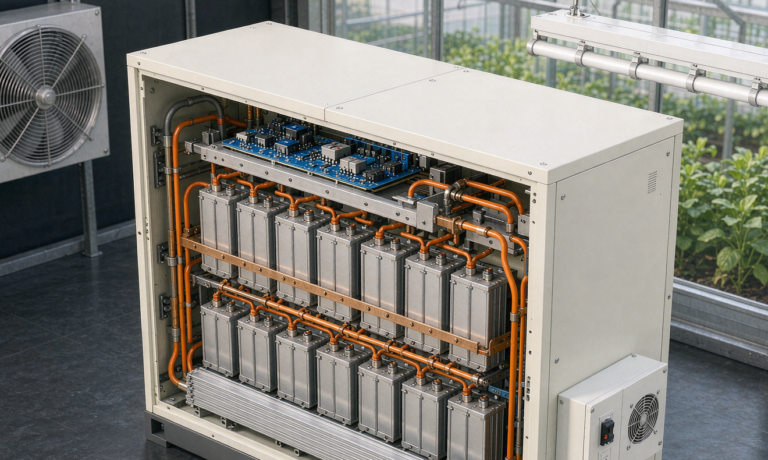
A cabinet in an asphalt median is a hostile environment in a way that a data centre rack is not. Internal cabinet temperatures of 60 to 70°C are routine on a 40°C afternoon with direct solar loading on a dark enclosure. Arrhenius behaviour is brutal here: the same LFP cell that gives 6000 cycles at 25°C delivers roughly 3500 at 35°C and drops below 2000 at 45°C. Every 8 to 10°C of sustained cell temperature cut calendar life in half.
The cheapest intervention is not cooling, it is reflection. A light-coloured or high solar reflectance index finish with a standoff shade panel typically drops internal cabinet temperature by 8 to 12°C before you spend a watt on active cooling. After that, use a compressor-based air conditioner with a COP of 1.5 to 2.5 rather than a thermoelectric module. Peltier coolers look attractive at 100 to 200 W, but at a COP of 0.5 to 0.7 they consume more energy than they move and become a net heat source exactly when the grid is down and you need every watt-hour.
Cold brings the opposite problem. LFP should not be charged below 0°C without reducing current, because lithium plating on the anode is permanent and it also creates the internal dendrites that turn a mild overcharge into a venting event. Roadside packs in freezing climates need a self-regulating heater pad and a BMS charge inhibit that blocks charging until cells are above 5°C, sized so the heater does not consume more than 5 to 8% of pack energy per standby day.
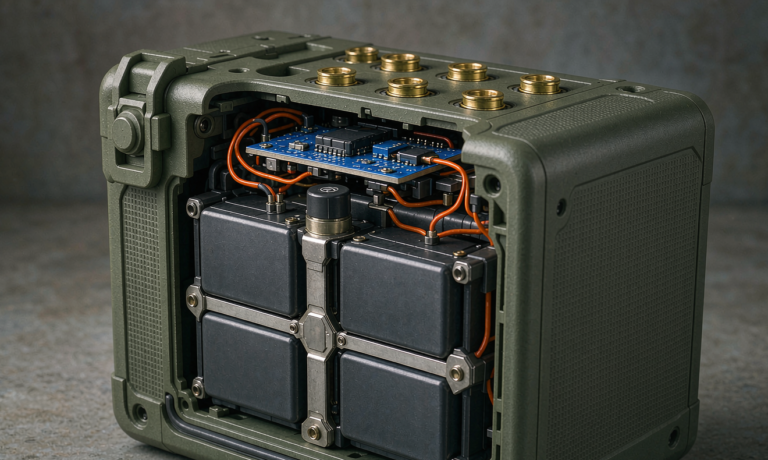
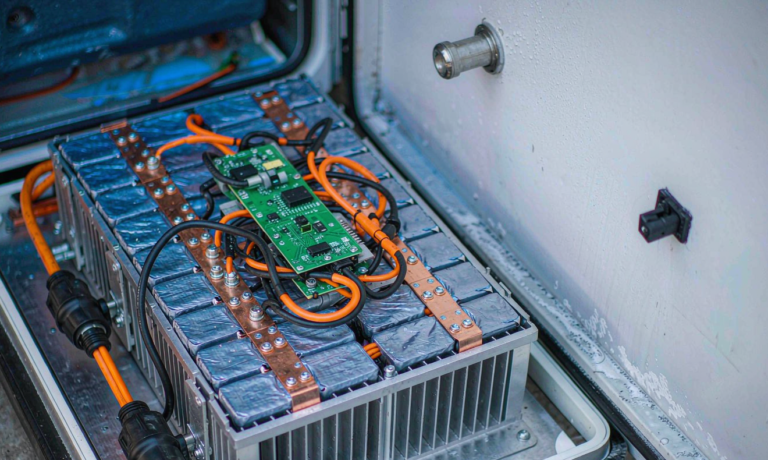
Mechanically, these cabinets live next to heavy vehicle traffic. I design busbar joints to survive IEC 60068-2-64 random vibration profiles and repeated shock in the 5 to 15 g range, which in practice means M8 studs, serrated flange nuts, medium-strength threadlocker, and genuine strain relief on every cable leaving a module. Every cell interconnect gets a torque witness mark. I have opened too many roadside cabinets where a 3000 A short across a loose terminal was prevented only by the fact that the nut had not yet backed all the way off.
Ingress protection should be specified to NEMA 3R as an absolute floor, NEMA 4X for coastal or de-icing-salt corridors, with IP55 to IP66 as the IEC equivalent. Coastal and northern sites also need ePTFE vent plugs to equalize pressure without pumping humid air inside, IPC-CC-830 conformal coating on every PCB, and tinned or nickel-plated copper busbars. Condensation, not rain, is what kills roadside electronics.
Lightning, Grounding and Surge Protection
Roadside sites get struck. A battery system that survives a decade of grid faults will still die in one afternoon without coordinated surge protection. I specify Type 1 or Type 2 SPDs to IEC 61643-11 on the AC input, a DC SPD on the battery bus, and a separate surge device on every communications and antenna line entering the enclosure, because the antenna cable running 8 metres up a gantry is a very effective lightning collector. Grounding resistance should be verified below 10 ohms and preferably below 5 ohms, and the battery enclosure bond must be tied into the same electrode system, not a separate rod, or you will create the ground potential difference that destroys your RS-485 transceiver.
BMS, Monitoring and Remote Visibility
Nobody drives to a toll plaza to check a battery. The BMS solution has to report its own health over whatever backhaul the agency already has, and it has to do it in the protocol the traffic network speaks. In practice that means:
- Cell voltage sampling at 200 Hz and pack current at 1 kHz, with temperature every 10 Hz
- Contactors that open in under 5 ms on a hard fault, driven by dual-redundant AFE front ends
- SNMP v3 and Modbus TCP or RTU, plus at least four dry-contact alarm outputs for legacy cabinet controllers
- Door-open, water-ingress and cabinet temperature inputs on the same telemetry stream
- State of health reported as coulomb-counted capacity cross-checked against 1 kHz impedance trend, not as a single magic number
That last point matters for maintenance planning. A pack that reports 100% state of health for six years and then falls off a cliff is not reporting state of health; it is reporting a guess. I want to see the impedance rise curve, because a 30% impedance increase usually precedes the capacity knee by 300 to 500 cycles, and that is the window in which you want to schedule replacement rather than respond to a failure.
Remote testing is the other half. A monthly automated discharge test at 0.2C down to 80% depth of discharge, run at 3 a.m. when the lane is quiet, tells you more about site readiness than any quarterly truck roll. The system should log the delivered ampere-hours and flag any site that delivers less than 95% of its commissioned value.
Compliance: What to Demand Before Shipment
For a battery solution for traffic and toll infrastructure, the documentation package is part of the product. I require:
- UN38.3 test summary for transport, with cells shipped at or below 30% state of charge
- IEC 62619 for industrial secondary lithium cells and batteries, and IEC 62133 where the pack is used in a portable or semi-portable subassembly
- UL 9540 and UL 9540A thermal runaway propagation evaluation where the local authority having jurisdiction applies NFPA 855
- UL 1973 for stationary battery assemblies in North American projects, plus NEC Article 706 for energy storage system installation
- NEMA 3R or 4X enclosure rating with the gasket material declared, not just the rating claimed
- IEC 61000-6-2 and 61000-6-4 for industrial immunity and emissions, because these cabinets share a concrete pad with motor drives and RF transmitters
Ask for the actual test reports with the model number matching what you are buying. A certificate for a “family” of products is not a certificate for your product, and I have rejected shipments on exactly that basis.
Commissioning and Acceptance Tests
Five checks catch almost every installation defect before the site is handed over:
- Insulation resistance at 500 V: greater than 100 megohms between the pack terminals and the earthed enclosure. Below 10 megohms, do not energize; find the pinch or the moisture.
- Full charge followed by a two-hour rest: cell delta-V under 30 mV. Anything wider means a bad interconnect, a weak cell or a balance problem.
- Capacity verification at 0.2C: at least 95% of nameplate.
- Full-load thermal imaging of every busbar joint and terminal. Any joint running more than 15 K above its neighbours gets re-torqued and retested.
- Transfer test under load: measure the actual ride-through with a scope on the lane controller supply. If the controller drops, the LED signal heads ride through 8 to 16 ms but your controller apparently does not.
Lifecycle Cost and Replacement Planning
Valve-regulated lead-acid monoblocs are the incumbent, and they fail on a predictable curve: three to five years in a hot roadside cabinet, faster if the enclosure sees sustained high temperature. At 45°C a VRLA string can lose 50% of its life for every 8°C rise, so a hot corridor agency can find itself replacing batteries every 24 to 30 months. Against that, an LFP pack at 10 to 15 years with one mid-life fan or AC service visit is usually cheaper on a ten-year total cost basis even before you count truck rolls, lane closures and the traffic management cost of a crew standing on a live shoulder.
Set the replacement trigger at 80% state of health or 1.5 times initial impedance, whichever arrives first, and budget for the replacement in the year the trend line says it will happen rather than the year the alarm fires. Roadside battery replacement is a planned-outage activity, and planned outages cost a fraction of emergency callouts.
Frequently Asked Questions
How many hours of backup should a toll lane battery provide?
Most agencies I work with specify four to eight hours of full critical load, and I design to eight unless the site has a generator with a proven automatic transfer. The right answer depends on how long the utility feeder realistically takes to repair in that corridor, which is a question for your maintenance history, not for the battery supplier.
Can a lithium battery solution replace VRLA in an existing traffic cabinet?
Yes in most cases, and it is usually a mechanical and thermal exercise rather than an electrical one. The retrofit has to confirm the existing charger profile supports lithium, that the enclosure can hold cell temperature in range, and that the added energy density does not exceed the cabinet’s fire and ventilation assumptions. A custom battery solution for retrofit typically reuses the cabinet and replaces the entire internal tray.
What operating temperature range should I specify for a roadside battery cabinet?
Specify cell temperature, not air temperature: 0 to 45°C for charging and -20 to 55°C for discharge, with the BMS inhibiting charge below 5°C. Cabinet air can go far wider, but what determines cycle life is what the cells actually sit at.
How do I size a battery for a signalized intersection with LED signal heads?
Audit the real continuous load rather than using the old incandescent figures. A twelve-head LED intersection with controller, detection and comms usually runs 250 to 600 W; multiply by required hours, then divide by depth of discharge, system efficiency and the 0.80 end-of-life derate to get nameplate kWh.
Does the battery cabinet need air conditioning in a desert climate?
Often yes, but start with passive measures. A high-reflectance finish and a standoff shade panel commonly remove 8 to 12°C of internal temperature rise. If cells still exceed 45°C in summer, add a compressor-based air conditioner sized to the charging heat load rather than a thermoelectric cooler.
How often should roadside backup batteries be tested?
Run an automated 0.2C discharge to 80% depth monthly, off-peak, with delivered ampere-hours logged and alarmed below 95% of the commissioned value. Do a full capacity verification annually and a torque and thermal imaging inspection every 12 to 24 months.
Is sodium-ion a better fit for cold-climate toll plazas?
It can be. Sodium-ion retains roughly 85 to 92% of room-temperature capacity at -20°C and charges below 0°C without lithium plating, so it avoids the parasitic heater load. The trade-off is 100 to 160 Wh/kg against LFP’s 150 to 180 Wh/kg, which means a larger enclosure for the same energy.
What certifications should I require from a battery supplier?
At minimum UN38.3 test summary, IEC 62619, and for North American stationary installations UL 1973, UL 9540 with UL 9540A propagation data, plus a NEMA 3R or 4X enclosure rating. Insist that the report model number matches the product shipped, not a product family.
Further Reading
References