Home Energy Storage Design Apartments
When I first started helping urban homeowners integrate batteries into rental flats and small apartments, I quickly learned that home energy storage design for apartments is not simply a scaled-down version of a suburban solar-plus-storage install. You cannot drop a 200 kg outdoor cabinet next to a terrace wall and call it done. Space is limited, ventilation is shared with neighbors, electrical capacity is fixed by the landlord or the building’s main panel, and fire codes treat multi-family dwellings very differently from detached houses. Over the last decade, my team at Horizon Power has designed, tested, and commissioned dozens of apartment battery systems across Asia, Europe, and North America. In this guide, I will walk you through the engineering decisions that make an apartment energy storage system safe, useful, and cost-effective.
Why Apartments Need a Different Energy Storage Mindset
Most residential storage marketing focuses on detached homes with rooftop solar. That is a very different load profile from an apartment. In a typical 80 m² rental unit, the available floor load may be only 150 kg/m², corridor widths can be under 1.1 m, and the electrical room is often two floors away. These constraints dictate everything from battery chemistry to enclosure dimensions.
In our field work, the most successful home energy storage projects in apartments target three jobs: reducing peak demand charges, providing backup for critical circuits, and storing cheap off-peak electricity. They rarely try to back up the entire flat because the cost and space penalty is too high. A focused 5 kWh to 10 kWh lithium iron phosphate (LFP) battery, paired with a compact hybrid inverter, usually delivers the best return on investment.
The key metric we track is usable energy density per square meter of floor space. A modern wall-mounted LFP system can deliver 180 Wh to 220 Wh per litre of volume, while a floor-standing lead-acid bank only reaches 40 Wh to 60 Wh per litre. That difference makes wall-mounted lithium battery cabinets practical even in a small utility closet.
Choosing the Right Battery Chemistry and Form Factor
For apartment installations, I almost always specify lithium iron phosphate (LiFePO₄) cells. The reasons are straightforward: LFP has a higher thermal runaway threshold than nickel-cobalt chemistries, it does not release oxygen during failure, and it tolerates the shallow daily cycling common in grid-tied apartments. In our IEC 62619 abuse testing, LFP modules reached onset-of-venting temperatures above 250 °C, while comparable NMC modules vented near 130 °C. That margin matters when the battery shares a wall with a bedroom.
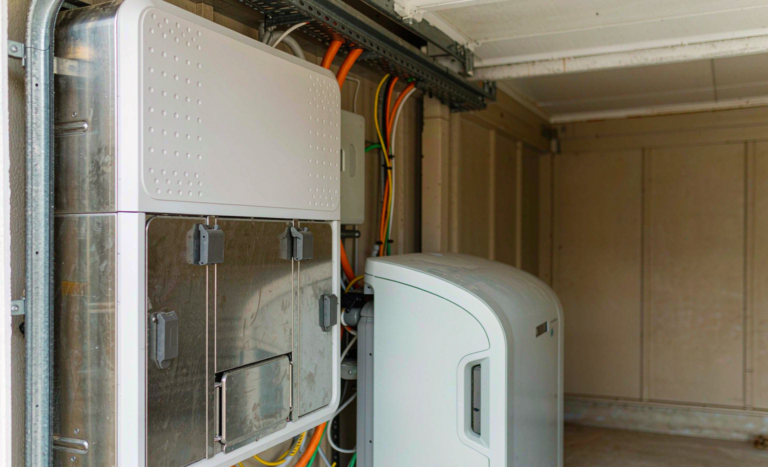
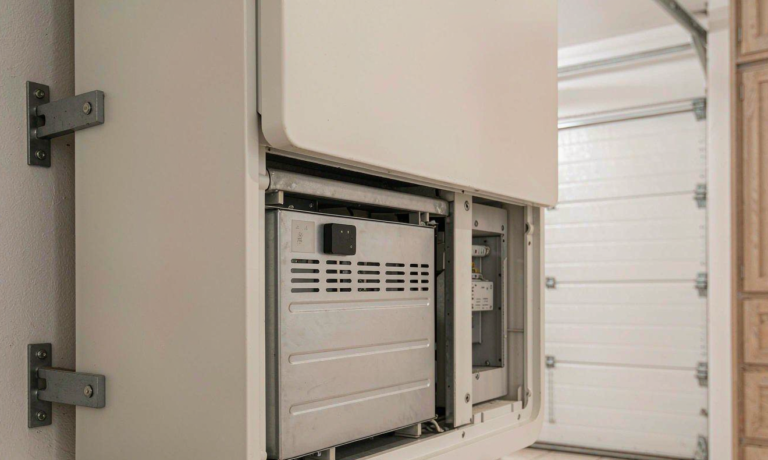
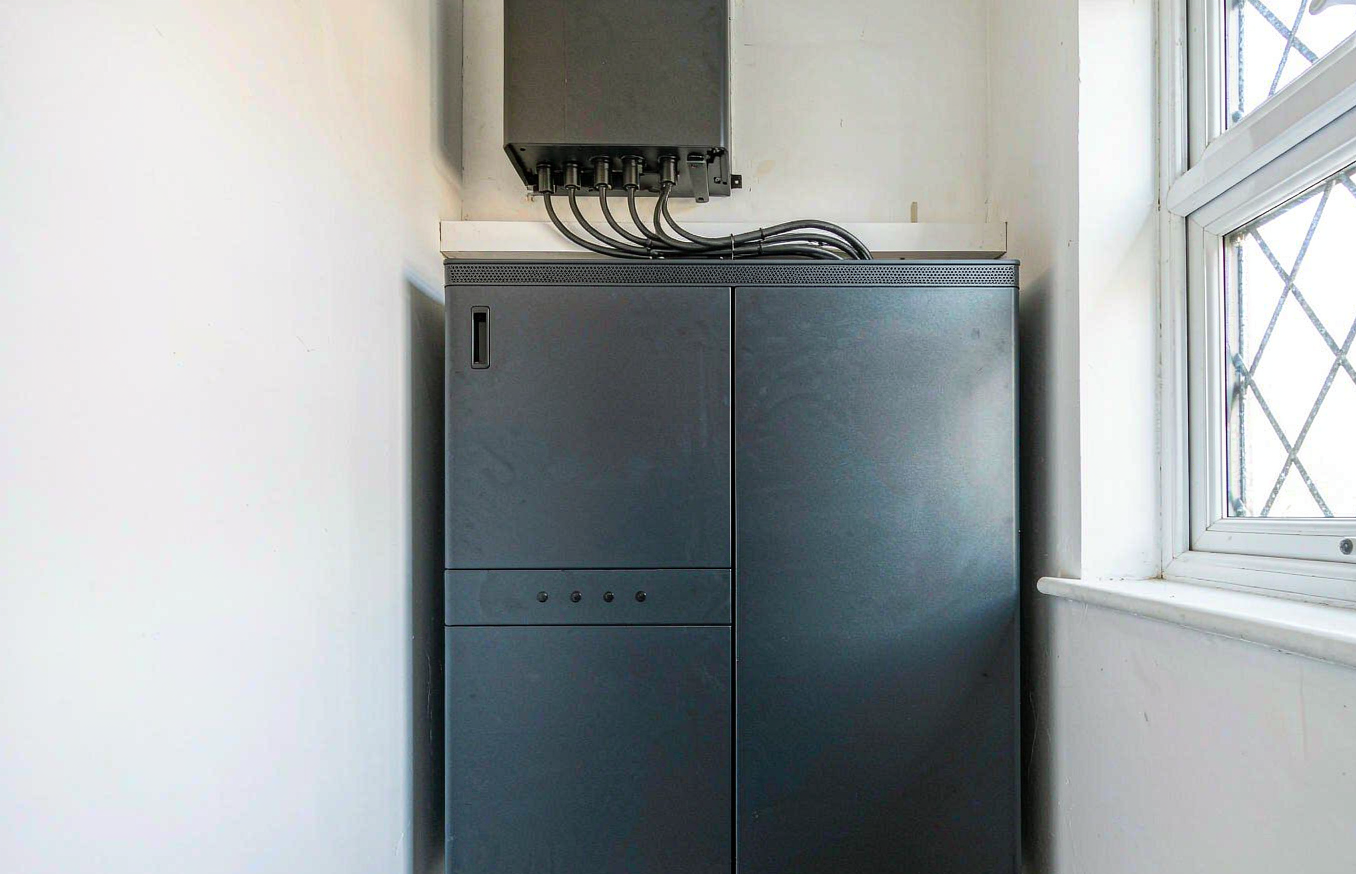
Form factor is equally important. A 51.2 V 100 Ah rack battery can be 500 mm deep and weigh 55 kg. That is too much for most apartment closets. We instead prefer slim wall-mounted units under 200 mm depth and under 35 kg per module. When multiple modules are needed, we stack them vertically with proper seismic brackets. This is why energy storage design for apartments starts with the cabinet footprint, not the cell datasheet.
For very small studios, we sometimes use modular 2 kWh to 3 kWh tower units that plug into a standard wall outlet through an integrated inverter. These systems cannot run an entire flat, but they can keep a refrigerator, Wi-Fi router, and a few LED lights alive for four to eight hours. That is often enough value to justify the purchase.
Electrical Integration: Load Centers, Inverters, and Protection
Apartment electrical panels are usually rated between 40 A and 100 A, and the landlord may not allow major rewiring. We design around two integration modes. Mode one is a whole-apartment backup through the main distribution panel, requiring a transfer switch and written approval from the building manager. Mode two, which we use far more often, is a dedicated critical-load sub-panel fed by the battery inverter. This sub-panel powers only essential circuits such as lighting, fridge, medical devices, and communications.
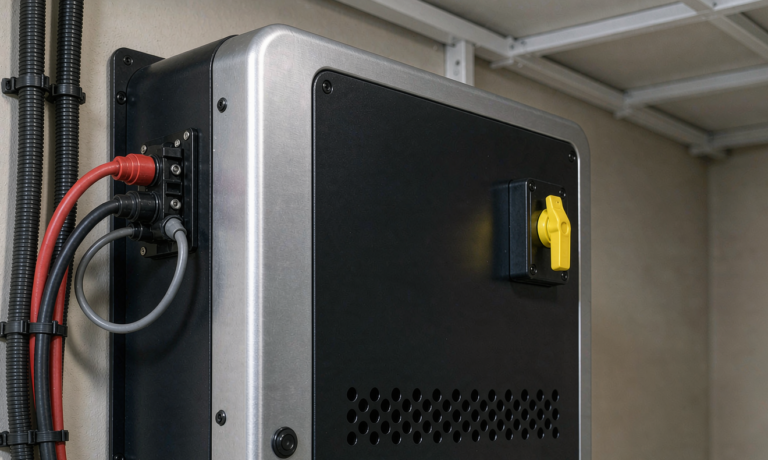
The inverter choice depends on the battery voltage and the required backup power. For a 5 kWh to 10 kWh LFP system, a 3 kW to 5 kW hybrid inverter is sufficient for most apartments. We set the maximum continuous discharge at 0.5 C to keep cell temperatures below 45 °C and extend cycle life. All DC cabling is protected by fuses or DC breakers rated for the full prospective short-circuit current, which we calculate using the battery’s internal resistance and maximum fault current.
Ground fault protection is non-negotiable. We install residual current monitors on AC output and ensure the battery chassis is bonded to the building’s protective earth in accordance with IEC 60364-7-712 or the local electrical code. In older buildings with poor grounding, we have refused installations until the grounding was upgraded.
Thermal Management, Ventilation, and Fire Safety
Small enclosed spaces amplify heat. We have measured closet temperatures 8 °C to 12 °C above ambient when a battery, inverter, and distribution board share a 2 m² closet without ventilation. That heat shortens cell life and can trigger derating. A good apartment home battery system design therefore includes active or passive ventilation, and sometimes both.
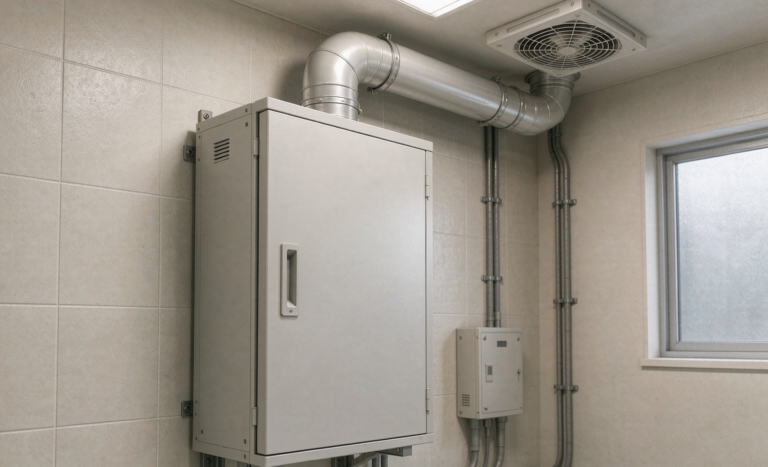
We use a simple rule of thumb: the battery compartment needs at least two air changes per hour, with intake at the bottom and exhaust at the top, because heated air rises. If natural ventilation cannot achieve that, we add a low-noise axial fan with a thermostat controller. The target operating range is 15 °C to 30 °C, which aligns with LFP’s comfort zone. Below 10 °C, lithium plating risk rises; above 40 °C, calendar aging accelerates.
Fire safety also drives layout. We keep a minimum 150 mm clearance around the battery cabinet, use non-combustible backplates, and install a smoke detector with remote alarm inside the battery closet. We do not install gas suppression in residential apartments because it is expensive and impractical; instead, we rely on chemistry selection, cell-level fusing, and early thermal monitoring. Every system we ship includes a battery management system with cell-level voltage and temperature monitoring, plus a failsafe contactor that opens on over-temperature, over-voltage, or short-circuit detection.
Sizing, Use Cases, and Payback for Apartment Owners
Sizing an apartment battery is different from sizing an off-grid cabin. We start with the resident’s goal. If the goal is backup, we inventory critical loads and estimate runtime. If the goal is arbitrage, we model the local time-of-use tariff and calculate how many cycles per day pay back the hardware.
A typical city apartment in a region with time-of-use pricing might have a daily consumption of 12 kWh to 18 kWh. A 7 kWh usable battery, cycled once per day, can shift roughly 35 % to 45 % of that consumption to off-peak hours. At a €0.20 per kWh peak-to-off-peak spread, that saves around €1.40 per day, or about €510 per year. With installed costs of €3,500 to €5,000 for a compact LFP system, the simple payback is seven to ten years. Backup value and grid-service revenue can shorten that further.
One application I find underrated in apartments is peak shaving for EV chargers. Many buildings allocate only 16 A to 32 A per parking space. A 10 kWh buffer battery can deliver 7 kW for 90 minutes to boost an EV charge session without tripping the building’s main breaker. This turns the apartment battery solution into a shared infrastructure upgrade rather than just a household appliance.
Regulatory and Installation Pitfalls
Apartment installations sit at the intersection of electrical, fire, and tenancy regulations. Before we commit to a project, we verify three things: whether the building strata or management allows battery storage, whether the distribution panel has spare capacity, and whether the local fire department requires notification. In some jurisdictions, systems above a certain energy threshold must be registered with the utility or inspected by a licensed electrician.
Transportation is another practical constraint. A 50 kg battery may not fit in a residential elevator, and hauling it up stairs is unsafe. We often choose split-module designs that can be carried by one person and assembled on-site. We also confirm floor loading with the building engineer; a 200 kg battery plus inverter spread over 0.5 m² can exceed the safe load limit of some older suspended floors.
Finally, firmware and remote monitoring matter. We configure each system to send alerts for over-temperature, ground fault, or abnormal cell drift. The installer and the resident both receive notifications. This visibility is part of why our apartment deployments have maintained a field failure rate below 0.5 % over three years.
Frequently Asked Questions
Can I install a home energy storage battery in a rented apartment?
Yes, but you need written permission from the landlord or building management. We recommend a non-invasive, wall-mounted LFP system with a dedicated critical-load circuit rather than modifying the main panel. Portable plug-and-play units are the easiest option for renters.
How much space does an apartment battery system need?
A compact 5 kWh wall-mounted system typically needs less than 0.3 m² of wall space and protrudes less than 200 mm. Including the inverter and protection gear, a small utility closet of about 1 m² is usually sufficient for systems up to 10 kWh.
What is the safest battery chemistry for apartments?
Lithium iron phosphate (LiFePO₄) is our preferred chemistry for apartments because of its higher thermal stability and lower toxicity during venting. It also offers a long cycle life, which improves payback in daily-cycle applications.
Can an apartment battery power my entire flat during an outage?
Only if it is sized for the full load and approved for whole-apartment backup. Most apartment battery designs instead protect critical circuits such as lighting, refrigeration, and communications. This keeps costs, weight, and space requirements reasonable.
How long does an apartment lithium battery last?
A well-designed LFP system typically retains over 80 % of its original capacity after 4,000 to 6,000 cycles. In a daily-cycle application, that translates to 10 to 15 years of useful life, although the inverter and contactors may need maintenance earlier.
Is a battery worth it if I do not have rooftop solar?
Yes, in many markets. Without solar, the battery earns value through time-of-use arbitrage, peak shaving, demand-charge reduction, and backup power. The economics depend on your local electricity tariff structure and the available incentives.
What certifications should I look for?
For international projects, we look for IEC 62619 (industrial secondary lithium cells), IEC 62040 or UL 1741-SA for inverter safety, UN38.3 for transport, and local grid-connection approval. Fire-safety listings such as UL 9540 or VDE-AR-E 2510-50 are also valuable for residential systems.
Conclusion
Designing energy storage for apartments demands a systems-thinking approach. The constraints of space, ventilation, electrical capacity, and regulation force every decision back to safety, efficiency, and lifecycle cost. At Horizon Power, we have learned that a modest, well-engineered lithium battery system can deliver real value to apartment dwellers without turning a closet into an industrial site. If you are evaluating home energy storage design for apartments, start with your goals, validate your building constraints, and choose a chemistry and form factor that fits the space you actually have.