Lithium Battery Cost Optimization for Mobility Devices
As a senior lithium battery engineer, I have spent the last decade watching the same mistake repeat itself on mobility-device projects — powered wheelchairs, mobility scooters, stair lifts, and attendant-propelled assist carts. Procurement teams fixate on the sticker price of the lithium battery and ignore everything that happens after the invoice is paid. For a daily-use mobility device, that first cost is often less than a third of what the pack actually costs the owner over its service life. In this article I will walk through the cost-optimization playbook we use at Horizon Power when we design a lithium ion battery for a wheelchair or scooter, and show why the cheapest cell on the spreadsheet is almost never the cheapest pack on the road.
Why Mobility Devices Break the Usual Cost Math
Mobility devices are not consumer gadgets. The user is often elderly or living with a disability, the duty cycle is daily and non-negotiable, and a sudden failure is not an inconvenience — it is a loss of independence. That changes the cost equation in two ways. First, field-service truck-rolls and warranty returns dominate lifetime cost far more than the bill of materials. Second, cycle life and calendar life matter more than peak energy density, because the device is charged every single night for years. When I model a lithium ion battery for a mobility scooter, I treat cost-per-mile and cost-per-cycle as the only metrics that count, not $/kWh of nameplate capacity.
Start With the Duty Cycle, Not the Catalog
Before we quote a cell, we profile the real load. A typical powered wheelchair draws 15–30 A in cruising, spikes to 50–70 A climbing a 1:10 ramp with a 120 kg user, and sits idle at high state-of-charge between trips. Daily energy is usually 120–350 Wh depending on range and terrain. Right-sizing is the first cost lever: oversizing to “be safe” wastes 20–40% of cell dollars that never get used, while undersizing forces the pack into deep discharge that halves its life. We size to 1.0–1.5 days of typical autonomy at 80–90% depth-of-discharge, which leaves margin without paying for unused amp-hours. The same discipline applies whether we are building a lithium battery pack for a scooter or a custom battery solution for a stair lift with a pulsed 200 W motor.
Chemistry Choice: LFP Wins the Cost-Per-Cycle Race
For mobility devices I almost always recommend LFP (lithium iron phosphate) over NMC. The reason is pure arithmetic. NMC offers higher energy density (150–250 Wh/kg) but 1,000–2,000 cycles and a thermal-runaway onset around 210 °C. LFP gives 2,000–6,000 cycles and a runaway onset near 270 °C, which also simplifies the enclosure and transport story. Landed cell cost sits in the same $70–110/kWh band, but spread over four to six times the cycles, LFP’s cost-per-cycle lands roughly 30–55% lower. For a device charged nightly, that gap overwhelms the small weight penalty. Where range is genuinely constrained — a very lightweight folding scooter — we will look at NMC, but for the bulk of mobility products LFP is the value-engineering choice. This trade-off is the same one we weigh when we design a high-rate drone battery, just tilted harder toward lifetime cost than toward peak power.
BMS Tuning Is a Free Lifetime Extender
The single highest-leverage, lowest-cost optimization is how the BMS manages the pack. Three settings, at zero extra hardware cost, extend calendar life by 18–25%:
- Cap the charge window at 90% state-of-charge for daily use; the top 10% of voltage is where lithium plating and cathode stress concentrate.
- Hold charge and discharge inside a 15–35 °C window; below 0 °C we lock out charging entirely to prevent lithium dendrite growth.
- Limit charge current to 0.5C and discharge to the rated continuous current, with a layered over-current protection that trips under 200 ms.
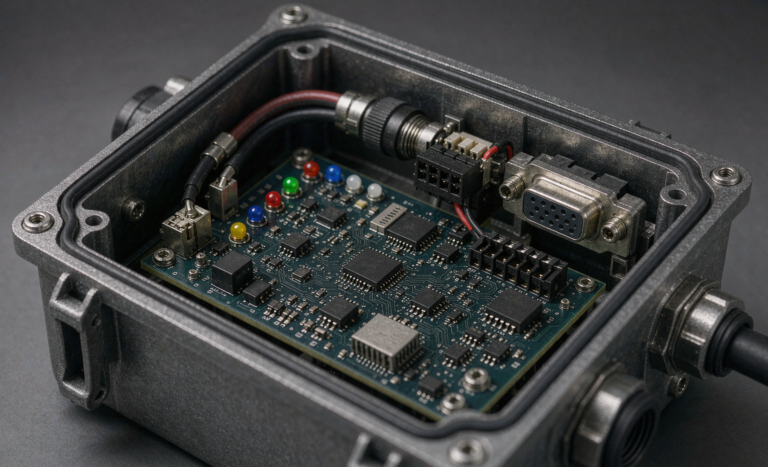
A well-commissioned BMS also performs passive balancing at 20 mV every cycle, which keeps cell spread tight and prevents the premature “weak cell” failures that generate warranty returns. This is exactly the kind of firmware discipline we carry from our drone battery programs, where high-rate cells live or die by the same balancing math.
Cell Grading: The Warranty-Return Tax You Can Engineer Out
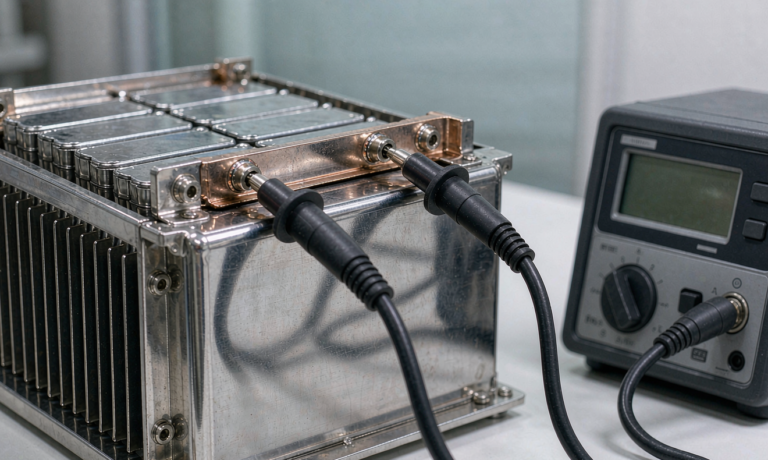
Most “cheap” packs fail expensively because the cells were never graded. We grade every incoming cell on three parameters: capacity coefficient of variation under 6%, DC internal resistance measured by four-wire Kelvin method with CoV under 10%, and a self-discharge K-factor below 1.0 mV/day. Mismatched cells force the BMS to retire the whole pack when one weak cell hits its end-of-life, so tight grading directly raises realized cycle count and collapses the return rate. Across an 18-month, 400-unit wheelchair field program we tracked, tight grading plus the BMS tuning above cut warranty returns to under 0.8% per year — versus the 3–5% we see in ungraded low-cost packs. That difference alone repays the grading step many times over.
Manufacturing Levers That Lower Landed Cost
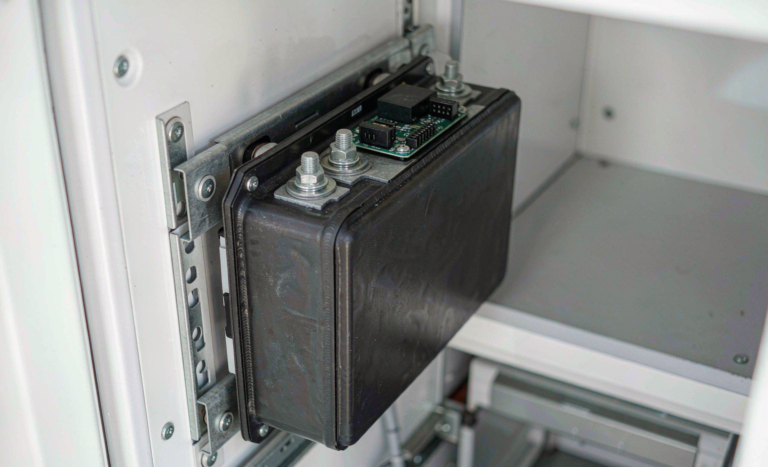
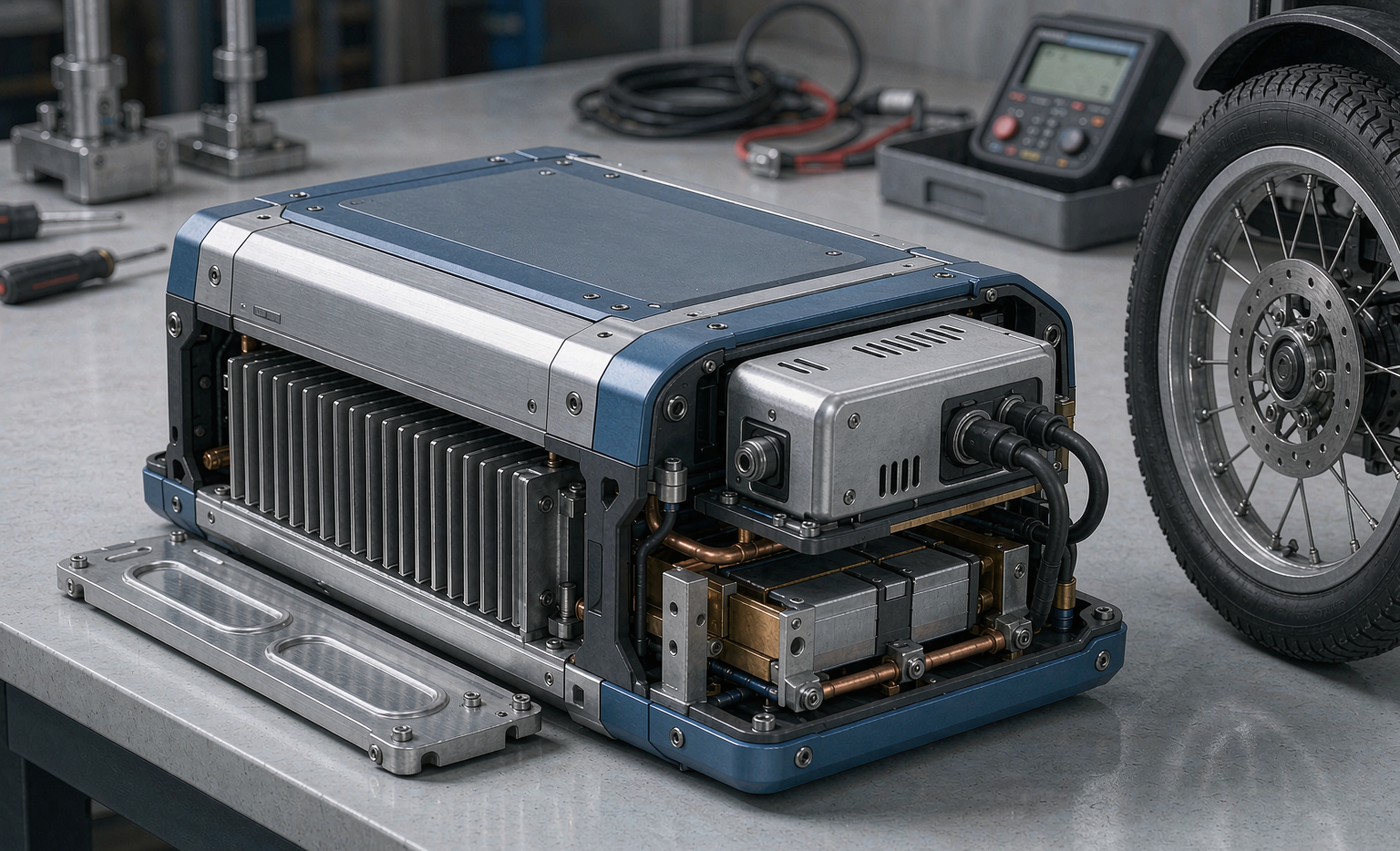
On the production floor, a few disciplined steps reduce both cost and failure rate. Pure-nickel laser welds at 25 N force with contact resistance under 0.15 mΩ and a process capability of Cpk ≥ 1.67 replace mechanical crimps that loosen under vibration — and vibration is constant in a wheelchair. Formation and burn-in gate every lithium battery pack at ≥98% of nameplate capacity with cell spread under 30 mV before it ships, so the field never pays to debug a weak pack. We apply a 0.3–0.7 MPa preload to the cell stack to control swelling, and pot the modules against shock per MIL-STD-810H 514.8 and 516.8. Connector choice matters too: hard-gold contacts rated above 1,000 insertion cycles outlast flash-gold parts that wear out under 500 cycles, and a keyed, sealed connector prevents the reverse-insertion faults that otherwise destroy a BMS in one mistake. Enclosures are kept to IP54–IP65 with an ePTFE pressure vent so the pack breathes without ingesting moisture. None of this costs more than the failures it prevents; it is cost optimization by reliability, not cost cutting by omission. When a client needs a non-standard form factor, we deliver a custom battery solution built on the same graded, burn-in-gated floor.
Warranty Reserve, Second-Life, and a Procurement Scorecard
The final levers are commercial. We book a warranty reserve against the modeled return rate rather than a flat guess, which keeps the true cost visible. When a pack finally retires at 80% capacity, we rotate it into second-life storage or low-duty carts instead of scrapping it, recovering 10–20% of value. And we qualify cells with a five-point scorecard: cycle life at the real discharge rate, CoV of incoming grade, thermal-runaway margin, documented UN38.3 and IEC test reports, and volume-price trajectory. A custom battery solution built on that scorecard out-costs a catalog pack over three years even when its purchase price is higher.
The Standards Floor You Cannot Skip
Mobility devices sit close to the body and are often regulated as medical electrical equipment, so the compliance floor is non-negotiable. Every pack we ship clears UN38.3 (tests T.1–T.8), IEC 62133-2 for portable cells and packs, IEC 60601-1 for medical electrical equipment safety, ISO 7176 for wheelchair dynamic strength and fatigue, IEC 62619 for industrial secondary cells, and UL 2580 for traction batteries. Transport follows IATA Section II at 30% state-of-charge, and we align labeling with FAA and EASA carriage rules. Skipping any of these to save a few dollars is not optimization — it is a recall waiting to happen.
Frequently Asked Questions
How much does a lithium battery for a mobility scooter actually cost over its life?
First cost is typically 30–40% of lifetime cost. The rest is warranty returns, service truck-rolls, and premature replacement. A well-graded LFP pack at $300–500 purchase price often delivers a lower three-year cost than a $200 ungraded pack, because it avoids 3–5% annual returns and lasts 2,000–6,000 cycles instead of 1,000–2,000. For a user who depends on the device daily, the real metric is cost per independent day of use, and that is where grading and BMS tuning pay for themselves many times over.
Is LFP or NMC better for a powered wheelchair?
For most wheelchairs and scooters, LFP is the better value: 2,000–6,000 cycles, a 270 °C thermal-runaway onset, and 30–55% lower cost-per-cycle than NMC. NMC only wins when range is tightly constrained by weight, such as a very lightweight folding scooter, where its 150–250 Wh/kg density justifies the shorter life.
Can I use a cheaper generic lithium battery pack?
You can, but the hidden warranty-return tax usually erases the saving. Ungraded packs mismatch cells, skip burn-in, and omit medical-grade standards like IEC 60601-1 and ISO 7176. The result is more failures, more service calls, and a higher real cost per mile than a graded, standards-compliant lithium battery pack. If budget is the constraint, the better move is a right-sized LFP pack from a supplier who publishes their UN38.3 and IEC 62133-2 reports, not the lowest line item on a marketplace.
How long should a mobility-device lithium battery last?
A properly sized, graded LFP pack managed by a tuned BMS should deliver 3–5 years of daily use, or 2,000–6,000 equivalent cycles, before it reaches 80% capacity. Right-sizing and the 90% charge cap are the two settings that most extend that window.
Do mobility-device batteries need special transport handling?
Yes. They ship as dangerous goods under UN38.3 and IATA Section II, typically at 30% state-of-charge for air freight, with labeling aligned to FAA and EASA rules. We handle the test reports and documentation so the pack is compliant from the factory to the end user.