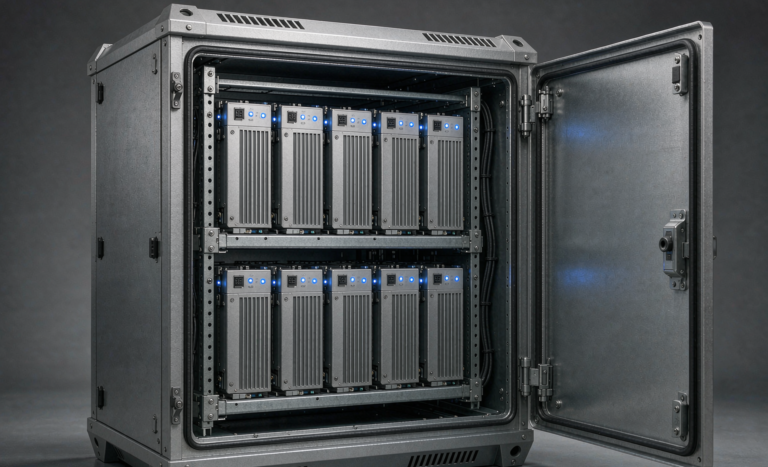
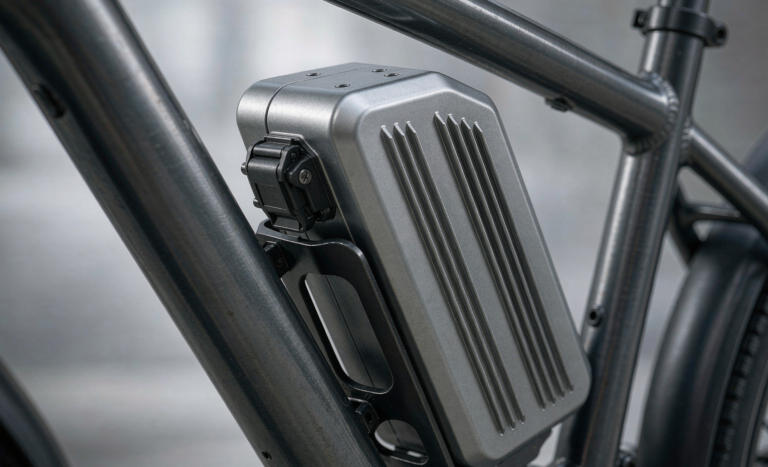
Lithium Battery Deployment for Power Tools
Over the last decade I have spec’d, built, and field-tested lithium battery packs for everything from 12 V electric screwdrivers to 36 V rotary hammers used on offshore wind-turbine towers. The single biggest misconception I meet among procurement teams is that “a lithium battery is a lithium battery.” In reality, lithium battery deployment for power tools is a full system-engineering problem: cell chemistry, discharge profile, thermal envelope, and certification all have to be matched to the tool’s duty cycle before a single pack leaves the factory. In this article I walk through exactly how our engineering team at Horizon Power designs, validates, and deploys lithium-ion battery packs for professional power tools, plus the lessons we learned the hard way on real job sites.
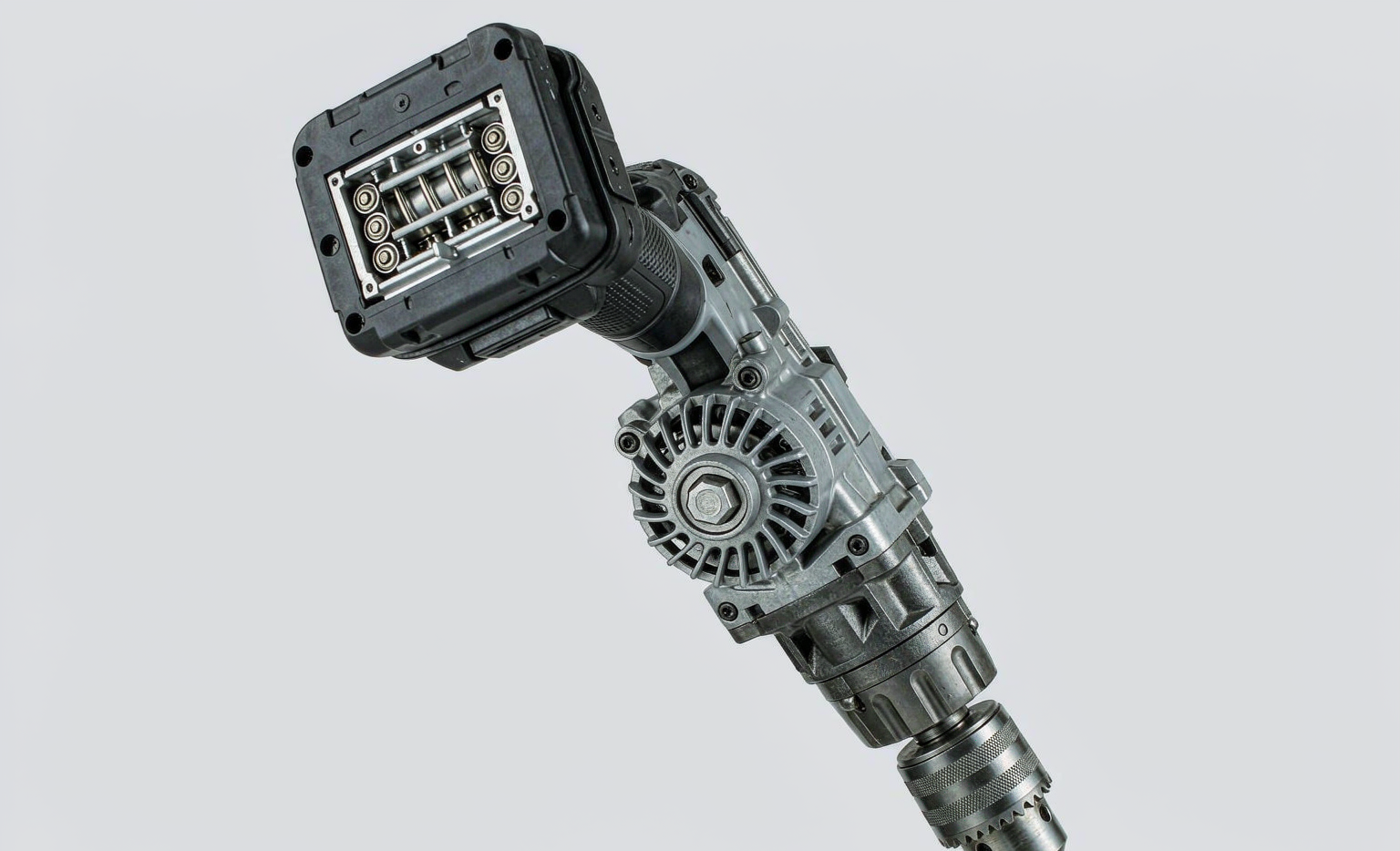
Match the Battery to the Tool’s Load Profile First
Professional cordless tools are brutal on cells. A homeowner’s drill glides through pine; a jobsite impact wrench stalls against a seized bolt and the motor demands a violent current spike. Before we size anything, we log the tool’s current signature with a 100 kHz current shunt for a full duty cycle. A typical 5 Ah pack in a 20 V impact wrench will see 40–60 A pulses during fastening, and a rotary hammer can pull short 70–80 A spikes under load.
We design every battery pack for a sustained 15–20C discharge and a 30C peak pulse for 2–3 seconds. The limiting factor is almost never nominal capacity — it is internal resistance (DCIR). A high-rate NMC cell we commonly use sits at 18–22 mΩ; a cheap commodity cell can be 35–45 mΩ, and that extra resistance translates directly into heat and voltage sag at the motor. If the pack voltage collapses under load, the tool’s controller throttles torque and the operator blames the battery. Matching the load profile is the difference between a pack that feels powerful and one that feels weak.
Choosing Cell Chemistry: NMC vs LFP
For power tools, energy density and pulse capability usually matter more than absolute cycle life. We standardize on two platforms:
- NMC (nickel-manganese-cobalt): 200–250 Wh/kg, excellent pulse current, good down to −10 °C. This is our default for compact high-power tools where every gram and every millimeter counts.
- LFP (lithium iron phosphate): ~160 Wh/kg, inherently safer and 3,000+ cycles, but weaker cold performance and lower voltage plateau. We deploy LFP only where safety margin and longevity dominate — fleet tools, mining, or enclosed-space work.
A custom battery solution lets us mix these deliberately. For a 36 V demolition tool we might run 10S NMC for power density; for a stationary workshop torque tool that sits on a bench all day, 8S LFP gives a pack that outlives the tool itself. There is no universal answer — only the right chemistry for the duty cycle.
We also keep NCA (nickel-cobalt-aluminum) in the toolbox for the highest-energy applications. NCA reaches 250–270 Wh/kg and supports very high pulse currents, which is why it dominates cordless chainsaws and high-torque impact drivers, but it demands a tighter thermal budget and a more conservative charging profile. The trade-off table we hand to customers is simple: if the tool runs hot and hard for short bursts, favor NMC/NCA; if it runs cool and long, favor LFP. Picking wrong costs either runtime or lifespan, and both show up as warranty claims.
Pack Architecture, BMS, and Thermal Design
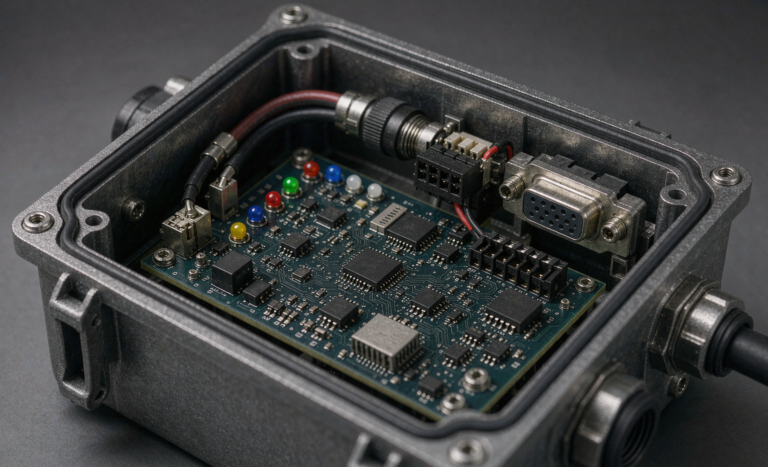
A pack is far more than cells in a plastic sleeve. Our typical architecture uses 4S, 5S, 7S, or 10S configurations with laser-welded nickel strips, and a battery management system (BMS) that monitors per-cell voltage, passive balancing, and at least two NTC thermistors. The BMS enforces five protections every professional tool needs: over-voltage (OVP), under-voltage (UVP), over-current (OCP), over-temperature (OTP), and short-circuit (SCP).
For smart tools we add SMBus or CAN communication so the tool can read state-of-charge and remaining runtime. Thermally, we embed a thin aluminum heat-spreading frame and designed vent paths so a single cell failure cannot cascade. On one roofing crew’s 55 °C job site, an early pack tripped OTP repeatedly until we added that passive spreader — telemetry showed pack temperature dropped 9 °C at the same workload.
Certification and Compliance You Cannot Skip
Compliance is not paperwork — it is what keeps a pack from becoming a recall. Two standards sit at the top of our checklist:
- UN38.3 — mandatory for air and ground transport of lithium cells and batteries. It covers eight tests (T.1 altitude simulation, T.2 thermal, T.3 vibration, T.4 shock, T.5 external short, T.6 impact/crush, T.7 overcharge, T.8 forced discharge). Every SKU we ship carries a valid UN38.3 test summary.
- IEC 62133-2 — the international safety standard for portable secondary lithium cells and batteries, covering internal short, overcharge, and temperature abuse. We pair it with CE, RoHS, and REACH declarations.
For tools deployed across borders, FAA and EASA rules govern how spare packs are carried and declared — typically limited to 100 Wh per pack and 2 spares in carry-on. We keep a complete test dossier for every battery we deploy so a customer’s logistics team can clear customs without a fight.
Field Deployment: What We Learned on Real Job Sites
Lab data lies politely; job sites do not. On an offshore wind project in February, ambient temperatures hit −10 °C and our packs lost 15–20% of usable capacity because lithium kinetics slow in the cold. The fix was operational, not electrical: we pre-conditioned packs in insulated cases warmed by the crew’s cabin and rotated two packs per tool. Capacity came back to spec within minutes of warming.
Another lesson came from a flooring contractor running packs at a 60% depth-of-discharge (DoD) average. When we pulled the telemetry, we found that holding DoD near 60% instead of 90% roughly doubled the pack’s useful life. We now tune fleet chargers to “workspace mode” that stops at 80% SoC for tools that are used continuously, reserving full 100% charges for intermittent use. Small firmware decisions like this are where a custom battery solution pays for itself.
Lifecycle, Maintenance, and When to Retire a Pack
We track state-of-health (SoH) through charge-count logging and internal-resistance trending. Our rule of thumb: retire a pack at 80% SoH, because beyond that point DCIR climbs fast and the risk of a weak-cell imbalance rises. Storage matters too — keep packs at 30–50% SoC in a 15 °C space, and never leave them fully charged for months. A lithium-ion battery stored at 100% SoC and 40 °C ages roughly four times faster than one stored at 40% SoC and 20 °C.
For fleet operators we recommend a simple rotation: label every pack with its serial and first-use date, and pull the oldest 10% for reconditioning or retirement each quarter. That discipline keeps a jobsite running instead of discovering a dead pack mid-shift.
Mechanical and Environmental Sealing
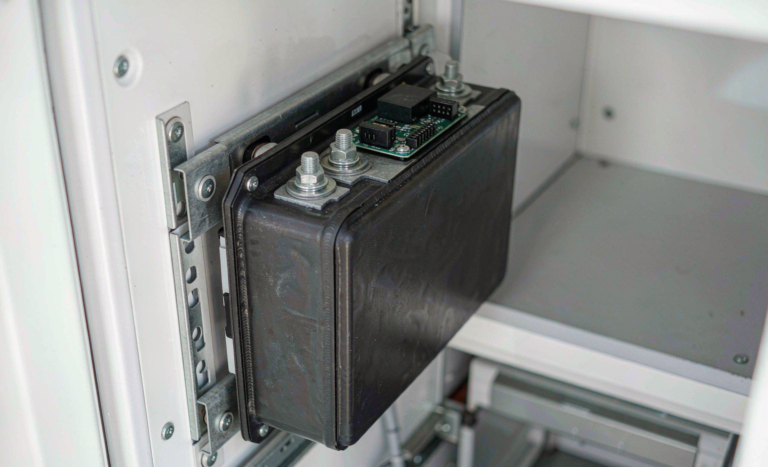
A battery pack on a construction site lives in dust, moisture, and occasional drops. We design the enclosure to at least IP54 for general tools and IP67 for outdoor or marine deployment, using gasketed seams and potted electronics so a rain shower or a fall into a puddle does not end the pack’s life. The mechanical latch is rated for 5,000 insertion cycles, and the cell holder is a rigid frame rather than loose pouches rattling in a shell. Drop testing to 1.5 m onto concrete is part of our internal qualification — a pack that cracks its weld on the first fall is a pack we will not ship. Connector choice matters too: we standardize on a gold-plated, keyed interface that resists corrosion and prevents reverse insertion, because a bent pin in the field is a tool that will not power on.
Frequently Asked Questions
What voltage should a power-tool lithium battery use?
It depends on the tool’s motor and torque target. 12–18 V platforms suit light duty such as screwdrivers and lights; 20–24 V is the mainstream professional standard for drills, impact drivers, and saws; 36–40 V serves demolition hammers, large angle grinders, and outdoor equipment where sustained power matters more than weight. We match pack cell-count (4S/5S/7S/10S) to the tool’s rated voltage within ±5% and size capacity so the pack delivers the full duty cycle without thermal throttling. A common mistake is over-volting a tool to get more speed — that voids the motor’s commutation design and shortens both tool and pack life.
How many charge cycles can a lithium power-tool battery deliver?
A quality NMC pack delivers 500–800 full cycles to 80% SoH under normal use; an LFP pack reaches 2,000–3,000. In practice, limiting depth-of-discharge to ~60–80% roughly doubles cycle life versus always draining to empty, and charging at 0.5C instead of 2C reduces cell stress further. We log these parameters in fleet mode so operators can see remaining useful life on the tool’s display rather than guessing.
Are LFP battery packs worth it for cordless tools?
For high-power compact tools, NMC usually wins on energy density and pulse current. LFP is worth it where safety, longevity, or enclosed-space use dominate — fleet benches, mining, or training environments — trading some power density for 3,000+ cycles and superior thermal stability. If a pack spends its life bolted to one station and cycled daily, the LFP premium pays back inside a year through avoided replacements.
Can I ship replacement power-tool battery packs by air?
Yes, if each pack is ≤100 Wh and carries a valid UN38.3 test summary; typically up to two spares are allowed in carry-on under FAA/EASA rules, with terminals protected against short circuit. Above 100 Wh, freight-only shipping with Class 9 labelling applies. We print the Watt-hour rating and UN number on every pack label so logistics teams can clear it without opening the case.
How should I store power-tool batteries during the off-season?
Store at 30–50% state-of-charge in a cool, dry place around 15 °C, never fully charged and never fully empty. A pack left at 100% SoC in a hot garage ages several times faster than one stored correctly, and one left at 0% for months can slip below the BMS recovery threshold. For winter storage we recommend a top-up charge to ~40% every three months.