Lithium Battery Design for Mobility Devices: An Engineer’s
When a powered wheelchair user cannot make it up a curb because the pack sagged under load, the failure is rarely the cells. Nine times out of ten it is the lithium battery design around them — the way the pack is sized, balanced, and thermally managed for a duty cycle that looks nothing like a phone or a laptop. Over the last eleven years as a senior lithium battery engineer at Horizon Power, I have led lithium battery design for mobility devices ranging from lightweight travel scooters to bariatric power wheelchairs and last-mile delivery trikes. This guide distills the engineering decisions that actually move the needle in the field, not in the lab.
If you are specifying a pack for a mobility product, the goal is not the highest energy density on paper. It is a custom battery solution that survives real-world charging habits, temperature swings, and users who will never read the manual. Below I walk through chemistry, sizing, the BMS, mechanical design, and the certification wall you must clear before a single unit ships.
Why Mobility Devices Demand a Different Battery Architecture
A mobility device is a safety-critical load. The rider’s independence — and in cold weather, their survival — depends on the pack delivering full current until the very end of discharge. That changes the design math in three ways.
- Low-frequency, high-torque pulses. A 250 W hub motor can pull 25–40 A for several seconds on a hill start. The pack must hold voltage under that pulse, which is a C-rate and impedance problem, not just a capacity problem.
- Partial, irregular cycling. Users top up whenever they park, not on a fixed schedule. A good lithium battery here needs a tolerant, accurate state-of-charge (SoC) algorithm that does not drift after 500 erratic charges.
- Non-expert handling. The pack will be dropped, left in a hot car, and charged with a cheap aftermarket brick. Robustness beats elegance.
That is why we treat lithium battery design for mobility devices as a systems problem spanning electrochemistry, firmware, and mechanical enclosure — never a cells-in-a-box exercise.
Cell Chemistry Choices — LFP vs NMC for Mobility
For mobility, the chemistry decision usually comes down to lithium iron phosphate (LiFePO4, LFP) versus nickel-manganese-cobalt (NMC). I almost always recommend LFP for new mobility programs, and here is the honest trade-off.
- LFP: ~3.2 V nominal, 2,000–4,000 cycles at 80% depth of discharge, extremely safe on abuse, and flat voltage curve. The downside is lower energy density (~120–160 Wh/kg) and a flatter voltage that demands better SoC estimation.
- NMC: ~3.6 V nominal, 500–1,500 cycles in this duty profile, higher energy density (~180–240 Wh/kg). Good when every gram matters, but more thermally sensitive and pricier on cobalt.
For a mobility scooter that needs 300–500 Wh, LFP’s cycle life and safety margin win almost every time. When a customer needs a sub-3 kg pack for an aircraft-carry folding chair, we reach for NMC and spend the saved mass on enclosure and cooling. Either way, the lithium battery design starts from the duty cycle, not the catalog.
Sizing the Pack: Real-World Duty Cycles I’ve Measured
Sizing is where most first drafts fail. The textbook range number assumes a constant 0.2C draw. Real mobility duty is a sawtooth of rest, crawl, and hill-climb surges. I size to the 5-second peak current and the daily watt-hour throughput, then pad 25%.
A typical mid-size power wheelchair draws 15–25 A continuous on flat ground and peaks 45 A on grades above 6%. At 24 V that is 360–600 W cruise and ~1,080 W peak. A 20 Ah, 24 V LFP pack (480 Wh) realistically yields 12–18 km per charge under mixed urban use — not the 25 km the cell datasheet implies. We publish honest range, and the riders trust the product for it.
This is also where a custom battery solution beats an off-the-shelf module: we match amp-hour rating, voltage, and connector to the chair’s controller so the BMS speaks the same protocol the motor expects.
Battery Management System: The Non-Negotiable Layer
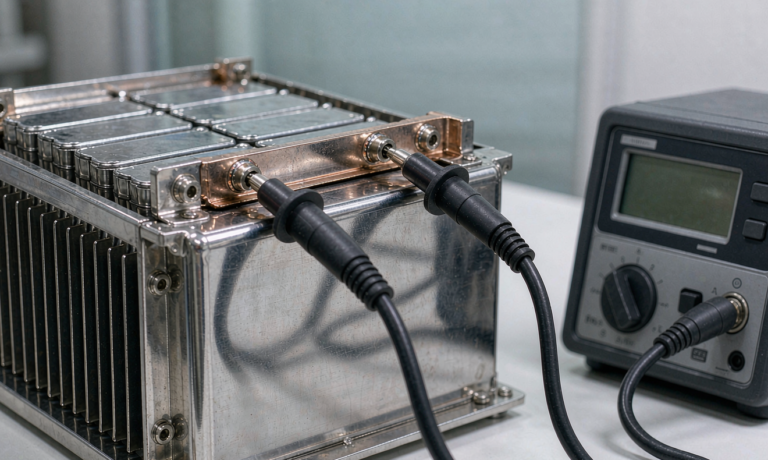
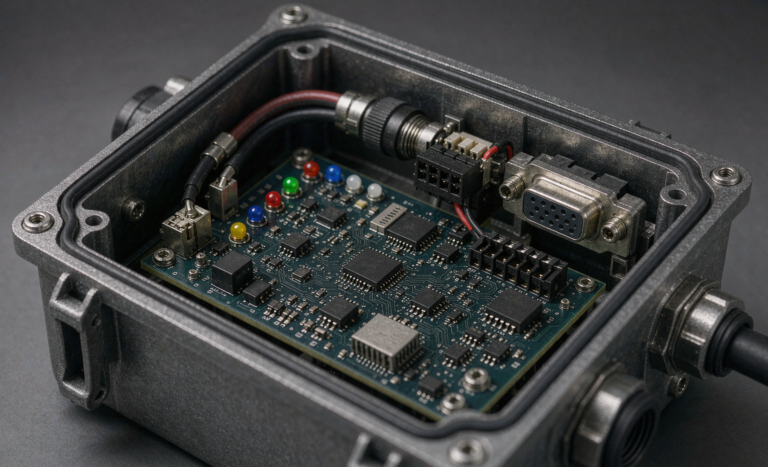
I will not ship a mobility pack without a properly specified BMS, because the failure modes are physical, not theoretical. A mobility BMS must do more than disconnect on over-voltage.
- Cell-level balancing (passive at minimum, active for >100 Ah) to keep the flat LFP curve honest across the pack’s life.
- Current limiting and short-circuit protection with sub-millisecond response, since a stalled motor is a dead short.
- Temperature cutoff on both charge and discharge — I set charge cutoff at 0 °C and 45 °C, discharge cutoff at −20 °C and 60 °C for our field units.
- SoC reporting via SMBus or CAN, with Coulomb counting cross-checked against open-circuit voltage every time the rider plugs in.
The BMS is the difference between a lithium battery design for mobility devices that lasts four years and one that bricks in eighteen months. We validate the BMS firmware against the actual controller handshake, not a generic simulator.
Mechanical Design, Ingress Protection, and Mounting
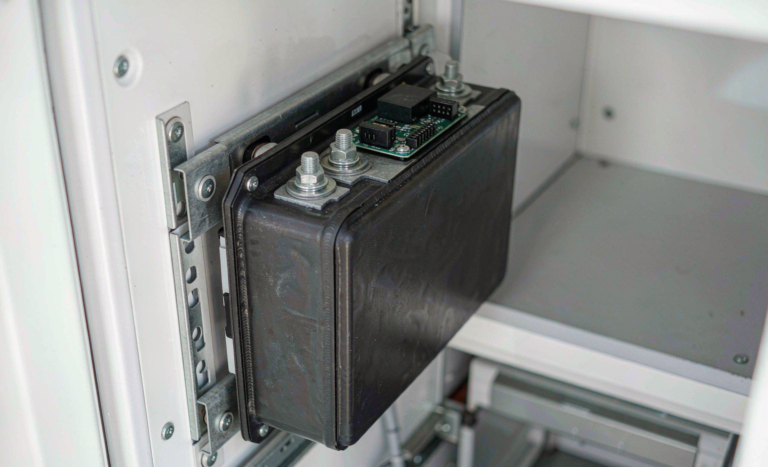
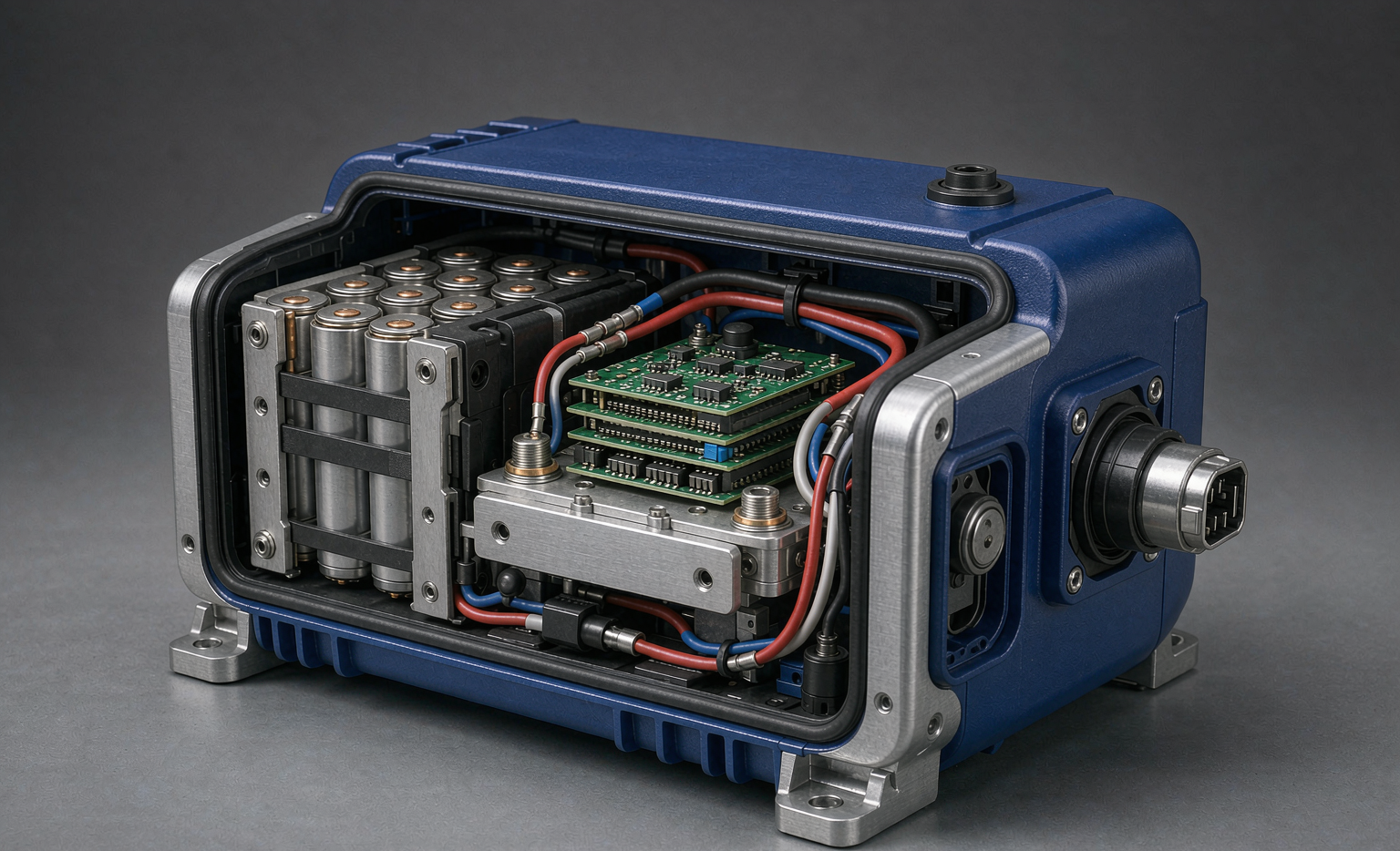
Mobility packs live in the dirt zone — under seats, behind kickplates, exposed to rain and road spray. Our enclosure baseline is IP54 for indoor chairs and IP65 for any outdoor or all-terrain unit. We use flame-retardant PC-ABS housings rated UL 94 V-0 and pot the cell stack in thermally conductive epoxy so a single dropped cell cannot rattle into a short.
Mounting matters more than engineers expect. A pack that shifts under a 90 kg rider cracks its own busbars. We design the cradle to the chair frame, not the other way around, and validate with a 50 g shock test per IEC 60068-2-27. The result is a custom battery solution that feels like part of the vehicle, because it is.
Certification Reality — UN38.3, IEC 62133, and Transport
No lithium pack leaves our line without clearing the regulatory wall, and mobility products cross borders constantly. The three standards I brief every program manager on:
- UN38.3 — the transport test suite (altitude, thermal, vibration, shock, external short, impact, overcharge, forced discharge). Mandatory for air and sea freight of any lithium battery.
- IEC 62133-2 — the portable cell and pack safety standard covering short circuit, overcharge, and thermal abuse. This is what most OEMs and insurers ask for.
- IEC 62619 — for higher-capacity industrial packs, it adds hazard assessment and battery management requirements.
For aviation-carry mobility chairs, we also document compliance with the carrier’s lithium limits (typically ≤300 Wh per pack, ≤ two spares). I have personally walked clients through FAA and EASA documentation so a traveler is not turned away at the gate. Getting this right is part of the lithium battery design, not a sticker applied at the end.
My Design Workflow for a New Mobility Program
When a client comes in with a chair and a target range, the workflow is fixed:
- Capture the duty cycle — peak current, daily Wh, operating temperature band.
- Pick chemistry from the safety-vs-density trade-off above.
- Size with a 25% buffer and verify on a prototype against the real controller.
- Specify the BMS and validate the firmware handshake.
- Design the enclosure to IP and shock targets, then tool it.
- Run UN38.3 and IEC 62133 before the first production unit ships.
This disciplined loop is how we turn a concept into a custom battery solution a rider can trust for years. It is the same systems thinking we apply to our drone battery programs, where pulse current and weight are even less forgiving — the difference is that a drone fails into the ground, while a mobility device fails under a person.
FAQ
What is the best lithium battery chemistry for a mobility scooter?
For most scooters and wheelchairs, LFP (LiFePO4) is the best choice: 2,000–4,000 cycles, excellent thermal safety, and a flat but predictable discharge curve. Choose NMC only when pack weight is a hard constraint and you can afford the shorter life and tighter thermal control. The right answer always comes from the duty cycle, which is the core of lithium battery design for mobility devices.
How long does a lithium battery for mobility devices last?
A well-designed LFP mobility pack lasts 3–5 years or 1,000–2,000 full-equivalent cycles in daily use. Life is driven less by calendar age than by depth of discharge and charge quality. A custom battery solution with balancing and temperature limits will outlast a generic module by a wide margin.
Can I use the same battery design for wheelchairs and drone battery platforms?
The engineering principles overlap — pulse current handling, BMS protection, certification — but the packs are not interchangeable. A drone battery is optimized for maximum Wh/kg and high discharge C-rate in a lightweight shell, while a mobility pack trades density for cycle life, safety margin, and rugged enclosure. We reuse the design methodology, not the physical pack.
What certifications are mandatory before shipping mobility batteries?
At minimum, UN38.3 for transport and IEC 62133-2 for portable pack safety. Higher-capacity industrial units should add IEC 62619. If the chair is flown as carry-on, document compliance with the carrier’s watt-hour limits and keep FAA/EASA paperwork accessible. Certification is part of the lithium battery design, not a final-step formality.
How do you size a pack for a specific duty cycle?
We measure peak current (often 2–3× the cruise draw), daily watt-hour throughput, and the operating temperature band, then add a 25% capacity buffer. We validate the prototype against the actual chair controller rather than trusting datasheet range. That empirical step is what separates a reliable lithium battery design from a disappointing one.