Lithium Battery for Drones and UAV Platforms
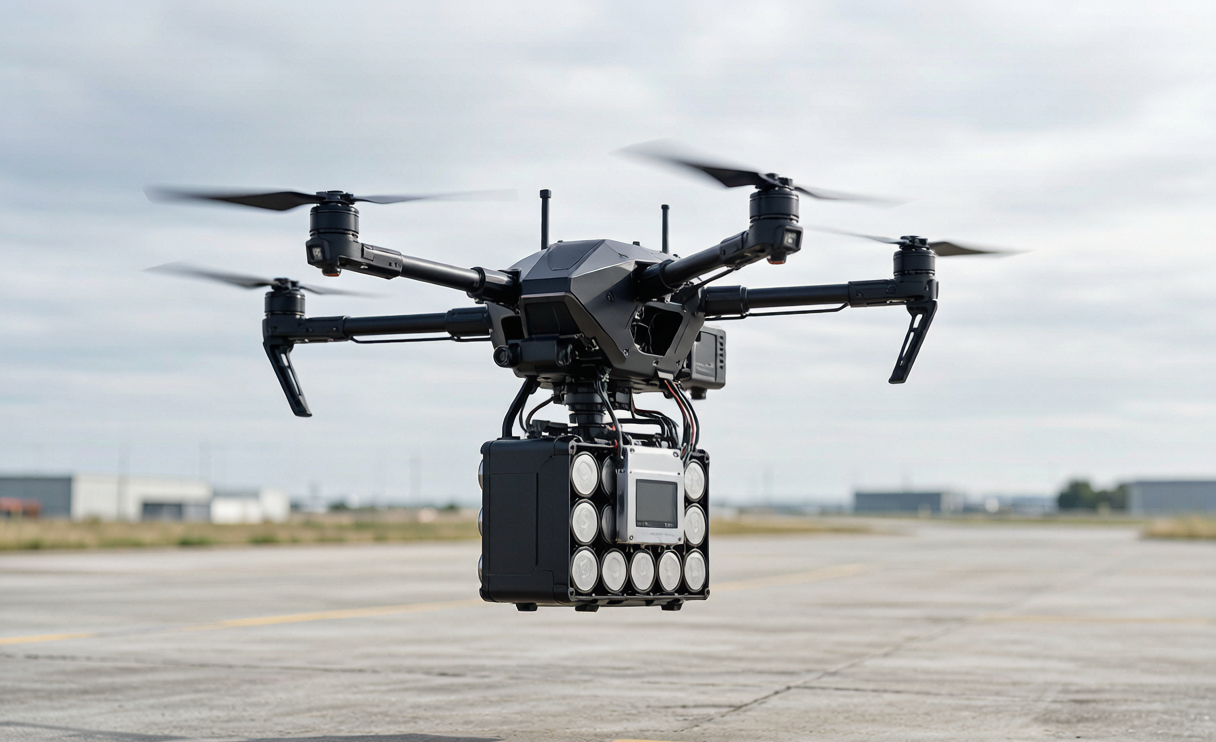
When I started designing power systems for unmanned platforms back in 2014, the assumption most procurement teams made was simple: “a lithium battery is a lithium battery.” Fifteen minutes on a drone test field destroys that idea. A lithium battery that works perfectly in a warehouse tug can be dead weight on a quadcopter, and a pack that flies beautifully on a light survey UAV can overheat and swell inside a heavy-lift airframe. Over the last decade, building drone battery systems for agriculture, inspection, and delivery customers has taught me that aerial power is its own engineering discipline — one where every gram, every watt, and every degree matters.
Why Drones Demand a Different Kind of Lithium Battery
The first constraint is the weight budget. On a typical multirotor, the battery is 30–45% of the takeoff mass. That single fact dictates everything downstream. If I shave 100 grams off a lithium battery pack, I can either extend flight time, carry a bigger sensor, or meet a tighter payload spec — so energy density (Wh/kg) is the number I obsess over, not just capacity (Ah). Aerial platforms live and die by specific energy, and that is why we almost always reach for high-energy NMC or NCA cells rather than the cheaper LFP chemistries used in ground vehicles. The trade-off is real: those high-energy cells are less tolerant of abuse, so the whole pack design has to work harder to keep them safe.
The second constraint is the discharge profile. A car battery sees a fairly steady load. A drone battery sees a violent spike the instant the rotors spin up, a sustained pull during hover, and constant micro-adjustments as the flight controller fights wind. That pulse-and-hover pattern is brutal on cells, and it is the reason a drone lithium battery is rated by both capacity and continuous/pulse C-rate, not by either alone.
Cell Formats and Voltage Platforms I Actually Specify
For most UAV work, I standardize on cylindrical 18650 and 21700 cells. They are mechanically robust, individually fuseable, and easy to arrange into the 3S, 4S, or 6S packs that flight controllers expect (11.1 V, 14.8 V, and 22.2 V nominal). A 21700 cell typically delivers 4.0–5.0 Ah at roughly 250–280 Wh/kg, which is still the sweet spot for a lightweight lithium battery pack that has to survive hard landings.
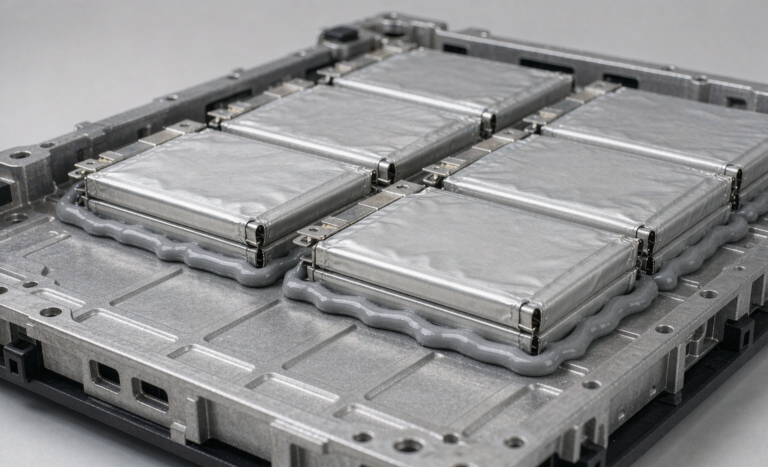
Pouch cells let me push energy density higher and shape the pack to a tight airframe, but they need careful mechanical restraint because they swell under age and heat. For a custom battery solution on a fixed-wing or a blended-wing UAV, pouch or semi-pouch layouts are often worth the extra mechanical design effort. In every case I keep the series/parallel configuration simple enough that a field technician can identify a bad parallel group with a multimeter.
The Discharge Profile Problem: Pulse Current and Hover Efficiency
Hover is the dominant energy consumer, but takeoff and aggressive maneuvers set the peak. I size the pack so that continuous discharge sits around 5C–10C for sport and cinematic UAVs, with short 15C–25C pulses tolerated without voltage collapse. If the pack voltage sags below the flight-controller cutoff during a punch-out, you get a sudden landing — and a broken airframe.
One detail newcomers miss: internal resistance climbs as the pack cools at altitude and as it ages. A drone lithium battery that holds 22.2 V at 25°C on the bench may sag to 19 V in a 5°C hover. I pad the design for that, and the BMS I specify reports pack impedance so operators can retire cells before they become a flight risk. I also set a separate punch-out current limit in firmware: if a sustained maneuver asks for more than the pack can deliver without drooping below the cutoff, the controller gets a warning rather than a surprise landing.
Smart BMS and Flight Controller Communication
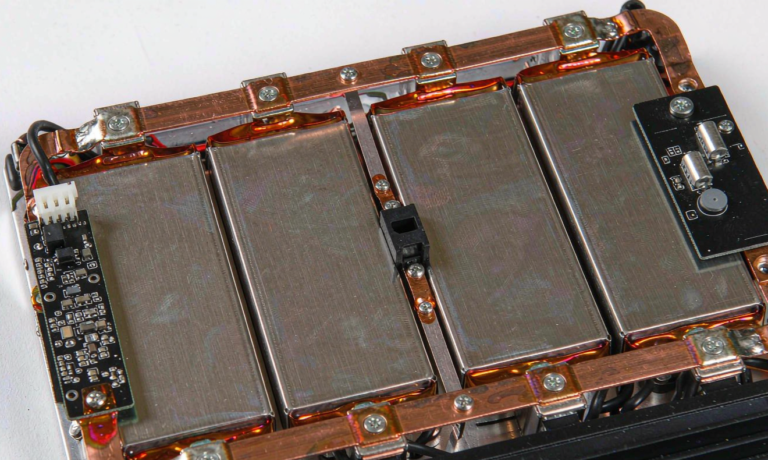
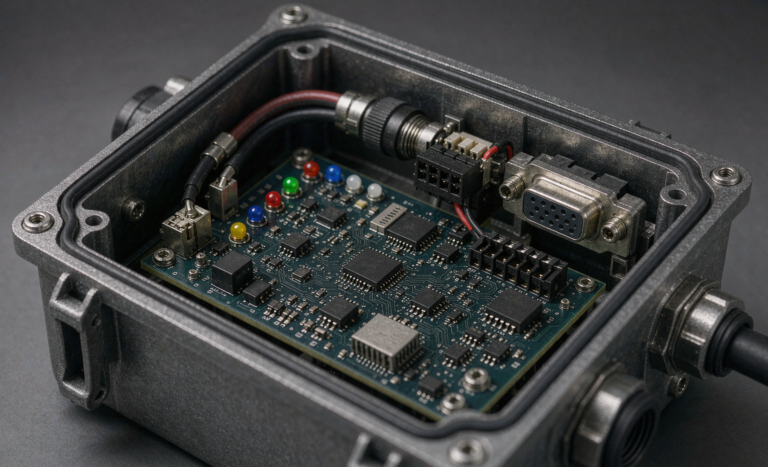
A bare cell stack is not a drone battery — the BMS is what makes it safe and useful. On every UAV platform I build, the battery talks to the flight controller over SMBus or CAN, reporting state of charge, cell balance, temperature, and cycle count in real time. That telemetry lets the autopilot do accurate remaining-time estimates and trigger a return-to-home before the pack is genuinely empty.
For a custom battery solution tied to a specific airframe, I also add per-cell balancing current high enough to correct imbalance within a single charge cycle, plus a pre-charge stage that limits the inrush current that would otherwise weld the main connector shut. These are unglamorous details, but they are the difference between a pack that lasts 400 cycles and one that fails in 40.
Thermal Management and Altitude Effects
Cooling on a drone is passive — you get airflow from the rotors and not much else. So I design the enclosure for convection, keep cell-to-cell gaps for air movement, and place the BMS where it is not directly above the hottest cells. Above 2,000 m, air density drops and so does convective cooling, while rotor load actually rises to hold altitude. I derate the continuous C-rate for high-altitude operations and warn operators to watch pack temperature on the telemetry screen.
Low temperatures are the other enemy. Below about 5°C, lithium plating during charging permanently damages cells. Any lithium battery I ship for cold-climate inspection work carries a charge-temperature lockout in firmware so the pack simply refuses to charge while cold — annoying on a winter job site, but far cheaper than a swollen pack.
Certification and Safe Transport for a Drone Battery
Commercial flight means paperwork. Every drone battery we ship must pass UN 38.3 (the T.1–T.8 test sequence: altitude simulation, thermal, vibration, shock, external short, impact, overcharge, and forced discharge). For air transport, IATA Dangerous Goods Rules and the operator’s own manuals govern how many watt-hours can travel in carry-on versus cargo, and whether the lithium battery pack must be at a state of charge below 30%. In the field, FAA and EASA expectations drive how operators document battery condition for Part 107 or specific operations.
On the product side, I design to IEC 62133 for cell and pack safety and keep an eye on IP rating for dust and rain resistance, because inspection drones do not get to pick the weather. None of this is optional if you want a custom battery solution that a certifying body will actually sign off.
Building a Custom Battery Solution That Survives the Field
When a customer brings me a new UAV platform, I start from the mission, not the cell. Flight time target, payload, climate, and recharge window tell me the energy and power I need; only then do I pick chemistry, format, and layout. That mission-first approach is how a lithium battery ends up flying reliably instead of merely fitting in the bay. If you are specifying power for a new airframe, send me the takeoff mass and the hover-current curve — that is all I need to start a custom battery solution that will actually earn its place in the air.
Cycle Life, Fleet Management, and When to Retire a Pack
A drone lithium battery does not fail all at once — it drifts. Capacity fades, internal resistance climbs, and self-discharge creeps up until one cold morning the pack will not hold the hover current. On a fleet, I track this with the BMS logs: when a pack drops below 80% of its original capacity or its impedance rises past a threshold I set per airframe, it gets pulled from flight duty and moved to bench or training use. That single rule has saved more airframes than any individual design choice I have made.
For operators running many UAVs, I recommend a custom battery solution with a simple ID and cycle counter so you can rotate packs evenly. Balanced rotation beats squeezing the last flights out of a favorite pack, and it keeps your worst-case pack younger than your mission-critical margin. Treat the lithium battery as a consumable with a known service life, and your in-flight failure rate drops more than most teams expect.
Frequently Asked Questions
How long does a drone lithium battery last per charge?
For most multirotors, usable flight time lands between 15 and 35 minutes at sensible payload, because hover dominates the energy budget. Fixed-wing and hybrid UAVs can stretch that to an hour or more. The honest answer depends on pack Wh/kg, airframe efficiency, and how hard you push the rotors — which is why I always size from the hover-current curve, not a marketing number.
Can I use the same lithium battery pack across different UAV platforms?
Sometimes, if the voltage platform (3S/4S/6S) and connector match and the loads are similar. But a pack tuned for a light cinematic drone will sag and overheat in a heavy-lift airframe. For mixed fleets I usually recommend one well-characterized lithium battery pack per airframe class rather than forcing a single pack to do everything.
What certifications does a drone battery need for commercial flight?
At minimum, UN 38.3 transport testing and compliance with IEC 62133 for the cell and pack. For carriage by air you follow IATA rules on watt-hour limits and state of charge, and for operations the FAA (Part 107 in the US) or EASA framework sets the expectations operators document. A credible drone battery carries test reports for all of these.
How should I store and transport drone batteries safely?
Store at roughly 30–60% state of charge in a cool, dry place, ideally in a fire-resistant bag, and never charge a cold pack. For transport, follow IATA limits on watt-hours and keep spares in carry-on with terminal protection. A well-designed BMS helps, but the operator’s habits decide whether a lithium battery reaches old age or fails early.