Lithium Battery for Robotic Lawn Mowers
As a senior lithium battery engineer I have spent the last decade watching robotic lawn mowers move from novelty gadgets to serious grounds-care tools. The one component that decides whether a mower finishes the job or strands itself at the edge of the lawn is the lithium battery pack. In this article I walk through the cell chemistry, pack architecture, battery management logic, and field lessons I use when I design a lithium battery for robotic lawn mowers, and I explain why a custom battery solution almost always beats an off-the-shelf pack for this application.
Why Robotic Mowers Are a Harsh Battery Environment
A robotic mower is not a calm laboratory load. The pack lives in a sealed shell a few centimeters above the ground, where it absorbs wheel vibration, blade-motor kickback, and the constant thump of small obstacles. It charges and discharges every single day, often through a contact docking station that wears the connector and heats the cells. Outdoor temperature swings from near freezing at dawn to over 40 degrees Celsius in direct sun push the lithium battery chemistry to both ends of its comfort zone.
Rain, dew, and grass clippings mean the enclosure needs real sealing, not just a plastic lid. I have opened packs that failed simply because condensation formed inside a poorly vented case and crept onto the protection circuit. The result is a short that no firmware can recover from. For this reason the mechanical and thermal design of the lithium battery pack is as important as the cells themselves.
Choosing the Cell Chemistry: NMC vs LFP
Two chemistries dominate the robotic mower market. Nickel manganese cobalt, or NMC, uses 18650 or 21700 cylindrical cells with high energy density, so the mower carries more watt-hours per gram and climbs slopes without a heavy pack. Lithium iron phosphate, or LFP, trades some energy density for superior cycle life and thermal stability, and it tolerates a full charge state better over time.
In my experience a residential mower under 0.5 hectare usually runs NMC because weight and runtime matter more than 2000 extra cycles. Larger commercial grounds-care robots that dock frequently and run long shifts often move to LFP for the safety margin and the longer service life. Neither is wrong; the choice is a system trade-off between mass, cost, and how many seasons the owner expects before a pack replacement.
Pack Architecture and the Role of the BMS
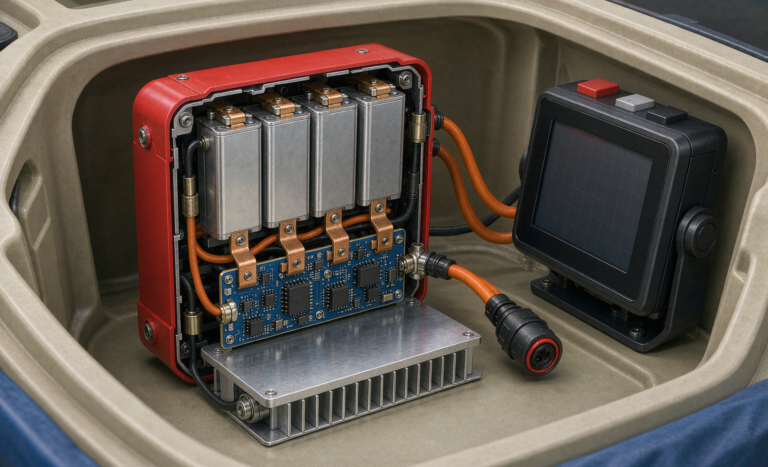
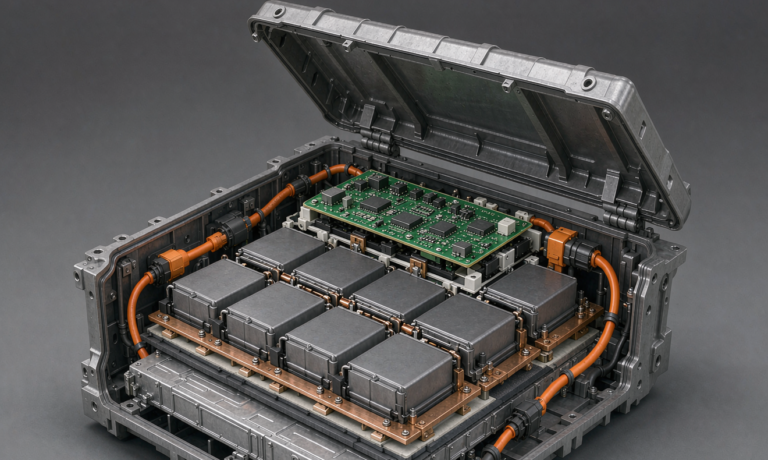
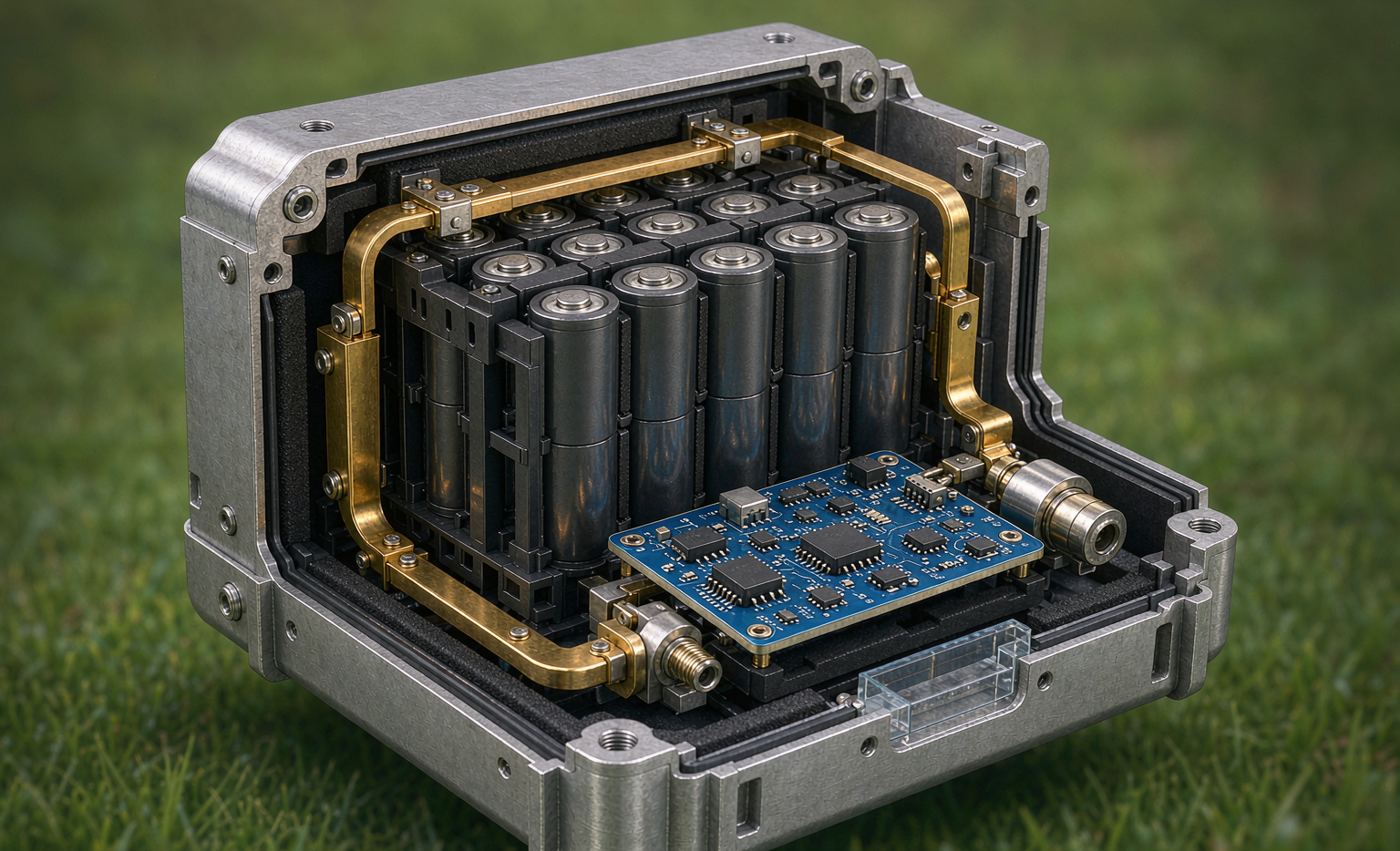
A lithium battery for robotic lawn mowers is rarely a single cell. I typically arrange cylindrical cells in a series-parallel matrix, for example 10 cells in series and 3 in parallel, to reach a pack voltage near 36 volts with enough capacity for a full run. The battery management system, or BMS, sits between the cells and the mower controller and performs three jobs that keep the pack alive.
First, the BMS balances the cells so one weak group does not drag the whole pack down. Second, it enforces a safe operating window: it cuts discharge if current spikes during a blade stall, and it stops charge if a cell drifts above its upper limit at the dock. Third, it reports state of charge and temperature to the mower over a simple communication line so the robot can return to base before it is stranded. A custom battery solution lets me tune these thresholds to the specific motor and charger rather than accepting generic defaults.
Sizing Capacity for Real Lawn Area
Sizing is where many buyers go wrong. A useful rule of thumb from my field data is roughly 8 to 12 watt-hours per square meter of mown area per day, depending on grass density, slope, and how low the cut is set. A 500 square meter lawn therefore needs about 4 to 6 ampere-hours at 36 volts, or 150 to 220 watt-hours, to cover the area with one or two charge cycles.
I always add a margin because real lawns are not flat rectangles. Thick fescue, wet grass after rain, and a 15 degree side hill can double the blade-motor load. When I spec a lithium battery pack I rate it for the worst weekly condition, not the best-case dry afternoon, so the mower keeps completing its schedule through the growing season instead of quitting in May.
Ingress Protection and Thermal Behavior
Because the pack lives outdoors, I design for at least IP67 on the cell enclosure, which means it survives temporary immersion and a hard rain while docking. The sealed shell also traps heat, so I place the cells away from the motor and use the aluminum enclosure as a passive heatsink. Venting is a compromise: too much airflow invites moisture, too little cooks the cells on a hot day.
Thermal runaway is the failure mode every engineer fears. A quality lithium ion battery pack includes a temperature sensor on the BMS, a vent path that directs gas away from the electronics, and a cell separator design that resists internal short. I never skip these on a mower pack, because a fire under a homeowner’s deck is the fastest way to lose the entire market’s trust.
Docking, Charging, and Contact Wear
The docking station is the weak link most owners never think about. A robotic mower charges through spring contacts that scrape a few millimeters every time the robot seats itself, and grass dust plus dew turn that interface into a gritty switch that arcs and heats. I spec gold-flashed contacts and a charge current that ramps gently so the first connection does not spark, and I add a short pre-charge resistor in the dock so a deeply discharged pack is not hit with full current on contact.
Inductive or contactless charging removes the wear entirely but costs more and loses a little efficiency to the air gap, so I reserve it for premium models. For the common contact dock I design the BMS to verify a clean seat before it closes the charge relay, and I log contact resistance over time so the app can warn the owner to clean the dock before the pack stops taking a full charge.
Safety Standards and Certification
Any lithium battery for robotic lawn mowers shipped across borders must clear UN38.3, the transport test that proves the cells survive shock, vibration, and altitude. For the pack itself I design to IEC 62133, which covers portable cells and their protection, and to UL 2271 where the mower is classified as a light electric vehicle in the destination market. An IP rating from an accredited lab closes the ingress requirement.
I keep certification in mind from day one rather than at the end, because a last-minute redesign to pass a drop or crush test is expensive. A custom battery solution that is built around the test plan ships faster and avoids the recall risk that comes from bolting compliance onto a finished pack.
Field Lessons: Extending Cycle Life
The single biggest lifespan killer I see is the float charge habit. Many docks hold the pack at 100 percent for the hours the mower sits idle, and that constant top-of-charge stress ages NMC cells quickly. I set the firmware charge ceiling to about 90 percent and let the mower top up only before a scheduled run. Stored packs I leave near 50 percent state of charge through the winter.
The second lesson is to respect the partial-cycle nature of the work. A robotic mower rarely fully discharges; it nibbles the lawn in short passes. That duty is actually gentle on the cells, and a well-balanced lithium battery pack will often reach 800 to 1200 cycles before capacity falls to 80 percent. Treat the BMS well, keep water out, and the pack outlives the mower’s motors.
Frequently Asked Questions
How long does a lithium battery for robotic lawn mowers last?
Most packs reach 800 to 1200 charge cycles before capacity drops to about 80 percent of the original rating. With daily use that is roughly three to five mowing seasons, after which a replacement pack restores full runtime.
Should I choose NMC or LFP for my mower?
Pick NMC when weight and runtime matter most on a small residential lawn. Choose LFP when you want longer service life and better thermal tolerance on a larger or commercial grounds-care robot that charges often.
Can I use any lithium battery pack as a replacement?
Not safely. The voltage, connector, communication protocol, and BMS charge limits must match the mower controller. A mismatched pack can trip the robot, overheat at the dock, or refuse to charge altogether.
How do I size the battery for my lawn size?
Plan for about 8 to 12 watt-hours per square meter per day, then add margin for slopes, thick grass, and rain. A 500 square meter lawn typically needs a 36 volt pack in the 150 to 220 watt-hour range to finish on one or two charges.
What IP rating does a robotic mower battery need?
Aim for at least IP67 on the cell enclosure so the pack survives hard rain and temporary immersion at the dock. Pair that with a sealed connector and a drainage path so condensation cannot reach the protection circuit.
Is it safe to leave the mower charging in the rain?
Yes, with a correctly sealed pack and dock that meet IP67 and the relevant electrical safety standard. The risk rises only if the enclosure gasket is damaged or the dock sits in standing water, so I inspect the seal each season.
Further Reading
References