Lithium Battery Maintenance for UPS Systems
If you run a server room, a telecom shelter, or any 24/7 standby load, you already know that a UPS is only as good as the lithium battery pack that lives inside it. The cruel irony of UPS work is that the battery sits at 100% state of charge almost every minute of its life, never cycles, never sees a real load, and then gets blamed when a five-second outage turns into a five-minute one. Most field failures I see on lithium battery UPS packs are not chemistry failures, they are maintenance failures. After ten years of auditing UPS rooms, the same five issues show up on almost every site: float voltage drift, thermal runaway from blocked filters, loose busbars after the third winter, BMS SoC drift masking real capacity loss, and legacy lead-acid charge profiles still bolted onto LFP racks. This playbook is the checklist I walk every new site through, and the diagnostic I run on every callback.
Why UPS duty is uniquely hostile to a lithium battery pack
A UPS is a float-duty machine. From the day it is commissioned until the day it is decommissioned, the lithium battery pack sits at 100% SoC almost continuously, with only brief dips during monthly runtime tests or actual grid outages. That single fact rules the maintenance philosophy. The chemical calendar of LFP and NCM chemistry accelerates when the cell lives at high SoC, especially at elevated temperature. A 48 V 16S LFP string sitting at 54.4 V float in a 35 °C server closet will lose roughly 2.5 to 3.5 percent of its nameplate capacity per year to calendar fade. The same string held at 30 to 50 percent SoC and 20 °C loses well under 1 percent per year. That is not a defect, it is chemistry, and it is why a UPS lithium ion battery is typically rated for a five to seven year service life, not the ten years a solar cyclic pack is rated for.
The second hostile factor is thermal confinement. Most server racks and telecom shelters run hot, often with the UPS module stacked directly above a PDU or below a switch. A delta of 10 °C roughly halves the calendar life of an LFP cell. If you have ever pulled a five-year-old UPS pack and seen the cells swollen with brown electrolyte staining on the wrapper, you know exactly what a hot float looks like.
The monthly ten-minute UPS battery walk
The single highest leverage habit is a monthly walk of ten minutes per rack. It is the same walk regardless of chemistry or brand, and it catches 80 percent of field failures before they reach the runtime test:
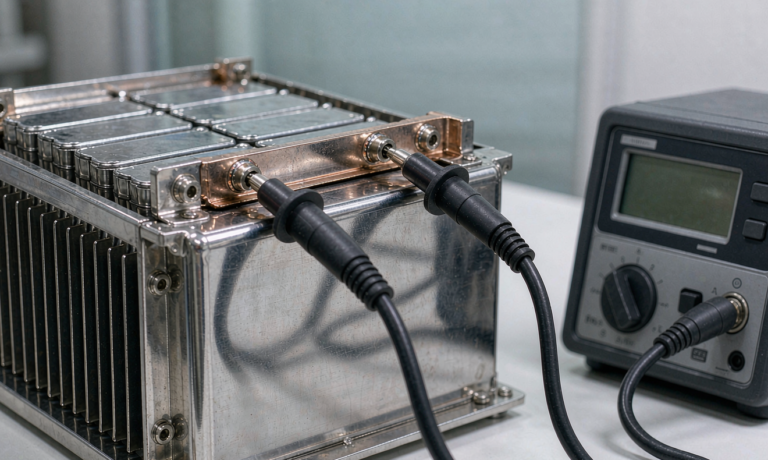
- Cell-level voltage scan. With the UPS in float, measure every cell with a calibrated handheld. For a 16S LFP string the healthy band is 3.350 to 3.400 V per cell. Anything below 3.300 V or above 3.420 V on a single cell, while the rest of the pack is centered, flags a cell that has drifted out of balance. Yellow at 50 mV delta, red at 100 mV delta.
- Pack-to-pack delta. If the UPS has parallel strings, the worst-to-best string voltage should stay within 200 mV. Anything wider points to a connector, a fuse, or a balancing issue.
- Thermal delta across the rack. Use an IR thermometer or thermal camera on the front face of every module. A delta above 6 °C from coolest to hottest module under float conditions is a fan or airflow failure. Ten °C is the red line.
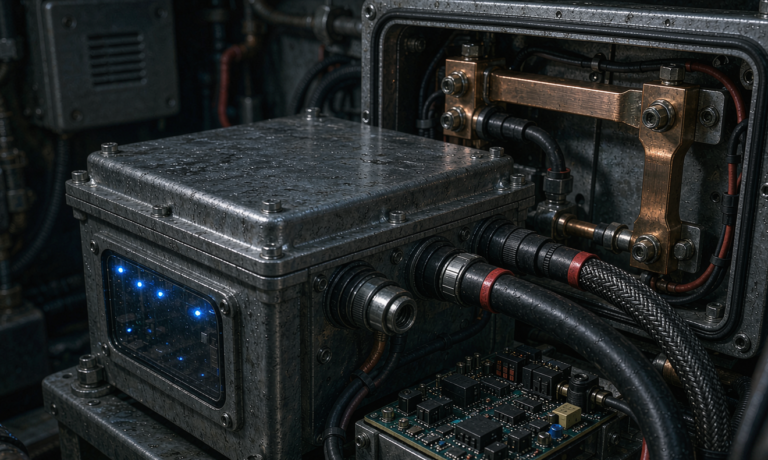
- Visual scan of the rack. Look for wrapper discoloration, busbar oxidation (the telltale green-white bloom on copper), dust on intake filters, and any sign of electrolyte venting at the cell top.
- Filter check. A blocked intake filter is the single most common cause of accelerated UPS battery aging I see. Pull the filter, hold it to a light. If you cannot see light through it, replace it.
I keep a laminated card with these five items taped to the inside of every UPS door I commission. Operators run through it while waiting for their coffee to brew. The discipline is more important than the tool.
Quarterly deep diagnostic on a UPS lithium battery
Once per quarter, spend 45 minutes per rack on a proper diagnostic. This is the inspection that catches the slow-moving failures the monthly walk misses.
DCIR baseline and trend
Run a 10-second 0.5C discharge pulse from the string with the UPS momentarily on battery, or with a calibrated electronic load across the string through the service disconnect. Record the voltage drop divided by the current. For a 100 Ah 16S LFP pack the healthy baseline is 18 to 22 mΩ at 25 °C and 50 percent SoC. Anything that has drifted 30 percent above baseline is a yellow flag. Fifty percent above baseline is the red line: that pack will fail the next annual runtime test even if it looks fine on float voltage alone. DCIR is the only honest internal-health indicator you can get without a full capacity test.
Capacity test protocol
Once per year, run a real runtime test rather than a quick partial discharge. The honest protocol is to take the pack to 80 percent depth of discharge at the rated UPS load, while logging voltage per cell and ambient temperature. Compare the measured runtime to the rated runtime at the same load. If the pack delivers less than 90 percent of rated runtime, it is on a yellow trend. Below 80 percent, per UL 1973, the pack is at end-of-life and should be replaced. The runtime test is the single most informative maintenance step you can run, and it is also the one most often skipped because operators do not want to take the load offline.
If you cannot take the load offline, run the test through a dummy load bank sized to the UPS rating. Do not let the BMS firmware convince you that a SoC reading of 100 percent means a healthy pack. SoC drift on a long-floating lithium battery is the second most common callback I see. The BMS has had a year to forget what 100 percent actually means relative to the cells, and the only fix is a full charge-discharge-charge cycle to relearn the open-circuit voltage curve.
Connector torque and busbar audit
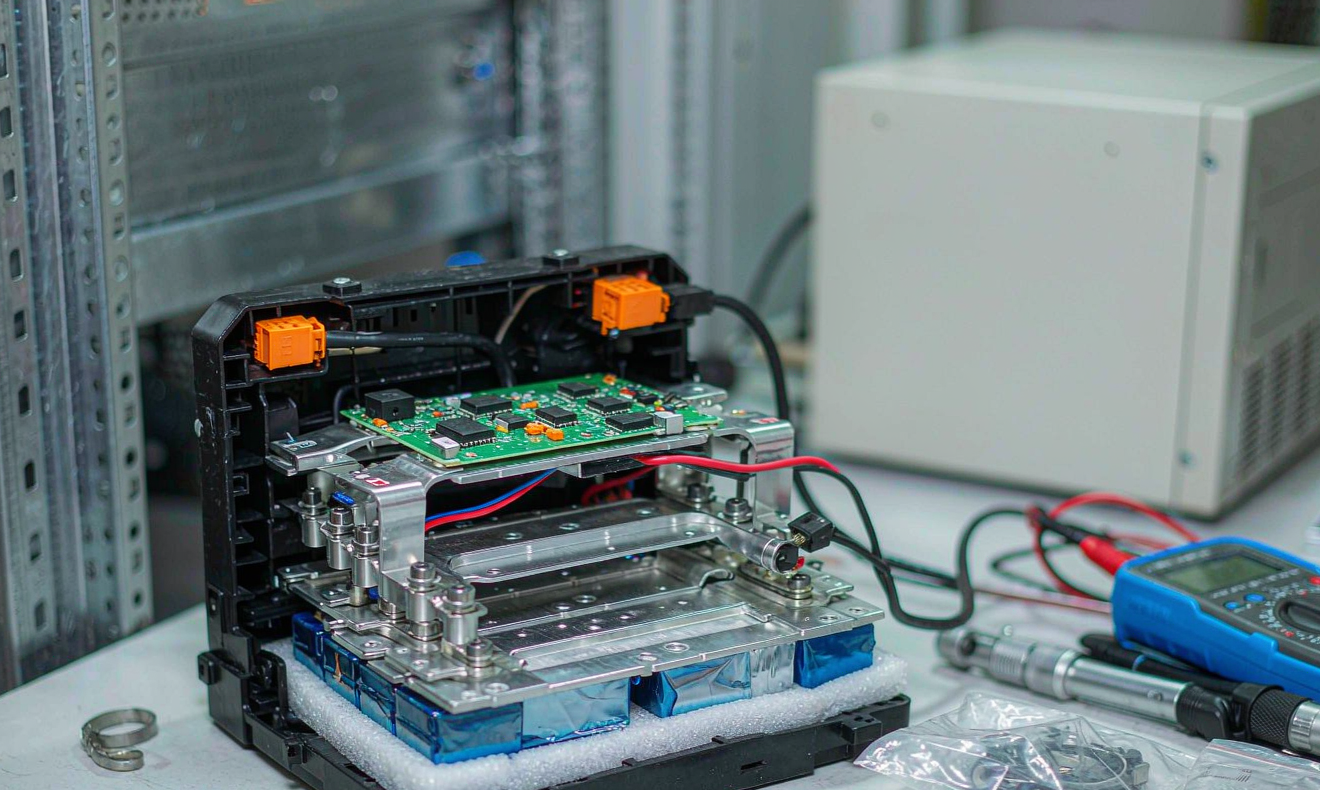
Heat-cold cycles in a server room, especially one with night setback HVAC, will back a busbar loose over the course of a year. Pull a torque wrench on every M6 terminal and verify 8 to 10 N·m. Pull every M5 terminal at 4 to 6 N·m. Any terminal that has lost more than 1 N·m of torque should be re-torqued and marked with a yellow paint pen so you can see drift at the next quarterly. Busbar torque loss shows up as DCIR drift on the affected string long before it shows up as a voltage sag during a real outage.
BMS firmware and event log review
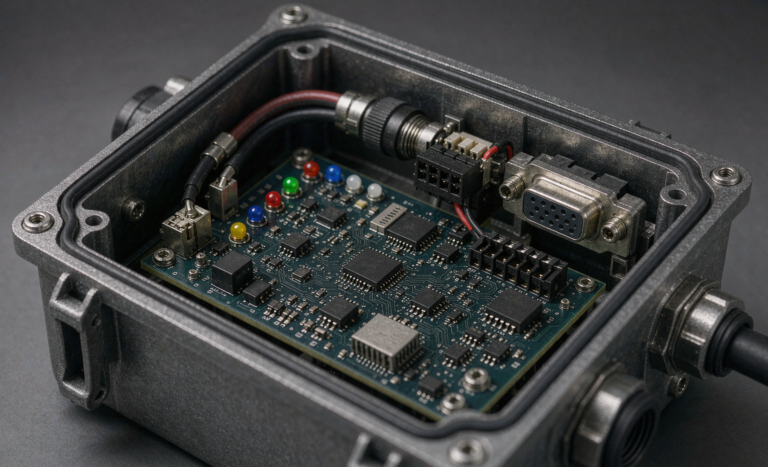
Pull the BMS event log from every module and scan for overvoltage, undervoltage, overtemperature, and balancing errors. Firmware drift on a BMS is rare, but a missed balancing event for six months will leave a 50 mV cell delta that compounds quietly until the runtime test fails. Most BMS vendors push a firmware update every 12 to 18 months. Apply it, then verify the pack relearns its SoC curve on the next full cycle.
The five killer mistakes I see on UPS lithium battery service calls
After ten years and roughly two hundred UPS service calls, I can group the field failures into five buckets. Each is preventable with a disciplined maintenance routine.
- Legacy lead-acid charge profile still enabled. The single most common killer. A 16S LFP pack charged to 55.2 V absorption and held at 53.6 V float looks superficially similar to a 16S lead-acid profile, and many installers never reset the charger after a retrofit. The result is chronic overcharge to 100 percent SoC at elevated voltage, accelerated calendar fade, and dry-out of the cell electrolyte. Always reset the charger to LFP-specific values: 55.2 V absorption, 53.6 V float for 16S LFP, or 55.6 V / 54.0 V for 16S NCM if the application demands the higher energy density.
- Float voltage calibration drift on the charger itself. A four-year-old charger can drift 200 to 400 mV on its float setpoint. That sounds small, but at 16 cells in series it adds 200 mV per cell, pushing a 3.350 V cell to 3.375 V and accelerating calendar fade by 30 percent. Verify float voltage with a calibrated multimeter at the actual battery terminals once per year, not at the charger display.
- Blocked intake filter. A filter clogged to half its open area raises internal cell temperature by 4 to 6 °C. Over a year, that halves calendar life. Replace the filter annually, sooner in dusty environments.
- Connector torque never verified. A loose M6 terminal will read normal on float voltage and only fail during the actual outage when 200 A of inrush hits the busbar. Always torque-check on commissioning and again at every quarterly.
- BMS SoC drift unaddressed. A BMS that has been floating at one voltage for a year will report 100 percent SoC when the pack is actually at 85 percent. When the grid drops and the pack fails at the 15-minute mark of a 30-minute runtime expectation, the operator blames the battery. The battery was never given a chance to relearn its own SoC curve. Force a full cycle once per year.
Annual and five-year inspection milestones
Annual inspection adds insulation resistance testing with a 500 V megohmmeter across the full pack against chassis ground. A healthy reading is above 1 MΩ. Anything below 500 kΩ flags moisture intrusion in the pack housing or a damaged HV wiring jacket. Annual inspection is also the right time to weigh the pack. If the weight has dropped by more than 1 percent from the as-shipped figure, the cells have vented electrolyte and the pack is at end-of-life regardless of what the BMS reports.
At year five on a well-maintained 12v lithium battery or 48 V UPS pack, run a full disassembly inspection: torque every cell-to-busbar joint, replace any connector showing oxidation, replace the fan, replace the filter, re-grease the thermal pads between the cells and the housing. A five-year midlife rebuild typically extends pack life by another five years at 40 percent of the cost of a full replacement.
At year seven, plan replacement. Modern lithium battery manufacturer data sheets are honest about calendar life, and pushing past seven years of float duty is gambling with the runtime test that the next grid event will demand.
Standards that govern UPS lithium battery safety
If you are specifying or auditing a UPS lithium battery rack, these five standards are the ones I check first. UL 1973 covers stationary storage batteries and is the primary North American safety standard for a stationary LFP battery in a UPS application. IEC 62133-2 is the international cell-level safety standard covering mechanical, thermal, and electrical abuse. UN38.3 governs transport of lithium cells by air, sea, and ground. IEC 62619 covers secondary lithium cells for industrial applications including UPS. UL 9540A and NFPA 855 together cover the fire propagation behavior of large stationary installations.
When you receive a new pack, ask the manufacturer for the cell date code, the DCIR curve at 25 °C and 50 °C, and a calendar-life test report at 100 percent SoC and 35 °C over at least 90 days. If the manufacturer cannot produce those documents, you are looking at a NCM battery or LFP module that has not been independently validated for the float duty you are about to put it through. Pick a different vendor.
Frequently asked questions about lithium battery maintenance for UPS systems
How often should I run a runtime test on a UPS lithium battery?
Once per year minimum, ideally aligned with a scheduled maintenance window. A 30 to 50 percent depth discharge to the dummy load is enough to refresh the BMS SoC curve and verify the pack still meets its nameplate runtime. A monthly short discharge of 5 to 10 percent depth is also good practice but is not a substitute for the annual full diagnostic.
What float voltage should I set for a 16S LFP UPS rack?
55.2 V absorption for 30 minutes after a full charge, then 53.6 V float for long-term standby. Some vendors recommend 54.4 V float for reduced calendar fade; check with the cell manufacturer and apply the lower float only if the UPS is not expected to backfeed the load within 100 milliseconds.
Can I replace my lead-acid UPS batteries with lithium without changing the charger?
Almost certainly not. Lead-acid chargers typically float at 2.25 to 2.30 V per cell, which is 54.4 to 55.2 V for a 48 V string. That range overlaps with the LFP float band, but the absorption voltage of a lead-acid charger is often 2.40 V per cell, which is 57.6 V on a 48 V string, far above the LFP maximum of 3.65 V per cell or 58.4 V pack. Always reset the charger to the LFP-specific profile before commissioning a new lithium pack. This is the single most common commissioning mistake and the single most common cause of year-one UPS battery failures.
What is the real service life of a UPS lithium battery?
In well-maintained 25 °C server rooms, plan on five to seven years to 80 percent of nameplate capacity. In 35 °C telecom shelters, plan on four to five years. In conditioned data centers held at 20 °C, an LFP pack can stretch to eight to ten years. Calendar fade at 100 percent SoC is the binding constraint, not cycle count.
Is it safe to retrofit a lithium battery into a legacy UPS cabinet?
Yes, with three caveats. First, reset the charger to the LFP profile. Second, verify the BMS and the UPS inverter are galvanically compatible and that the BMS can interrupt the pack output through a contactor rated for the full UPS short-circuit current. Third, verify the cabinet ventilation path can dissipate the new heat load without raising the cell temperature above 35 °C. Get the manufacturer to sign off on the retrofit in writing.