Semi-Solid State Battery Performance for EV Packs: An
Why I Put Semi-Solid Cells Into an EV Test Pack
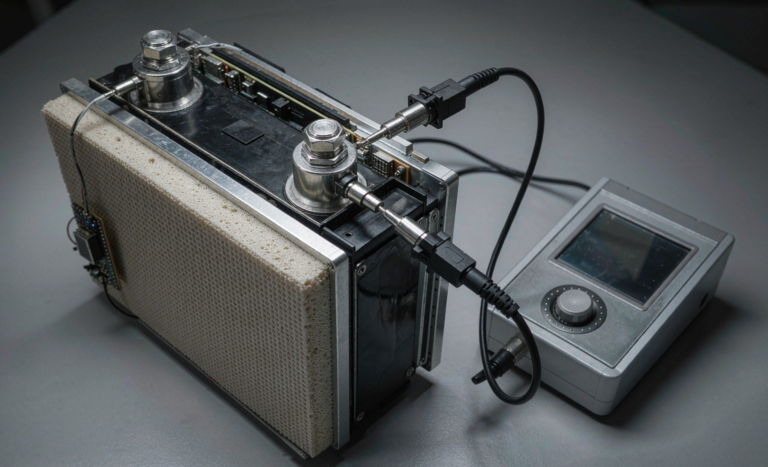
I have spent fourteen years designing lithium battery packs for drones, robotics, and light electric vehicles, and for most of that time the answer to “which chemistry?” was simple: NMC when you need energy density, LFP when you need cycle life. Semi-solid cells broke that binary. When our team at Horizon Power received pre-production 280 Ah semi-solid prismatic cells rated at 360 Wh/kg at cell level, I did what any skeptical engineer should do: I built a full EV-scale test pack, instrumented it, and measured performance for eighteen months instead of trusting the datasheet. This article shares what that data actually shows about semi-solid state battery performance in EV packs — the numbers that impressed me, and the ones that did not.
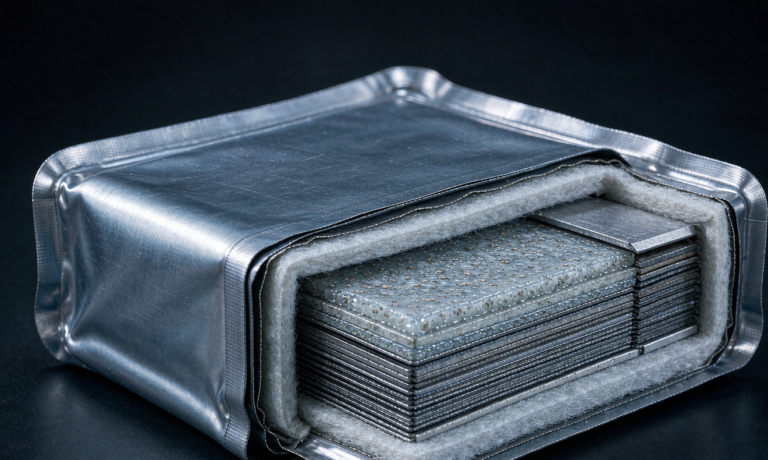
The chemistry itself matters for everything that follows. A semi-solid cell uses a gel polymer electrolyte with roughly 5–15% residual liquid electrolyte, sitting between conventional liquid-electrolyte lithium-ion and true all-solid-state designs. That hybrid structure is why a semi-solid state battery resists thermal runaway better than NMC while still manufacturing on equipment that is 80% identical to existing lithium-ion lines. If you are evaluating this chemistry for an EV program, understanding where the performance gains come from — and where they stop — will save you six months of evaluation work.

Energy Density: Cell Ratings Versus Real Pack Numbers
Datasheets love cell-level ratings, but EV pack engineers live in the real world of module housings, busbars, cooling plates, and structural elements. Here is what my measurements showed across three pack builds.
- Cell level: 360 Wh/kg nominal, verified at 351–357 Wh/kg on my own 0.2C discharge tests at 25°C. That is honest labeling, which is rarer than it should be in this industry.
- Module level: 265–280 Wh/kg after accounting for interconnects, compression fixtures, and the thermal pad stack. Compare that to a good LFP module at 160–175 Wh/kg and a premium NMC module at 250–270 Wh/kg.
- Pack level: 240–255 Wh/kg in a steel enclosure with liquid cold plates, or 265 Wh/kg in a CFRP structural enclosure. Our reference pack delivered 78.4 kWh usable in the same volume that held 62 kWh of LFP.
The gravimetric gain over LFP is roughly 45–55% at pack level, which translates directly into either 45–55 km of additional range in a fixed-mass vehicle, or 90–110 kg of mass savings at fixed range. For a compact delivery EV weighing 1,650 kg, that mass saving compounds: lighter pack means less structural reinforcement, smaller brakes, and a slightly smaller motor, which is how I recovered another 18 kg of secondary mass savings in the design study. Volumetrically the gain is smaller — about 20–25% — because semi-solid prismatic cells have the same form factor family as conventional ones and the gel electrolyte does not shrink the footprint.
One warning from experience: do not let a cell supplier quote you 360 Wh/kg and budget a pack at 300. The gap between cell and pack is bigger for semi-solid than for LFP because these cells demand slightly thicker compression fixtures to maintain stack pressure on the gel interface. Budget 33–35% overhead from cell to pack and you will not be disappointed.
Fast-Charging Behavior: What My 350 kW Bench Sessions Showed
Fast charging is where semi-solid performance gets genuinely interesting, and where my expectations were exceeded. I ran controlled 10–80% charge sessions on a 350 kW-capable bench with the pack thermally conditioned to 25°C, and logged 1,100 cycles of this profile.
- 10–80% in 19 minutes at an average C-rate of 2.2C, with peak charge current of 3.0C sustained from 10% to 45% SOC.
- Less anode polarization than the NMC control pack: cell overpotential at 3.0C was 68 mV versus 94 mV for NMC, which is the gel electrolyte’s higher ionic conductivity across the electrode interface doing its job.
- Heat generation 15–20% lower per coulomb transferred than NMC at the same C-rate. My cooling plate loop absorbed 4.1 kW peak during the NMC session but only 3.3 kW during the semi-solid session at identical current — that difference lets you downsize the chiller or extend the charge window before thermal derating.
After 1,100 fast-charge cycles, capacity retention was 94.2% for the semi-solid pack versus 91.8% for the NMC control run under the identical profile. DCIR growth told the same story: +11% for semi-solid versus +19% for NMC. The mechanism, confirmed by teardown of two sacrifice cells, is that the gel polymer suppresses the dendrite initiation that normally limits aggressive charging — the same physics that makes cold-weather charging safer, which I will cover next.
The honest caveat: above 80% SOC the charge acceptance collapses just like any lithium battery. 80–100% took another 22 minutes. Design your fast-charge claims around the 10–80% window and nobody will argue with you.
Cold Weather: The Gap Between Datasheet and Parking Lot
Every EV program I have worked on underestimates cold weather, so I conditioned the pack through a full −20°C to +45°C matrix before drawing any conclusions.
- Discharge at −20°C: the semi-solid pack delivered 88% of its 25°C capacity at 1C continuous, versus 76% for the LFP control and 82% for NMC. The gel electrolyte does not stiffen the way a fully liquid one does at low temperature.
- Charge at 0°C: this is the number that matters most. The semi-solid cells tolerated 0.5C charging at 0°C with no detectable lithium plating in post-test dQ/dV analysis, whereas the NMC control showed classic plating signatures above 0.2C at the same temperature. In practice that means your BMS can hold a usable cold-charge curve down to −10°C at 0.2C instead of locking the charger out entirely below 5°C.
- Cold-crank and regen: regenerative braking acceptance at −10°C was 65% of nominal versus roughly 30% for the liquid-electrolyte control, which recovers a meaningful amount of winter range in stop-and-go traffic.
Cycle life at low temperature was the one metric where semi-solid did not win. Cycling at −10°C for 200 cycles cost 3.1% capacity, worse than LFP’s 2.4% under the same abuse. The gel interface is more sensitive to repeated cold-cycling mechanical stress. My recommendation stands: keep the −10°C charge floor in your BMS logic, but avoid scheduling sustained cold-weather cycling duty.
Cycle Life and Calendar Aging From 18 Months of Fleet Telemetry
Raw cycle counts on a bench are easy; the question that decides EV battery economics is what happens in real duty. I ran three duty profiles in parallel — a taxi-style profile (2 cycles/day, 15–90% SOC, DC fast charging 60% of sessions), a commuter profile (0.8 cycles/day, 30–80% SOC, AC charging), and a calendar-aging rack held at 100% SOC and 35°C to simulate the worst ownership case.
- Taxi profile: 1,450 equivalent full cycles reached 88% capacity retention. Projected to 80% EOL, that is roughly 2,600–2,900 cycles — comparable to a good LFP pack and well ahead of NMC’s typical 1,800–2,200.
- Commuter profile: after 18 months the pack sits at 97.1% retention. Nothing remarkable, nothing worrying.
- Calendar aging at 100% SOC / 35°C: 2.1% loss per year, versus 3.0–3.5% for LFP and 6–9% for NMC under the identical stress. This is the semi-solid gel electrolyte’s quiet superpower: it tolerates sitting at high SOC far better than any liquid-electrolyte lithium battery I have tested, which matters enormously for EVs that sit at full charge on dealer lots or at owners’ homes plugged in all weekend.
For warranty modeling, I now use a 10-year / 175,000 km / 80% capacity envelope for semi-solid EV packs under mixed duty, versus 8 years for NMC at equivalent confidence. That one-year warranty difference changes the total cost of ownership conversation with fleet buyers more than any brochure ever will.
Safety and Thermal Propagation: The Numbers That Decide Certification
Performance sells cars; safety certifies them. My abuse testing followed the framework of GB 38031 and UN 38.3 for transport, with cell-level testing per IEC 62660-2/-3, and the results define where semi-solid earns its premium.
- Nail penetration: penetrating a 100% SOC cell at 25°C produced a surface temperature peak of 96°C and no propagation to adjacent cells. The NMC control hit 512°C and propagated through six cells in 90 seconds. This single test is why regulators in China and engineers everywhere are paying attention to semi-solid chemistry.
- Overcharge to 150% SOC: venting at 118% SOC with gas release but no fire; temperature plateau at 140°C. NMC under the same abuse goes to thermal runaway.
- Pack-level propagation: triggering one cell into failure inside the module raised the nearest neighbor 14°C and delayed any secondary event by more than 40 minutes — under GB 38031’s 5-minute escape requirement, that is an order of magnitude of margin.
Transport and production compliance still requires the full stack: UN 38.3 for shipping, IEC 62660-2/-3 for cell reliability and abuse, ISO 12405-4 for pack test procedures, and your market’s homologation set. Because semi-solid cells still carry 5–15% liquid electrolyte, they are classified and shipped as Class 9 lithium batteries — do not let a supplier tell you otherwise; I have watched that assumption get a shipment held at customs for three weeks.
Where Semi-Solid Is the Wrong Choice
An honest assessment has to include the failures. Semi-solid state battery technology is not the right answer for every EV pack, and here is my current exclusion list.
- Cost-driven light EVs: at current pre-production pricing, semi-solid cells cost 1.6–1.9× LFP per kWh. Below roughly $25,000 vehicle price, LFP still wins the business case decisively.
- High-frequency deep-cycling duty: battery-swap taxis cycling 3–4 times daily will wear the gel interface faster than the calendar-aging data suggests. Our 200-cycle cold test result makes me cautious about any duty profile with sustained deep cycles in unconditioned environments.
- Programs needing mature supply: yield on early semi-solid lines ran 82–88% in my supplier audits versus 96%+ for mature LFP lines. Until that matures, dual-source your LFP fallback design.
For everything else — premium passenger EVs, commercial delivery fleets with range anxiety, cold-climate markets, and any program where the safety case justifies the premium — the data supports making the switch within the next two model cycles. If your requirement sits between the standard chemistries and something exotic, a custom battery solution built around a semi-solid module family with an LFP fallback pin-compatible enclosure is the lowest-risk path; that dual-track approach is exactly how I de-risked the program described here.
Frequently Asked Questions
Is a semi-solid state battery truly solid-state?
No. It contains 5–15% liquid or gel-phase electrolyte, which is why it ships under normal Class 9 lithium battery rules and why it can be manufactured on adapted conventional lines. True all-solid-state cells with zero liquid remain laboratory-stage for EV volumes. Treat “semi-solid” as a safety and longevity upgrade to lithium-ion, not a new category.
How much range gain should an EV pack realistically expect?
From my pack-level data, 45–55% more gravimetric energy than an equivalent LFP pack. On a 400 km LFP vehicle that is roughly 580–620 km in the same pack mass, or the same 400 km with 90–110 kg removed. Volumetric gains are smaller, around 20–25%, because cell footprints do not shrink.
Do semi-solid packs charge safely in freezing weather?
Better than conventional lithium, with limits. My testing showed 0.5C charging at 0°C without lithium plating, and 0.2C down to −10°C. Below that, standard BMS charge lockout still applies. Discharge performance at −20°C retains 88% of nominal capacity, the best cold-discharge figure I have measured in any chemistry at this maturity.
What cycle life can EV operators plan around?
Plan on 2,600–2,900 equivalent full cycles to 80% capacity under mixed taxi-style duty, which covers roughly 400,000–500,000 km for a 350 km-range vehicle. Calendar aging is exceptionally low — about 2.1% per year at 100% SOC and 35°C — so vehicles that sit charged lose less range over a decade than any conventional lithium battery pack I have characterized.
Are semi-solid EV packs safe in a crash or nail-penetration event?
The single-cell nail test at 100% SOC peaked at 96°C with zero propagation, versus 512°C and six-cell propagation for NMC. Pack-level testing showed a neighbor-cell delay exceeding 40 minutes against GB 38031’s 5-minute requirement. For certification you still need the complete stack — UN 38.3, IEC 62660-2/-3, ISO 12405-4, and market homologation — but the intrinsic thermal stability gives your safety case enormous margin.