Lithium Battery Performance for Power Tools: Pulse-Drain
In twelve years of designing lithium battery packs for cordless tools, I have watched more “failed” batteries get replaced for reasons that had nothing to do with worn-out cells. A drill that bogs down mid-screw, an impact wrench that cuts out on a frozen morning, a circular saw that never quite reaches full RPM — in most of those cases the pack is not dead. It is simply being asked to deliver current in a way its internal resistance, cell chemistry, or protection board was never tuned for. Lithium battery performance for power tools is a pulse-load problem first and an energy problem second, and understanding that distinction is what separates a pack that lasts three winters from one that gets thrown in a scrap bin after eight months.
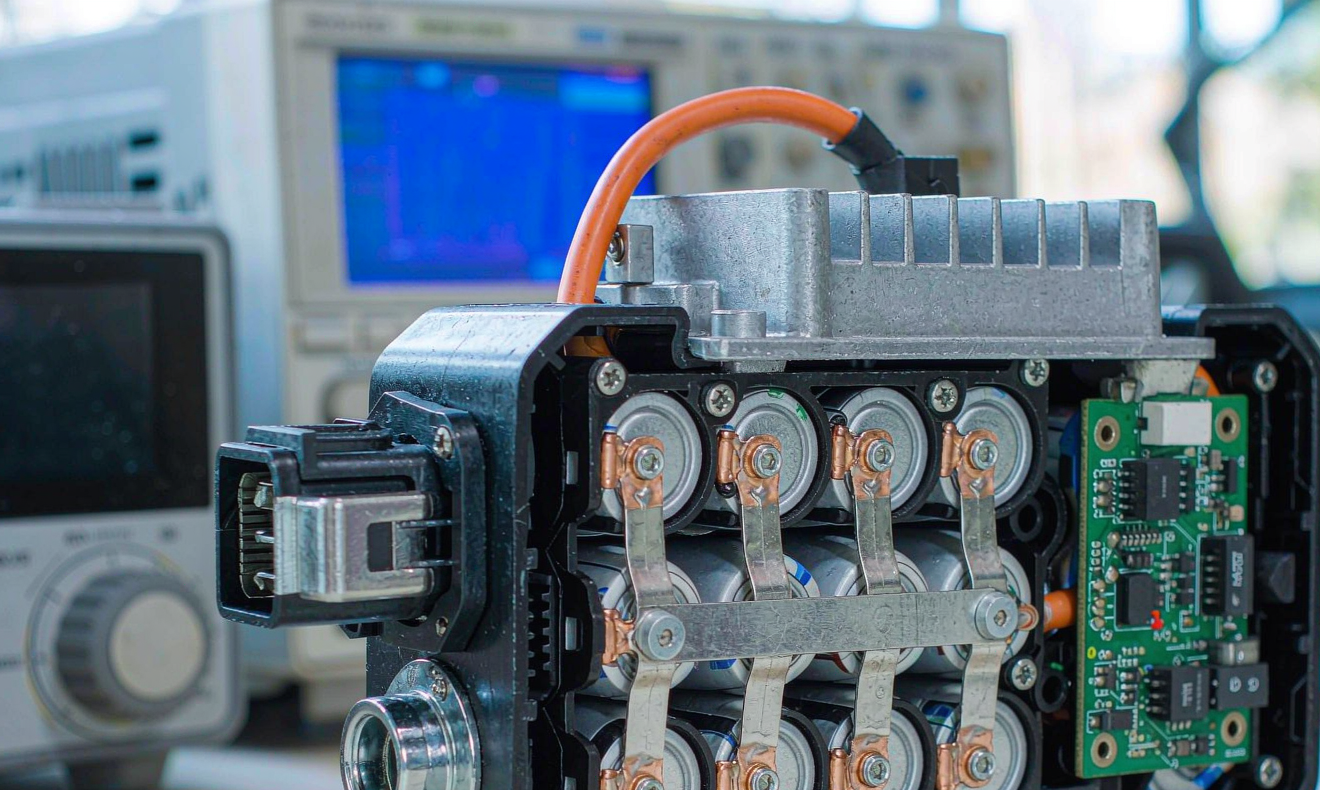
In this article I want to walk through the engineering reality behind power tool battery performance the way we handle it in our lab: voltage sag under pulse loads, cold-start behavior on winter job sites, cell selection trade-offs, thermal management, and the duty-cycle data we collect before we sign off on a pack design. Whether you are an OEM specifying a custom lithium battery solution or a fleet manager trying to understand why your crews burn through packs, the same numbers matter.
Why Pulse Loads Define Power Tool Battery Performance
A power tool does not behave like a flashlight or a laptop. It draws current in violent, short bursts. A brushless impact driver hitting a seized bolt can pull 30–40 amps from a 4 Ah pack for one to three seconds, then drop to near-idle. That is an effective C-rate of 8–10C — far above what most consumer cells are rated to sustain continuously. The pack’s job during that pulse is to hold terminal voltage high enough that the tool’s motor controller does not hit its undervoltage cutoff and shut the tool down mid-task.
This is why I always tell clients that runtime ratings lie a little bit. A 4 Ah pack tested at 0.2C on a cell analyzer will comfortably deliver 4 amp-hours. The same pack driving an impact wrench at 35 A pulses may deliver effectively 3.2–3.4 Ah before the tool’s cutoff triggers, simply because pulse losses eat usable capacity. When we design a lithium battery pack for tools, we characterize it at the real duty cycle, not on a datasheet number.
Three parameters dominate pulse performance:
- DC internal resistance (DCIR) of the cells — typically 8–12 mΩ per high-drain 21700 cell versus 25–40 mΩ for an energy-oriented cell.
- Interconnect resistance — nickel strip, busbars, spot welds, and connector contacts. A poor weld joint can add as much resistance as the cell itself.
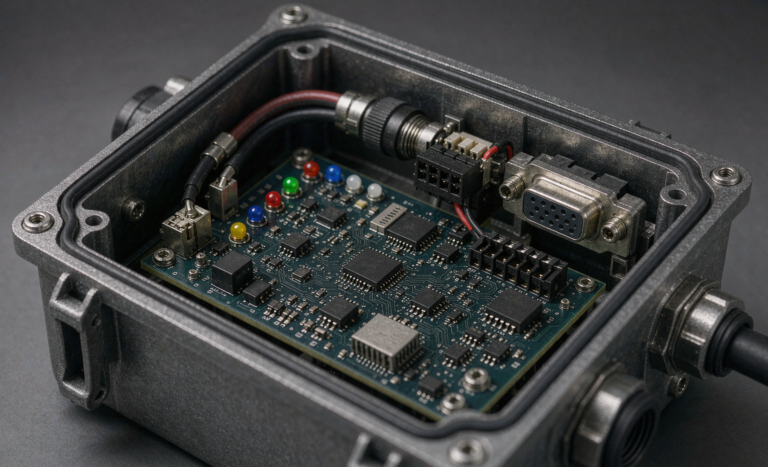
- Protection board limits — overcurrent thresholds and delay windows that must tolerate legitimate pulses without nuisance tripping.
Voltage Sag and Internal Resistance: The Numbers That Matter
Voltage sag is simple physics. When a pack delivers current I through total internal resistance R, the terminal voltage drops by I × R. Consider a realistic 5S2P pack built from high-drain 21700 cells with 10 mΩ per cell. The 2P parallel groups halve per-group resistance to 5 mΩ, five groups in series give 25 mΩ at pack level, and after adding busbars and the BMS sense path we are realistically at 30–35 mΩ. At a 35 A pulse, that is a 1.05–1.2 V instantaneous sag on an 18 V nominal pack.
Now layer in state of charge. A lithium-ion cell at 20% SOC rests around 3.4–3.5 V, so the pack sits near 17 V open-circuit. Subtract the pulse sag and the tool controller sees roughly 15.9–16 V — dangerously close to the 15–16 V undervoltage cutoffs many tool manufacturers program. This is exactly the “my battery is half full but my saw cuts out under load” complaint that lands on our support queue every week.
The fixes are rarely exotic. In order of impact:
- Use low-DCIR high-drain cells (the cell choice alone can cut pack resistance 40–50%).
- Replace nickel strip with copper-nickel composite or stamped copper busbars on high-current paths.
- Widen and thicken PCB traces, and use a connector rated for the true peak current with margin.
- Set the BMS undervoltage cutoff per-cell at 2.5 V with a pulse-aware delay, not a hair-trigger instantaneous trip.
We log every prototype pack through 500 automated pulse cycles — 3 s at rated peak, 10 s rest, repeating — and plot terminal voltage against cycle count. A healthy design shows less than 8% DCIR growth over those 500 cycles; anything worse tells me a weld joint, connector, or cell lot has a problem long before a customer ever feels it.
Cold-Start Torque and Winter Jobsite Behavior
Every power tool engineer learns about cold weather the hard way. Lithium-ion chemistry slows down as temperature drops: electrolyte viscosity rises, charge-transfer kinetics at the electrode interface degrade, and DCIR climbs sharply. In our chamber tests, a typical high-drain 21700 pack shows roughly a 60–80% increase in internal resistance at −10 °C compared with 23 °C, and deliverable capacity drops to about 70–80% of rated.
The symptom on site is distinctive: the tool works fine for the first fastener, then the motor controller cuts power on the second. What happened is that the first high-current pulse heated the cells through their own I²R losses just enough, but the pack started so cold that the first pulse itself sagged below cutoff. The pack is fine; it simply needs a different protection strategy.
Approaches that work in production:
- Soft-start pulse warming. The tool briefly pulses the motor at low duty cycle, using resistive heating to bring cells above 0 °C before full power is allowed. Several premium tool platforms do this in firmware; it costs nothing in hardware.
- Temperature-aware cutoffs. A BMS with an NTC on the cell block can relax the undervoltage threshold slightly at low temperature, since the sag is predictable, while enforcing a hard block below −20 °C to prevent lithium plating on recharge.
- Cell selection. Cells optimized for low-temperature pulse discharge — often with different electrolyte formulations — cost more per amp-hour but hold 85–90% of room-temperature pulse capability at −10 °C.
One warning I give every OEM: never fast-charge a pack below 0 °C. Plating metallic lithium onto the anode is permanent, cumulative, and in the worst case a safety event. Charging below freezing must be blocked in hardware, not just firmware — I have seen a firmware bug survive three engineering reviews and reach production.
Cell Selection: 18650, 21700, and the Pouch Question
The cylindrical cell formats dominate this market for good reasons, but the trade-offs are worth spelling out. High-drain 18650 cells remain attractive for compact 12 V-class tools: mature supply chains, 15–20 A continuous ratings, and excellent cost per watt-hour. For 18 V and 36 V platforms, 21700 cells have largely won: 4–5 Ah per cell with 25–35 A pulse capability means a 2P design hits the 40 A+ peaks brushless tools demand while keeping pack resistance low.
Pouch cells offer superb energy density and flexible packaging, and we do use them in slim form-factor packs. But for tools, their tab connections and softer mechanical construction demand more careful vibration and drop engineering — job sites punish packs in ways an engineer’s desk never will. IEC 60068-2-6 vibration profiles and repeated 1 m drops onto concrete are part of every tool pack qualification we run, and cylindrical cells on spot-welded busbars tolerate that abuse more forgivingly.
A practical selection matrix we use:
- 12 V compact tools: 18650, 3S1P or 3S2P, 2.0–4.0 Ah, optimized for weight.
- 18 V mainstream: 21700, 5S2P, 4.0–8.0 Ah, balanced energy and pulse capability.
- 18 V high-torque / 36 V: 21700, 5S3P or dual 5S2P in series, 6.0–12.0 Ah, priority on DCIR and thermal headroom.
Thermal Management and Duty-Cycle Endurance
Heat is the silent killer of cycle life. A pack cycled gently at 20 °C can reach 800+ cycles to 80% capacity; the same pack repeatedly pushed to 55–60 °C internals during heavy demolition work can lose 20% capacity in fewer than 300 cycles. High-drain pulses generate I²R heat in every resistive element, and tools rarely give the pack much surface area or airflow.
In pack design we attack this with an aluminum heat spreader bonded to the cell block, thermally conductive gap fillers between cells and housing, and — critically — firmware duty-cycle limits in the tool. The best implementations derate maximum current as cell temperature rises: full torque below 45 °C, tapered limits to 60 °C, hard cutoff above. Users experience this as “the tool slowed down,” which is infinitely better than cooking the cells.
For fleet durability data, we run a simulated jobsite day: 60 heavy cut/sink cycles per hour for six hours, with realistic idle gaps, at 35 °C ambient. Packs that survive 90 such days with under 15% capacity fade pass. That test has rejected more “paper-specified” designs than any datasheet review ever has.
BMS and Protection Tuning for High-Drain Packs
A protection board tuned like a laptop pack will ruin a tool pack. Overcurrent thresholds must sit well above legitimate working pulses — for a 40 A-peak platform, we typically set a 70–80 A hard limit with a 50–150 ms window, so a brief stall spike trips nothing but a true short cuts fast. Cell balancing matters less per-cycle on pulse-duty packs, but top-of-charge balance keeps the highest cell from hitting 4.2 V before its siblings, and asymmetric aging shows up first as reduced usable capacity.
Fuel gauging deserves its own mention. Coulomb counting alone drifts badly under pulse loads with varying efficiency; combining it with voltage-based correction at rest points, and ideally cell temperature input, keeps the gauge credible within 5%. Nothing erodes user trust faster than a gauge that says 40% while the tool is already cutting out.
Compliance: UN38.3, IEC 62133-2, and UL 2595
No lithium battery for power tools ships legally or responsibly without the certification spine in place. UN38.3 governs transport — altitude, thermal, vibration, shock, external short, impact, and overcharge testing — and applies to every pack and its cells. IEC 62133-2 is the baseline safety standard for lithium cells and batteries in portable applications and is the reference most global markets recognize. UL 2595 specifically covers battery packs for portable power tools and is frequently required by North American retailers and insurance underwriters.
From experience: design the certification path in from day one. Reworking a pack to add vent spacing, fuse coordination, or an approved cell change after a failed test round costs multiples of doing it right initially, and failed rounds burn three to five months each.
Practical Takeaways for Buyers and OEMs
If you are specifying or buying power tool lithium battery packs, here is the short list I would check before anything else: cell DCIR at your real operating temperature (not 23 °C only), pack-level resistance budget including interconnects, BMS cutoff strategy under pulse loads, low-temperature charge lockout in hardware, thermal derating firmware coordination with the tool maker, and a duty-cycle endurance test report rather than a single cycle-life number. A supplier who can show you pulse-cycle voltage logs and winter chamber data is a supplier whose packs will still be turning bolts in year three.
Frequently Asked Questions
Why does my power tool battery cut out even when the gauge shows charge remaining?
Almost always voltage sag. Under a heavy pulse, the pack’s internal resistance drops terminal voltage below the tool’s undervoltage cutoff, and the controller shuts down to protect cells. It is worst at low state of charge, cold temperature, or with aged packs whose resistance has grown. The fix is lower-resistance cells and interconnects — or a tool-side cutoff strategy that tolerates brief sags.
What is the difference between high-drain and energy cells for tools?
High-drain cells trade some capacity for much lower internal resistance and higher rated current — think 3.6 Ah at 30 A pulse versus 5 Ah at 10 A. For tools, where 8–10C pulses are normal, high-drain cells deliver more usable energy despite the lower nameplate rating, because less capacity is lost to sag and premature cutoff.
Can I store power tool batteries in a cold van overnight?
Storage at low temperature is actually gentle on lithium-ion — the problem is using or charging them cold. Let packs warm above 0 °C before charging (charging below freezing causes lithium plating), and expect reduced pulse performance until cells warm up. Many premium chargers refuse to start below 0 °C for exactly this reason.
How many cycles should a quality power tool battery last?
A well-designed high-drain pack should deliver 500–800 full cycles to 80% remaining capacity under realistic pulse duty, which typically translates to two to four years of daily professional use. Numbers dramatically higher than that assume gentle discharge rates no tool ever produces.
Is a bigger amp-hour pack automatically better performance?
Not automatically, though usually yes — more parallel cells mean lower pack resistance and better pulse capability alongside more runtime. But cell quality matters more: a 4 Ah pack built from premium low-DCIR cells will outperform a 5 Ah pack built from commodity energy cells on any real tool.
What certifications should I require from a power tool battery supplier?
At minimum UN38.3 (transport) and IEC 62133-2 (cell and battery safety); add UL 2595 for North American tool packs. Ask to see the actual test reports for the cell model in your pack, not just a certificate for a similar cell — cell-level test reports are where quality suppliers separate themselves.