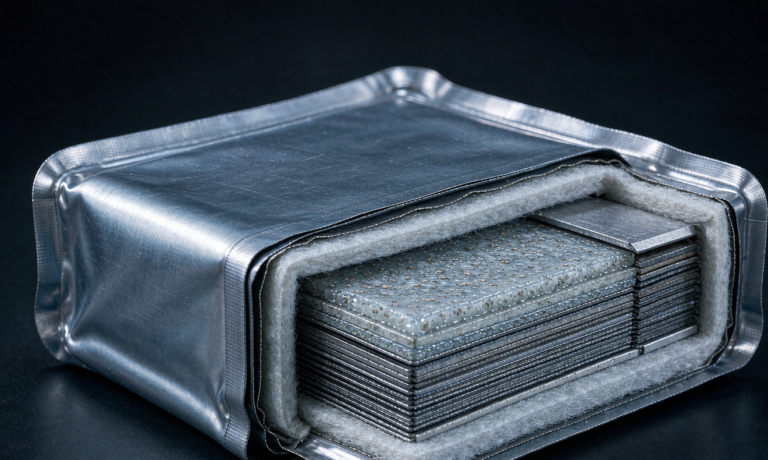
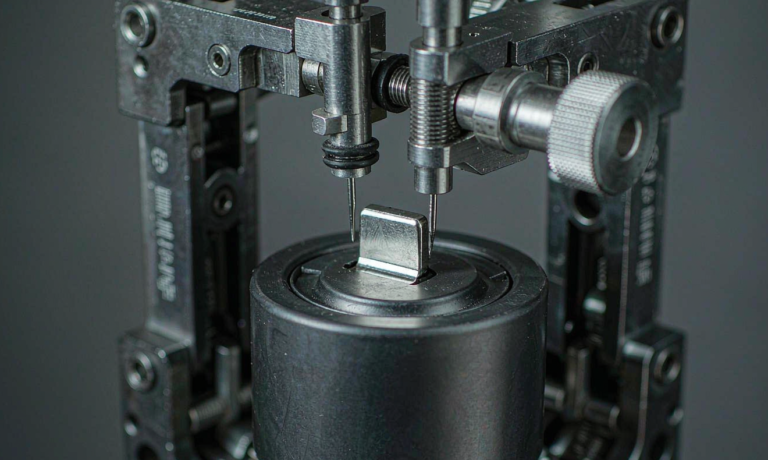
Semi-Solid State Battery Cost Optimization for Robotics (2)
Three years ago, a warehouse automation client asked me a question that has shaped how I quote every robotics project since: “We believe semi-solid is safer. Why does your pack cost forty percent more than the lithium-ion option?” I did not have a clean answer then. Today, after shipping semi-solid state battery packs into autonomous mobile robot (AMR) fleets, legged robots, and warehouse picker platforms, I can answer it line by line — and more importantly, I can show where that cost gap shrinks to under fifteen percent, and where it disappears entirely over a five-year ownership window.
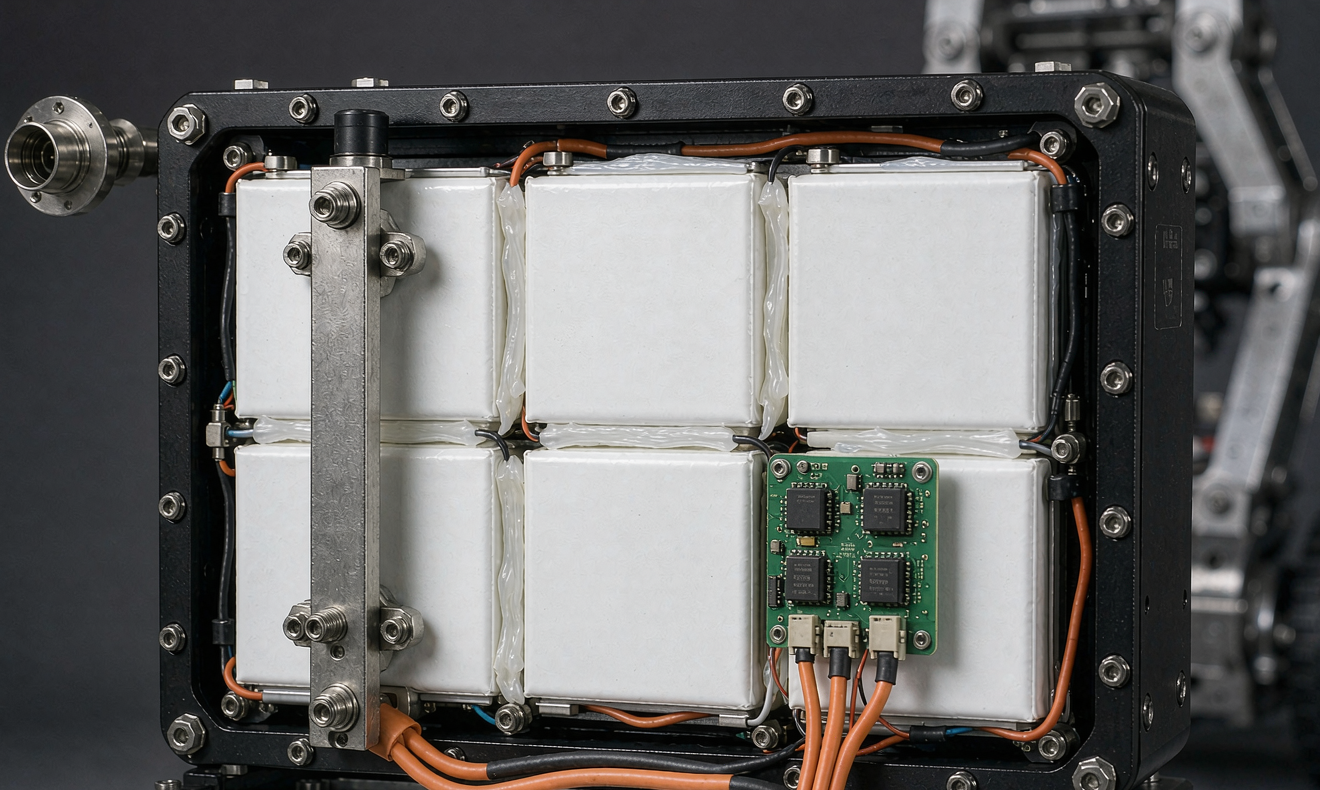
In this article I will break down semi-solid state battery cost optimization for robotics the way we actually do it on the bench: cell-to-pack economics, yield learning curves, right-sizing, five-year total cost of ownership, and the compliance spending that is not optional. If you are evaluating a semi-solid state battery pack against a conventional lithium battery for a robot fleet, this is the math your supplier should be showing you — and if they are not, ask why.
Why Cost, Not Chemistry, Decides Semi-Solid Adoption in Robotics
The robotics market does not buy chemistry. It buys uptime per dollar. A semi-solid state battery uses a gel or semi-solid electrolyte instead of the fully liquid electrolyte in conventional lithium-ion cells, which removes most of the flammable solvent from the cell. That translates into real engineering benefits: higher nail-penetration survival rates, better tolerance of mechanical abuse, lower thermal runaway propagation risk, and in many cell formats the ability to pass abusive tests that would fail a standard liquid-electrolyte cell.
But every one of those benefits arrives with a price tag. Semi-solid cells today typically carry a 25–45% premium at the cell level compared with mainstream LFP or NMC cells of equivalent capacity, depending on volume commitments and format. For a warehouse AMR that runs two shifts a day and swaps packs every four hours, that premium lands on a bill of materials that is already tightly budgeted. My job as a pack engineer is not to argue the chemistry is worth it — it is to engineer the premium down until the total cost of ownership makes the decision for the customer.
That is the right frame for cost optimization: never compare cell prices, always compare cost per delivered kilowatt-hour over the fleet’s service life, including labor, downtime, replacement cycles, and risk. When you model it that way, the picture changes dramatically, and I will show you the numbers later in this article.
Where the Money Goes: A Cell-to-Pack Cost Breakdown
When a robotics OEM asks us why a semi-solid pack costs what it costs, we open the BOM. A typical 48 V, 40 Ah AMR pack breaks down roughly like this:
- Cells: 55–65% of pack cost. Semi-solid prismatic or pouch cells carry the chemistry premium. This is the line item most buyers fixate on, and the one least within a pack maker’s control at low volumes.
- BMS and electronics: 12–18%. Cell monitoring, balancing, current shunts, CAN communication, and protection FETs. For robotics we usually specify CAN 2.0B with a documented register map so the robot’s main controller can read SoC, SoH, and fault codes directly.
- Thermal management: 8–12%. Aluminum cold plates, thermal interface materials, and in high-duty designs, liquid cooling loops. Semi-solid cells tolerate wider temperature windows, which sometimes lets us delete active cooling entirely — an immediate saving.
- Mechanical structure: 8–12%. Enclosures, busbars, vibration-rated fasteners, and gaskets. Warehouse floors punish packs with shocks and constant vibration, so we do not cheap out here, but we do design for standard hex hardware over custom machined parts.
- Assembly, test, and scrap: 8–12%. Every pack passes end-of-line functional test, hipot, and capacity verification. Scrap and rework are hidden costs that disciplined design can shrink.
Two observations follow from this breakdown. First, only 55–65% of the pack carries the semi-solid premium — the rest is engineering content that a competent pack house optimizes the same way regardless of chemistry. So a 35% cell premium becomes roughly a 20–23% pack premium before any design work. Second, in every robotics project we have shipped, we have recovered 5–10 points of that premium through the levers in the rest of this article.
Yield and Learning Curves: The Real Price Curve Nobody Quotes
Cell pricing sheets lie by omission. They quote today’s price, not the price you will pay when your volume actually ships. Semi-solid cell manufacturing is roughly where lithium-ion was fifteen years ago: yields are climbing, and each generation of production equipment drops cost per Ah meaningfully. In our own purchasing history, semi-solid cell prices have declined on the order of 8–12% per year over the past three years as cell makers ramp larger coating and stacking lines.
For a robotics OEM, this creates a contracting opportunity. If you sign a volume framework with scheduled price-downs — we routinely structure 24-month agreements with 5–8% annual cell price step-downs tied to published benchmarks — you capture the learning curve instead of the spot market. On a 500-unit AMR fleet, that alone can be worth tens of thousands of dollars over the contract life.
The same logic applies inside the pack house. First-article builds of any custom battery solution run expensive: engineering NRE, test fixture development, and low-yield early lots. By the third production lot, our first-pass yield on a mature semi-solid robotics pack design typically exceeds 98%, and the amortized NRE is a rounding error. Buyers who evaluate cost on the pilot lot, without an NRE amortization schedule, systematically overestimate the steady-state price.
Right-Sizing the Pack: Overspecification Is the Most Expensive Habit
The single largest saving we deliver in semi-solid robotics projects has nothing to do with chemistry negotiation. It is stopping customers from buying capacity they do not use. AMR duty cycles are remarkably consistent: route lengths are fixed, payload is known, charging windows are scheduled. Yet the default instinct is to spec the pack for the worst-case day of the year plus 30% margin.
On one recent project, the customer’s draft requirement was 55 Ah. We instrumented their pilot robot for two weeks and measured actual consumption: a 95th-percentile shift used 31 Ah, and the deepest discharge we ever recorded was 36 Ah. We shipped a 40 Ah pack with a 20% floor on usable depth of discharge — roughly 32 Ah usable — and the fleet has never pulled a robot off route for low battery. That right-sizing deleted roughly 27% of the cell BOM. At semi-solid cell prices, that saving is far larger than at LFP prices, which makes disciplined sizing disproportionately valuable on premium chemistry.
Semi-solid chemistry gives you a second right-sizing lever: thermal headroom. Because these cells handle internal heat generation and cold environments more gracefully than many liquid-electrolyte designs, we can often reduce cooling mass, simplify venting, and shrink enclosure volume. On one legged-robot pack, deleting the fan and heatsink assembly removed 340 grams and 9% of pack cost. On a robot, weight savings compound — less mass to carry means less energy per route, which can justify trimming another cell in the next design iteration.
Five-Year TCO: Where Semi-Solid Quietly Wins
This is the analysis I insist every fleet buyer sees. Take a 60-robot AMR fleet, two shifts per day, 330 operating days a year. Conventional lithium packs in this duty cycle typically reach end of useful life — 80% capacity — in three to four years. The semi-solid packs we ship into the same cycle carry cycle-life ratings 30–50% higher, conservatively reaching five years or 2,500+ equivalent full cycles with capacity to spare.
Model it honestly and three cost lines change. First, replacement: the conventional fleet buys one full pack refresh mid-window; the semi-solid fleet does not. On 60 robots at a pack price of roughly $1,800 versus $2,300, the conventional fleet spends $108,000 on replacements that the semi-solid fleet avoids — more than erasing the initial $30,000 premium. Second, downtime: every pack swap event is a maintenance bay occupied and a robot idle; a fleet that does not refresh packs mid-life simply does not pay that labor. Third, residual value: semi-solid packs that exit robot duty with 75–80% capacity remaining are attractive candidates for second-life stationary storage, which our logistics customers increasingly monetize through buy-back programs.
Add the risk line, which accountants hate and insurance underwriters increasingly do not: semi-solid cells’ abuse tolerance reduces the probability of a thermal event that writes off a warehouse aisle. You may never see it on a spreadsheet line, but your insurer may — several European fleet operators we work with now receive premium credits for packs carrying enhanced abuse-test documentation.
A Practical Cost-Down Roadmap for Your Next Robotics Pack
When a client engages us for cost optimization on a semi-solid state battery program, we run a fixed sequence. It works, and you can hold any qualified supplier to it:
- Step 1 — Duty-cycle instrumentation. Two weeks of real current and voltage logging on the pilot robot. Every sizing decision downstream depends on measured data, not the sales team’s worst case.
- Step 2 — Cell format selection. Standard formats from the cell maker’s catalog beat custom formats on price every time. Custom form factors only pay back above roughly 50,000 packs per year in our experience.
- Step 3 — Electrical right-sizing. Trim Ah to the measured 95th-percentile shift plus a defined SoC floor, and set the voltage window with the motor drive engineer in the room, not after the fact.
- Step 4 — Thermal simplification. Model heat generation at the real duty cycle; semi-solid tolerance often lets you delete fans, reduce cold-plate area, or raise the acceptable ambient band.
- Step 5 — DFM review. Standard fasteners, one enclosure gasket instead of three, busbar bend radii the press brake likes, and connector choices your contract manufacturer already stocks. Boring, and worth 4–7% of pack cost.
- Step 6 — Contract structure. Volume framework with scheduled cell price step-downs and NRE amortization written explicitly into unit pricing.
Executed together on real projects, these six steps have consistently closed 40–60% of the initial semi-solid premium before the first production lot ships.
Compliance Spending You Cannot Optimize Away
I always tell clients which costs are real and non-negotiable, because cutting them is how projects fail six months later. Every robotics lithium battery — semi-solid included — that ships internationally needs UN38.3 transport testing. Robots that carry humans nearby or operate in public spaces push you toward IEC 62133-2 cell-level certification, and fixed industrial applications toward IEC 62619. If your robot exports to North America, UL 2271 for light electric vehicles or the applicable UL evaluation for industrial trucks may apply, and EMC behavior of the BMS falls under your system-level testing.
Budget $15,000–40,000 and three to five months for the certification stack on a new pack design. The cost optimization here is not avoidance — it is choosing a cell and pack architecture with existing, transferable certifications. A semi-solid cell that already holds IEC 62133-2 and UN38.3 lets you certify the pack with system-level tests instead of re-running cell abuse sequences, which is both cheaper and faster. Ask for the cell certificates before you fall in love with a datasheet.
Conclusion: Buy Chemistry on Cost per Delivered Kilowatt-Hour
Semi-solid state batteries for robotics are not cheap, and pretending otherwise wastes everyone’s time. But cell price is the wrong number, repeated too often. The right number is total cost per delivered kilowatt-hour over your fleet’s service life — and when you size packs from measured duty cycles, capture the yield learning curve in your contracts, simplify thermal and mechanical design, and monetize second-life capacity, semi-solid frequently wins that comparison outright. The fleets adopting this chemistry today are not paying a safety premium; they are buying a five-year battery that their competitors will replace twice. That is what cost optimization actually looks like from the engineer’s side of the table.
Frequently Asked Questions
How much more expensive is a semi-solid state battery pack than a standard lithium battery for robots?
At the cell level, expect a 25–45% premium at current volumes. At the pack level, after standard engineering content is included, the premium typically compresses to 20–25%. After duty-cycle right-sizing and thermal simplification on a real project, we routinely close it to 10–15%, and over a five-year ownership window the semi-solid pack is frequently cheaper in total cost because it avoids a mid-life pack replacement.
Can semi-solid cells reduce the cost of cooling systems in mobile robots?
Often, yes. Semi-solid cells tolerate wider temperature windows and abusive cycling better than many liquid-electrolyte cells, which allows pack designers to delete forced-air cooling, shrink cold plates, or widen the specified ambient range. On one legged-robot program this removed the entire fan and heatsink assembly — about 9% of pack cost and 340 grams of mass the robot no longer carries.
Do semi-solid battery packs need UN38.3 certification for shipping?
Yes. UN38.3 transport testing applies to lithium-based cells and batteries regardless of electrolyte state, and it is a prerequisite for air and sea freight. Choosing a semi-solid cell that already holds UN38.3 and IEC 62133-2 certificates significantly reduces the time and cost of certifying your finished pack.
What is the realistic cycle life of semi-solid cells in warehouse AMR duty cycles?
The packs we ship into two-shift warehouse duty are rated at 2,500+ equivalent full cycles to 80% capacity, roughly 30–50% more than the conventional cells they replace in the same duty cycle. Real fleet data over three years of deployment has tracked those ratings conservatively, which is what makes the five-year TCO case work without a mid-life pack refresh.
Is a custom battery solution always more expensive than an off-the-shelf pack?
Not over the fleet’s life. Off-the-shelf packs force you to buy the nearest larger capacity and voltage, which means paying for unused Ah on every unit. A custom battery solution sized from measured duty-cycle data often uses fewer cells per pack, and at semi-solid cell prices that saving usually pays back the engineering NRE within the first 100–200 units on mid-volume robotics programs.
How should I structure purchasing contracts to capture falling semi-solid cell prices?
Sign volume frameworks of 18–36 months with scheduled price step-downs tied to objective benchmarks, explicit NRE amortization in unit pricing, and capacity reservation clauses. Semi-solid cell prices have been declining roughly 8–12% annually as production scales; a structured contract captures that curve, while spot purchasing hands the benefit to the next buyer after you.