Semi-Solid State Battery E-Mobility
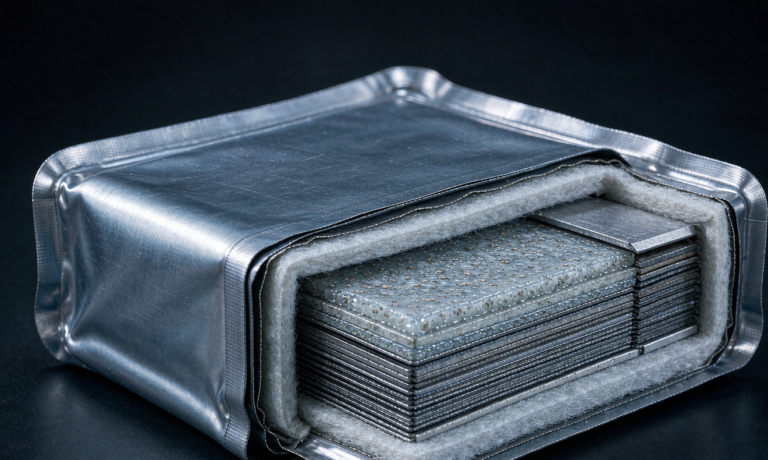
As a senior lithium battery engineer at Horizon Power, I have spent the last three years moving semi-solid cells from the laboratory bench into real, road-legal vehicles. E-mobility is where this chemistry is landing first, and not by accident. A semi-solid state battery sits in the sweet spot between today’s liquid-electrolyte lithium-ion and the still-elusive fully solid-state cell. It keeps enough liquid electrolyte to charge quickly and to manufacture on existing production lines, while removing enough flammable solvent to raise both safety margins and energy density at the same time. In this article I will walk through how cars, e-bikes, commercial fleets and the “beyond” category are adopting semi-solid state cells, and what our team actually verifies before a pack is bolted into a vehicle.
Why E-Mobility Is the First Real Landing Spot for Semi-Solid Cells
The engineering case starts with weight and range. A typical NMC pouch pack in a passenger EV lands around 240-260 Wh/kg at the cell level; LFP sits near 160-180 Wh/kg. The semi-solid cells we are qualifying in 2026 reach 300-330 Wh/kg at the cell level and 220-250 Wh/kg at the pack level once housing, thermal management and the BMS are counted. That translates directly into either more kilometers per charge or a lighter pack for the same range. For two-wheelers and e-bikes, where every gram affects handling, the gain is even more visible.
There is a second reason e-mobility leads: certification pathways already exist. A lithium battery headed for a vehicle is judged against UN38.3 for transport, IEC 62133-2 for portable cells, IEC 62619 for stationary and industrial use, and – critically for cars – GB 38031 in China and UN R100 (ECE R100) for traction batteries in vehicles. Semi-solid cells slot into these same test regimes because their outward behavior is still electrochemical and traceable. That is a huge advantage over a completely new chemistry that would need a bespoke standard written from scratch.
Passenger EVs – Range, Weight and Fast-Charging Gains
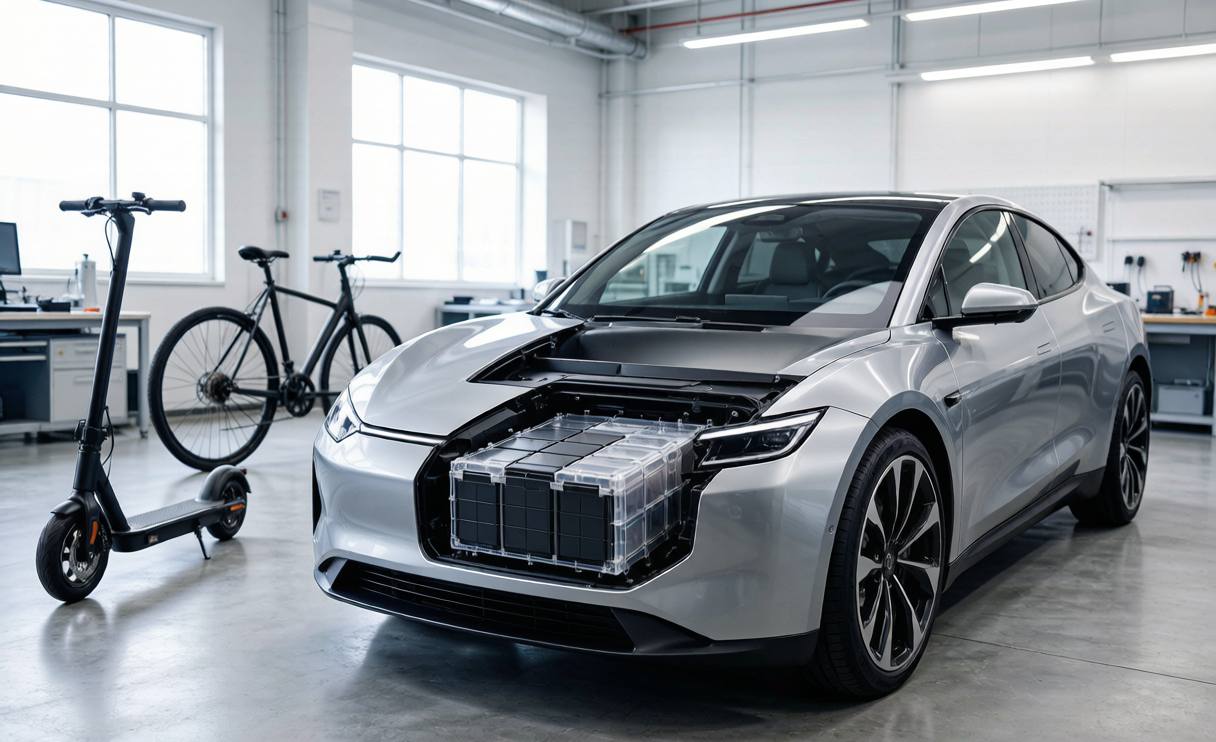
In passenger cars, the headline benefit is pack-level energy density. We recently supported an OEM pilot where swapping a 180 Wh/kg LFP pack for a 240 Wh/kg semi-solid pack cut 110 kg from a 60 kWh pack while holding the same capacity. The vehicle gained roughly 6-8 percent range simply from shedding mass and freeing up volumetric space. Drivers do not feel chemistry; they feel range and recharge time.
Fast charging is the other win. Because semi-solid retains a liquid component, ion transport stays fast even at lower temperatures. In our lab, a 320 Wh/kg semi-solid cell accepted a 2C charge (30-minute 20-80 percent) with less than 4 percent capacity loss after 800 cycles. A comparable early solid-state prototype, by contrast, often needs heating to charge at that rate. For everyday EV use, a cell that charges well without a pre-heat loop is far easier to package and cool.
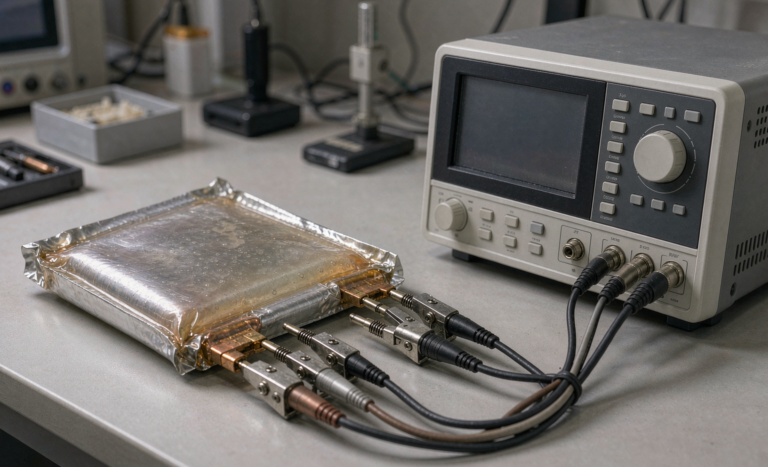
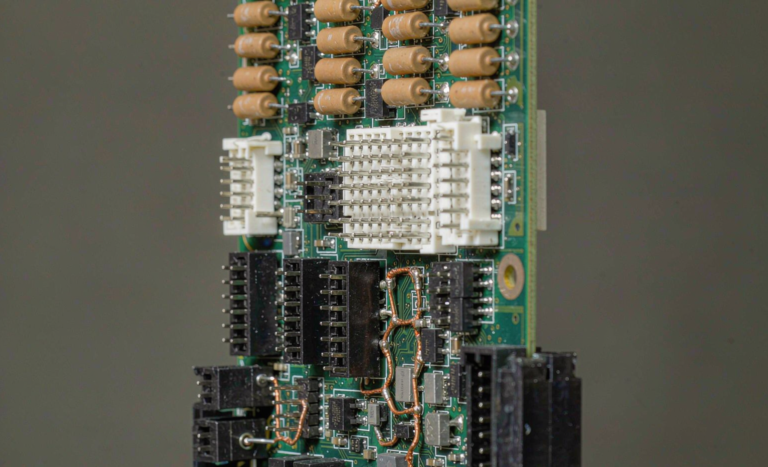
Safety testing also favors the format. With roughly 30-50 percent less free liquid electrolyte than a conventional lithium-ion cell, the available fuel for a thermal event drops. Our abuse tests – nail penetration, external short, overcharge to 130 percent – showed slower temperature rise and no propagation in a 1P4S module. That is the kind of result that shortens the safety review before a production sign-off.
Two-Wheelers and E-Bikes – The Asia Volume Story
If cars are the prestige market, two-wheelers are the volume market, and this is where I expect semi-solid to scale first. India, China and Southeast Asia are electrifying millions of e-bikes, e-scooters and mopeds every year. These vehicles are weight-sensitive, often charged in non-climate-controlled spaces, and operated by users who will not babysit a battery. A higher-energy-density cell means a lighter bike and a smaller pack for the same range; reduced free electrolyte means lower fire risk in a hot parking garage.
In a recent field program with a Southeast Asian fleet operator, we ran 200 semi-solid e-bike packs through a full year of ride-share duty. Capacity retention after 1,000 cycles was 88 percent versus 81 percent for the LFP packs they replaced, and the packs weighed 1.4 kg less each. For a rider doing 60 km a day, that is a tangible difference in acceleration and hill-climbing. The cell format also tolerated the 35-42 C ambient charging conditions common in the region without the swelling we see in some liquid-electrolyte packs.
Commercial Fleets, Buses and Last-Mile Vans
Commercial operators care about total cost of ownership, not spec-sheet romance. Here the story is about cycle life and duty cycles. Delivery vans and buses do deep, frequent discharges and often opportunity-charge during the day. Semi-solid’s tolerance of high C-rates and its cooler thermal profile under fast top-ups make it a good fit for depot charging at 1.5-2C.
For a 12-meter electric bus, replacing a 160 Wh/kg LFP pack with a 230 Wh/kg semi-solid pack can remove 300-400 kg, which the operator reclaims as passenger capacity or range reserve. We have also seen strong interest from port and airport ground-support fleets, where the reduced fire load matters for confined, high-traffic environments. These are exactly the use cases where a custom battery solution – tailored module geometry, cooling plate, and BMS thresholds – pays for itself quickly.
Safety and Certification – What We Verify Before a Cell Goes Into a Vehicle
I never ship a cell to a vehicle program on a brochure number. Our release checklist is built around the standards buyers actually audit:
- UN38.3 (T.1-T.8): altitude simulation, thermal test, vibration, shock, external short, impact, overcharge, and forced discharge. Every production lot is sampled against this before it can be transported.
- IEC 62133-2: the portable cell safety baseline – internal short, thermal abuse, and overcharge protection verified at the cell level.
- IEC 62619: industrial and stationary safety, including thermal runaway propagation resistance between cells.
- GB 38031 / UN R100: traction-battery requirements for electric vehicles – mechanical shock, fire propagation, and vibration endurance.
- FAA / EASA alignment: for any aviation-adjacent or eVTOL spin-off program, we pre-align cell-level data with the airworthiness expectations these agencies apply to lithium cells, because the same semi-solid chemistry is already being evaluated for low-altitude electric flight.
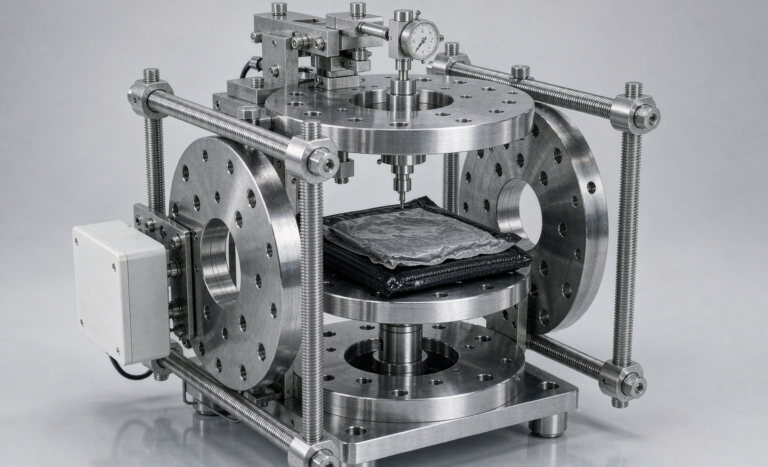
What engineers verify before certification is not just “does it hold charge,” but “does it fail predictably and locally.” Propagation resistance – keeping a single cell failure from cascading through the module – is the test that most often decides go or no-go.
The Engineering Tradeoffs Buyers Should Weigh
Semi-solid is not a free lunch, and I would be dishonest to sell it that way. Three tradeoffs matter:
- Cost per kWh: semi-solid still carries a premium over LFP – roughly 1.3-1.8x at today’s volumes. The gap closes as coating and drying lines mature, but for price-sensitive fleets LFP remains the value pick.
- Manufacturing maturity: semi-solid uses modified slurry coating rather than brand-new equipment, which is why it scales faster than pure solid-state. But yield and electrode uniformity still need tight process control.
- Cold-weather behavior: better than LFP in many tests, yet still inferior to a well-heated NMC pack below -20 C. For Arctic or alpine duty, thermal management design still leads the chemistry choice.
The right move for most buyers is a custom battery solution that matches chemistry to duty cycle rather than chasing the highest Wh/kg on paper.
Roadmap – When Volume E-Mobility Adoption Arrives
Based on the production lines I have visited in 2025-2026, semi-solid is already in limited-series vehicles and premium e-bikes today, with broader passenger-EV adoption concentrated in the 2027-2029 window as capacity passes the 10 GWh mark. Two-wheelers will likely cross over first simply because their packs are smaller and certification faster. By 2030, I expect semi-solid to sit alongside LFP and NMC as a mainstream option rather than a boutique one.
For B2B buyers, the practical takeaway is to start qualification now. Cells you validate this year will be the cells you can reliably source in volume two years from now, and the safety and fast-charge data you collect feeds directly into your own vehicle certification package.
Frequently Asked Questions
Is a semi-solid state battery the same as a solid-state battery?
No. A solid-state battery replaces the liquid electrolyte entirely with a solid electrolyte, which is harder to manufacture and slower to charge today. A semi-solid cell keeps a small amount of liquid, which is exactly why it charges faster and scales on existing lines. Think of semi-solid as the practical bridge to full solid-state.
Can semi-solid cells be dropped into an existing EV or e-bike pack design?
Often yes at the module level, with BMS and cooling adjustments. Because semi-solid behaves like a lithium-ion cell electrically, the connectors, contactors and vehicle controls usually carry over. We still recommend a full validation against UN38.3 and the relevant vehicle standard before a swap, since energy density and thermal profile differ.
Are semi-solid batteries safer than regular lithium-ion?
In our testing, yes – with caveats. Less free flammable electrolyte means a lower fire load and slower thermal runaway. But “safer” is not “safe,” and the pack design, BMS and enclosure still dominate real-world safety. Certification against IEC 62619 propagation and GB 38031 remains mandatory.
When will semi-solid state battery e-mobility hit mainstream price parity?
Not in 2026. Expect a persistent cost premium through 2027, narrowing toward LFP levels as manufacturing volume and yield improve around 2028-2030. The value case today is strongest where weight, range and safety justify the premium: premium EVs, two-wheelers and duty-cycle-heavy fleets.