Semi-Solid State Battery Mass Market
As a senior lithium battery engineer who has spent the last decade on the factory floor and in the abuse-test lab, I get asked one question more than any other: when will the semi-solid state battery mass market actually arrive? It is a fair question. Every quarter a new press release promises that “solid-state is coming,” yet most procurement managers still cannot open a supplier catalog and specify one for a volume program. In this article I will skip the hype and walk through what I see in pilot lines, certification labs, and customer meetings at Horizon Power, then give you a realistic, engineering-grounded timeline for when a true semi-solid state battery mass market forms — and what you should do about it today.
What “Semi-Solid-State” Actually Means Inside the Cell
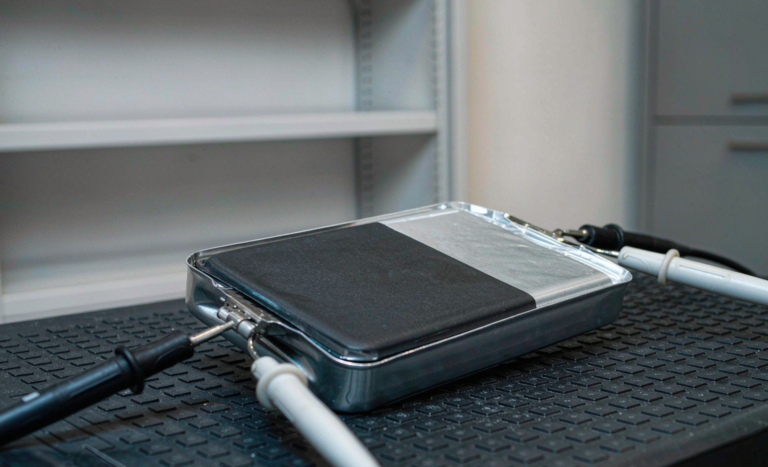
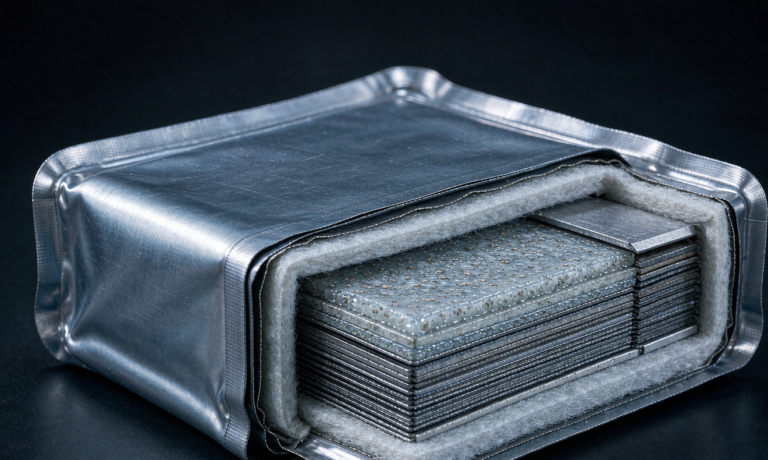
Before we talk timelines, we have to agree on what we are measuring. A semi-solid state battery sits between a conventional liquid lithium battery and a fully solid-state cell. Instead of a free-flowing liquid electrolyte, the cathode is built as a high-loading composite slurry that contains a small fraction — typically 5% to 10% by weight — of liquid or gel electrolyte. The bulk of ionic transport still happens through a quasi-solid medium, but you retain enough wettability to keep interfacial resistance manageable.
That last point is the whole engineering trick. Full solid-state designs based on oxide, sulfide, or polymer electrolytes struggle with interface impedance and require extreme pressure or temperature to work. Semi-solid keeps the mature roll-to-roll coating envelope of existing lithium battery lines while pushing gravimetric energy density from the ~250 Wh/kg of good NMC up toward 300–360 Wh/kg. In my lab, the reduction in flammable solvent is also what makes the safety story credible, not just marketing.
Under the hood, the gains come from two places. First, the composite cathode carries a higher active-material loading because the semi-solid medium tolerates thicker coatings without drying cracks. Second, the anode side is where the real upside hides: paired with a silicon-dominant or thin lithium-metal anode, a semi-solid cell can beat the theoretical ceiling of graphite-based designs. At Horizon Power we routinely pair semi-solid cathodes with silicon-anode formulations for drone and aerospace pilots, and the cycle-life trade-off is far gentler than a full lithium-metal solid-state would impose. You are buying 80% of the energy-density prize for 20% of the manufacturing pain — which is exactly why I believe semi-solid, not full solid-state, is what reaches the semi-solid state battery mass market first.
Where Semi-Solid Cells Are Already Shipping Today
The technology is not vaporware. I have handled production-intent cells from multiple Chinese and Korean lines, and semi-solid packs are already in limited-series electric vehicles — most visibly in premium sedans carrying 150 kWh-class packs rated for roughly 1,000 km of range. On the small-cell side, high-end consumer electronics and wearable devices have adopted semi-solid formats where energy density justifies the cost premium.
For the programs I touch directly at Horizon Power, the appeal is aerospace and industrial. A custom battery solution built around semi-solid chemistry lets a long-endurance survey drone or an eVTOL prototype gain 15%–25% more flight time without changing the pack envelope. But here is the catch: every one of these deployments is a premium, low-volume program. They prove the chemistry works; they do not yet define a mass market.
The Real Bottleneck Is Manufacturing, Not Chemistry
If you ask a chemist, semi-solid is essentially solved. If you ask a process engineer like me, the hard part is scaling it. Coating a high-loading composite cathode uniformly at line speed is unforgiving. The slurry is more viscous than standard cathode paste, which means tighter tolerances on gap-coating dies, slower line rates, and far less margin for defect. Interface control between the composite cathode and the separator decides whether a cell ages gracefully or grows dendrites.
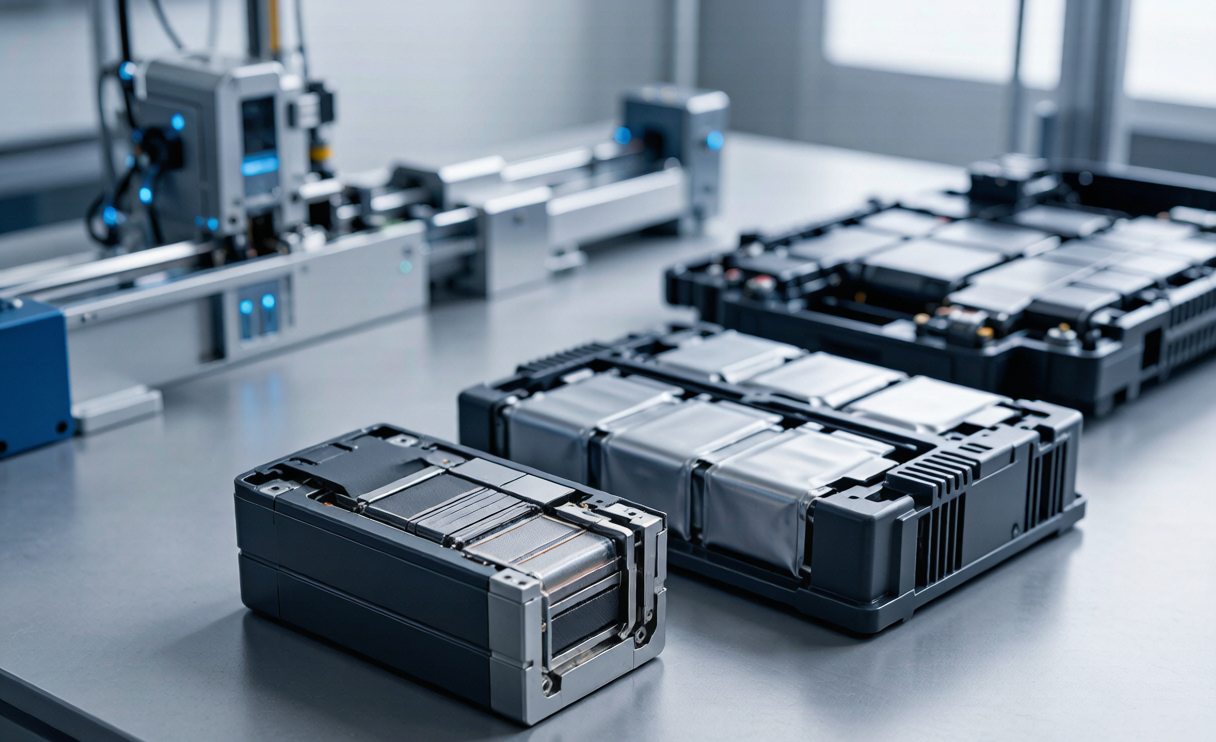
Then there is capital. Retrofitting an existing lithium battery gigafactory line is cheaper than greenfield, but it still means new coaters, new calendering, and re-validated drying zones. Most pilot lines I have visited run at 0.1–0.5 GWh annually. A genuine semi-solid state battery mass market needs multi-gigawatt-hour capacity at a cell cost below roughly $100/kWh. We are not there yet, and yield — not the electrode formula — is what gates the ramp.
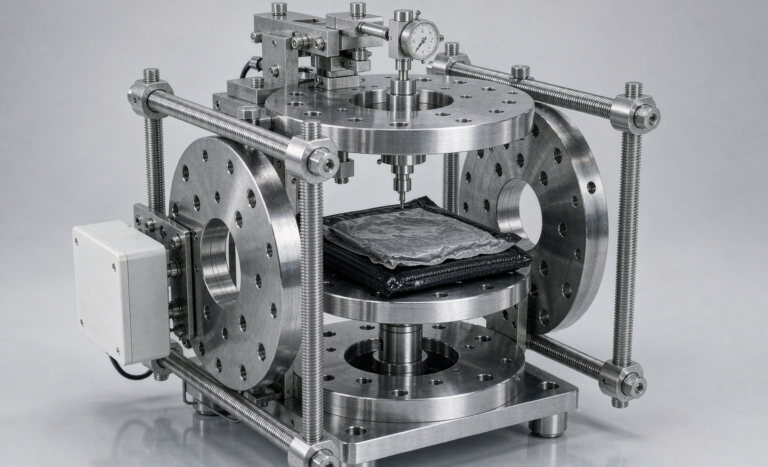
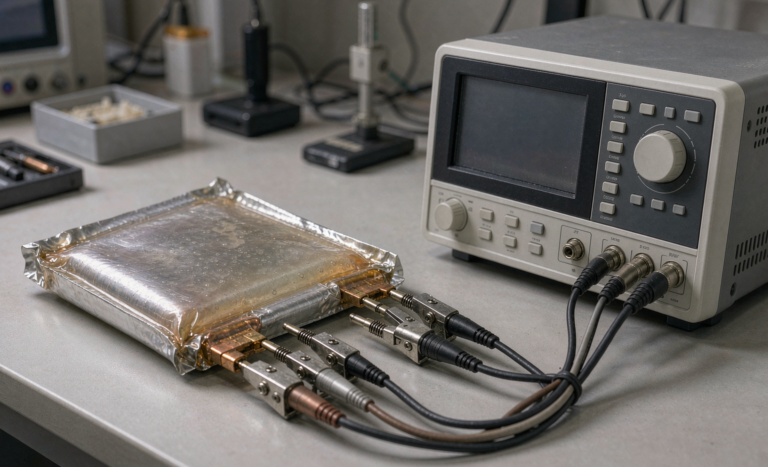
And before any of those cells can cross a border, they must clear UN38.3, the transport safety standard with its eight test sequences (T.1 altitude simulation through T.8 impact and overcharge). I have personally signed off on UN38.3 dossiers for semi-solid cells, and the abuse behavior is genuinely better than liquid — but the paperwork and validation still take months per cell design.
Certification and the Safety Runway Nobody Talks About
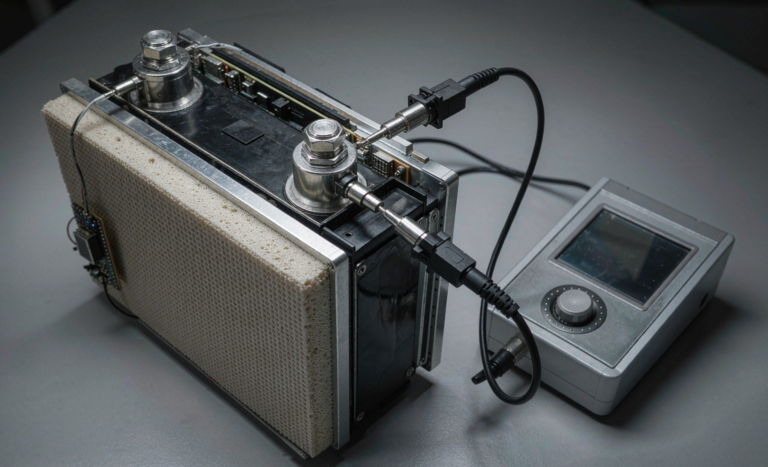
New electrolyte chemistry forces a full re-prove of abuse tolerance. For portable and stationary formats we qualify against IEC 62133-2 and IEC 62619; for North American stationary and motive packs, UL 1642 and UL 1973 apply. When the application is aviation — which is where a lot of the early semi-solid demand lives — the bar is FAA and EASA thermal-runaway-propagation rules, and those are the strictest of all.
In my experience the certification runway adds 12 to 18 months on top of the manufacturing ramp. This is precisely the window the semi-solid state battery mass market is waiting on: not “can we build it,” but “can we certify it cheaply and repeatably at scale.” Until that answer is yes, volume buyers in regulated industries will keep specifying proven lithium battery chemistry.
Cost Trajectory and Supply Chain Readiness
Chemistry is only half the story; the bill of materials is the other half. Semi-solid cathodes still rely on nickel, cobalt, and lithium feedstocks that track the same volatile commodity curve as every other lithium battery. What changes is the electrolyte and separator stack, where semi-solid can trim cost by reducing the amount of expensive wet separator and solvent handling. I model cell cost on a learning curve of roughly 18%–20% reduction per cumulative doubling of volume — the same curve that brought LFP down to today’s aggressive pricing.
Supply chain readiness is the quieter risk. Semi-solid does not need exotic raw materials the way some sulfide solid-state routes do, which is a point in its favor. But it does need a qualified base of coating and drying equipment suppliers, and right now that capacity is concentrated in a handful of Asian lines. Until Western and Indian gigafactories qualify local coaters and validate the cathode slurries, the semi-solid state battery mass market will be geographically narrow. I tell procurement teams to watch equipment qualification, not just cell announcements, because the coaters are the real bottleneck on global supply.
My Engineering Timeline: When Mass Market Actually Forms
Here is the straight answer I give customers. From 2026 through 2027, expect semi-solid to stay in premium and low-volume channels: flagship EVs, aerospace, and bespoke custom battery solution programs where energy density justifies a 30%–50% cost premium. That is not mass market; that is early adopter.
The real inflection is 2028 to 2030. As coating yields climb and cathode loading stabilizes, pack-level cost should cross the $110–$130/kWh band that makes mainstream adoption economic. By 2030 I expect semi-solid to claim meaningful share in premium EVs and in energy-density-sensitive B2B segments, while incumbent LFP and NMC continue to dominate cost-driven volume. In other words, a true semi-solid state battery mass market — one where a buyer can source competitively without a custom qualification project — forms in the back half of this decade, not the front.
What B2B Buyers Should Specify Today
My advice is the opposite of “wait and see.” If your product lives or dies by energy density — drones, portable medical, off-grid, aerospace — start a pilot program now with a partner who can deliver a custom battery solution around semi-solid cells. Qualify the cells against your actual duty cycle, capture the UN38.3 and IEC test data early, and lock in safety characterization before your competitors do. At Horizon Power we run exactly these pilot builds, and the teams that started in 2025 will be shipping volume in 2028 while everyone else is still in qualification.
A semi-solid state battery mass market is coming, but it rewards the prepared. Build the relationship and the test data today; harvest the volume when the line rates finally justify it.
Frequently Asked Questions
How is a semi-solid state battery different from a full solid-state battery?
A full solid-state battery replaces the liquid electrolyte almost entirely with a solid conductor, which creates severe interface-resistance problems. A semi-solid cell keeps a small amount of liquid or gel electrolyte — usually under 10% — to maintain wettability, which lets it use conventional lithium battery manufacturing while still raising energy density. Semi-solid is the pragmatic stepping stone; full solid-state remains a longer-term bet.
Is a semi-solid cell safer than a normal lithium battery?
In my testing, yes, modestly. Because flammable solvent content is much lower, thermal runaway is harder to trigger and propagation is slower. That is why aviation regulators and premium EV programs are interested. But “safer” is not “safe,” and every cell still must pass UN38.3, IEC 62133-2, and UL 1642 before it ships.
When can I buy a semi-solid state battery mass market product?
Premium and low-volume products are available now. Competitive, catalog-style volume — a real semi-solid state battery mass market — is most realistic from 2028 to 2030 as manufacturing yields and certification maturity improve. If you need volume before then, plan a qualified custom battery solution rather than waiting for off-the-shelf supply.
What standards apply to semi-solid cells I might specify?
Expect UN38.3 for transport, IEC 62133-2 for portable cells, IEC 62619 for industrial stationary use, and UL 1642 / UL 1973 for North American markets. Aviation and aerospace programs add FAA and EASA thermal-runaway-propagation requirements. Build your qualification plan around these from day one.