Semi-Solid State Battery Safety
Why I Treat Safety as the First Specification, Not the Last Check
When a buyer asks me whether a semi-solid state battery is “safe,” they usually expect a one-word answer. After fifteen years on the lithium battery pack line and another few running abuse-test programs for aerospace and industrial clients, my honest answer is longer: safety is not a property you bolt on, it is the sum of every design choice—cathode loading, separator thickness, gel electrolyte fraction, and how the cell behaves when someone does something stupid to it. Abuse testing is how we find out whether our assumptions survive contact with reality.
In this article I want to walk you through the safety profile of semi-solid-state cells the way I explain it to a new procurement engineer: what makes the chemistry intrinsically safer than a wet liquid-electrolyte lithium battery, which standardized abuse tests we actually run, the numbers we record, and the failure modes that still keep me up at night. If you are specifying a custom battery solution and need to certify it for transport or field use, this is the short version of what your supplier should already be doing.
What Actually Makes a Semi-Solid State Battery Safer
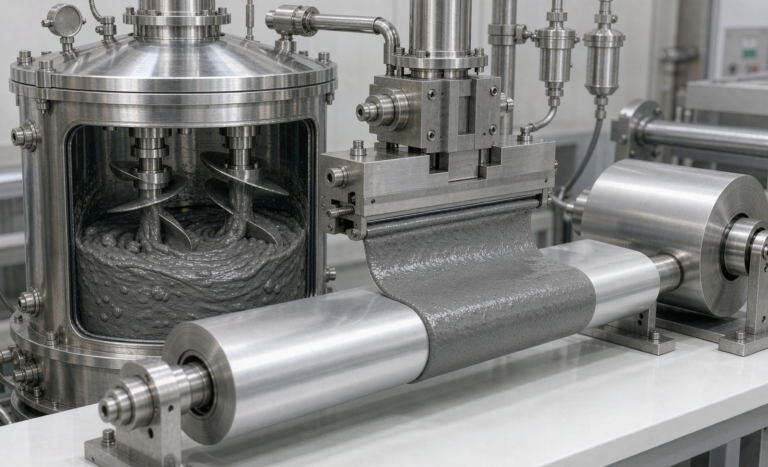
The headline advantage of semi-solid-state chemistry is the electrolyte. Instead of a free-flowing organic liquid that can leak, vaporize, and feed a flame, we use a gel polymer or semi-solid electrolyte that immobilizes most of the solvent. A lithium battery with a conventional liquid electrolyte carries roughly 30–40% of its cell mass as flammable solvent. Cut that fraction down and you cut the fuel available for thermal runaway.
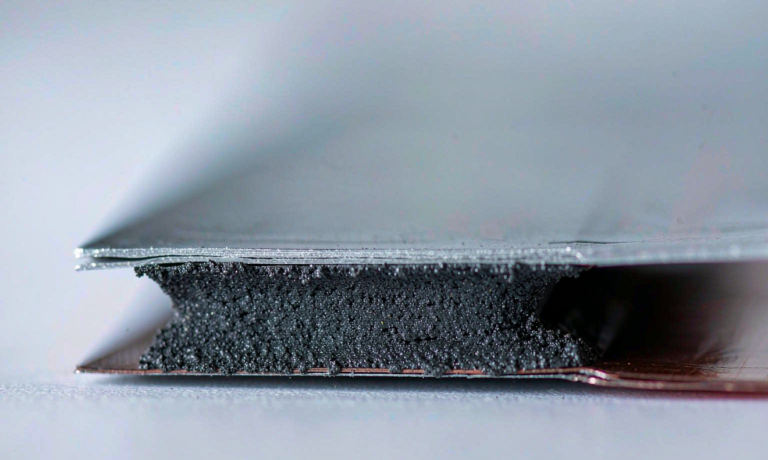
In my own teardowns, a well-built semi-solid-state pouch holds the cell voltage and stays mechanically coherent at temperatures where a comparable liquid-electrolyte pouch has already vented. That does not mean it is fireproof—no commercial cell is—but the onset temperature for exothermic reaction typically moves upward by 20–40 °C, which is a meaningful margin when you are designing battery packs for drones, vehicles, or grid cabinets.
- Reduced free solvent means less flammable vapor pressure inside the pouch.
- Gel matrix limits ionic shuttling of heat between layers, slowing propagation.
- More stable interface between cathode and electrolyte reduces lithium plating at high C-rate.
- Higher mechanical integrity under crush, because the semi-solid layer holds its shape.
The Abuse Tests We Run Before a Cell Earns My Signature
Before any semi-solid state battery leaves our pilot line for certification, it goes through the same abuse regime I apply to lithium battery programs. These map directly onto UN38.3, the transport test manual that airlines and freight forwarders require. I run them in a controlled chamber with thermal imaging and gas sampling, not just a pass/fail light.
1. Thermal Abuse (Hot Box)
We ramp the cell from ambient to 130 °C at 5 °C per minute and hold. A competent semi-solid-state cell should show no explosion and no fire through the hold. What I watch for is the slope of the internal temperature: a gentle plateau tells me the gel is absorbing energy; a sharp vertical spike tells me a hot spot is self-sustaining. We log the onset temperature of the exotherm, which for our current generation lands around 165–185 °C versus 130–150 °C on liquid cells.
2. External Short Circuit
A <5 mΩ short is applied across the terminals. The cell temperature should stay below 170 °C and not ignite. The internal protection—fuse, PTC, or BMS-level contactor—should trip before the cell core cooks. I have rejected otherwise good cells here because the protection circuit reacted 200 ms too late.
3. Crush and Nail Penetration
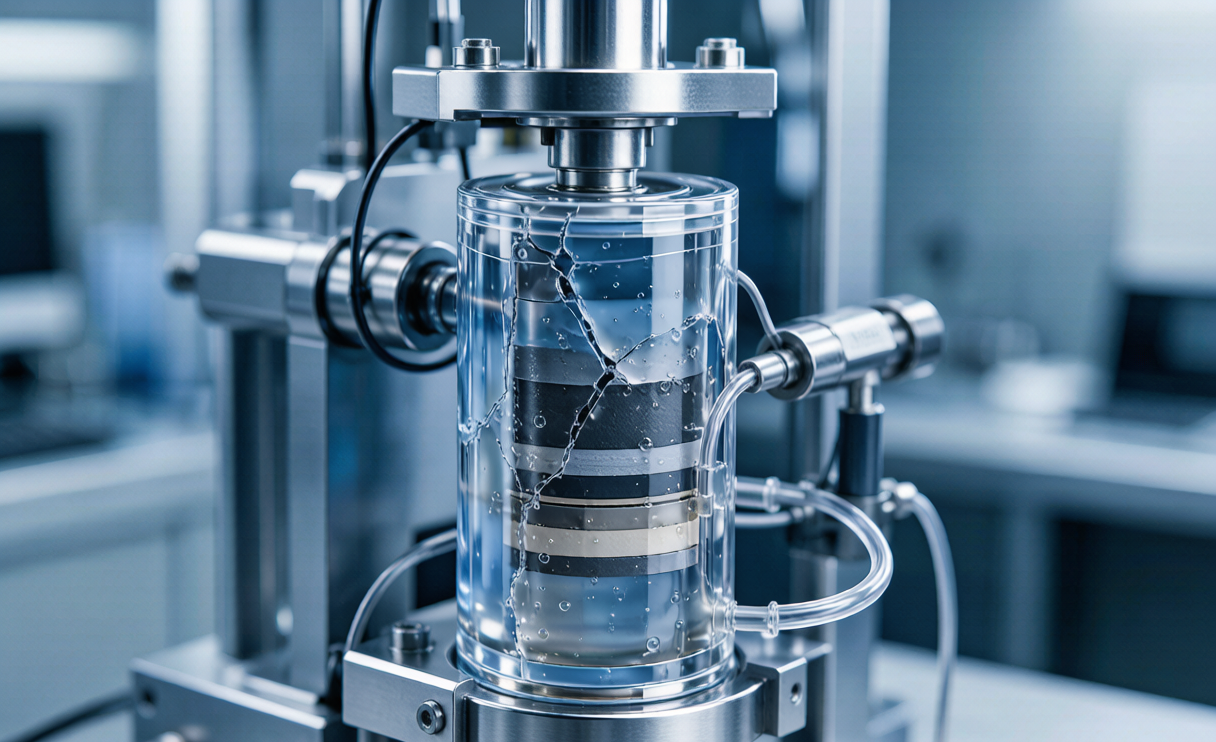
We crush to 50% deformation at 13 kN and also drive a 3 mm nail through the cell. This is the nastiest test for any lithium battery because it directly creates an internal short. Semi-solid-state cells usually deform and lose voltage rather than erupt, because the semi-solid layer does not splash and bridge electrodes the way free liquid does. Still, I have seen one batch vent under nail test because the cathode loading was too aggressive—a reminder that chemistry alone is not destiny.
4. Overcharge and Forced Discharge
We push the cell to 200% of rated voltage at a controlled current. The BMS should disconnect, but the cell itself should not ignite even if it does not. Overcharge is where weak separators fail first, so this test also validates our separator choice.
How This Compares to a True solid-state battery
Buyers sometimes conflate the two. A genuine solid-state battery replaces the electrolyte entirely with a solid ceramic or sulfide layer and is theoretically the safest architecture of all—no liquid, no gel, no solvent at all. The catch is manufacturing yield and interfacial resistance, which is why mass production is still climbing the curve. A semi-solid state battery is the pragmatic middle step: most of the safety benefit, far fewer production headaches, and a cost per kWh that B2B buyers can actually justify today.
For most of the applications my clients bring me—drones, industrial vehicles, stationary storage—the semi-solid route delivers 80–90% of the safety upside of solid-state at a fraction of the integration risk. I say that as an engineer who would love to ship pure solid-state tomorrow, not as a salesman protecting margin.
Standards and Certification Path You Should Expect
If your custom battery solution needs to cross borders, plan for UN38.3 as the baseline, plus IEC 62133-2 for portable cells and IEC 62619 for stationary industrial batteries. In North America, UL 1642 and UL 1973 cover cell and system levels respectively. For aviation-specific packs, FAA and EASA expectations follow directly from the UN38.3 test summary. I keep a single test-summary document that maps each abuse test to the corresponding clause so a reviewer can trace every claim.
One practical note: a semi-solid state battery still ships under the same Class 9 lithium battery rules until regulators carve out an exception. Do not let a supplier tell you the gel electrolyte means it flies unrestricted. It does not.
Failure Modes I Still Watch
No honest engineer will tell you the problem is solved. The failure modes I track on semi-solid-state programs are:
- Interface drying at the cathode–gel boundary after hundreds of cycles, which raises impedance and local heating.
- Gel shrinkage under deep discharge, creating voids that concentrate current.
- Edge leakage in poorly sealed pouches, where the semi-solid layer wicks toward the foil.
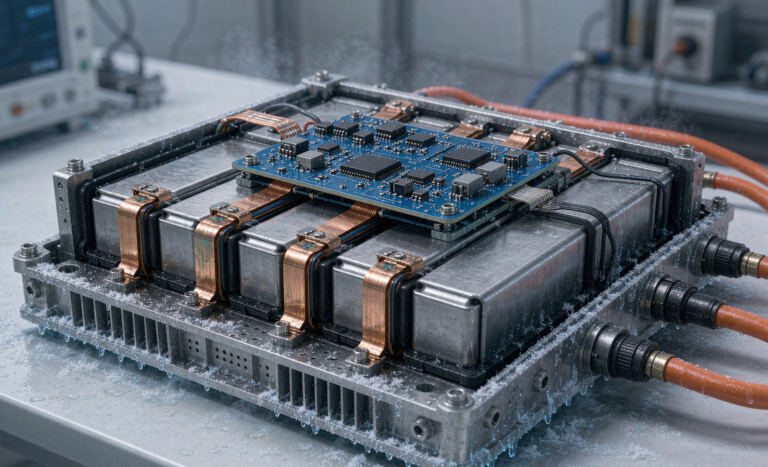
- Propagation between cells in a pack—even a safe cell can cook its neighbor if spacing and thermal barriers are wrong.
That last point is why I spend as much time on pack architecture and the BMS as on the cell itself. A safe cell in a badly designed pack is still a fire risk.
What This Means for Your Sourcing Decision
If you are evaluating a custom battery solution built on semi-solid-state chemistry, ask the supplier for the actual abuse-test data, not a marketing claim. Request the UN38.3 test summary, the onset temperature from thermal abuse, and the result of the nail-penetration test. A serious manufacturer will hand you a report with numbers; a blurry “very safe” is a red flag. And remember that safety is a system property—cell chemistry, pack design, BMS logic, and certification all have to line up.
Frequently Asked Questions
Is a semi-solid state battery safer than a normal lithium battery?
In most abuse scenarios, yes. The gel or semi-solid electrolyte carries far less free flammable solvent, which raises the onset temperature of thermal runaway and slows heat propagation. It is not fireproof, but the safety margin is real and measurable in standardized tests.
Does semi-solid state mean it passes nail penetration without any reaction?
Not always. A well-designed cell typically deforms and loses voltage rather than igniting, but aggressive cathode loading or weak sealing can still cause venting. We qualify every batch with the nail test rather than assuming the chemistry guarantees a pass.
Can I ship a semi-solid state battery without UN38.3?
No. Until regulators issue a specific exemption, semi-solid-state cells ship under the same Class 9 lithium battery transport rules as conventional lithium battery products. UN38.3 testing and a test summary are mandatory for air and most ground freight.
How does a semi-solid state battery differ from a solid-state battery for safety?
A solid-state battery removes the liquid and gel entirely, giving the highest theoretical safety. A semi-solid state battery keeps a gel fraction, capturing most of that safety benefit with much easier manufacturing. For most B2B applications today, semi-solid is the lower-risk choice to deploy.