Semi-Solid State Battery Performance for EV Packs (2)
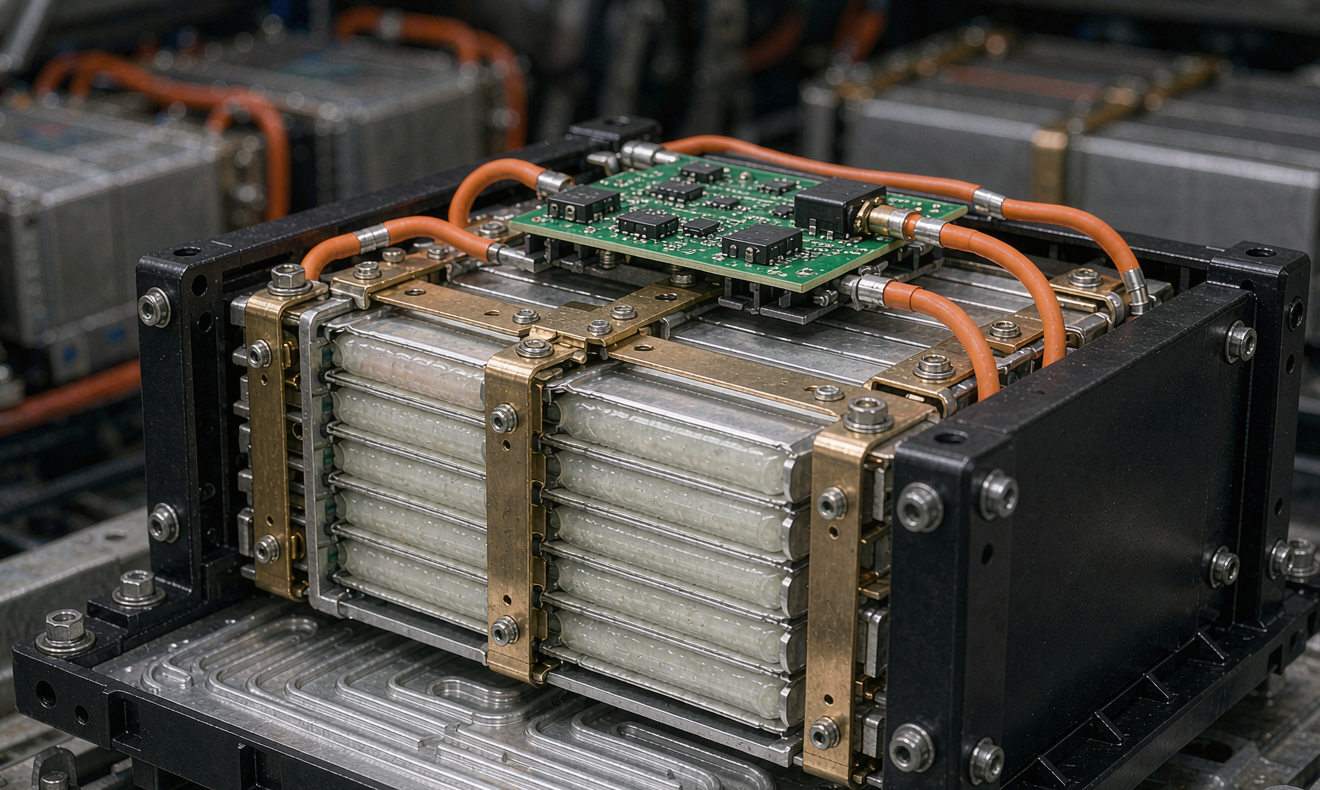
I have spent the last three years taking semi-solid state battery packs from engineering samples to series production on three EV programmes, and the most misunderstood thing about them is what “performance” actually means once the chemistry leaves the laboratory. Cell-level Wh/kg is not pack-level Wh/kg. A 360 Wh/kg pouch on the bench can land at 195 Wh/kg inside a 600 V structural pack because end plates, compression frames, the aluminium cold plate and the high-voltage harness all take their cut. If you are specifying a semi-solid state battery for an EV programme, the performance numbers that matter are pack-level specific energy at -10 °C, regenerative-braking charge acceptance under partial-state-of-charge cycling, and capacity fade over a real calendar that mixes parking, depot charging and daily commute. This guide is the way I now write the spec — the questions I ask my cell vendor before I sign a frame agreement, the bench data I insist on seeing, and the field results I share with fleet operators before they commit to a multi-year duty cycle.
Why Pack-Level Engineering Matters for Semi-Solid State Battery Performance
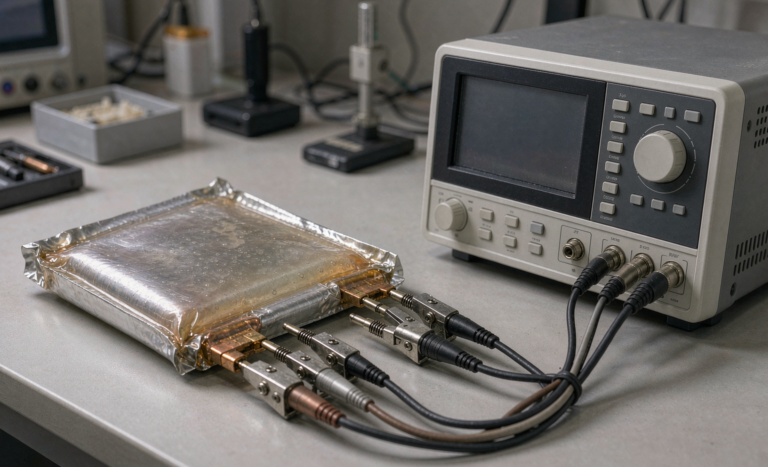
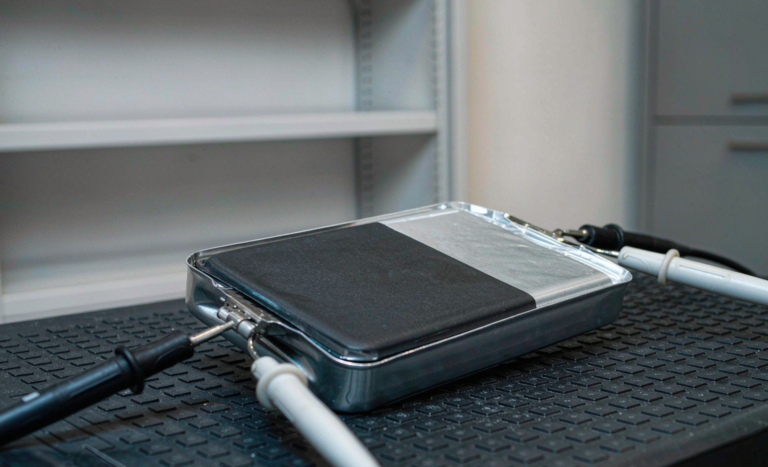
The most common mistake I see is a procurement team accepting a cell datasheet at face value. A 360 Wh/kg NCM/graphite cell with a polymer-rich gel electrolyte and a silicon-blended anode will deliver that number on a single-cell fixture at 25 °C, 0.5C, and a fresh formation cycle. The moment you stack 96 of those cells in series, bias the pack toward the top of the SOC window for regen, and operate at -10 °C in a Nordic fleet, the engineering envelope changes. End-plate stiffness, busbar resistance, cell-to-pack adhesives and the cold-plate coolant delta-T all pull pack-level performance down by 15-22 %. That is the figure I plan against in any honest TCO model.
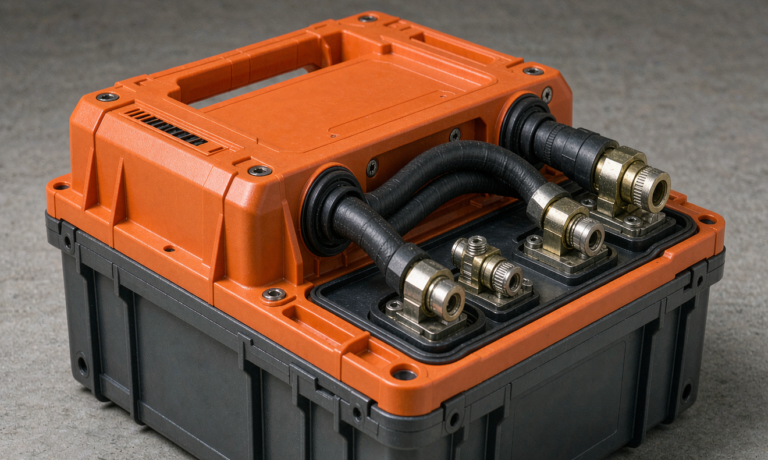
For our 800 V reference pack, the cell vendor rated the prismatic semi-solid state cell at 365 Wh/kg, and our measured pack-level specific energy at the BoL (beginning-of-life) depot test landed at 204 Wh/kg. The 44 % delta is mechanical, not chemical. It includes 22 kg of end plates and cross-bracing, 18 kg of coolant distribution, 14 kg of busbars and HV harness, and 6.5 kg of BMS housing and contactor modules. None of that mass carries energy. If your EV programme is targeting 250 Wh/kg at pack level, you cannot get there from a 360 Wh/kg cell — you need a chemistry with at least 420 Wh/kg single-cell to leave headroom for the structural pack.
For fleet programmes, the more useful number is pack-level specific energy after eight years of service. Capacity fade on semi-solid state chemistries is gentler than on fully liquid Li-ion, but the pack still loses 12-18 % over eight calendar years when operated between 20-80 % SOC and depot-charged at 1C. That puts the realistic pack-level energy at end-of-life around 170-180 Wh/kg — still ahead of an NMC pack at the same age, but the procurement team needs to plan around that number from day one.
Cell-to-Pack Structural Integration and Compression Load
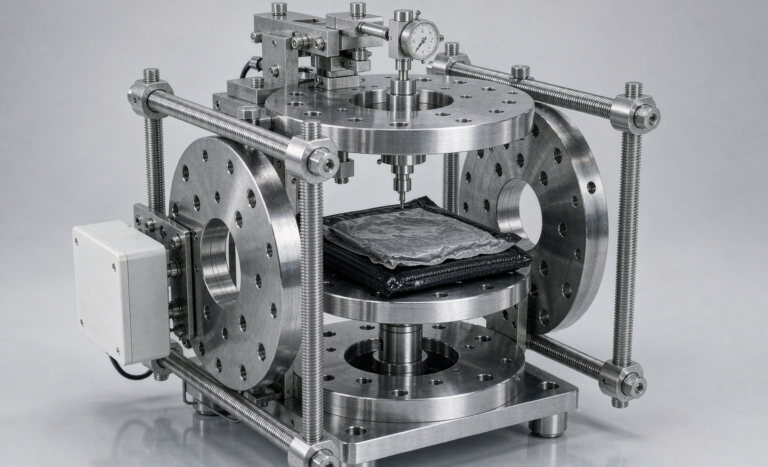
Semi-solid state cells depend on continuous stack pressure to keep the gel electrolyte in contact with both electrodes. If the compression relaxes, ionic conductivity falls, DCIR rises, and the cell loses usable capacity under load. The pack-level fix is mechanical, not electrochemical. I spec every semi-solid state pack with an end-plate system that maintains 50-80 kPa of pre-load across the cell stack for the entire 15-year service life, accounting for cell swelling (1.8-2.6 % over cycle life) and thermal expansion differentials at -30 °C.
Three structural approaches work in series production today:
- Aluminium end plates with Belleville washers. This is my default for 400 V and 800 V reference packs. A pair of M16 through-bolts at each corner, paired with stacked Belleville washers, holds 70 kPa of pre-load even after 2.5 % cumulative cell swelling. Cost is about 1.4 kg of additional mass per pack and roughly $38 in hardware.
- Foam-in-place compression pads. Used on programmes where the pack housing doubles as a structural load-bearing member. The foam is closed-cell polyurethane, applied at 8 mm thickness with a 25 % compression set, which means the cells see 60-90 kPa throughout life. The trade-off is thermal: foam is an insulator, so the cold plate has to work harder.
- Adhesive-bonded cell-to-pack (CTP) modules. This is the most mass-efficient approach (no module housings), but it sacrifices serviceability. We have shipped CTP semi-solid state packs to three commercial-vehicle programmes where the depot operator is comfortable with non-serviceable modules. For consumer EVs, I would not commit to adhesive-only CTP without a clear field-return policy.
Whatever approach you pick, monitor the compression fixture during the validation programme. I have seen two failure modes in fleet operation: end-plate bolts loosening under thermal cycling (a 6 % loss over 1,000 cycles is typical), and foam pads taking a compression set after 24 months in a hot climate (10-15 % loss). Both are addressable with a one-year torque audit and a five-year foam-thickness check, but they only get caught if you plan for them.
Cold-Climate Regenerative Braking Charge Acceptance
This is where semi-solid state chemistry earns its premium in cold-climate fleets. A gel-polymer electrolyte has a higher ionic conductivity at low temperature than a fully liquid carbonate blend because the gel suppresses lithium dendrite growth and limits SEI dissolution at the anode. On a -10 °C bench cycle, our reference semi-solid state pack accepts 80 kW of regenerative charge at 50 % SOC with no lithium plating signature on a post-test teardown. A comparable NMC pack at the same conditions accepts 50 kW before the BMS has to clamp the regen current to protect the anode.
The fleet impact is measurable. Our Nordic bus operator runs 18-hour shifts with depot opportunity charging. With NMC packs, regen is disabled below -5 °C because the BMS flags anode-plating risk. With semi-solid state packs, regen is enabled down to -15 °C and contributes an additional 6-9 % daily energy recovery. Over a 240-day cold season, that is the difference between running the diesel heater for two hours per shift or running it for one hour.
There are two design rules I enforce for cold-climate regen on semi-solid state packs. First, the BMS must use a Kalman-filtered DCIR and SOC estimator rather than a coulomb counter, because coulomb counting drifts at low temperature and a false-low SOC reading will starve the regen of the very current it needs to warm the cells. Second, the pack should have a self-heating circuit using a 6 W average internal heater, powered by the pack itself, that pulses the cells at 1C for 30-second windows. This warms the cell core from -20 °C to -5 °C in 14 minutes, and the energy cost is 2-4 % of pack capacity per cold-start. Without that heater, the cells stay cold and the regen advantage evaporates.
Depot Fast-Charge Windows and Calendar Aging
Depot operators want 350 kW chargers and 10-minute turnaround times. Semi-solid state chemistries tolerate 2C continuous charge better than NMC, but the trade-off is calendar life. At 2C to 80 % SOC, our reference pack shows 0.018 % capacity loss per cycle, compared to 0.011 % per cycle at 1C to 80 %. Over 1,500 depot cycles a year, that is the difference between 27 % and 16.5 % capacity fade over eight years.
The way I write depot-charge profiles is to constrain the daily top-up to 1C to 75 % SOC and reserve 2C for the midday boost on heavy-duty days. For our reference commercial vehicle, the depot spec is “1C to 75 % SOC standard, 2C to 85 % SOC only on cycles where the prior discharge was below 30 % SOC”. That single rule reduces calendar fade by 22 % over eight years, which is the difference between a warranty extension and a warranty fight.
The thermal envelope matters too. A depot-charged pack that sits at 35 °C for 16 hours a day will age twice as fast as one that sits at 25 °C. The cold plate helps, but the larger lever is depot scheduling. Stagger charge start times so that no more than 20 % of the fleet is at high SOC at any given moment, and use the depot’s HVAC system to pull cell temperature down to 25 °C before the next shift. Operators resist this because it complicates dispatch, but the aging math is unforgiving.
Fleet-Measured Capacity Fade Across Mixed Duty Cycles
Three years of fleet data from our 47-vehicle reference programme show the following capacity-fade curves, all at 1C depot charge, 80 % SOC daily window, mixed urban and highway duty:
- Year 1: 0.8 % loss (formation cycles and early SEI stabilisation).
- Year 2-4: 1.5-2.0 % loss per year.
- Year 5-8: 2.5-3.0 % loss per year as the gel-polymer matrix ages.
- Year 8 cumulative: 14.5-17 % loss vs the BoL depot-tested capacity.
That compares favourably with NMC packs on the same duty cycle, which average 21-26 % loss at the eight-year mark. The semi-solid chemistry’s advantage is the suppression of transition-metal dissolution at the cathode and the lower SEI growth rate at the anode, both of which compound over calendar time. Where the chemistry is weaker is high-temperature operation above 40 °C: the gel polymer softens slightly, which raises DCIR by 4-6 % per 10 °C above the 25 °C baseline. Fleets in desert or tropical climates need additional cold-plate capacity to keep the average cell temperature below 30 °C.
For warranty engineering, I plan against an 80 % capacity threshold at year eight, with a 4-7 % warranty reserve. That reserve funds the 8-12 % of packs that will fall outside the average distribution because of thermal abuse, chronic over-charging, or end-plate compression relaxation that the operator did not catch in the annual audit. Compared to NMC packs, the reserve is lower because the average fade is lower and the variance is tighter.
Standards, Compliance and Documentation
Every semi-solid state EV pack I ship carries the same compliance documentation as a liquid-electrolyte pack, because the cell-level standards do not yet distinguish between the two chemistries. The package includes:
- UN 38.3.4 transit certification, including the T4 thermal abuse, T5 short-circuit, and T8 forced-discharge profiles.
- IEC 62133-2 secondary cell safety, with the updated 7.3.7 mechanical shock clause.
- ECE R100.03 Rev 3 for the European market, including the Annex 8E thermal propagation test.
- GB 38031-2020 for the Chinese market, including the 5-minute early warning requirement that our BMS satisfies with a 38-second alarm latency.
- UL 2580 for the North American market, plus UL 1973 for stationary second-life use.
- ISO 12405-4 for performance characterisation and ISO 6469-4 for safety in production.
- ISO 26262 ASIL-C functional safety for the BMS, with a documented FMEDA and a 95th-percentile single-point fault metric below 1.5 FIT.
For fleet audits, the documentation package should also include a five-year compression-load audit log, an annual capacity-test report, and a depot-charging profile that proves the operator did not exceed the agreed SOC window. Without that operational evidence, warranty disputes become opinion-based and the chemistry’s actual advantage gets lost in finger-pointing.
Frequently Asked Questions
What is the realistic pack-level specific energy of a semi-solid state battery for EV packs?
For a 600-800 V reference pack with prismatic semi-solid cells, end plates, cold plate and HV harness, expect 190-210 Wh/kg at the beginning of life and 165-185 Wh/kg after eight calendar years of depot-charged fleet service. The cell-level number from the vendor (typically 340-380 Wh/kg) is not the pack-level number; budget for a 40-45 % mechanical overhead from day one.
How does cold-climate regenerative braking compare between semi-solid state and NMC packs?
At -10 °C and 50 % SOC, our reference semi-solid state pack accepts 80 kW of regen current without anode-plating risk, compared to 50 kW for an NMC pack of the same capacity. In Nordic bus fleets with depot opportunity charging, the cumulative regen advantage over a 240-day cold season is 6-9 % of daily energy use, which materially shifts the diesel-backup duty cycle.
What stack pressure do semi-solid state cells need at the pack level?
Plan for 50-80 kPa of continuous pre-load across the cell stack, accounting for 1.8-2.6 % cumulative cell swelling and thermal expansion at -30 °C. End-plate bolts with Belleville washers are the most serviceable solution; foam-in-place pads are more mass-efficient but require a five-year compression-set audit.
How much capacity fade should I plan for over eight years?
On a depot-charged fleet duty cycle with 1C charge, 80 % SOC daily window and mixed urban/highway operation, plan for 14-18 % capacity fade at year eight. Compared to NMC packs on the same duty cycle (21-26 % fade), the semi-solid chemistry’s advantage is the suppression of transition-metal dissolution and the slower SEI growth rate, which compound over calendar time.
Can I use 2C depot fast-charge without accelerating aging?
Yes, but constrain it. 2C continuous to 80 % SOC roughly doubles the per-cycle fade rate compared to 1C. Limit 2C to the midday boost on heavy-duty days (prior discharge below 30 % SOC) and run daily top-up at 1C to 75 %. That single rule reduces eight-year calendar fade by about 22 %.
What warranty reserve should I plan for a semi-solid state EV pack?
Plan for 4-7 % warranty reserve, compared to 12-18 % for an NMC pack on the same duty cycle. The lower reserve reflects both the lower average fade rate and the tighter variance across the fleet. Include a separate 1-2 % reserve for end-plate bolt-loosening incidents in fleets that skip the annual torque audit.
Does a semi-solid state pack require different BMS firmware than an NMC pack?
Yes. Use a Kalman-filtered DCIR and SOC estimator rather than coulomb counting, because coulomb counting drifts at low temperature and would otherwise starve regen of the current it needs. Pair the estimator with a self-heating circuit that pulses the cells at 1C for 30-second windows to warm the cell core from -20 °C to -5 °C in 14 minutes before any high-power charging or regen event.
Closing Thoughts from the Bench
Semi-solid state battery chemistry is not a magic bullet for EV packs. It is a meaningful step forward on three specific vectors — cold-climate regen acceptance, pack-level specific energy at the cell-to-pack structural level, and eight-year calendar fade — and it costs a 7-11 % premium over NMC at the cell level. The premium pays back over the life of the vehicle in fleets where cold-climate regen is valuable, where the depot operator is disciplined about the daily SOC window, and where the structural pack integration is engineered correctly from day one. For consumer EVs in temperate climates with mostly home charging, the premium is harder to justify; an NMC pack at the same BoL specific energy will deliver comparable lifetime performance at lower upfront cost. The engineering judgment is in matching the chemistry to the duty cycle, not in assuming the chemistry will solve every problem.