Semi-Solid State Battery Pilot Line Cost Modeling
When a customer asks me how much a semi-solid state battery will cost at volume, I tell them the honest number only exists after you have built the pilot line. A pilot line is the small-scale production system, typically rated between 0.1 and 5 MWh per year, that sits between a lab prototype and a gigafactory. It is where the coating window, the gel electrolyte rheology, and the stacking yield stop being slide-deck claims and become measured cost. As Karl Huang, Senior lithium battery Engineer at Horizon Power, I have commissioned three of these lines, and the single most useful artifact we produce is not a cell sample but a cost model. This article walks through how we build that model, station by station, and why the numbers at pilot volume look nothing like the numbers at scale.
What a Pilot Line Actually Models
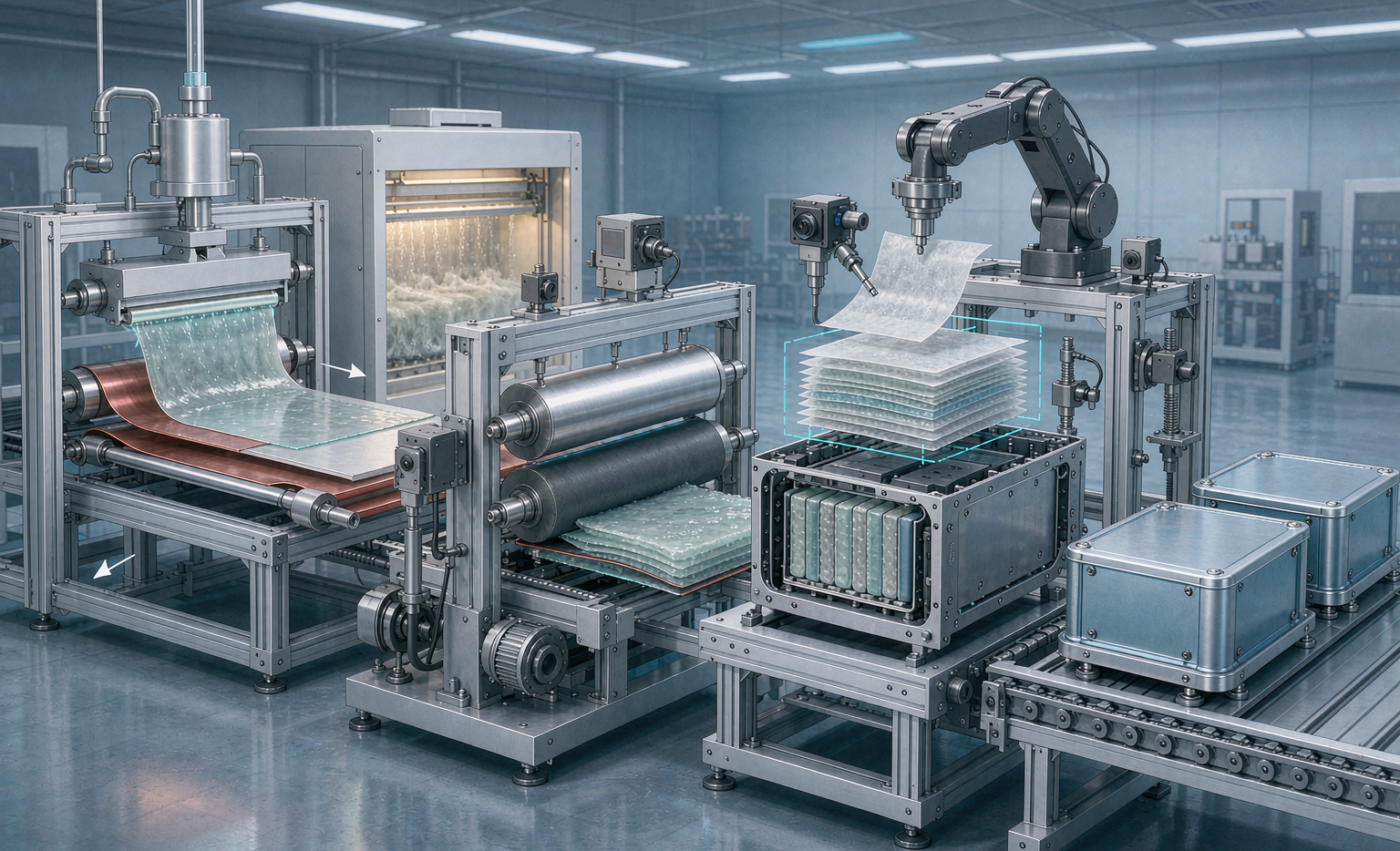
A pilot line is not a shrunken factory. It is a controlled experiment in throughput, yield, and unit economics. The output that matters is a bill of process: the exact sequence of coating, calendering, drying, stacking, formation, and assembly, each with a measured cycle time and a measured scrap rate. We model two cost layers on top of that process. The first is capital, the equipment and facility you depreciate over years. The second is operating cost, the materials and labor you burn for every kilowatt hour that leaves the line. Most teams underestimate the second layer because pilot-volume material prices bear no resemblance to production-volume prices. A semi-solid state battery looks cheap on a cell teardown; it looks expensive on a pilot line because you are buying active material by the kilogram instead of by the ton. We revisit this model every quarter as supplier quotes move, because a stale model is worse than no model when a customer is sizing a program and committing to a timeline.
Capital Cost Breakdown by Process Station
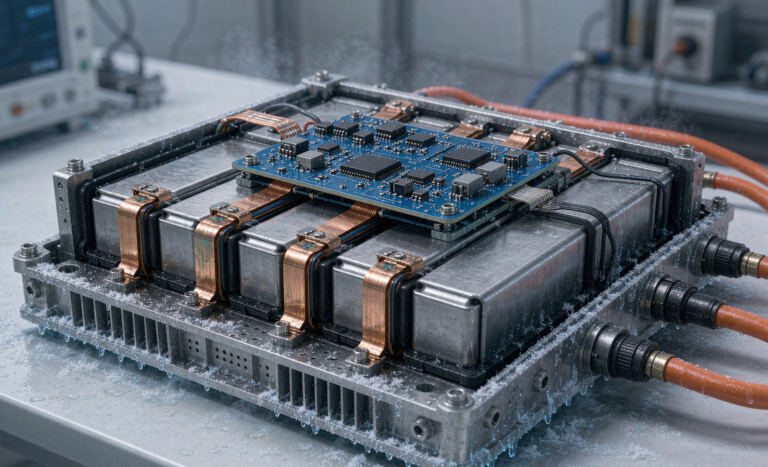
The capital cost of a semi-solid state battery pilot line lands between 4 million and 10 million US dollars, and the spread comes almost entirely from coating and drying. The slot-die coater with a precision oven is the largest single line item, typically 1.5 to 3 million dollars, because the gel slurry demands tight coat-weight control and a long, low-temperature dry zone. The roll press or calendering station that compacts the wet electrode runs 0.4 to 0.8 million. Vacuum drying ovens for the stacked electrodes add 0.5 to 1.2 million, and the formation and aging racks, which trickle-charge and screen every cell, add another 0.6 to 1.5 million. Assembly, whether pouch or prismatic, is the cheapest mechanical step at 0.5 to 1 million. The remainder sits in utilities, partial dry-room build-out, and material handling. What surprises first-time buyers is that the cell itself is a small fraction of the capital; the qualified, validated process is the asset. We keep a live equipment list with lead times, because a six-month wait on a single coater can change the whole financial case more than a 10 percent move in material cost.
Operating Cost at Pilot Volume
Operating cost is where pilot lines bleed money, and the driver is volume-discount loss. Cathode active material that costs 15 to 25 dollars per kilogram in full production costs 30 to 60 dollars per kilogram at pilot volume. The gel polymer electrolyte, the component that actually defines a semi-solid cell, runs 40 to 80 dollars per kilogram in small lots. Yield is the other silent tax: a pilot line routinely ships at 60 to 80 percent first-pass yield, while a mature line runs above 90 percent. Every scrapped cell carries its full material and formation cost, so a 70 percent yield means you effectively buy 1.4 cells for every one you sell. Labor is also higher per kilowatt hour because the line is partially manual and the engineers are hands-on. We model operating cost as a function of both price and yield, because the two move together as volume climbs. This is the part a conventional lithium battery cost sheet hides until you are already committed.
Why Semi-Solid Eases the Dry-Room Tax
One genuine cost advantage of semi-solid state chemistry is that it does not demand the extreme dry room that full solid-state and even conventional lines require. The gel electrolyte tolerates a higher dew point, so a pilot line can run a partial dry room or a locally controlled coating aisle rather than a full-class clean room. In our models this removes 0.5 to 2 million dollars of facility capital and trims the perpetual energy cost of dehumidification. It is a real edge, but it is easy to overstate. You still need moisture control at stacking and assembly, and the saving shows up mostly in facility CAPEX and utility OPEX rather than in the cell itself. When we compare a custom battery solution against a full solid-state roadmap, this dry-room delta is often the deciding line item for a pilot build.
Modeling Cost per kWh and the Learning Curve
The number customers actually want is cost per kilowatt hour at the pilot line. In our experience a semi-solid state battery pilot line delivers cells at 300 to 800 dollars per kWh, against a production target of 100 to 150 dollars per kWh. That gap is not fraud; it is the learning curve made visible. We apply Wright’s law, where cost falls roughly 20 percent for every cumulative doubling of volume, and we plot the pilot point against the production point to show when the curve flattens. The flattening happens later than optimistic roadmaps claim, usually after several cumulative doublings, which is why a pilot line is a modeling tool first and a supply tool second. The BMS and pack integration cost sit on top of the cell cost and scale more gently, but they are not free, and we keep them as a separate line so the model never hides pack-level economics inside the cell number.
When the Model Says Build Versus Outsource
The model earns its keep at the build-or-outsource decision. If your forecast stays under a few megawatt hours per year, outsourcing to a qualified contract line is almost always cheaper than amortizing your own equipment. The crossover appears when your cumulative volume pushes pilot cost per kilowatt hour within striking distance of your production target and your roadmap needs process lock-in that a contractor cannot give you. At that point the pilot line stops being a cost center and becomes the cheapest way to de-risk a gigafactory. We present this as a chart of cumulative volume versus modeled cost per kilowatt hour, with the outsourced line drawn as a flat reference. The intersection tells you the year to break ground, not the month. A good semi-solid state battery program treats the pilot line as the first financial instrument, not the last engineering step.
Frequently Asked Questions
How much does a semi-solid state battery pilot line cost to build?
Capital for a semi-solid state battery pilot line typically runs 4 to 10 million US dollars. The slot-die coater and precision oven are the largest items at 1.5 to 3 million, followed by vacuum drying ovens and formation racks. Facility and partial dry-room build-out add another 0.5 to 2 million depending on local climate and utility cost.
What is the typical cost per kWh at pilot line volume?
We measure 300 to 800 dollars per kWh at pilot volume, against a 100 to 150 dollar per kWh production target. The gap is driven by low-volume material prices, 60 to 80 percent first-pass yield, and unamortized equipment. The number falls along a learning curve as cumulative volume doubles, not on a fixed schedule.
Does a semi-solid state pilot line need a full dry room?
No, and this is a real cost advantage. The gel electrolyte tolerates a higher dew point than full solid-state cells, so most pilot lines use a partial dry room or a locally controlled coating aisle. You still need moisture control at stacking and assembly, but the facility saving is 0.5 to 2 million dollars plus lower utility cost.
How long does it take to amortize pilot line equipment?
Amortization depends on throughput, not calendar time. At a few megawatt hours per year the equipment may never fully amortize before it is obsolete, which is why the build decision is tied to cumulative volume crossing the outsourced-line cost reference, not to a fixed payback period.
Which standards must pilot line output meet before customer sampling?
Before any customer sampling, cells should clear UN38.3 for transport and IEC 62619 for industrial applications, with IEC 62133 for smaller formats. For automotive sampling we add ISO 12405 cycling and, in China, GB 38031. The pilot line must hold these test lots from its own formation and screening data, not from a lab batch.
Can a pilot line scale directly into a gigafactory design?
Partially. The process sequence and the cost model transfer, but the equipment scales non-linearly: coaters widen, drying zones lengthen, and yield must climb above 90 percent. We treat the pilot line as the validated bill of process that the gigafactory copies, while the individual machines are re-specified for volume rather than reused.
Further Reading
References