Home Energy Storage for Electric Cooking and Induction Loads
When I first started engineering residential lithium battery systems at Horizon Power, cooking was the last load anyone worried about. Gas dominated the kitchen, and early home energy storage was sized for lights, routers and a fridge. That assumption has aged badly. Over the past few years I have watched kitchen electrification move from a niche ideal to a building-code conversation, and induction cooktops sit at the center of it. A single induction burner can pull more instantaneous power than an entire legacy battery inverter was rated for, which is exactly why pairing a home battery with electric cooking needs deliberate engineering rather than a lucky guess. This article walks through what I have learned specifying home energy storage for induction and electric cooking loads, from peak power math to the BMS logic that keeps a cooktop happy during a grid outage.
Why Electric Cooking Puts a Different Load on Home Energy Storage
Most household loads are either low and continuous, like a refrigerator compressor, or brief and modest, like a LED lamp. Induction cooking breaks that pattern in two ways. First, the instantaneous power is high: a typical single burner draws 1.2 kW to 3.7 kW, and a full four-zone cooktop on a 240 V circuit can reach 7.4 kW. Second, the load is bursty. You are not cooking for eight steady hours; you are drawing 3 kW for twelve minutes, then zero, then 2 kW for eight minutes. That duty cycle matters because a home battery is really two products in one box: an energy reservoir measured in kilowatt-hours and a power channel measured in kilowatts.
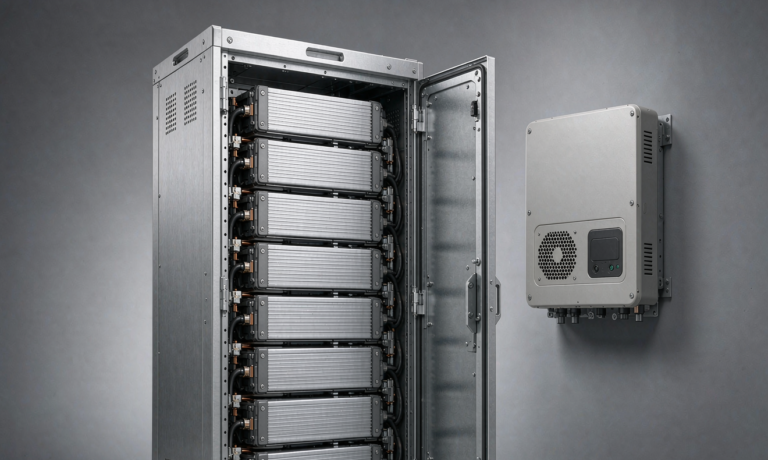
In my field measurements, the useful question is not ‘how big is the battery’ but ‘how fast can it deliver, and for how long’. A 10 kWh home energy storage pack with a 5 kW continuous inverter will run one burner comfortably but will trip or sag if you fire all four zones at once. The inverter’s surge rating, not the cell capacity, becomes the constraint. This is the first place where a generic solar battery and a cooking-ready home battery diverge, and it is why I always spec the inverter’s peak output separately from the cell bank when electric cooking is on the load list.
Sizing a Home Battery for Induction Cooktop Loads
Sizing starts with energy, then validates against power. A practical dinner for a family of four on induction uses about 0.8 to 1.5 kWh per meal once you account for the cooktop’s roughly 90 percent efficiency and the inverter’s own losses. If you want three cooked meals a day plus the usual background loads, budget 4 to 6 kWh of usable capacity just for cooking. Because we build LFP lithium cells with a usable depth of discharge near 90 percent, a 6 kWh nameplate pack gives you about 5.4 kWh you can actually spend, which is enough for most homes without stretching the cells.
The harder check is peak power. I recommend sizing the inverter for at least 1.3 times the cooktop’s nameplate rating so a cold pan and a preheat spike do not clip. For a 7.4 kW cooktop that means a 9 to 10 kW inverter, larger than the 5 kW unit many entry-level home battery bundles ship with. If your home energy storage system is modular, this is where a custom battery solution pays off: we add power stages in parallel so the cell bank stays at 6 kWh while the inverter grows to match the kitchen. Do not forget the round-trip link either. Storing PV energy and later discharging it through an induction load costs roughly 12 to 18 percent in conversion losses, so size the bank, not the solar array, to cover the cooked meal.
How the BMS Handles Cooking Surges
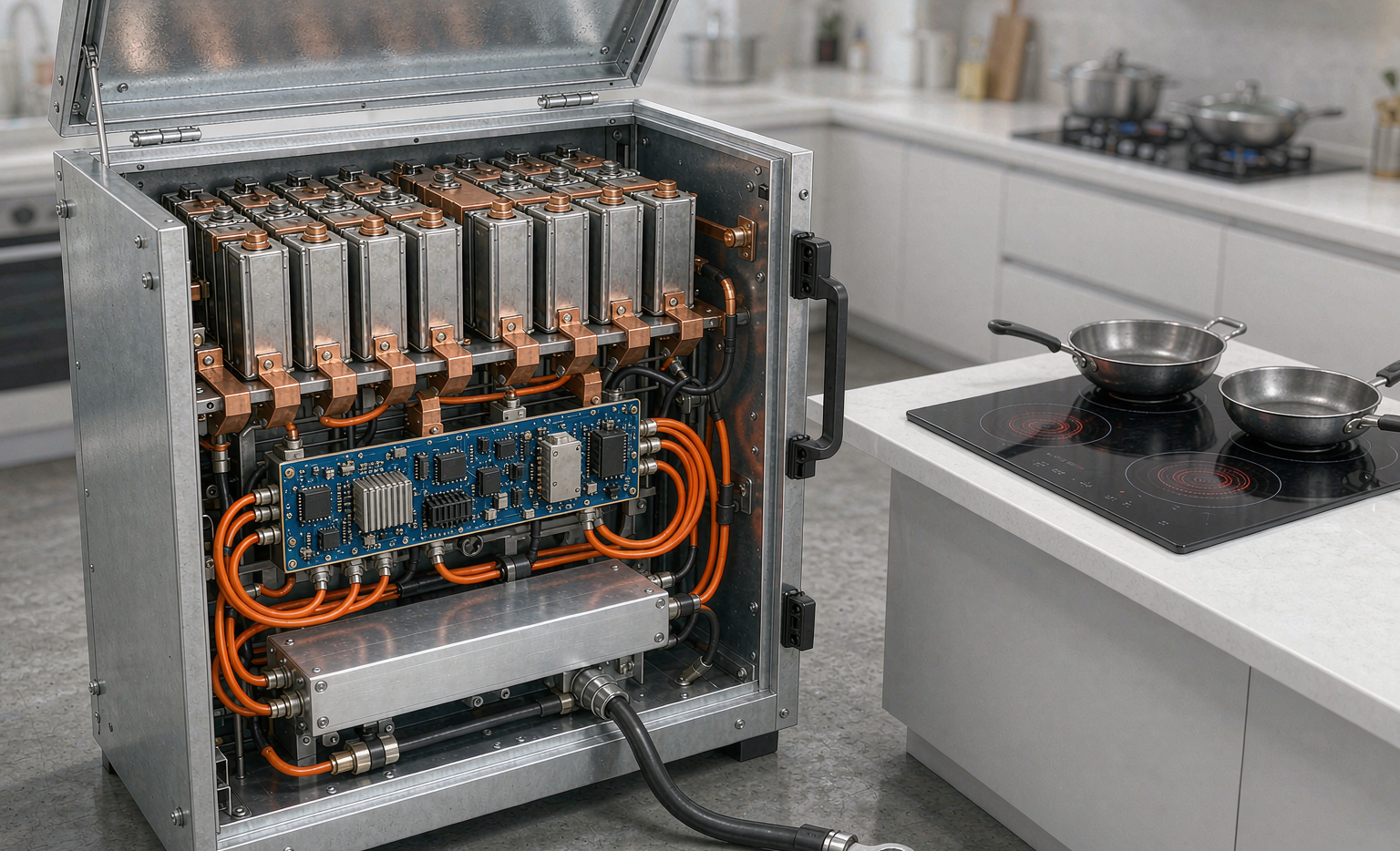
The battery management system is the part customers never see and the part that decides whether cooking feels seamless. When you switch on a burner, the inverter asks the cells for a sudden current step, sometimes from near idle to 30 or 40 amps within a second. A lazy BMS will let cell voltage sag, the inverter will fault, and dinner stops. Our BMS at Horizon Power runs a current-loop update under a millisecond and pre-positions the DC bus so the step is absorbed without tripping protection.
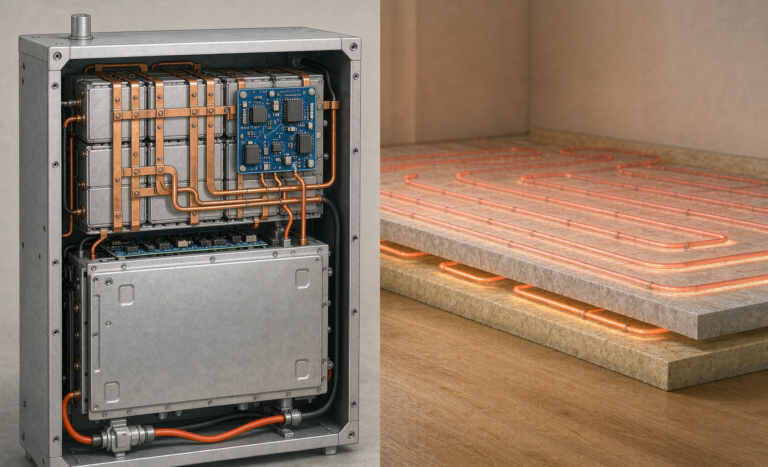
Active balancing matters here too. Cooking surges are uneven across the pack, and without balancing the weakest parallel group heats first and ages fastest. I spec cell grading so parallel strings stay within a few millivolts, and the BMS continuously tops up the lagging group during the quiet gaps between cooking bursts. Temperature is the other lever. An induction dinner in a hot kitchen can push the enclosure past 40 degrees Celsius, so the BMS throttles charge current and triggers the cooling fan before the cells complain. The goal is boring predictability: the cooktop should never know it is running on a home battery instead of the grid.
Pairing the Battery With Solar and Self-Consumption
Electric cooking is one of the best loads you can pair with a solar battery, because a lot of cooking happens in daylight. In my own test home, the midday meal runs almost entirely on photovoltaic energy stored a few hours earlier, and the evening meal draws from the same pack after sunset. This is the self-consumption logic that makes a home energy storage system worth installing: instead of exporting cheap midday solar and importing expensive evening grid power, you cook on your own electrons.
For time-of-use households the arithmetic is even cleaner. Charge the pack from PV or overnight off-peak, then cook during the peak tariff window on stored energy. A lithium battery rated for several thousand cycles shrugs off this daily shuttle, and the BMS keeps the state of charge inside the window that protects calendar life. I usually set a reserve of 15 to 20 percent so an unplanned cooking session never drains the pack below the floor that keeps the fridge and internet alive.
Safety, Certification and Installation Notes
Cooking loads sit close to people, oil and heat, so the certification bar is non-negotiable. Every cell we use clears UN38.3 for transport and IEC 62133 for portable cell safety, and the stationary pack itself is built to IEC 62619 for industrial energy storage. In North America the equivalent markers are UL 1973 for the battery and UL 9540 for the system, and the inverter should carry the relevant grid-interactive listing. I treat these not as paperwork but as the design envelope: the venting, the disconnect and the arc-fault protection all follow from the standard.
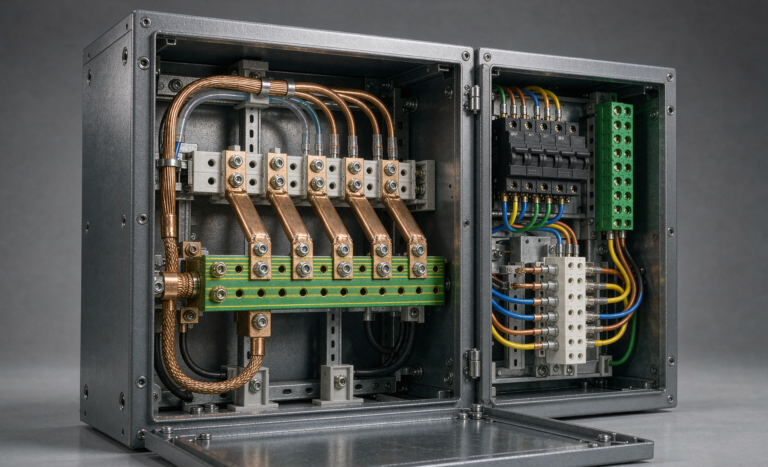
Installation details I insist on: a dedicated cooking circuit so the induction load never shares a branch with the fridge; a pure sine wave inverter because induction cooktops are switching power supplies that hate modified sine output; ventilation so the enclosure stays below its rated ambient; and a manual isolation switch a homeowner can reach. A home energy storage pack behind a cooktop is safe when it is engineered as a system, not as a battery with a hope. We document the wiring diagram for every custom battery solution so the electrician is not guessing.
A Realistic Day With a Cooking-Ready Home Battery
To make the numbers concrete, here is a typical day from a 10 kWh, 10 kW system I commissioned. Breakfast draws 0.6 kWh from stored overnight power. Midday, 3 kW of PV tops the pack and the lunch cooker takes 0.9 kWh straight from the panels. Evening sees the biggest pull: 1.4 kWh for a stir-fry while the pack also covers lights and a load of laundry, all inside the 10 kW inverter headroom. A grid outage that evening is uneventful: the cooktop, fridge and router stay up because the battery was already carrying the house.
The takeaway from that day is simple. Electric cooking is not a problem for home energy storage; it is a stress test that rewards correct sizing. Get the inverter peak right, let the BMS manage the surges, and a home battery turns a gas-free kitchen into a feature rather than a risk.
Frequently Asked Questions
Can a home battery run an induction cooktop during a power outage?
Yes, provided the inverter’s continuous and surge ratings exceed the cooktop’s draw. A 7.4 kW cooktop needs roughly a 9 to 10 kW inverter, and the pack must hold enough state of charge after the fridge and lights take their share. In my outage tests the cooktop behaved exactly like it does on grid power once the inverter was sized correctly.
How many kWh do I need for electric cooking?
For most families, 4 to 6 kWh of usable capacity covers three cooked meals a day plus background loads. Because LFP cells safely use about 90 percent depth of discharge, a 6 kWh nameplate pack delivers around 5.4 kWh you can actually spend on cooking and appliances.
Will induction cooking damage my home energy storage system?
Not if it is engineered for the load. The risk is voltage sag during the current step when you switch on a burner, which a fast BMS and adequate inverter surge rating prevent. Without that headroom the inverter may fault, but the cells themselves are not harmed by normal cooking currents.
Is a pure sine wave inverter required for induction cooktops?
Yes. Induction cooktops are switching power supplies that expect a clean waveform, and a modified sine wave inverter can cause buzzing, reduced power or fault codes. Every home energy storage system I specify for cooking uses a pure sine wave inverter as standard.
Can I charge the battery from solar and cook at the same time?
Absolutely, and it is the most efficient mode. Midday cooking pulls directly from photovoltaic energy, so the pack stores surplus rather than discharging. The BMS balances charge and discharge so the cooktop and the solar input never fight for the same bus.
Which standards should a home cooking battery meet?
Look for IEC 62133 and UN38.3 on the cells, IEC 62619 on the stationary pack, and UL 1973 plus UL 9540 for North America. The inverter needs the relevant grid-interactive listing. These marks define the venting, disconnect and protection design, not just the paperwork.
Further Reading
References