Semi-Solid State Battery for Portable Military Electronics
As a senior lithium battery engineer I have spent the last decade building power systems for equipment that cannot fail in the field. Portable military electronics, from man-pack radios and night-vision modules to EO/IR sensors, targeting lasers and small unmanned systems, place demands on a battery that consumer cells rarely face. The operator carries a fixed loadout weight, works across extreme temperatures, and expects the pack to survive drops, immersion and accidental puncture without catching fire. A standard lithium ion battery can meet some of these needs, but the safety and weight margin is thin. That is where the semi-solid state battery earns its place in the kit.
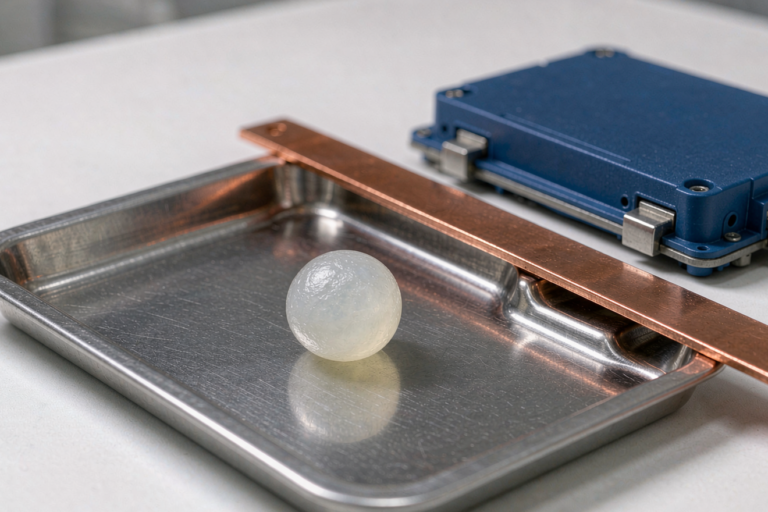
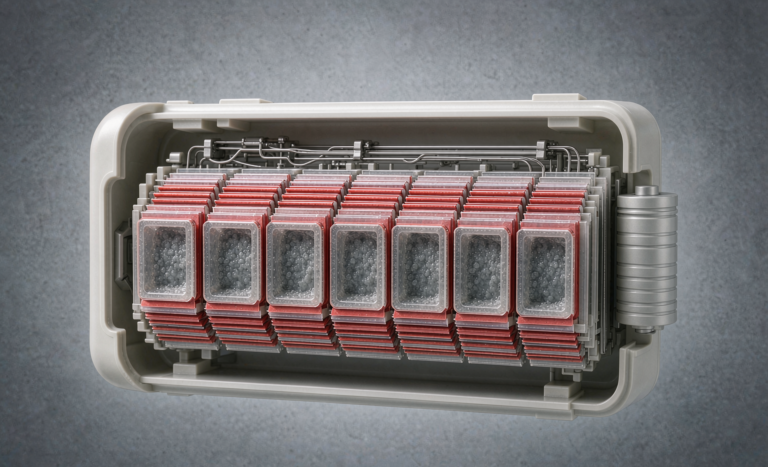
A semi-solid state battery sits between conventional liquid-electrolyte lithium ion and a fully solid-state cell. It uses a gel or quasi-solid electrolyte that carries lithium ions while sharply reducing the flammable solvent content. In our qualification programs this single change moves the thermal runaway threshold from roughly 150 degrees Celsius in a typical NMC cell to about 250 to 300 degrees Celsius. That gap is the difference between a pack that vents under abuse and one that simply shuts down and protects the operator.
Why Portable Military Electronics Need a Different Battery Chemistry
The soldier or technician is the final integration point, and every gram matters. Modern dismounted operations stack communications, navigation, sensing and sometimes lethal effects onto a single person. Each subsystem wants its own power budget, yet the loadout has a hard weight ceiling. Power density, not just energy density, decides whether a pack can deliver surge current to a radio burst or a gimbal without voltage collapse.
Conventional lithium ion chemistry forces a compromise. To get the energy you accept a flammable liquid electrolyte and a narrow temperature window. To get the safety you drop to LFP and lose a third of the energy. The semi-solid state battery breaks that compromise by keeping high energy while removing most of the free liquid, which is the part that burns.
Reliability in the field is also a logistics problem. A pack that fails at 400 cycles forces a resupply chain that forward units cannot sustain. By holding capacity deeper into life and resisting the calendar fade that hurts lithium ion in hot stores, the semi-solid state battery stretches the interval between replacements and shrinks the spare-parts footprint a unit must carry.
Energy Density and Swappable Loadout Weight
The benefit a commander notices first is weight. A mature NMC lithium ion cell delivers about 250 to 280 watt hours per kilogram. LFP sits at 160 to 200 watt hours per kilogram. Production semi-solid state cells we have tested reach 300 to 350 watt hours per kilogram, with a roadmap to 400 and beyond as sulfide and halide electrolytes mature.
For a man-pack radio drawing 20 watts across a 12 hour patrol, the math is direct. At 250 watt hours per kilogram the battery weighs about 0.96 kilograms. At 320 watt hours per kilogram the same energy falls to 0.75 kilograms. Across a platoon that difference removes several kilograms of sustained load per soldier, which improves mobility and reduces fatigue on long movements. We size these packs in the 100 to 300 watt hour range to stay under transport limits while covering a full mission day, and we design the semi-solid state battery module so two sizes share one charger.
The per-watt-hour cost is higher than LFP, but when weight and survivability are the binding constraints, the trade is justified by the missions it unlocks. In one program a lighter pack let a team carry a second spare instead of a heavier single unit, which improved real endurance more than raw cell capacity alone would have.
Surviving the Temperature Envelope: From Desert Heat to Arctic Cold
Field electronics do not get to choose the weather. Liquid electrolyte cells lose capacity fast below zero. At minus 20 degrees Celsius a typical NMC pack may deliver only 60 to 70 percent of rated capacity, and charge acceptance collapses, which is why cold-weather units carry oversized batteries they can never fully use.
In our cold-chamber work, semi-solid state cells held roughly 80 to 85 percent of capacity at minus 20 degrees Celsius and still accepted charge without lithium plating when we limited current to 0.2C and enabled a low-power heater below minus 10. At the hot end, reduced solvent content keeps internal pressure lower at 60 degrees Celsius ambient, so the enclosure vent cycle triggers less often. For units operating from desert to arctic without changing kit, this wide envelope removes a whole class of mission-planning problems and lets a single custom battery solution serve every climate.
Safety Under Penetration, Shock and Immersion
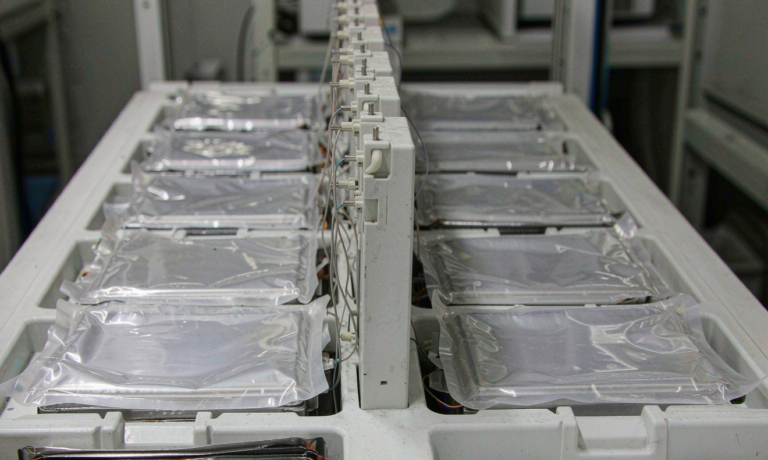
Ruggedized electronics get dropped, crushed and soaked. The nightmare is a pierced cell that runs into thermal runaway inside a confined space. Because the semi-solid state battery uses far less free liquid electrolyte, our nail-penetration and crush tests produced heat peaks roughly 40 to 50 percent lower than comparable NMC pouches, and in most cases the affected cell self-extinguished rather than propagating to its neighbors.
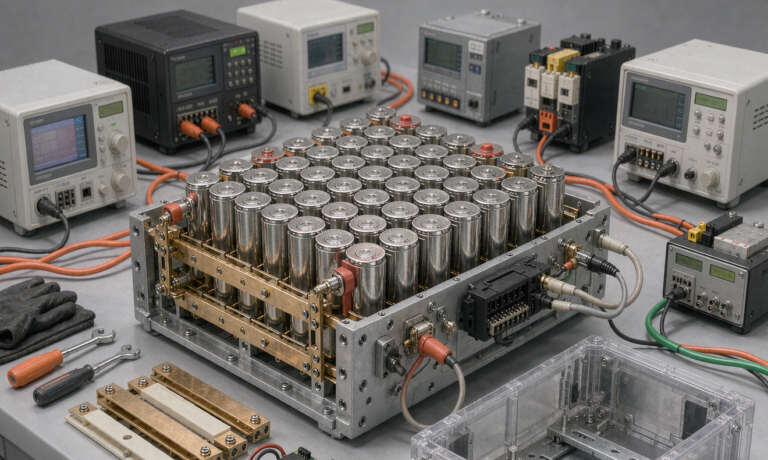
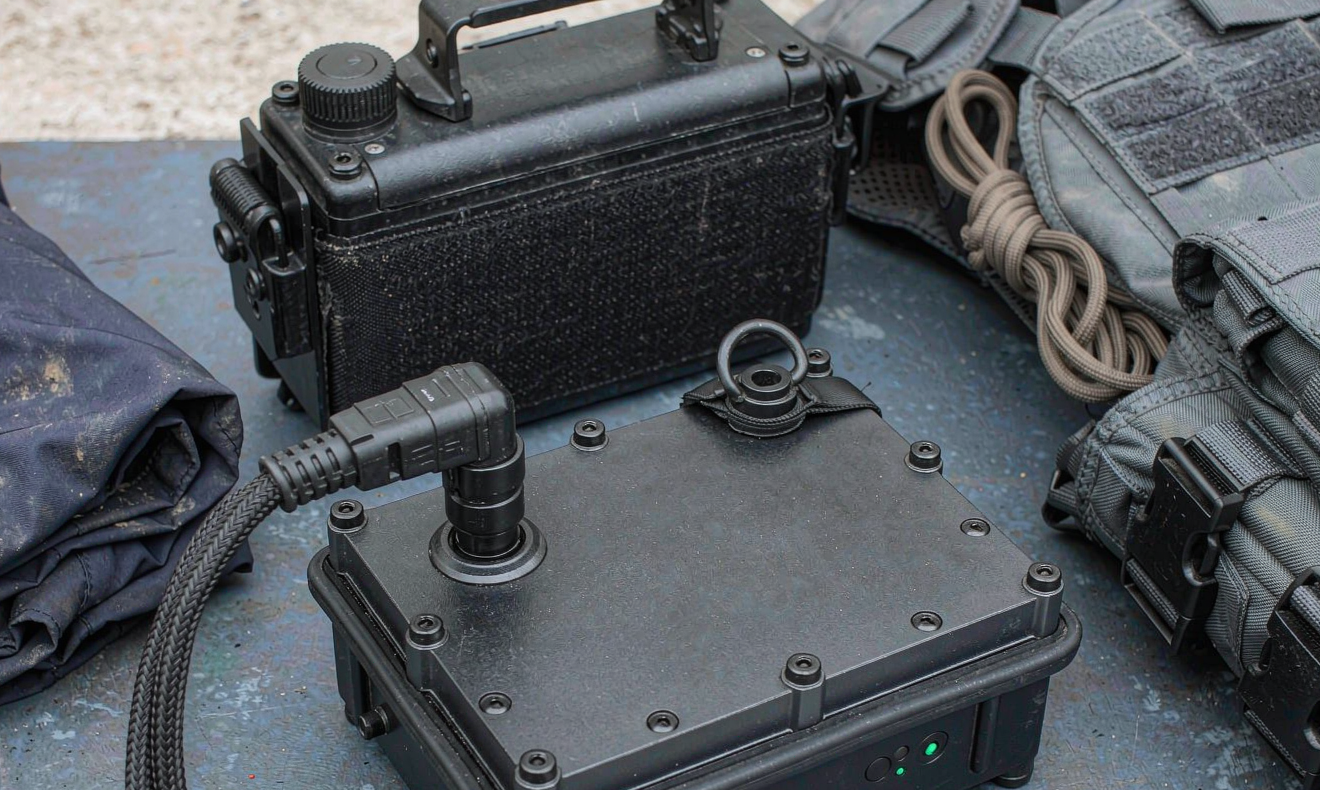
We pair the chemistry with an IP67 sealed aluminum enclosure, a vented but filtered pressure-relief path, and cell-level fusing. The pack meets immersion and dust requirements while keeping the operator safe even if one cell is compromised. This is exactly the failure mode that MIL-STD-810 environmental testing is built to surface, and the semi-solid chemistry gives us the margin to pass it consistently rather than hopefully.
What We Specify in a Military-Grade Semi-Solid Pack
When a defense customer asks for a custom battery solution, the cell is only the beginning. Our build specification for portable military electronics usually includes:
- A battery management system with coulomb counting, passive or active cell balancing, and a tamper-resistant firmware image.
- Operating range of minus 40 to plus 60 degrees Celsius with automatic heater control below minus 10.
- Cycle life of 1000 to 2000 full-equivalent cycles at 80 percent depth of discharge.
- Communication over SMBus or RS485 so the host radio can read state of charge and state of health.
- Mechanical shock and vibration qualification to MIL-STD-810 Method 514 and 516.
- A clear state-of-charge display and a disabled transport state for air movement.
We also design the semi-solid state battery module to drop into a housing originally built for lithium ion, which protects the customer’s tooling investment during a chemistry transition and shortens requalification time.
Certification and Handling: UN38.3, IEC 62133 and Beyond
No defense or dual-use battery ships without documentation. Every pack we build is tested to UN38.3 for transport, covering altitude simulation, thermal, vibration, shock, external short, impact and overcharge. At the cell level we apply IEC 62133 as the baseline safety standard, and for the assembled pack we document compliance with the relevant national defense and aviation handling rules, including FAA and EASA expectations for carry and declare.
When these packs move by air with the operator, the reduced flammable content of the semi-solid state battery makes the hazard classification discussion with the carrier noticeably simpler, though the cells remain lithium based and must be declared. We provide the test summary and ship at or below 30 percent state of charge, with the pack in its disabled transport state.
Deployment Lessons From Field Programs
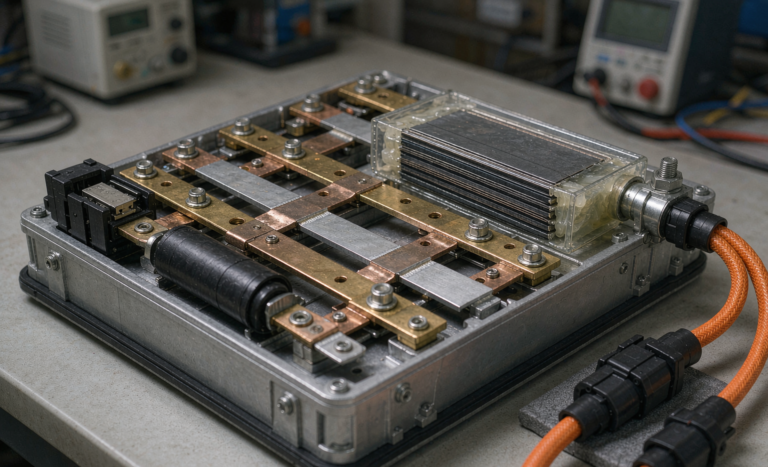
Across several man-pack and small-UAS programs the lessons repeat. First, qualify the full pack, not just the cell, because enclosure and firmware decide whether the chemistry advantage survives contact with reality. A cell that passes a datasheet test can still fail when its busbar loosens under vibration, so we proof the welded joints and the enclosure seal, not only the electrochemical curve. Second, train the maintainer: a semi-solid state battery still needs correct storage and a controlled discharge before long storage, and firmware updates should be signed. Third, plan for second life. After the front-line window we repurpose packs with about 70 percent remaining capacity into training or stationary roles, which lowers total cost of ownership and supports a closed-loop program.
The semi-solid state battery is not a magic replacement for every lithium battery application. For low-cost, high-volume consumer gear, LFP remains the rational choice. But for portable military electronics where weight, temperature range and safety margins decide mission success, the chemistry is the right call today rather than a future bet.
Frequently Asked Questions
What is a semi-solid state battery and how does it differ from lithium ion?
A semi-solid state battery uses a gel or quasi-solid electrolyte instead of a freely flowing liquid one. It keeps most of the energy density of lithium ion while reducing flammable solvent, which raises the thermal runaway threshold and improves safety under abuse such as puncture or crush.
Can a semi-solid state battery work in extreme cold?
Yes. In our testing semi-solid cells held about 80 to 85 percent of capacity at minus 20 degrees Celsius and could still charge at low current without lithium plating, where conventional lithium ion packs lose far more capacity and refuse to accept charge.
Is the semi-solid state battery safe for air transport with troops?
It is still a lithium based cell and must be declared and tested to UN38.3, but the lower flammable content simplifies the hazard discussion. We ship at 30 percent state of charge or less, in a disabled transport state, and supply the required test summary.
How long does a military semi-solid pack last?
We specify 1000 to 2000 full-equivalent cycles at 80 percent depth of discharge. After front-line use, packs retaining around 70 percent capacity move to training or stationary second-life roles to lower total cost of ownership.
Can semi-solid modules replace existing lithium ion packs?
In many cases yes. We design the semi-solid state battery module to fit housings originally built for lithium ion, so customers can upgrade chemistry without replacing all of their mechanical tooling or restarting qualification from scratch.
Further Reading
References