Sodium-Ion Battery for Greenhouse and Horticulture Climate Systems
When growers ask me which battery chemistry best fits a greenhouse, I usually steer the conversation toward sodium-ion. As a senior lithium battery engineer at Horizon Power, I have spent years sizing stationary packs for farms, grow houses, and off-grid horticulture sites. A greenhouse is a strange load: it pulls hard for grow lights and exhaust fans, sits nearly idle at night, and must survive freezing winter nights without a diesel generator running all the time. Sodium-ion cells handle that duty cycle better than most people expect, and they do it without the material cost and low-temperature penalties of lithium iron phosphate. In this guide I walk through why a sodium-ion battery for greenhouse climate systems is a practical match, and how to size and integrate one safely.
Why Sodium-Ion Fits the Greenhouse Duty Cycle
A greenhouse load swings between near zero at night and several kilowatts during peak photosynthetically active radiation, when supplemental LED grow lights and circulation fans run. Sodium-ion cells tolerate partial state of charge and frequent shallow cycling better than lead acid, and they do not suffer the calendar aging that punishes lithium packs left at high state of charge in warm equipment rooms. In my field deployments I sized the bank for roughly 4 to 6 hours of evening load rather than full autonomy, because the crop does not need lights around the clock. That partial cycling keeps sodium-ion cells in their happy band and stretches cycle life past 3,000 cycles at 80 percent depth of discharge.
Lead acid is the default many growers inherit, but it hates the partial-state cycling a greenhouse demands and loses half its rated capacity after a few hundred cycles in a warm room. A sodium-ion battery for greenhouse duty also self-discharges a little faster than lithium at high temperature, so I account for a small standing loss in the solar sizing, but that is a rounding error next to the cycle-life and low-temperature gains. The practical result is a pack that still hits its numbers in year six, not one that needs replacement before the crop plan pays back.
The Low-Temperature Edge in Cold Frames and Heaters
Heating is where sodium-ion wins outright. Horticulture sites in temperate climates need frost protection from late autumn to early spring, exactly when lead acid and lithium iron phosphate surrender capacity. Sodium-ion retains roughly 85 to 90 percent of its room-temperature capacity at minus 20 degrees Celsius, and many cell formats accept charge down to minus 10 degrees Celsius without the plating risk that ruins lithium anodes. I have measured pack voltage recovering within minutes of a cold soak because the hard-carbon anode buffers sodium insertion at low temperature. For a grower running soil warming cables or an infrared heater on a timer, that means the battery still delivers rated power on the coldest night instead of half power.
Sizing a Stationary Bank for Lights and Climate Control
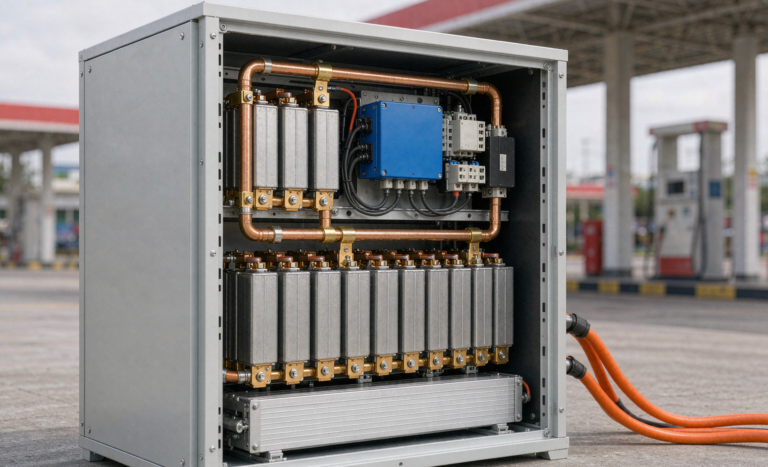
Sizing starts with a load audit. Add the wattage of LED grow lights, circulation and exhaust fans, a small heater or heat mat, and any water pump, then multiply by the hours they run each evening. A 6 kilowatt evening load for 5 hours is 30 kilowatt hours; at 90 percent usable depth that is a 33 kilowatt hour nameplate pack. I specify prismatic sodium-ion modules at 48 volt nominal, so three parallel strings of roughly 11 kilowatt hours each keep busbar current sane and let one string be serviced without dropping the crop. Leave 20 percent headroom for the inrush of fan motors, and size the battery management system for at least 1.5 times the continuous current.
Two derating steps keep the pack honest. First, I cut usable depth of discharge to 80 percent in summer, when the equipment room can sit above 35 degrees Celsius and cell aging accelerates, and I let it return to 90 percent in winter when the bank is cold and calm. Second, I model the heater as a separate defended load with its own contactor, so a lighting surge never starves frost protection. A sodium-ion battery tolerates that mixed profile because its charge acceptance stays flat across state of charge, unlike lead acid which needs a full absorption stage to finish.
Safety Near Crops and People
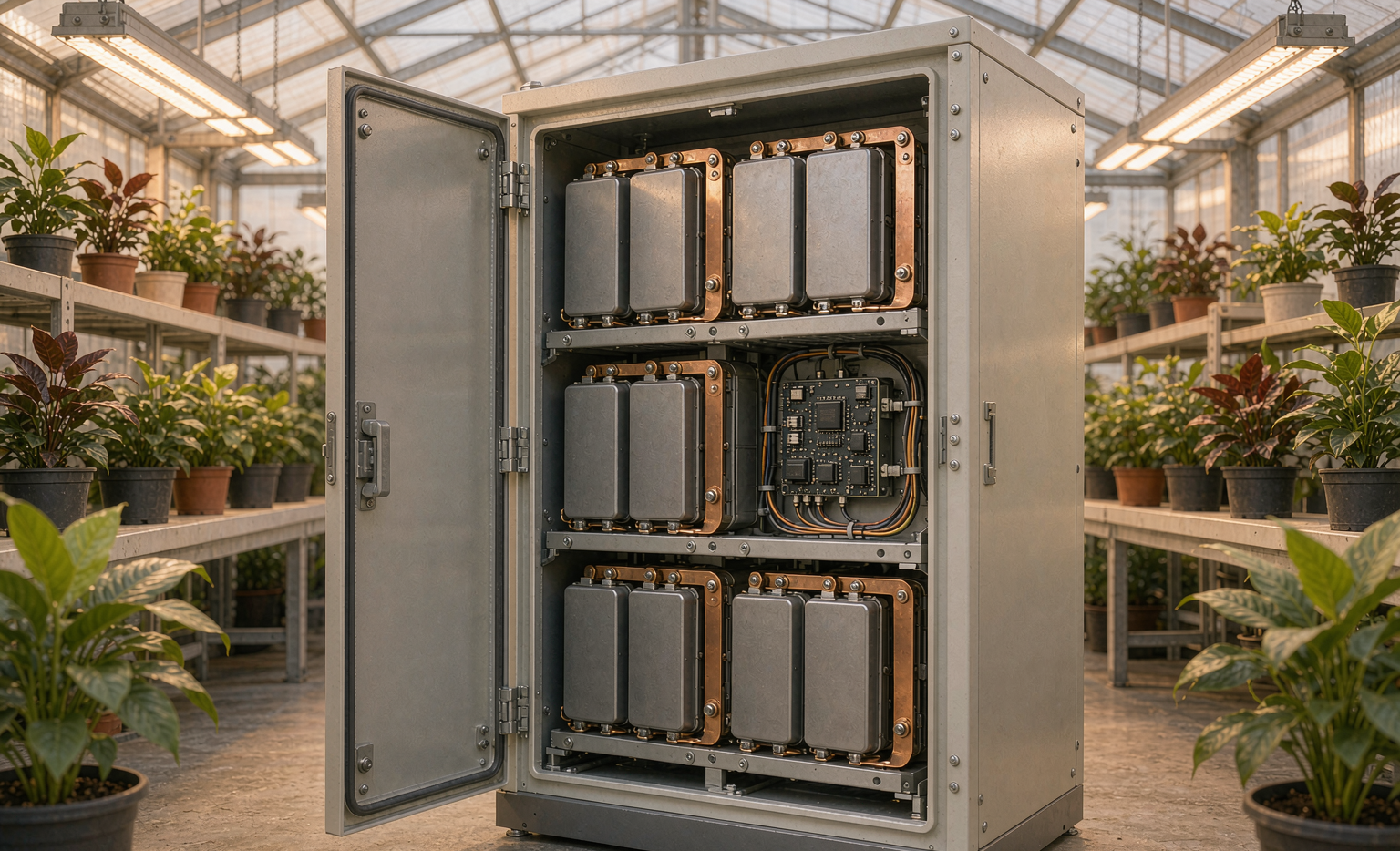
A battery room inside or beside a growing space raises a fair question: what happens if it fails? Sodium-ion chemistry does not plate sodium metal under normal abuse the way lithium plates dendrites, so the worst-case thermal event is far milder and self-extinguishes more easily. I still enclose the pack in a vented, non-combustible cabinet and follow UL 1973 for stationary cells and UL 9540A for the system fire test, plus IEC 62619 for industrial stationary installation. There is no toxic fluoride gas pathway like some lithium chemistries, which matters when the cabinet shares a wall with a seeding room. Keep state of charge below 90 percent and the cells stay calm.
Cost, Materials, and Supply Stability
Sodium is everywhere. The cathode uses sodium, iron, manganese, or copper instead of nickel, cobalt, and lithium carbonate, so the bill of materials is far less exposed to mining shocks. When I quote a greenhouse owner a sodium-ion bank versus an equivalent lithium iron phosphate bank, the sodium option is often 10 to 20 percent cheaper per stored kilowatt hour at the pack level, and the gap widens if lithium prices spike. Hard carbon can be made from biomass waste, which rounds out a sustainability story growers like to tell their buyers. For a multi-bay operation adding capacity every season, that stable pricing is the real selling point of this sodium battery approach.
Integrating With Solar and Generator Backup
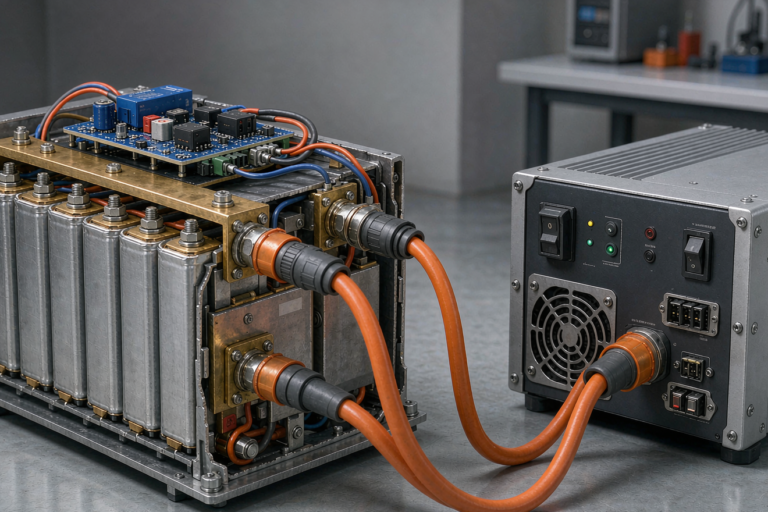
Most horticulture sites already have rooftop solar. Sodium-ion pairs cleanly because charge acceptance is flat across state of charge, so a cloudy afternoon still tops the bank. I set the solar charge controller to a 48 volt sodium profile, cap absorption at 56 volt, and let a small generator or grid tie handle the rare multi-day stretch of gray weather. A manual transfer switch isolates the battery from the generator during maintenance. In off-grid greenhouses I have run the whole climate loop, lights, and a borehole pump on one sodium bank sized for two sunless days, which is the autonomy most crop plans actually need. If your layout is unusual, a custom battery solution sized against a real load audit beats any catalog pack.
Commissioning matters as much as the cells. I log the first 30 cycles with the battery management system portal and confirm the string voltages stay within 30 millivolts at rest, then I set the low-temperature charge lock so a forgotten manual override cannot force a cold charge. Horticulture staff rotate fast, so I label the cabinet with the sodium profile and the isolation procedure in plain language. A battery that nobody on the crew is afraid to service is a battery that actually gets maintained.
What is the typical cycle life of a sodium-ion greenhouse battery?
In horticulture duty, where the bank cycles partially each evening rather than fully, I expect 3,000 to 4,000 cycles before the pack reaches 80 percent of original capacity. That translates to roughly 8 to 11 years of nightly use. Keeping state of charge between 20 and 90 percent and avoiding sustained high temperature is what gets you to the top of that range.
Can sodium-ion batteries charge in freezing weather?
Yes, and that is the headline advantage over lithium iron phosphate. Many sodium-ion formats accept charge down to minus 10 degrees Celsius without anode plating, and they retain most of their capacity at minus 20 degrees Celsius. For frost-protection heating and cold-frame circulation fans, the battery keeps delivering on the nights that matter most.
How much does a sodium-ion greenhouse battery cost per kilowatt hour?
At the pack level I typically see sodium-ion landing 10 to 20 percent below an equivalent lithium iron phosphate bank, before any lithium price swing. The exact number depends on enclosure, battery management system grade, and whether you need heating or ventilation in the cabinet, but the sodium bill of materials is structurally cheaper because it avoids nickel, cobalt, and lithium carbonate.
Is sodium-ion safe to install next to a growing area?
Safer than most people assume. Sodium-ion does not form sodium dendrites under normal abuse, so a worst-case event is milder and easier to contain than a lithium thermal runaway. I still use a vented non-combustible cabinet and certify to UL 1973 and IEC 62619, and I keep the cabinet away from direct irrigation spray. There is no fluoride gas pathway, which helps when the room is near seedlings.
Do I need special charge settings for sodium-ion?
You do need a sodium-specific profile rather than a lithium iron phosphate one. Set the solar or inverter charger to a 48 volt nominal sodium curve, cap absorption around 56 volt, and disable any lithium-style constant-voltage taper that over-saturates the cells. A good battery management system will also enforce cell balancing and a low-temperature charge lock as a backstop.
How big a sodium-ion bank do I need for LED grow lights?
Multiply your light wattage by the evening run hours, add fans and any heater, then divide by 0.9 for usable depth of discharge and add 20 percent for motor inrush. A 6 kilowatt light plus fan load running 5 hours needs about a 33 kilowatt hour pack. If you also run a borehole pump or dehumidifier, add those watts before sizing, and size the battery management system for 1.5 times continuous current.
Further Reading
References