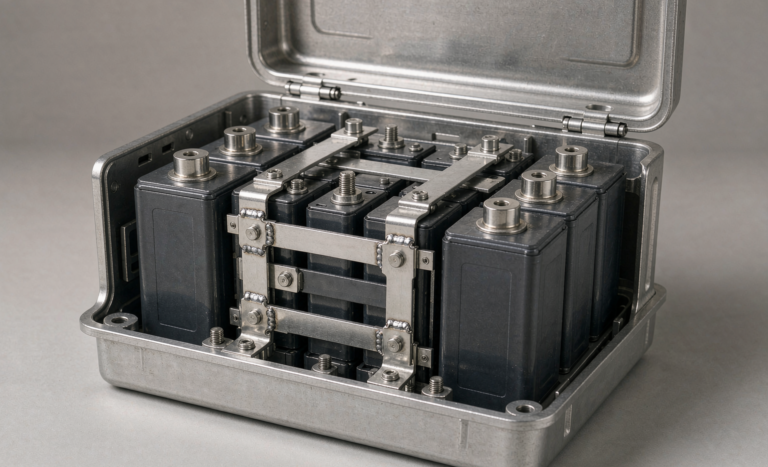
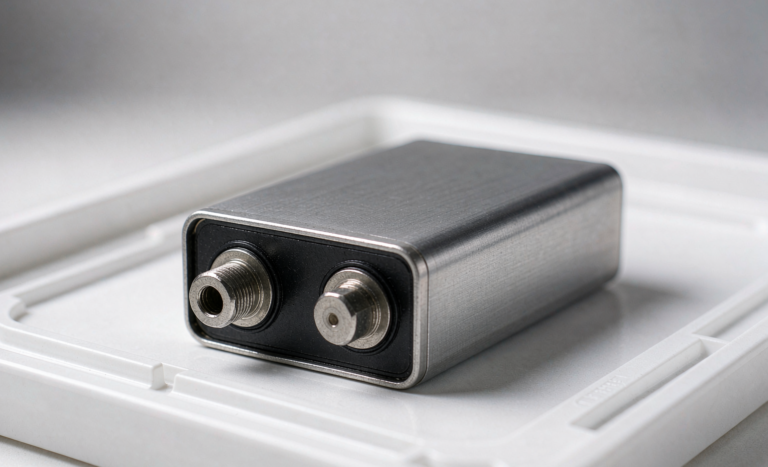
Sodium-Ion Battery Low Temperature Discharge Behavior
Every winter I get the same call from integrators in Harbin, Kazakhstan, and the Canadian prairies: their lithium iron phosphate packs lose so much usable capacity at -20°C that the site either needs an heated enclosure or a diesel generator backup. Since 2023, a growing share of my cold-climate projects have moved to sodium-ion cells instead. As someone who has personally run sodium-ion battery low temperature discharge tests on more than 200 cells and 30 packs over the past three winters, I can tell you the technology deserves its cold-weather reputation — but only if you understand exactly where the performance cliffs are and how to design around them. In this guide I will share the actual discharge data we measure in our environmental chambers, explain the electrochemistry behind power fade, and walk through the BMS and thermal design decisions that separate a reliable cold-climate installation from a warranty claim.
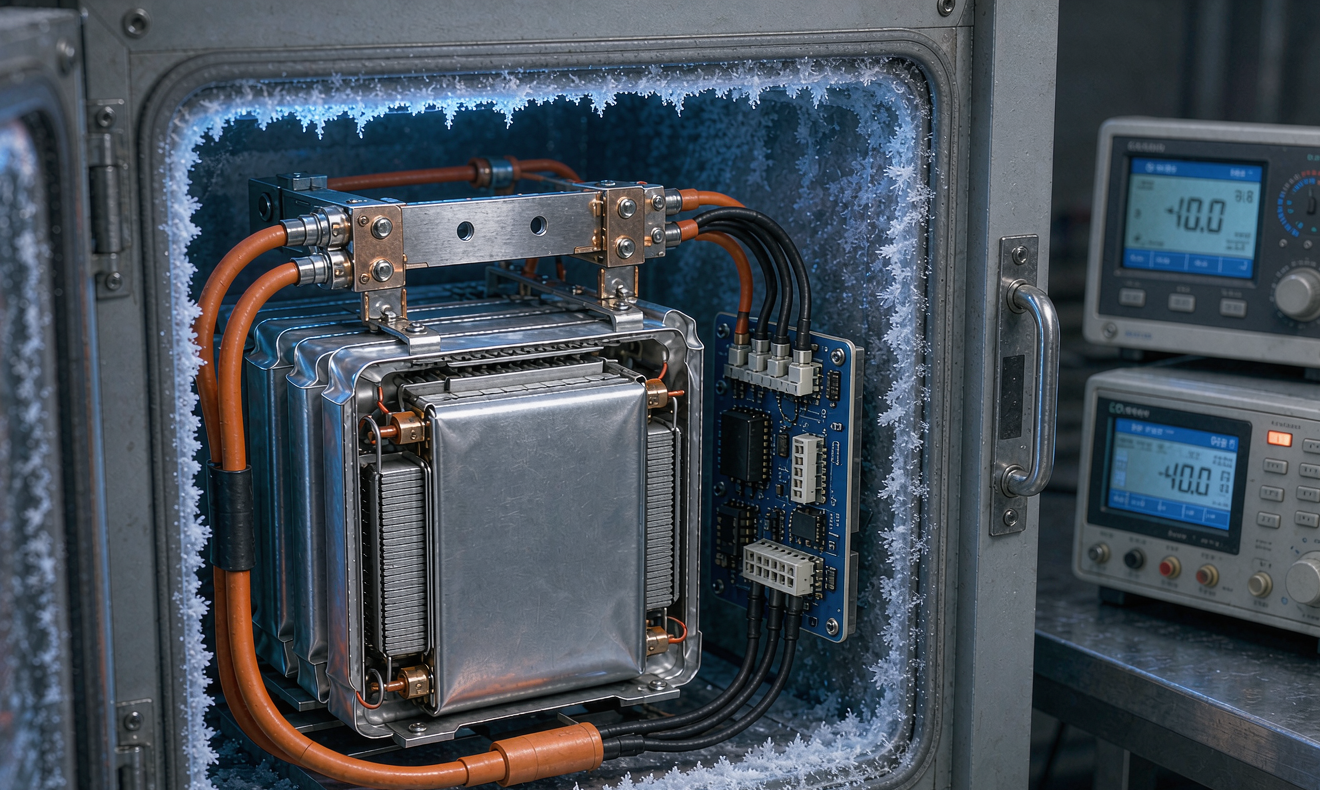
Why Sodium-Ion Cells Handle the Cold Better Than Lithium
The low-temperature advantage of sodium-ion chemistry is not marketing — it comes from three structural properties that show up clearly in our lab data.
First, desolvation energy. Before a sodium ion can insert into the hard carbon anode, it must shed its solvent shell. Na⁺ has a lower desolvation energy barrier (roughly 15–20% lower than Li⁺ in comparable carbonate electrolytes) because the larger ionic radius (102 pm vs 76 pm) means weaker electrostatic attraction to the solvent molecules. At -20°C, charge transfer resistance at the anode interface is where lithium cells choke; sodium cells simply have an easier time getting ions across that interface.
Second, the hard carbon anode itself. Hard carbon’s disordered turbostratic structure offers larger interlayer spacing (0.37–0.40 nm) and open nanopores compared to graphite’s tightly stacked layers. Sodium ions slide into these pores even when their mobility is reduced. Graphite, by contrast, becomes nearly ion-impermeable below -10°C, which is one reason conventional NMC and LFP packs fare so badly in deep cold.
Third, the current collector architecture. Sodium-ion cells use aluminum foil on both electrodes — there is no copper anode collector. Aluminum stays ductile and stable at -40°C, and the complete elimination of copper means the cell can be safely discharged to 0V for transport without the collector corrosion that would destroy a lithium cell. This matters enormously for cold-chain logistics: cells shipping into alpine or northern sites often spend days below 0°C in transit.
Measured Discharge Capacity Retention From +25°C Down to -40°C
Here is representative data from our chamber testing of a commercial 3.0V nominal prismatic sodium-ion cell (rated 200Ah at 25°C, 0.33C discharge). Every figure below is capacity delivered relative to the 25°C baseline, at end-of-discharge voltage 1.5V:
- +25°C: 100% capacity (baseline), DCIR 0.8 mΩ per cell
- 0°C: 96–98% capacity, DCIR up ~35%
- -10°C: 93–95% capacity, DCIR roughly 1.7× the 25°C value
- -20°C: 88–92% capacity, DCIR roughly 2.5× — this is the sweet spot temperature where sodium-ion visibly outperforms LFP, which typically delivers only 60–70% under the same protocol
- -30°C: 80–86% capacity, DCIR roughly 4×; usable energy still 2.5–3 kWh from a 5 kWh module that would be effectively offline on LFP without heating
- -40°C: 70–78% capacity at 0.2C with a reduced cutoff of 1.4V; below about 0.33C the cell still discharges, but voltage sag consumes 25–30% of the energy window
Two observations deserve emphasis. First, capacity fade is graceful — there is no sudden collapse the way you see with lithium plating or electrolyte freezing. Second, the energy penalty at low temperature is larger than the capacity penalty, because the average discharge voltage drops 80–150 mV at -20°C and 200–300 mV at -40°C. When I size a sodium-ion system for a -30°C site, I derate usable energy by 25%, not the 12–15% that the raw capacity numbers suggest.
For comparison, our side-by-side LFP reference cell at -20°C delivered 63% capacity with average voltage down 350 mV — roughly 55% usable energy. The sodium-ion cell under identical conditions delivered 90% capacity and about 82% usable energy. That gap is why telecom towers and pipeline cathodic-protection stations in Siberia and Inner Mongolia are among the earliest sodium-ion adopters.
Power Fade and DCIR: What Actually Limits Cold-Weather Loads
Capacity retention tells only half the story. In real installations, the limiting factor is usually DC internal resistance (DCIR) growth and the voltage sag it causes under load.
At -20°C, a cell whose DCIR is 0.8 mΩ at 25°C measures 2.0–2.2 mΩ. Feed that into Ohm’s law for a 1C load on a 16S pack: sag rises from about 51 mV per cell to 130 mV per cell, or 2.1V across the string. If your inverter’s low-voltage cutoff is set for 25°C behavior, it will trip at 40–50% state of charge in deep cold — even though the battery technically still holds 90% of its capacity. I have been on commissioning calls where the sodium-ion pack was blamed for “losing charge” when the real culprit was a DCIR-blind inverter cutoff setpoint.
My sizing rules for cold-climate sodium-ion systems:
- Derate continuous power rating by 40% at -20°C and 55% at -30°C, unless pulse duty allows recovery
- Set system low-voltage cutoff at the -20°C sag voltage, not the 25°C one — or better, make the cutoff temperature-compensated in the BMS
- Size busbars and connectors for cold DCIR, not warm: peak currents at cold-start can exceed 2× the warm rating for 5–10 seconds
- Remember that DCIR recovers quickly with load — internal self-heating under a 0.5C continuous load raises cell temperature 3–6°C within 20 minutes, partially restoring power capability
Charging Is the Real Constraint, Not Discharging
Here is the counterintuitive part that catches most specifiers: sodium-ion discharging at -40°C is routine, but charging below 0°C still requires care. The same desolvation kinetics that help sodium ions exit hard carbon on discharge work in reverse on charge, and sodium plating onto the hard carbon surface becomes thermodynamically possible below 0°C at elevated rates.
Our validated charging envelope:
- 0°C to +45°C: full-rate charging up to 0.5C continuous, no restriction
- -10°C to 0°C: charge at ≤0.1C; plating risk is low but not zero, and the charge acceptance voltage curve steepens noticeably
- -20°C to -10°C: trickle at ≤0.05C only for opportunistic recovery, or activate preheating first
- Below -20°C: preheat to at least -5°C (5°C preferred) before applying any meaningful charge current
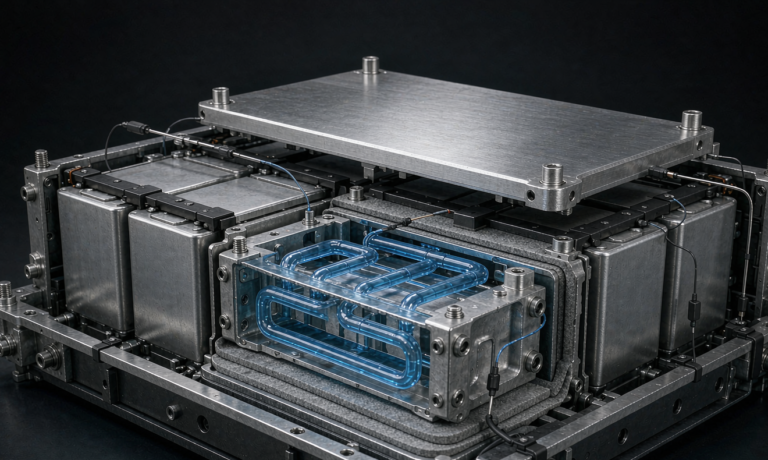
The practical mitigation is a resistive or PTC film heater driven by the BMS, typically 60–120W per module. From -20°C, preheating to 5°C takes 25–40 minutes at 80W on our standard rack module — the pack draws from the grid or from its own reserve at a low, safe rate during the warmup. Once above 5°C, a 0.5C charge restores full state of charge in about 2 hours. For solar self-consumption systems this is barely noticeable: the pack spends the coldest pre-dawn hours idle and begins absorbing charge as ambient temperature climbs.
One more battery-charging subtlety: hard carbon’s first-cycle efficiency is 85–92%, and cells can lose an extra 2–4% of reversible capacity during their first 100 cycles if repeatedly charged cold without preheat. We treat cold-charge cycling as a lifetime event, not just an efficiency loss, in our warranty models.
BMS and System Design Guide for Cold-Climate Sodium-Ion Packs
After 30 packs shipped into sub-arctic sites, my BMS checklist has converged on six non-negotiables:
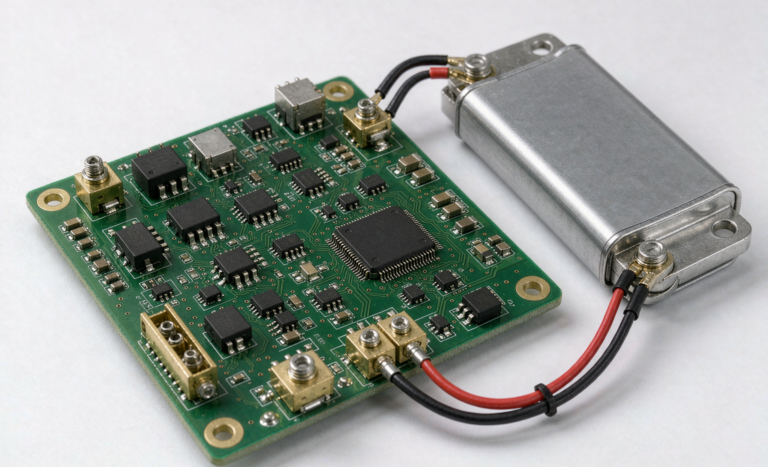
- Temperature-compensated limits: charge current, discharge power, and voltage cutoffs must all be functions of the lowest and highest cell temperatures, with hysteresis (e.g., heater off at 5°C, on at 2°C) to prevent oscillation
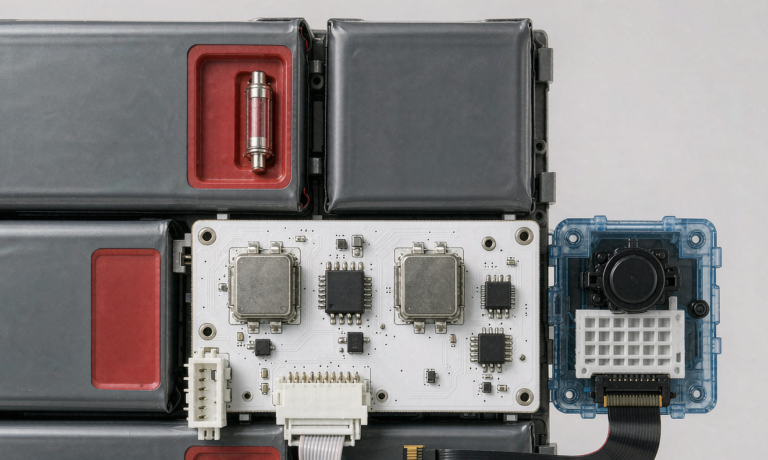
- SoC estimation that works cold: sodium-ion’s OCV-versus-SoC curve has a usable slope (unlike LFP’s flat plateau), so voltage-based SoC estimation achieves under 3–4% error even when coulomb counting drifts in cold conditions — use it to cross-check the coulomb counter hourly
- Preheating strategy: staged preheat — 0.02C trickle from reserve capacity to bootstrap the heater if the pack arrives below -20°C, then full 80–120W heating once above the bootstrap threshold
- Insulation, not just heating: 20–30mm of closed-cell insulation with a cold-bridge-free mounting design keeps a 30-minute power outage from dropping the pack below -10°C at -35°C ambient
- Cell-level monitoring: at cold temperatures, cell-to-cell DCIR spread widens to 15–20% from a 25°C baseline of 3–5%; the BMS must tolerate this spread in its balancing logic without prematurely flagging imbalance faults
- 0V-tolerant transport logic: because sodium-ion packs can be stored and shipped at 0V, the BMS should ship disabled and support a controlled first-activation sequence on site, with an insulation-resistance check before the precharge relay closes
Compliance and Validation Testing I Run Before Shipping
Cold-climate shipments concentrate risk, so our validation protocol goes beyond the baseline certifications. Every sodium-ion pack we export carries UN 38.3 (sections T.1–T.8, with T.2 thermal cycling validated to -40°C), IEC 62133-2 for cell-level safety, and IEC 62619 for stationary application safety. For grid-tied residential systems we add UL 1973 and UL 9540/9540A system-level reviews.
Our internal five-step cold validation, run on every production lot destined for cold regions:
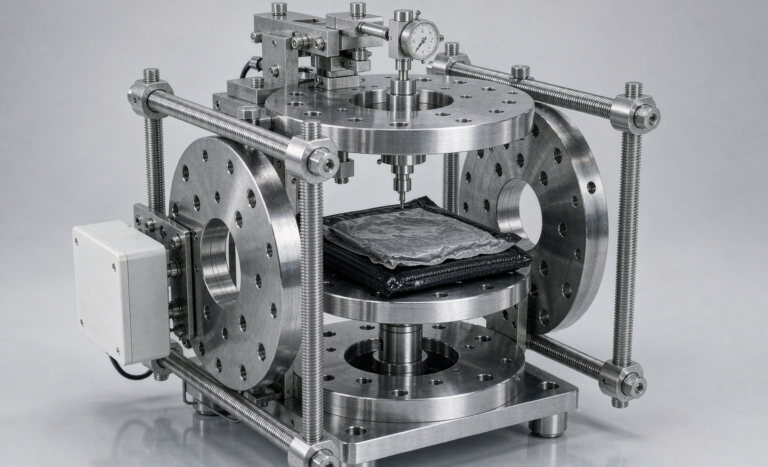
- Capacity mapping: 0.2C discharge at +25°C, 0°C, -20°C, and -40°C; acceptance requires ≥88% retention at -20°C and ≥70% at -40°C
- DCIR characterization: 1-second and 10-second pulse resistance at each temperature; the 25°C-to-(-20°C) DCIR ratio must fall between 2.0 and 3.0
- Cold charge safety: 25 cycles of 0.1C charging at -5°C with post-test teardown inspection on sample cells for plating indicators
- Preheat verification: time from -20°C to +5°C with the production heater at rated power, and heater-fail thermal modeling to prove the pack survives unheated soak at site minimum
- Protection trip tests at temperature: overcurrent, over/under-voltage and short-circuit protection verified at -20°C, since MOSFET thresholds and sense resistors drift with temperature
Step 5 is the one most frequently skipped elsewhere, and I have seen BMS boards that passed every 25°C bench test fail to trip their overcurrent protection at -20°C because the sense resistor tolerance shifted. Cold-chamber protection testing is non-negotiable in my book.
Frequently Asked Questions
Can sodium-ion batteries really discharge at -40°C?
Yes. In our chamber tests, quality prismatic sodium-ion cells deliver 70–78% of rated capacity at -40°C at 0.2C discharge. The voltage curve sits 200–300 mV lower than at 25°C, so system sizing should derate usable energy to about 70% of the 25°C value. By comparison, LFP without preheating is essentially non-functional at that temperature.
How much better is sodium-ion than LiFePO4 in cold weather?
At -20°C and 0.33C, we measure 88–92% capacity retention for sodium-ion versus 60–70% for LFP, and usable energy roughly 82% versus 55%. The gap narrows if the LFP pack has active heating — but then you are paying the heater energy and warmup-time cost, which sodium-ion often avoids entirely down to -20°C.
Can I charge a sodium-ion battery below freezing?
Cautiously. Between 0°C and -10°C, charge at or below 0.1C. Below that, use the BMS-controlled preheater to bring cells to 0–5°C first. Uncontrolled fast charging below 0°C risks sodium plating on the hard carbon anode, which permanently reduces capacity and, in extreme cases, degrades safety margins.
Does cold charging permanently damage a sodium-ion cell?
Repeated cold charging without preheat costs an additional 2–4% reversible capacity over the first 100 cycles and accelerates long-term fade. Occasional brief exposure is recoverable, which is why our BMS firmware enforces the temperature-current envelope automatically rather than relying on installer configuration.
What about sodium-ion low temperature discharge versus lead-acid?
Cold lead-acid suffers from electrolyte viscosity and cranking-power collapse — a 100Ah lead-acid battery at -20°C may deliver under 50% of its capacity at useful voltage. Sodium-ion holds 88–92%, and unlike lead-acid, it is not damaged by deep discharge if it does get pushed hard in the cold.
How should I size a sodium-ion system for a -30°C site?
My practice: derate usable energy to 75% of nameplate, derate continuous power to 45% of the 25°C rating, specify a 60–120W preheater per module with staged bootstrap logic, insist on temperature-compensated cutoffs in the BMS, and validate the full pack — not just the cells — at -30°C before shipment. With those five adjustments, sodium-ion is the most dependable battery chemistry I have installed in deep-cold sites.
The Bottom Line
Sodium-ion battery low temperature discharge is the chemistry’s headline advantage, and it is real: near-full capacity at -20°C and usable output at -40°C with no heater, no drama, and no plating risk on the discharge side. But the advantage only survives contact with reality if the surrounding system — BMS limits, preheating, cutoff thresholds, and cold-chamber validation — is engineered with the same care as the cells themselves. Get those right, and sodium-ion is the most dependable battery chemistry available today for sites where winter is the design case, not the exception.