Lithium Battery Shipping Compliance
Over the last twelve years on the production floor, I have shipped thousands of lithium battery packs to customers in North America, Europe, and Australia. If there is one lesson that never changes, it is this: a technically perfect battery is worthless if it cannot legally cross a border. As Karl Huang, Senior Lithium Battery Engineer at Horizon Power, I have personally shepherded LFP and NMC cells through IATA, IMDG, and ADR audits. This guide distills what lithium battery shipping compliance actually requires in practice — not the marketing version, but the version that keeps your cargo off the return flight.
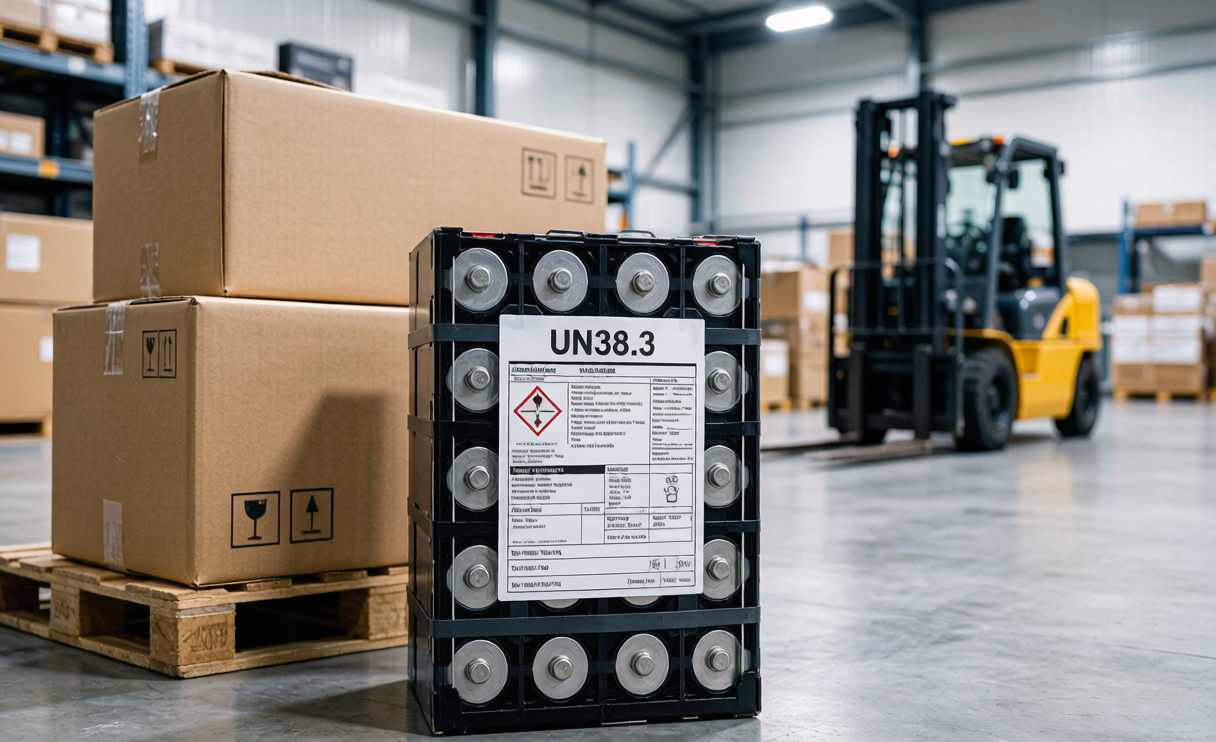
Whether you build a small Li-ion pouch cell or a 5 kWh home energy storage battery pack, the same three documents decide your fate at the cargo terminal: the UN38.3 test summary, the MSDS/SDS, and the correct Class 9 labeling. Get any one of them wrong and the freight forwarder will reject the pallet.
What Lithium Battery Shipping Compliance Really Means
When buyers ask me about lithium battery shipping compliance, they usually imagine a single certificate. In reality it is a chain of evidence. The lithium battery must first prove it is safe to transport through a battery of simulation tests (that is what UN38.3 is). Then the carrier needs a written safety sheet describing the chemistry and emergency response (MSDS/SDS). Finally, the outer packaging must carry the right marks so handlers know they are moving dangerous goods.
I work with both LFP (lithium iron phosphate) and NMC (nickel manganese cobalt) chemistries, and the compliance path differs slightly. NMC cells carry higher energy density and stricter state-of-charge limits for air transport, while LFP battery packs are often treated more favorably on sea freight. But the documentary backbone — UN38.3, MSDS, and labeling — is identical for every cell and battery pack we manufacture.
UN38.3: The Non-Negotiable Transport Test
UN38.3 is a section of the UN Manual of Tests and Criteria. I tell every new engineer: no UN38.3, no shipment. The standard subjects each cell and battery pack to eight tests:
- T.1 Altitude simulation — 11.6 kPa for at least 6 hours, verifying the cell survives the pressure at 15,000 m.
- T.2 Thermal test — 7 cycles between +75°C and −40°C.
- T.3 Vibration — swept-frequency vibration followed by a 3-hour logarithmic sweep.
- T.4 Shock — 150 G acceleration for small cells, 50 G for large battery packs.
- T.5 External short circuit — 55°C ±2°C, no fire or rupture.
- T.6 Impact / crush — applied force until 50% deformation or 13 kN, no fire.
- T.7 Overcharge — 2× rated voltage for 24 hours, applicable to battery packs.
- T.8 Forced discharge — single cell reversed to rated capacity.
A passing UN38.3 test summary must reference the specific model, cell chemistry, and nominal capacity. In my experience, the most common rejection reason at customs is a generic test summary that does not name the exact battery pack SKU. Each Li-ion product variant needs its own documented evidence.
MSDS and SDS: The Document Carriers Actually Read
The Material Safety Data Sheet (MSDS) — now standardized as the Safety Data Sheet (SDS) under GHS — is the document your freight forwarder opens first. An SDS for a lithium battery is not about the battery’s performance; it is about hazard communication. A proper SDS for our LFP battery pack contains 16 sections, including:
- Section 2 — hazard classification (typically Class 9, miscellaneous dangerous goods).
- Section 9 — physical and chemical properties, including lithium content in grams.
- Section 14 — transport information referencing UN3480 (cells/batteries) or UN3481 (packed with or contained in equipment).
- Section 16 — the UN38.3 statement confirming the cell has passed testing.
I always remind customers: the SDS must state the equivalent lithium content. For a Li-ion cell this is calculated as 0.3 × rated capacity in Ah. A cell above 20 Wh or a battery pack above 100 Wh triggers additional handling rules. Our NMC drone cells often sit just under the per-cell limit, which is why we design battery pack configurations carefully with the carrier limits in mind.
Labeling Rules: Class 9, the Lithium Battery Mark, and Packaging
Labeling is where small mistakes cause big delays. Every consignment of loose lithium cells or batteries must display the Class 9 lithium battery hazard label (a black-and-white striped border with the flame symbol) and, since the 2019 editions of IATA DGR and IMDG, the new Lithium Battery Mark — the rectangular symbol with the battery and flame, plus the UN number and a telephone number.
- UN3480 — lithium-ion cells and batteries shipped alone.
- UN3481 — lithium-ion batteries packed with or contained in equipment.
- UN3090 / UN3091 — the equivalent codes for lithium metal batteries.
Packaging is equally strict. A battery pack over 100 Wh shipped by air must go as Cargo Aircraft Only (CAO) unless it is under the passenger-approval threshold. We use UN-approved fiberboard or steel drums with the required cushioning, and we keep the state of charge at or below 30% for air shipments of standalone Li-ion batteries — a rule I enforce personally before any pallet leaves the dock.
Air, Sea, and Road: Mode-Specific Requirements
Different transport modes map to different rulebooks, and I brief our logistics team on all three:
- Air (IATA Dangerous Goods Regulations) — the strictest. Standalone lithium battery packs generally move as Cargo Aircraft Only. The 2025–2026 DGR continues to require the Lithium Battery Mark on every package.
- Sea (IMDG Code) — allows larger volumes and is our default for LFP home storage battery packs. Still Class 9, still the mark, plus segregation from certain dangerous goods on board.
- Road (ADR in Europe, DOT in the US) — similar Class 9 logic, with vehicle placarding once load thresholds are exceeded.
For a typical 5 kWh LFP battery pack, sea freight under IMDG is both cost-effective and compliant, provided the SDS lists UN3480 and the packaging meets the Packing Instruction. I have shipped entire containers this way to European installers without a single hold.
An Engineer’s Pre-Shipment Compliance Checklist
Before any lithium battery leaves our factory, my team runs this checklist:
- Valid UN38.3 test summary naming the exact battery pack model and chemistry (LFP or NMC).
- Current SDS dated within the last year, with UN number and lithium content stated.
- Correct Class 9 label and Lithium Battery Mark applied to every outer carton.
- State of charge verified — ≤30% for standalone air shipments.
- Packaging matches the applicable Packing Instruction (e.g., PI 965 for UN3480 by air).
- Shipper’s Declaration for Dangerous Goods completed and signed by a trained person.
This discipline is why Horizon Power’s lithium battery shipments clear customs predictably. Compliance is not a formality; it is part of the product.
Frequently Asked Questions
Is UN38.3 required for every lithium battery shipment?
Yes. UN38.3 testing and a test summary are mandatory for all lithium cells and battery packs offered for transport, regardless of mode. The test summary must identify the specific model and chemistry. I keep a binder of UN38.3 summaries for every SKU we produce, including each LFP and NMC variant.
What is the difference between MSDS and SDS?
Functionally they are the same hazard-communication document. MSDS is the older term; SDS is the current GHS-compliant 16-section format carriers expect. For a lithium battery, both must state the UN number, Class 9 classification, and lithium content so handlers know how to respond to an incident.
Can I ship a lithium battery pack by passenger air freight?
Standalone lithium-ion battery packs (UN3480) above the small-threshold generally must travel as Cargo Aircraft Only. Smaller batteries contained in or packed with equipment (UN3481) may be permitted on passenger aircraft under strict quantity and protection rules. When in doubt, I default to sea freight via IMDG for anything over 100 Wh.
Does a battery pack need both the Class 9 label and the Lithium Battery Mark?
In most current regulations, yes. The Class 9 hazard label communicates the danger class, while the Lithium Battery Mark provides the UN number and emergency contact. Together they tell handlers exactly what is inside the carton and how to move it safely.
How does IEC 62133 relate to shipping compliance?
IEC 62133 is the cell-level safety standard for portable sealed Li-ion and NiCd cells, covering short-circuit, overcharge, and thermal abuse. While it is not a transport test like UN38.3, passing IEC 62133 demonstrates the cell is inherently safe, which supports the UN38.3 dossier and reassures downstream customers.
Conclusion
Lithium battery shipping compliance is a discipline, not a document. The UN38.3 test proves the cell is transport-safe, the MSDS/SDS tells the world how to handle it, and correct Class 9 labeling keeps handlers informed at every step. At Horizon Power we treat these three as part of the battery pack itself. If you are specifying a Li-ion, LFP, or NMC solution for drones,储能, or home storage, build compliance into the bill of materials from day one — your freight forwarder, and your customer, will thank you.