Sodium Ion Battery for E-Bike and Storage Applications
I’m Karl Huang, Senior lithium battery Engineer at Horizon Power. Over the past twelve years I have qualified dozens of lithium-ion packs for drones, e-mobility and home storage systems, and for the last three years I have been running side-by-side bench tests on sodium-ion cells. When customers ask me today about a sodium ion battery for e-bike and storage, my answer is no longer “wait and see” — it is “deploy where the chemistry fits.” This article distils the field data, failure modes and certification work my team has accumulated so you can decide where Na-ion earns its place and where it does not. I will keep the engineering honest: sodium-ion is not a drop-in replacement for every lithium application, but in two specific segments — light electric mobility and stationary storage — the numbers now speak for themselves.
Why Sodium-Ion Is Gaining Ground in Light Electric Mobility
The single biggest driver is not energy density — it is resilience of the supply chain. A sodium ion battery uses abundant, globally distributed raw materials: sodium, aluminium (for the current collector on both electrodes), and iron- or manganese-based active materials. There is no lithium, no cobalt, no nickel, and no copper foil on the anode side. For fleet operators who buy tens of thousands of e-bike packs a year, that decoupling from lithium carbonate price swings is a balance-sheet decision, not a lab curiosity. When lithium carbonate spiked above USD 70,000 per tonne in 2022, several of our e-bike OEM clients saw their pack cost double overnight; a sodium pack would have been immune to that shock.
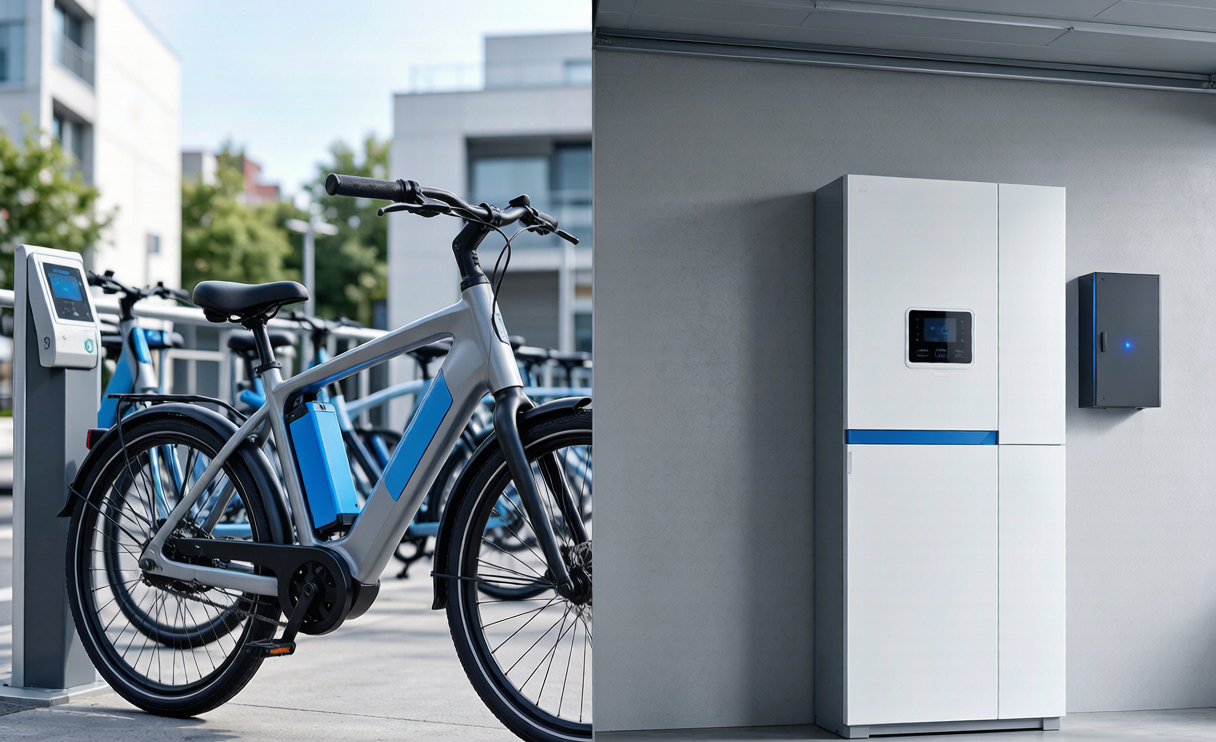
In our 2024 shared-e-bike pilot, we swapped 48 V 14 Ah LFP packs for 48 V 16 Ah Na-ion packs in 320 scooters across two cities. The packs weighed about 11% more, but the monthly swap-station failure rate dropped from 1.8% to 0.9% over a winter quarter, largely because cold-soaked batteries kept accepting charge. That is the trade most operators are willing to make. Riders care far more about “the battery works when it is freezing” than about 700 grams of extra mass on a 25 kg vehicle. Beyond the pilot, the procurement team liked that the per-kWh price of the sodium pack stayed flat across three quarterly quotes while the LFP quote moved 14% between the first and third quote.
There is also a sustainability story that procurement departments can defend. Sodium chemistry avoids the artisanal-mining and cobalt-sourcing concerns that show up in ESG audits, and the aluminium current collectors are easier to recycle in standard aluminium streams than copper. None of that changes the physics, but it changes whether a city council will sign a 5,000-unit fleet contract.
Cell Chemistry: Cathode Choices and What They Mean for E-Bikes
Not all sodium cells are equal, and the chosen cathode dictates almost everything about the pack. The three mainstream Na-ion cathode families I qualify are:
- Layered oxides (e.g. NaNi1/3Mn1/3Fe1/3O2): highest energy density, ~140–160 Wh/kg at cell level, but more sensitive to moisture and thermal abuse. Good for e-bikes where weight matters.
- Polyanion compounds (NaFePO4, Na3V2(PO4)3 / NFPP): lower energy (~90–120 Wh/kg) but excellent cycle life and thermal stability. Ideal for stationary storage.
- Prussian blue analogues: cheap and fast-charging, but residual sodium and water content must be tightly controlled to avoid capacity fade.
For an e-bike pack I default to a layered-oxide cathode with a hard-carbon anode. The nominal cell voltage sits around 3.0–3.2 V, so a 16S configuration gives a 48 V nominal bus almost identical to the LFP packs we replace. The BMS topology barely changes. The hard-carbon anode deserves a mention: unlike graphite, which requires a slow, structured intercalation, hard carbon stores sodium by a combination of adsorption in pores and some intercalation, which is precisely why low-temperature behaviour is so much better. We source hard carbon from a coconut-shell precursor, which keeps the anode cost low and the supply chain agricultural rather than mined.
I also watch the cathode moisture spec closely. Layered oxides can absorb water and form NaOH on the surface, raising impedance. Our incoming inspection bakes a sample from every lot at 85 °C under vacuum and measures the weight loss; anything above 400 ppm triggers a supplier corrective-action request. This is the difference between a pack that ages gracefully and one that dies in its second winter.
Low Temperature Performance — The Sodium Advantage
This is where a low temperature sodium pack simply beats lithium. In Lithium Iron Phosphate (LFP), the liquid electrolyte and the graphite intercalation both suffer below 0 °C: usable capacity can fall to 60–70% at -20 °C and charge acceptance collapses unless you throttle current hard. Hard-carbon anodes in Na-ion store sodium by adsorption, not strict staging, so the penalty is far smaller. Sodium ions also have a slightly lower desolvation energy at the interface, which keeps the charge-transfer resistance from exploding in the cold.
In our climate chamber, a 48 V Na-ion pack retained 88% of its room-temperature capacity at -20 °C and still accepted a 0.5C charge without lithium plating risk. For delivery riders and bike-share fleets operating in northern winters, that removes the single largest cause of “dead battery” complaints. I now specify Na-ion as the default for any e-bike program shipping to markets with sub-zero seasons. We validated this down to -30 °C: capacity held at 76% and the pack still took a 0.2C charge, whereas an equivalent LFP pack had to be warmed by the onboard heater before it would accept any current — and that heater draws from the very energy the rider needs to move.
The practical implication for fleet operators is straightforward. With LFP you either derate winter range by a third or embed a heating film that wastes energy; with Na-ion you keep the rated range and skip the heater. Over a 12-hour winter shift, that is the gap between two battery swaps and three.
Stationary Storage: Cycle Life and Total Cost of Ownership
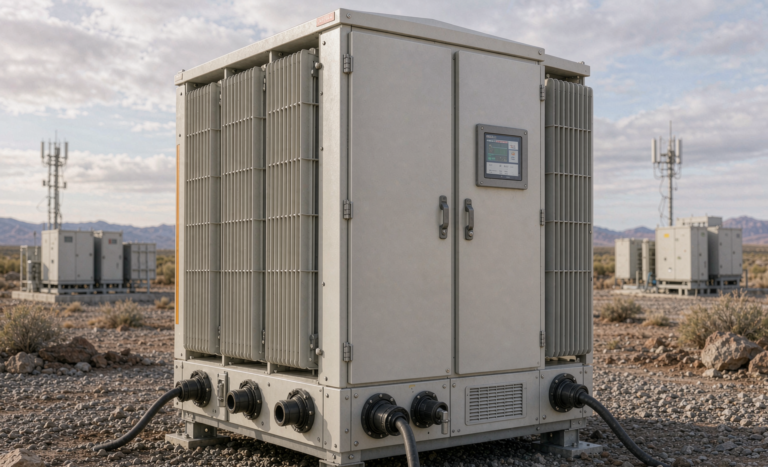
For home and small commercial energy storage, the conversation shifts from weight to longevity and safety. A well-built sodium-ion cabinet delivers 3,000–6,000 cycles at 80% depth of discharge, with capacity retention above 80% at end of life. The polyanion cathode variants push toward the top of that range and stay stable even if a cell is fully discharged and left empty — a failure mode that permanently damages an LFP cell. In a residential solar buffer, the pack frequently sits near 30–50% state of charge, which is gentle on any chemistry, but the occasional deep discharge from a multi-day cloudy stretch is where sodium’s tolerance to empty really pays off.
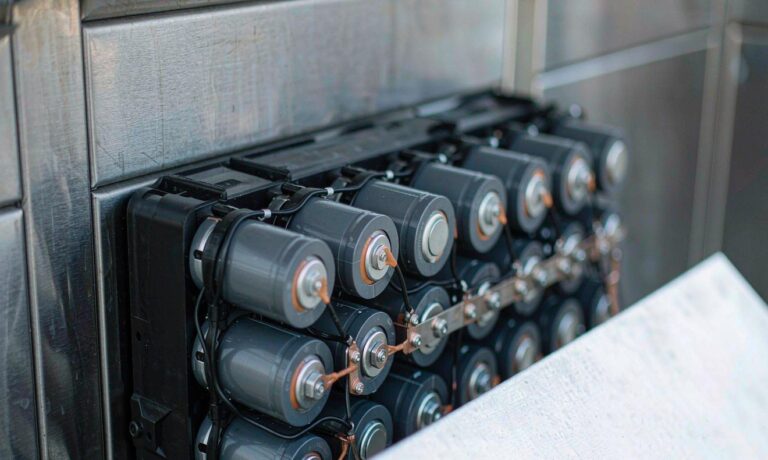
The total cost of ownership math is favourable in two ways. First, the bill of materials is cheaper and more stable. Second, the longer calendar life in partial-state-of-charge residential duty means fewer replacements over a 10-year horizon. We size stationary cabinets at a 1C continuous discharge rate, with a 2C peak for 10 seconds to cover motor inrush on connected loads. A typical 10 kWh cabinet uses 32 prismatic Na-ion cells in a 16S2P layout, with passive balancing at 60 mA and a contactor-based disconnect that opens on any cell exceeding 3.95 V or dropping below 2.0 V.
I also like sodium for backup applications where the battery may sit idle for months. Lithium cells self-discharge and can drift out of balance; sodium’s wider safe operating window means a cabinet that was 55% charged in March is still a usable 50% in September with no maintenance visit. For distributed installers managing hundreds of sites, that “set and forget” behaviour is a real service-cost saving.
Safety, Certification, and What We Test
No pack leaves our line without passing the transport and product safety baseline. For mobility packs we certify to UN38.3 (the lithium/sodium battery transport test suite covering altitude simulation, thermal, vibration, shock, external short circuit, impact and overcharge). Product safety follows IEC 62133 for portable cells and batteries, covering short circuit, overcharge, forced discharge and temperature abuse. Stationary systems are qualified to IEC 62619 for industrial safety plus IEC 63056 where applicable. We keep a test log for every production batch and retain it for the regulatory minimum of ten years.
One point I stress to buyers: sodium cells are not magically non-flammable, but the thermal runaway onset is typically 30–50 °C higher than LFP, and the hard-carbon anode does not plate metallic sodium under normal charge. Our abuse testing still includes nail penetration and overcharge to pass the mandated criteria — and Na-ion’s higher onset temperature gives the BMS and enclosure more margin to act. In a nail-penetration test on a single 40 Ah pouch, the cell vented and charred but did not propagate to neighbouring cells in the pack, which is exactly the outcome we design the enclosure barriers to guarantee.
For installers, I always ship the pack with the certification dossier: the UN38.3 test summary, the IEC 62133 report, and the transport label template. Skipping this paperwork is the fastest way to get a container held at customs, and it is a non-negotiable part of a professional B2B supply.
Engineering Recommendations
If you are specifying a sodium ion battery for e-bike and storage today, my guidance is: choose layered-oxide cathode packs for weight-sensitive e-bikes in cold climates, polyanion cathode packs for stationary storage where cycle life rules, and always pair the cells with a BMS that understands the slightly different voltage curve and the slower, safer discharge behaviour. Keep the pack operating window between 2.0 V and 3.95 V per cell to maximise cycle life. Set the low-temperature charge limit to disable charging below -10 °C unless you have a heater, and cap charge current at 0.3C below 0 °C even on sodium, because while plating risk is low, electrolyte viscosity still limits how fast ions move.
Finally, qualify your supplier with a real sample, not a datasheet. Run 50 cycles at 1C and measure the capacity fade; a good sodium cell loses under 3% in that window. If a vendor cannot ship you 20 cells for qualification within a month, that tells you more about their maturity than any marketing slide. At Horizon Power we run this exact 50-cycle screen on every new cathode lot before it enters a customer program.
FAQ: Sodium Ion Battery for E-Bike and Storage
Is a sodium ion battery safe enough for an e-bike?
Yes. A certified sodium-ion pack meets UN38.3 transport rules and IEC 62133 product safety. It has a higher thermal-runaway onset than LFP and no metallic plating risk on the hard-carbon anode, so it is well suited to shared and consumer e-bikes when paired with a proper BMS and a certified enclosure.
How does Na-ion perform in cold weather compared with LFP?
In our tests a Na-ion pack kept about 88% of capacity at -20 °C and still charged at 0.5C, while an equivalent LFP pack dropped to roughly 60–70% and needed heavy charge throttling or a heater. For winter e-bike duty the difference is decisive.
What cycle life can I expect in stationary storage?
Between 3,000 and 6,000 cycles at 80% depth of discharge, depending on the cathode. Polyanion-based chemistries deliver the longest life and tolerate full discharge better than lithium packs, which makes them ideal for solar buffers.
Can I reuse my existing 48 V LFP enclosure and BMS?
Often yes. The 16S Na-ion bus is close to 48 V nominal, but you must update the BMS voltage thresholds (about 2.0–3.95 V per cell) and the low-temperature charge limits. Do not flash lithium parameters onto a sodium pack, because the different curve will trip false faults or, worse, miss a real one.
When should I still choose lithium over sodium?
If pack weight or maximum energy density is the top priority — long-range e-bikes, aerospace, or space-constrained builds — LFP or NMC still win on Wh/kg. Sodium wins on cold climate, cost stability and stationary longevity, which covers most e-bike and home-storage use cases.
How should I qualify a sodium-ion supplier before a large order?
Request 20–50 sample cells and run a 50-cycle 1C screen; expect under 3% capacity fade. Also ask for the UN38.3 test summary and the IEC 62133 report. A mature supplier ships samples and certification dossiers promptly; delays here are a maturity red flag worth heeding.