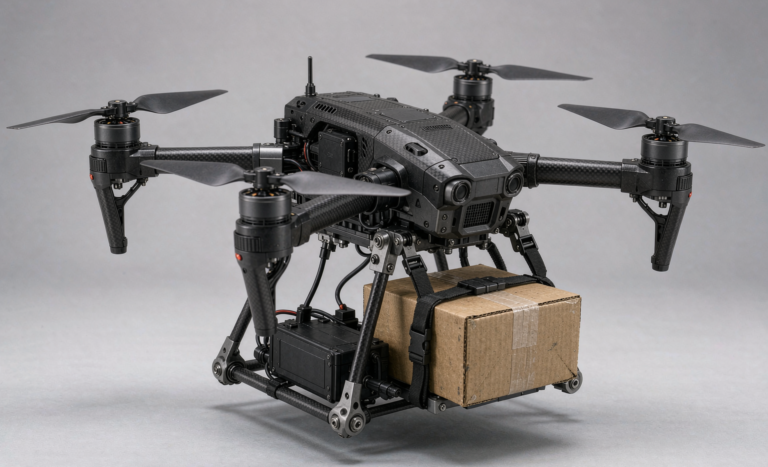
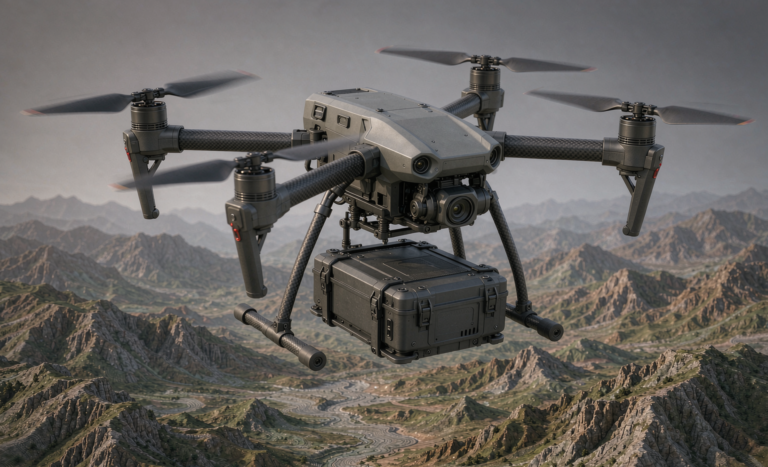
Custom Drone Battery Packs
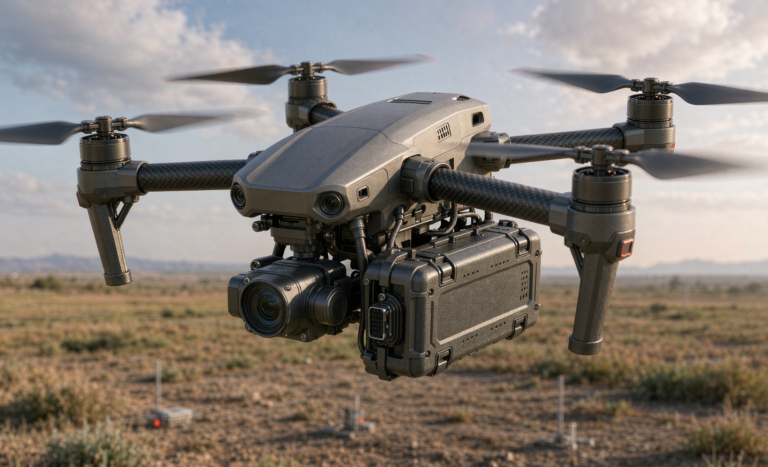
Every few weeks a prospective OEM sends me a CAD drawing of an airframe that simply will not accept a standard brick-shaped cell. As Karl Huang, Senior lithium battery Engineer at Horizon Power, I have spent more than twelve years designing custom drone battery packs for agriculture sprayers, long-range survey airframes, heavy-lift cinelifters, and inspection drones that must squeeze into spaces no off-the-shelf pack was ever built for. The conversation almost always starts the same way: “We tried three catalog packs, and none of them fit, balance, or deliver the burst current our motors need.” That is exactly when a custom drone battery stops being a luxury and becomes the only path to flight.
In this article I walk you through how we approach a bespoke pack from the first requirement call to the certified production unit, with the real numbers we use on the bench. My goal is to give you, the engineer or procurement lead, enough engineering detail to know when to stop shopping catalogs and start a custom battery solution with a manufacturer who understands flight loads.
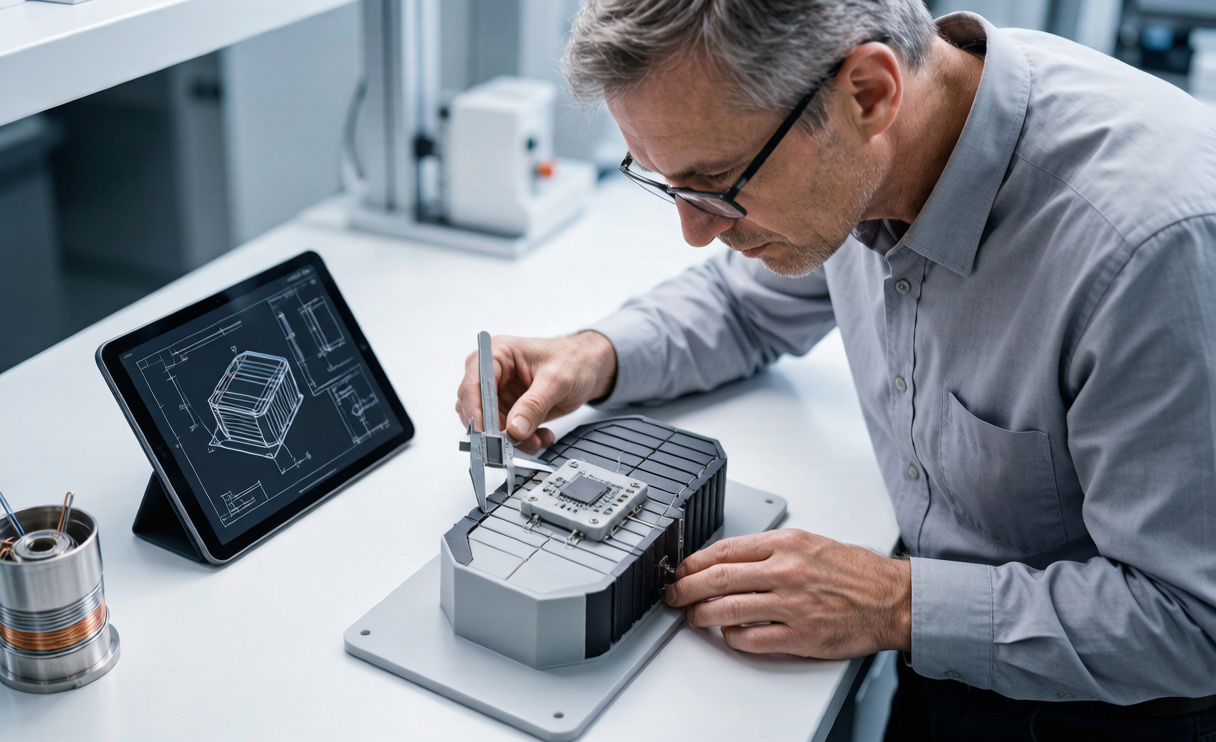
A drone battery is not just a cell with two wires. In a custom program the pack is a structural, thermal, and communication component of the aircraft. Below I break down the four decisions that determine whether your program succeeds.
When Off-the-Shelf Packs Fall Short
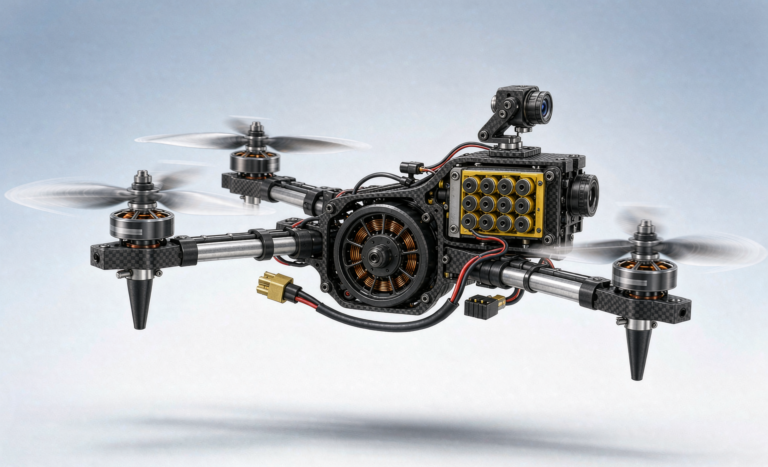
Standard packs are designed for the average airframe, which means they compromise on every axis that matters to a specialized one. I see four recurring failure modes that push teams toward a custom drone battery pack:
- Geometry mismatch. A curved fuselage, a thin wing root, or a gimbal cavity leaves no rectangle to bolt a catalog pack into. We routinely shape packs to 3-5 mm clearance envelopes, including L-, I-, and curved profiles.
- Current headroom. Catalog packs often spec a continuous C-rate that sags under real motor inrush. A cinelift drawing 120 A peaks on a 6S pack needs cells rated well above the label.
- Weight budget. Every gram of battery is a gram of payload lost. A custom drone lithium battery lets us trade unused capacity for lighter cells or a thinner enclosure.
- Flight-controller integration. Off-the-shelf packs rarely speak to the autopilot. A custom build embeds a BMS that reports state-of-charge and cell voltages over the bus the drone already uses.
If two or more of these apply to your program, a stock pack will cost you more in rework and returns than a proper custom design.
How We Engineer a Custom Drone Battery Pack
Our process at Horizon Power follows a fixed sequence so nothing is guessed. I personally review the cell-selection stage on every new program.
1. Requirement Capture
We start with the flight envelope: hover current, peak current, mission duration, operating temperature, and the physical envelope (often a 3D STEP file). From these we derive required capacity and C-rate rather than guessing from a competitor’s pack.
2. Cell Selection and Stacking
For most custom builds we use high-rate NCM 18650 or 21700 cells, or pouch cells where thickness is the constraint. A typical heavy-lift pack is a 12S2P 21700 configuration: 44.4 V nominal, around 16,000 mAh, continuous 25C (400 A) with 50C burst for takeoff and punch-out.
3. Mechanical and Thermal Design
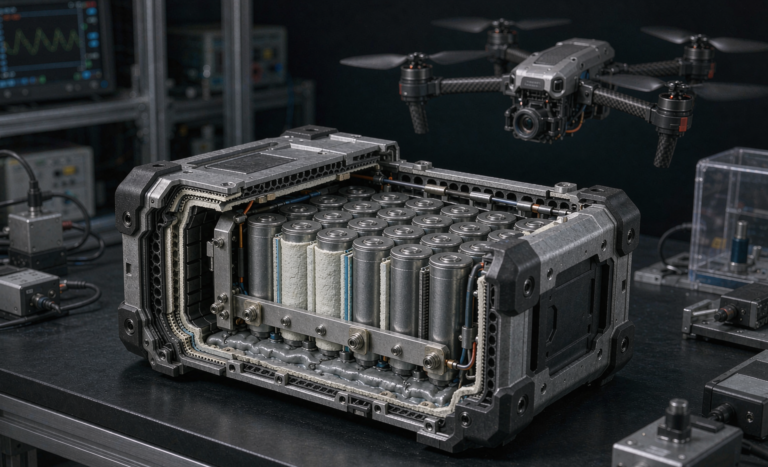
The pack becomes part of the airframe. We specify enclosure material (PC/ABS, carbon, or aluminum), compression nesting, and thermal pads so cells stay inside their 0-45 C window even at sustained 30C discharge. Custom dimensions such as 180 x 65 x 42 mm with a 12-degree curve are normal for us.
4. BMS and Harness Integration
The brain goes in last but is designed first. See the next section.
Real Numbers From the Bench
Here are two production custom packs we shipped in the last year. These are representative figures, not marketing rounding:
- Agriculture sprayer (6S). 22.2 V nominal, 22,000 mAh, continuous 25C / burst 50C, dimensions 152 x 72 x 50 mm curved to the belly, mass 1,180 g, integrated 7-cell SMBus BMS, 12-minute full-load mission.
- Long-range survey (12S). 44.4 V nominal, 16,000 mAh, continuous 20C / burst 40C, dimensions 198 x 64 x 48 mm, mass 1,640 g, CAN-enabled BMS reporting per-cell voltage to the autopilot, 38-minute loiter mission.
- Capacity range we support. 5,000 mAh up to 30,000 mAh per pack; discharge ratings from 15C continuous to 60C burst depending on cell grade.
The point is not the specific numbers but the method: every figure traces back to a measured flight load, not a catalog guess. A lithium battery only performs to its label when the pack around it is engineered for the same load.
BMS Integration: The Brains of a Custom Pack
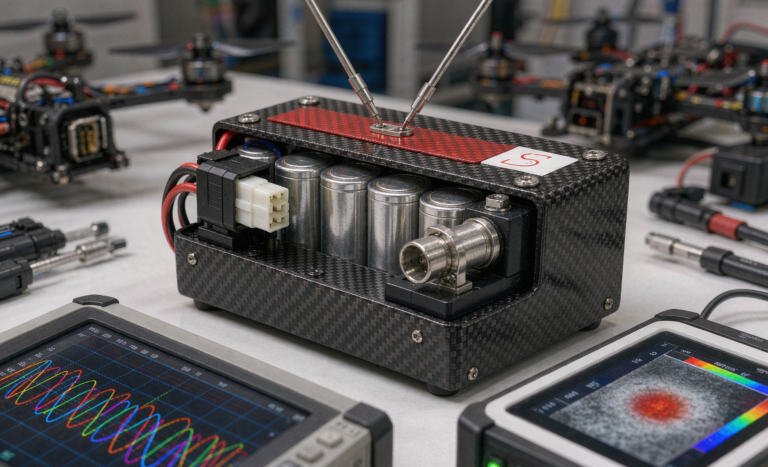
A bare cell stack is dangerous and dumb. The BMS turns it into a trustworthy aircraft component. For custom drone work we integrate:
- Active or passive balancing to keep cell drift under 20 mV across a season.
- Communication over SMBus, CAN, or DroneCAN so the flight controller sees state-of-charge, per-cell voltage, and temperature live.
- Protection against over-current (set to the motor controller’s trip point), over-temperature, and short circuit, with auto-reset where the airframe allows.
- Smart charge control limiting charge to 0.5-1C and cutting off at 4.20 V per cell to protect cycle life.
I have torn down returned packs where the “smart” BMS was just a protector switch. For flight, you need telemetry. That is a non-negotiable part of any serious custom drone battery we ship.
Common Custom Form Factors and Use Cases
Beyond rectangles, the shapes we build most often include:
- Curved belly packs for fixed-wing and VTOL where the battery doubles as a fairing.
- Slim wing-root packs using pouch cells at 8-10 mm thickness.
- Hot-swap dual packs with a mid-mission redundancy bus for inspection drones.
- High-altitude cold packs with self-heating films for sub-zero operations.
Each form factor changes the thermal and structural math, which is why a custom battery solution is engineered, not assembled.
Cost, MOQ, and Lead Time Considerations
Custom does not mean unaffordable. For most programs the tooling is modest: a 3D-printed or CNC enclosure and a BMS firmware profile. Typical minimum order quantity starts around 200 units for a new shape, with prototype lead time of 2-3 weeks and production at 4-6 weeks after validation. The unit economics usually beat a “good enough” catalog pack once you account for the returns, rewiring, and ballast you avoid.
Frequently Asked Questions
How long does it take to develop a custom drone battery pack?
From a signed requirement sheet, prototype delivery is typically 2-3 weeks. That includes cell selection, mechanical sample, BMS firmware, and one bench validation cycle. Production tooling adds another 2-3 weeks after the prototype is approved.
What is the minimum order quantity for a custom pack?
For a new shape we generally start at 200 units. If you only need evaluation units, we can build a small batch of 20-50 prototypes under a development agreement before committing to volume tooling.
Can you integrate a custom BMS with our flight controller?
Yes. We regularly implement SMBus, CAN, and DroneCAN telemetry so the autopilot reads per-cell voltage, state-of-charge, and temperature. We match the BMS communication to your existing bus rather than asking you to adapt.
Which cell chemistry do you recommend for custom drone battery packs?
For most flight packs, high-rate NCM 21700 or pouch cells give the best energy-to-weight ratio at 15-60C. If cycle life and safety outweigh peak power, an LFP-based custom pack is an option despite the weight penalty. We choose based on your mission, not our inventory.