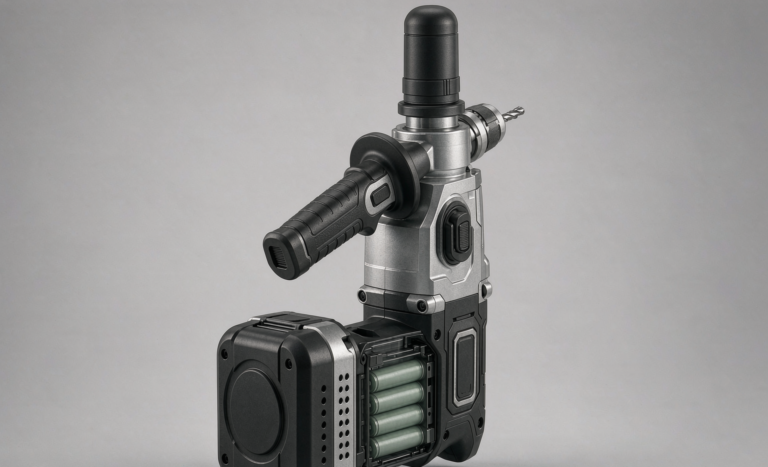
LFP vs NCM Battery: Choosing Chemistry for Your Product
After more than a decade on the factory floor and in the lab at Horizon Power, I have lost count of how many times a customer has asked me the same deceptively simple question: which is better, LFP or NCM? The honest answer is that neither chemistry is universally “better.” The right choice depends on what your product actually demands, energy density, safety margin, cycle life, operating temperature, and total cost of ownership. This guide to LFP vs NCM battery selection is built from real engineering trade-offs I make every week when we design a lithium battery pack for drones, energy storage, or industrial equipment. My goal is to give you the same decision framework I use, grounded in test data rather than marketing brochures.
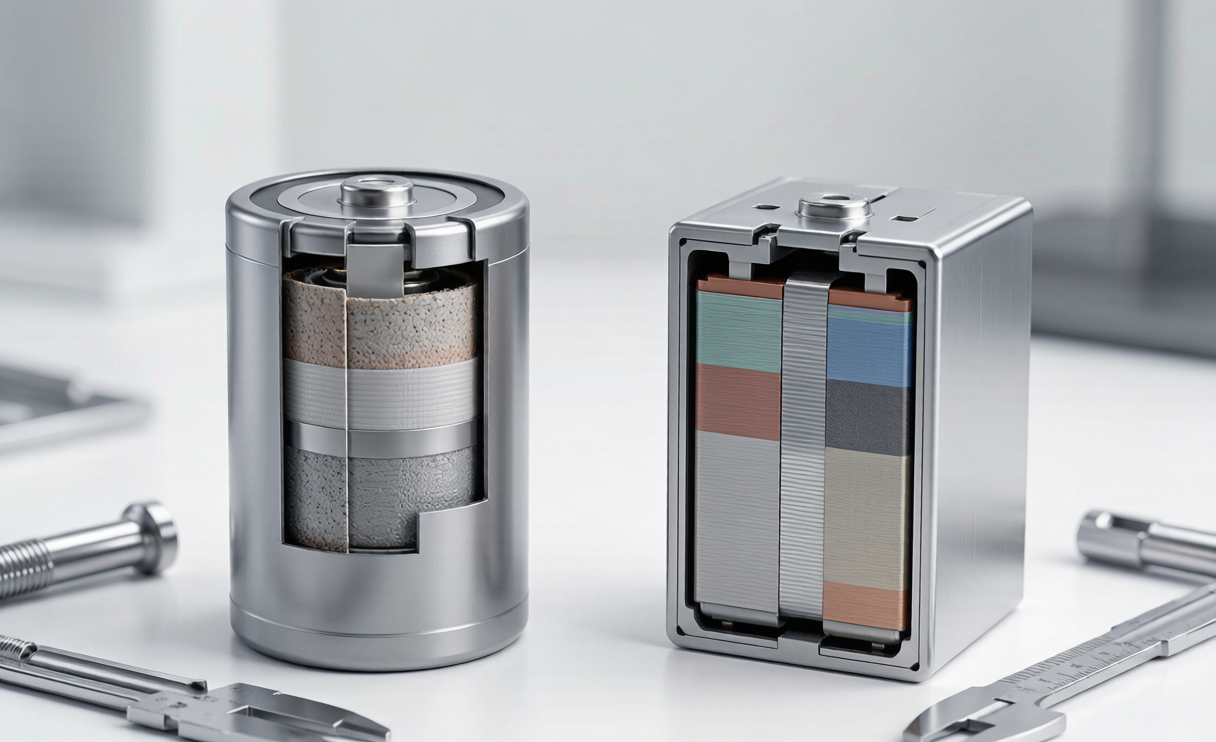
What LFP and NCM Actually Are
Both are members of the broader Li-ion family, but their cathode chemistry could not be more different. LFP stands for lithium iron phosphate (LiFePO4), a cathode built from iron and phosphate. NCM, sometimes written NMC, is a layered oxide cathode combining nickel, cobalt, and manganese (LiNiMnCoO2). That single difference in the cathode material cascades into everything you care about as a product engineer: voltage, energy density, thermal runaway behavior, and price.
In our production lines I treat them as two separate product families. An LFP cell is my default for stationary storage and high-cycle applications. An NCM cell is what I reach for when every gram of mass and every cubic centimeter of volume matters, such as in an aerial drone or a portable medical device.
Energy Density: Where NCM Wins Clearly
The most cited difference is gravimetric energy density. A typical commercial NCM cell today lands between 200 and 260 Wh/kg, with some high-nickel variants pushing past 280 Wh/kg. By contrast, a good LFP cell sits around 150 to 170 Wh/kg. On a volume basis the gap is smaller but still real: NCM delivers roughly 450 to 700 Wh/L versus LFP’s 300 to 350 Wh/L.
I learned this lesson the hard way on an early e-bike project. We prototyped the pack in LFP to save cost, then watched the frame balloon to an awkward shape because the cells simply took up too much room. Swapping to an NCM battery pack cut the volume by nearly 30 percent and brought the bike back to a rideable weight. When your product is carried, worn, or flown, that density gap is not a detail, it is the whole design.
Thermal Safety: Where LFP Shines
Safety is where the conversation flips. LFP has an extraordinarily stable crystal structure. Its onset of thermal runaway begins around 270 degrees Celsius, while NCM can enter thermal runaway as low as 150 to 180 degrees Celsius depending on the nickel content. In practice this means an LFP pack tolerates abuse, nail penetration, overcharge, and external short, far better than an NCM pack.
For home energy storage and anything installed inside a building, I nearly always specify LFP. The lower risk profile means simpler thermal management, cheaper enclosures, and a far smaller chance of a field incident that destroys a brand. An NCM pack is absolutely safe when engineered correctly with a strong BMS and cooling, but the safety margin you design around is simply tighter.
Cycle Life and Long-Term Value
Cycle life is where LFP pays you back. A quality LFP cell delivers 3,000 to 6,000 full cycles at 80 percent depth of discharge before falling to 80 percent capacity. High-grade cells in stationary storage can exceed 8,000 cycles. NCM typically offers 800 to 2,000 cycles under similar conditions, with high-nickel chemistries trending toward the lower end.
For a solar storage system that is charged and discharged daily, the math is brutal for NCM. Over ten years an LFP lithium battery system may need zero cell replacements, while an NCM system could require one or two. When I build a battery pack for backup power, I set the expected service life assumption on LFP at 10-plus years and on NCM closer to 5 to 7.
Cost, Temperature, and Real-World Trade-offs
On raw cell cost, LFP has pulled ahead in recent years. Without expensive cobalt and with abundant iron, LFP cells are generally 20 to 40 percent cheaper per kilowatt-hour than comparable NCM cells, and their price has stayed more stable through commodity swings. NCM carries the cobalt and nickel premium plus more volatile raw material exposure.
Temperature is the other axis. NCM performs better in the cold: it keeps meaningful capacity down to minus 20 or even minus 30 degrees Celsius, whereas LFP capacity can sag below 60 percent at minus 10 degrees Celsius and struggles to charge below freezing without heating. For Arctic telemetry or winter drone work, that cold tolerance is a genuine reason to choose NCM. In hot climates, LFP’s thermal stability again wins.
My personal rule of thumb after hundreds of designs: choose LFP when safety, cycle life, and cost dominate, choose NCM when energy density and cold performance dominate. Most products sit somewhere in between, and that is where a good system design, cell selection, BMS, and thermal strategy, decides the outcome.
How I Help Customers Decide
When a client comes to Horizon Power, I start with four questions: what is your mass budget, what is your volume budget, what is your worst-case ambient temperature, and how many cycles must the product survive? The answers almost always point to one chemistry. Where they conflict, we either split the system, using LFP for stationary buffer and NCM for mobile payload, or we tune the pack architecture to compensate. Either way the decision is data-driven, not tribal.
Frequently Asked Questions
Is LFP safer than NCM?
Yes, in generally accepted engineering terms. LFP’s phosphate cathode is far more thermally stable and resists thermal runaway at much higher temperatures, so an LFP lithium battery pack is the safer default for indoor, residential, and high-cycle storage use. NCM is safe when properly managed, but its failure margin is narrower.
Which lasts longer, LFP or NCM?
LFP lasts significantly longer. Expect 3,000 to 6,000-plus cycles from LFP versus roughly 800 to 2,000 from NCM. For any product that charges daily, LFP’s cycle life translates directly into lower lifetime cost and fewer replacements.
Why would I ever choose NCM over LFP?
When mass and volume are tight and cold weather is part of the duty cycle. NCM’s higher energy density shrinks and lightens the battery pack, and its cold-temperature performance is superior. Drones, portable medical gear, and cold-climate devices are common NCM wins.
Can I mix LFP and NCM in one product?
Not in the same electrical string, because their nominal voltages differ, 3.2 volts per LFP cell versus about 3.6 to 3.7 volts per NCM cell. But in a system-level design you can pair them as separate subsystems, for example LFP for stationary buffer storage and NCM for a mobile payload, each with its own BMS.