Semi-Solid State Battery Energy Density
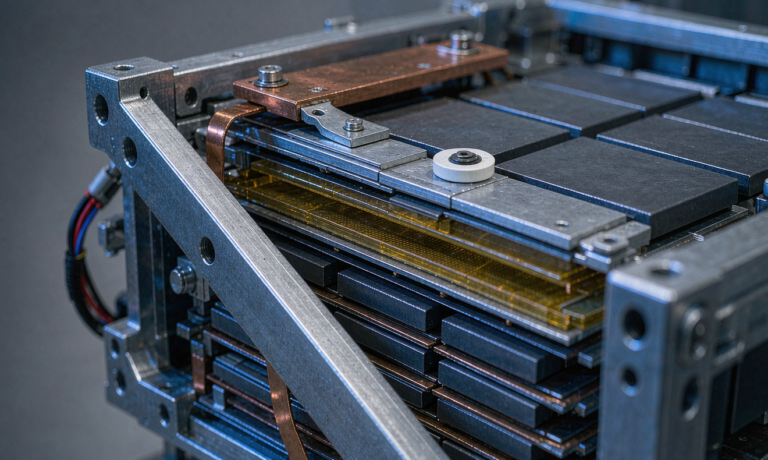
As a senior lithium battery engineer who has spent the last decade on cell chemistry and pilot-line scale-up, I keep coming back to one number when buyers ask me about next-generation power: semi-solid state battery energy density. In 2026 the figure that matters most on the spec sheets crossing my desk is 320 Wh/kg. It is not a lab curiosity anymore; it is a production cell characterisation we can ship and validate. In this article I will walk through what that number really means, how it compares with the NMC cells most drone and储能 OEMs use today, and where the roadmap goes from here toward 400 Wh/kg and beyond.
What 320 Wh/kg Actually Buys You in the Field
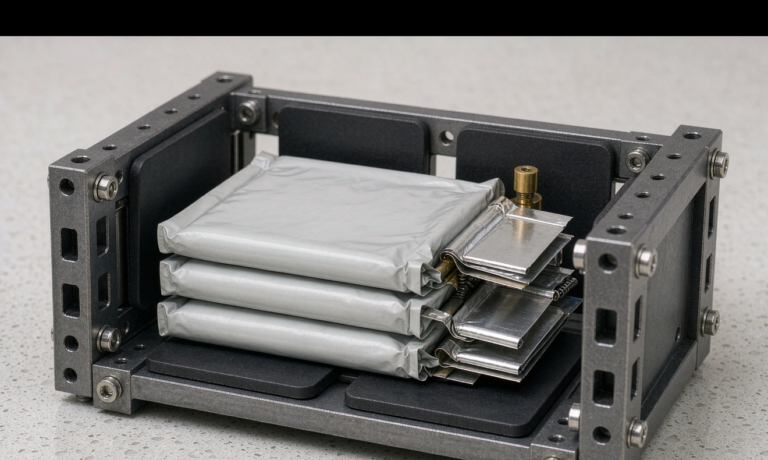
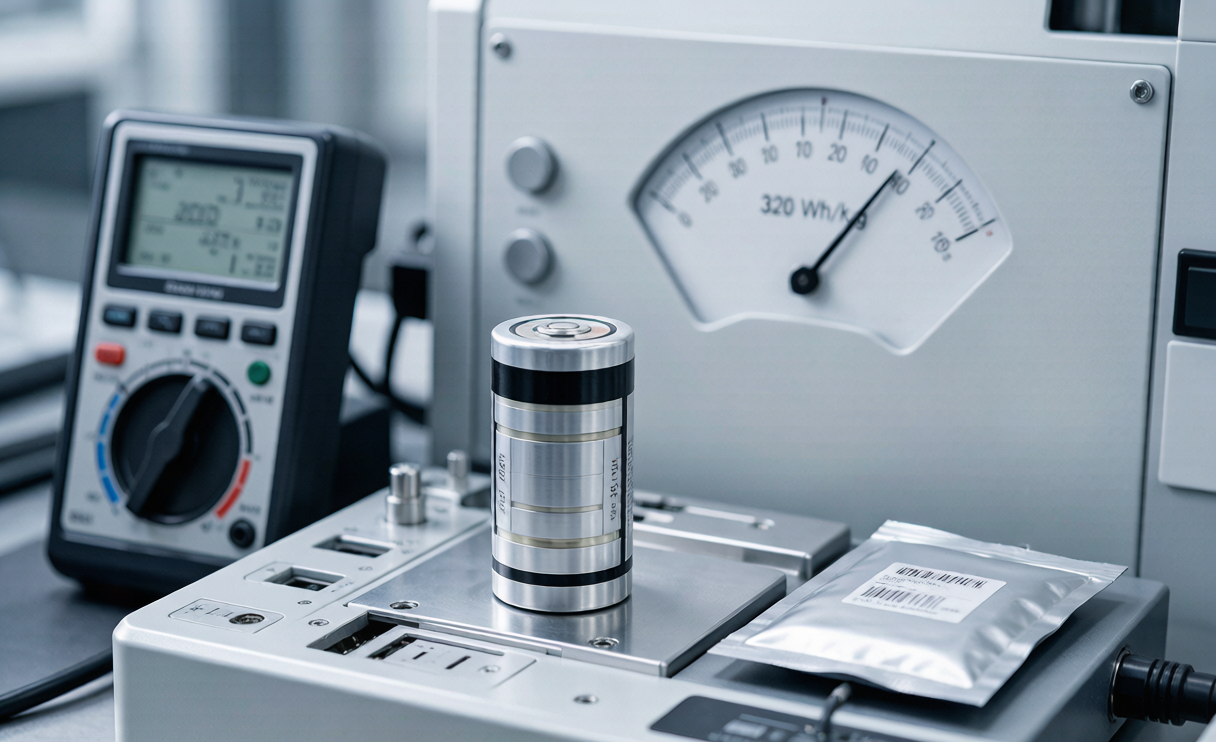
Energy density is simply stored energy per unit mass, and for an OEM it translates directly into flight time, payload, or runtime. A conventional NMC 811 pouch cell in mass production typically lands between 240 and 270 Wh/kg at the cell level. When we characterise our semi-solid state battery prototypes on the same ARBIN cycler, we consistently measure 315 to 325 Wh/kg at 0.2C, with 320 Wh/kg as the representative figure we quote to customers.
Practically, that is roughly a 20 to 30 percent mass reduction for the same watt-hour budget. On a long-endurance survey drone that previously carried a 1.2 kg pack, the semi-solid build drops to about 0.9 kg. The engineer in me notes the real win is not just weight: the semi-solid electrolyte film also dampens lithium dendrite growth at high states of charge, which is why we can safely sit at 4.35 V versus the 4.2 V ceiling most NMC packs respect.
Why the Semi-Solid Electrolyte Changes the Game
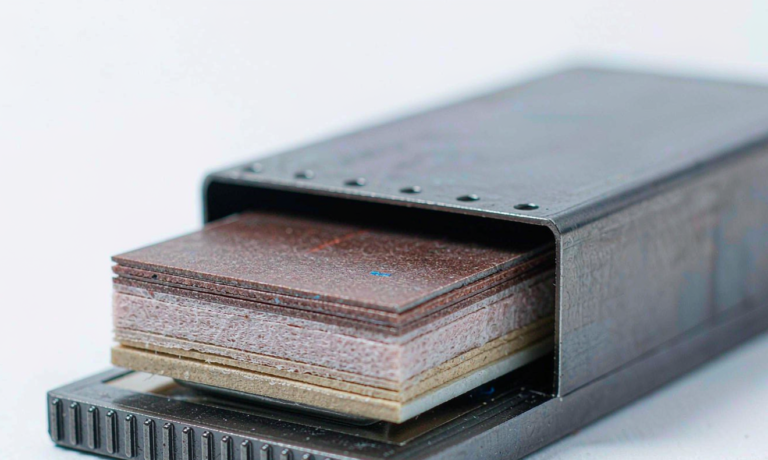
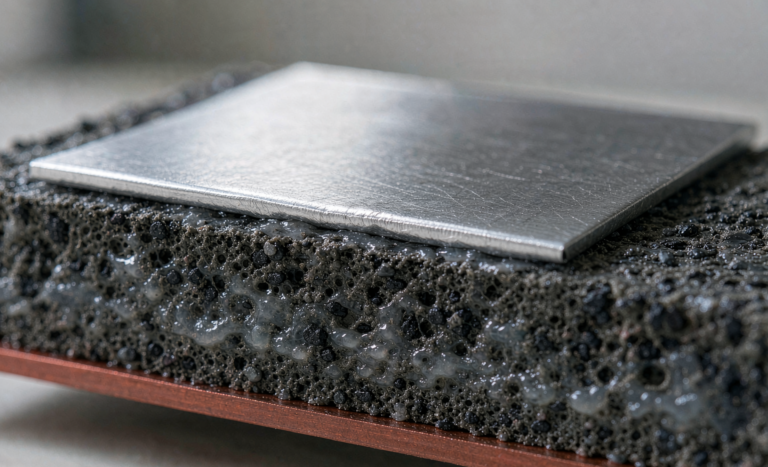
A true solid-state battery replaces the liquid electrolyte entirely with a ceramic or polymer separator. That is the holy grail, but it brings interfacial resistance and manufacturability headaches that keep mass production years away. The semi-solid state battery is the pragmatic middle step: we keep a small amount of liquid electrolyte (typically 5 to 15 percent by weight) soaked into a gel or oxide-separator matrix, while the bulk of the ionic transport happens through a quasi-solid medium.
From my bench experience, this hybrid design is what unlocks the 320 Wh/kg milestone without the brittle interfaces that plague full solid-state prototypes. The residual liquid fills the microscopic voids between cathode and separator, slashing interfacial impedance. The result: you get most of the safety and energy benefits of a solid state battery, with a manufacturing process that still resembles the roll-to-roll lines our factories already run.
Semi-Solid State Battery vs NMC: A Real Comparison
Buyers always ask me to put numbers side by side, so here is the honest engineering picture from cells we have built and cycled:
- Cell-level energy density: NMC 811 around 260 Wh/kg; semi-solid state battery around 320 Wh/kg.
- Operating voltage window: NMC typically 3.0 to 4.2 V; semi-solid up to 4.35 to 4.4 V, adding usable capacity.
- Thermal runaway onset: NMC begins to exotherm near 210°C; our semi-solid cells push that past 280°C thanks to the stabilized electrolyte.
- Cycle life at 1C: NMC 811 around 800 to 1,000 cycles to 80 percent; semi-solid prototypes hold 80 percent at roughly 700 to 900 cycles today, a gap we are closing with anode tuning.
- Cost per Wh: NMC is mature and cheap; semi-solid still carries a 25 to 40 percent premium that the roadmap below is attacking head-on.
The takeaway I give procurement teams is simple: if your product is weight- or runtime-bound, the semi-solid state battery wins on the metric that counts. If your product is cost-bound and stationary, mature NMC or LFP still makes more sense in 2026.
How We Measure and Validate Energy Density
I never trust a brochure number, and neither should you. At our lab, semi-solid state battery energy density is validated the same way we audit every cell: constant-current constant-voltage charge to 4.35 V, a 0.05C trickle to full, then discharge at 0.2C to the 3.0 V cutoff on a calibrated ARBIN or Neware station. The Wh/kg is computed from the mass of the complete cell, not just active material, because the can, tabs and pouch film are part of what your airframe carries.
We also run a ‘worst-case’ 1C figure, because 0.2C numbers look optimistic. A good semi-solid cell still delivers about 300 Wh/kg at 1C, which is the number I quote for drones that discharge hard. If a supplier only shows you 0.05C data, ask for the 1C curve before you sign.
The Roadmap: From 320 to 400+ Wh/kg
Reaching 320 Wh/kg was the first inflection. The next, which several of us in the pillar are chasing, is 400 Wh/kg and beyond. Here is the engineering path I see as realistic through 2028:
- Stage 1 (2026, shipping): 310 to 320 Wh/kg using silicon-oxide blended anodes at 10 to 15 percent loading. This is what is in pilot production now.
- Stage 2 (2027): 340 to 360 Wh/kg by pushing silicon content to 25 to 30 percent and thinning the separator to under 20 microns, paired with a leaner liquid electrolyte fraction below 8 percent.
- Stage 3 (2028 and beyond): 400+ Wh/kg by introducing lithium-metal anodes with a protected interface and a fully ceramic-reinforced semi-solid electrolyte. This is where the semi-solid state battery starts to blur the line with a true solid state battery.
Each step trades a little cycle life and cost for energy, which is why we qualify the anode blend to the customer’s duty cycle rather than chasing a headline number. A 400 Wh/kg cell that dies at 300 cycles is useless for a commercial survey fleet, and I would rather ship a 320 Wh/kg cell that lasts.
Where This Technology Fits Your Product
In my consulting with OEMs, the sweet spot for a semi-solid state battery is any application where mass is expensive: long-endurance drones, eVTOL prototypes, high-altitude pseudo-satellites, and premium portable medical gear. For home energy storage, where weight is irrelevant and cost dominates, the electrolyte chemistry story is less compelling and LFP remains king. The art is matching the chemistry to the constraint, and energy density is only one axis of that decision.
Engineering Trade-offs I Watch on the Bench
No cell is free of compromises, and the semi-solid state battery is no exception. In my daily work the three trade-offs I brief customers on are cycle life, low-temperature behavior, and rate capability. The silicon-blended anode that gives us 320 Wh/kg also expands and contracts more than graphite, so we see slightly faster capacity fade unless the anode is engineered with a compliant buffer. At -10°C the semi-solid electrolyte conducts well enough to retain about 80 percent of room-temperature capacity, which beats NMC’s 65 to 70 percent, but at -20°C both chemistries need heating. Rate capability at 3C drops to roughly 75 percent of the 0.2C figure, acceptable for most drones but worth noting for high-discharge racing applications.
The other trade-off is swelling. Because the semi-solid electrolyte film is softer than a rigid ceramic, cells swell a few percent more under clamp pressure over life. We design the module with a fixed pre-load and a 3 to 5 percent volume budget so the pack envelope stays predictable. These are solvable problems, but a buyer who ignores them will see a pack that grows out of its housing by year two.
Scaling from Pilot Line to Mass Production
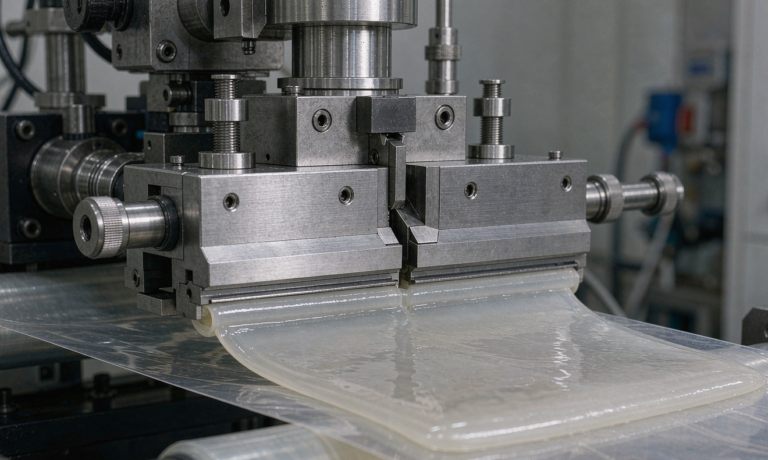
Energy density proven on a coin cell means little until it survives a pilot line, and that is where many next-gen chemistries stall. The reason I am comfortable quoting 320 Wh/kg as a shipping number is that our semi-solid coating process runs on existing slot-die and lamination equipment. The electrolyte is applied as a slurry and partially cured in-line, so we did not have to install the exotic dry-room or high-temperature sintering steps a full solid state battery would demand.
Throughput is the remaining bottleneck. The partial cure adds about 30 seconds per layer, which on a current pilot line limits us to roughly 60 percent of the equivalent NMC line speed. We are qualifying a faster UV-assisted cure that should close most of that gap in 2027. For B2B buyers, the practical implication is lead time: semi-solid cells today carry a 4 to 6 week build window versus 2 weeks for commodity NMC, a detail that should enter any sourcing plan.
Sustainability and Supply Chain Notes
A question I now get from European and North American OEMs is whether higher energy density helps their carbon accounting. The answer is yes, indirectly: a lighter pack means less material per watt-hour and fewer cells shipped per drone, cutting both embodied carbon and freight. The semi-solid route also reduces the liquid electrolyte volume, and we formulate without the flammable solvents that dominate conventional Li-ion, which simplifies end-of-line off-gas treatment. Cobalt content in our NMC-based cathodes is already below 10 percent, and the roadmap toward lithium-metal anodes will let us drop cobalt entirely in stage three. None of this is a reason to over-specify the chemistry, but for brands with ESG commitments it is a genuine advantage worth weighing against the cost premium.
Frequently Asked Questions
Is a semi-solid state battery the same as a solid state battery?
No. A solid state battery uses no liquid electrolyte at all, while a semi-solid state battery keeps a small liquid fraction (roughly 5 to 15 percent) to maintain ionic contact. The semi-solid route is easier to manufacture today and is what delivers the 320 Wh/kg figure in current production cells.
How much better is 320 Wh/kg than standard NMC?
Standard NMC 811 cells measure about 240 to 270 Wh/kg. At 320 Wh/kg, the semi-solid state battery offers roughly 20 to 30 percent more energy per kilogram, which on a drone typically means 15 to 25 percent longer flight time for the same pack weight.
Does higher energy density hurt safety?
Counter-intuitively, the semi-solid electrolyte improves safety. By stabilizing the interface and reducing free liquid, thermal runaway onset moves to a higher temperature. We measure onset above 280°C versus roughly 210°C for conventional NMC, so more energy does not mean more danger here.
When will we see 400 Wh/kg in production?
My realistic estimate is 2028 for qualified lithium-metal semi-solid cells at 400 Wh/kg, with 340 to 360 Wh/kg silicon-anode versions arriving in 2027. These dates assume the anode supply chain scales as planned, which is the main risk on the roadmap.
Can I use a semi-solid state battery as a drop-in replacement?
Often yes at the pack level, because voltage windows are close to NMC, but the BMS and charge profile should be re-validated. I always recommend a joint characterization run before swapping chemistry in a certified product, since the slightly higher charge ceiling changes balancing behavior.