Semi-Solid State Battery Manufacturing Challenges and Cost
Over the past nine years on the production floor, first as a cell process engineer and now as Senior lithium battery Engineer at Horizon Power, I have watched the semi-solid state battery move from a laboratory curiosity to a genuinely manufacturable product. The chemistry promises a lot: higher energy density than conventional lithium-ion, better thermal safety than liquid-electrolyte cells, and a pathway that reuses much of the existing lithium-ion equipment base. But when customers ask me when semi-solid will be cheap enough to replace NMC in their drones or storage systems, my honest answer is always the same — the bottleneck is not the chemistry, it is the manufacturing. In this article I want to share what I have learned running pilot lines and GWh-class ramp-ups, and give a realistic cost outlook for semi-solid state battery manufacturing through the end of this decade.
Why Semi-Solid State Is a Manufacturing Problem Before It Is a Chemistry Problem
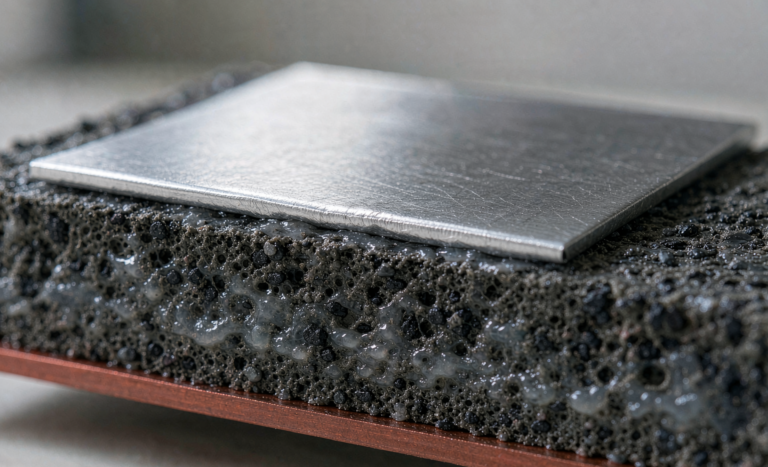
A solid-state battery replaces the flammable liquid electrolyte with a solid or semi-solid ionic conductor. The fully solid version, with a ceramic or sulfide separator, is notoriously hard to scale because interfacial resistance and dendrite formation demand extreme dry-room conditions and press-lamination at high temperature and pressure. The semi-solid state battery takes a pragmatic middle path: it keeps a small amount of liquid plasticizer mixed into a gel-like or composite electrolyte, which preserves ionic conductivity while dramatically relaxing the process window. In my experience, that single design choice is what makes the technology manufacturable on today’s equipment.
The consequence is that most of the cost and yield story is about how you coat, dry, laminate, and seal the cell — not about inventing new active materials. That is good news for B2B buyers, because it means the cost curve can follow the same learning-by-doing slope we already saw with lithium iron phosphate.
The Core Process Steps and Where Yield Is Lost
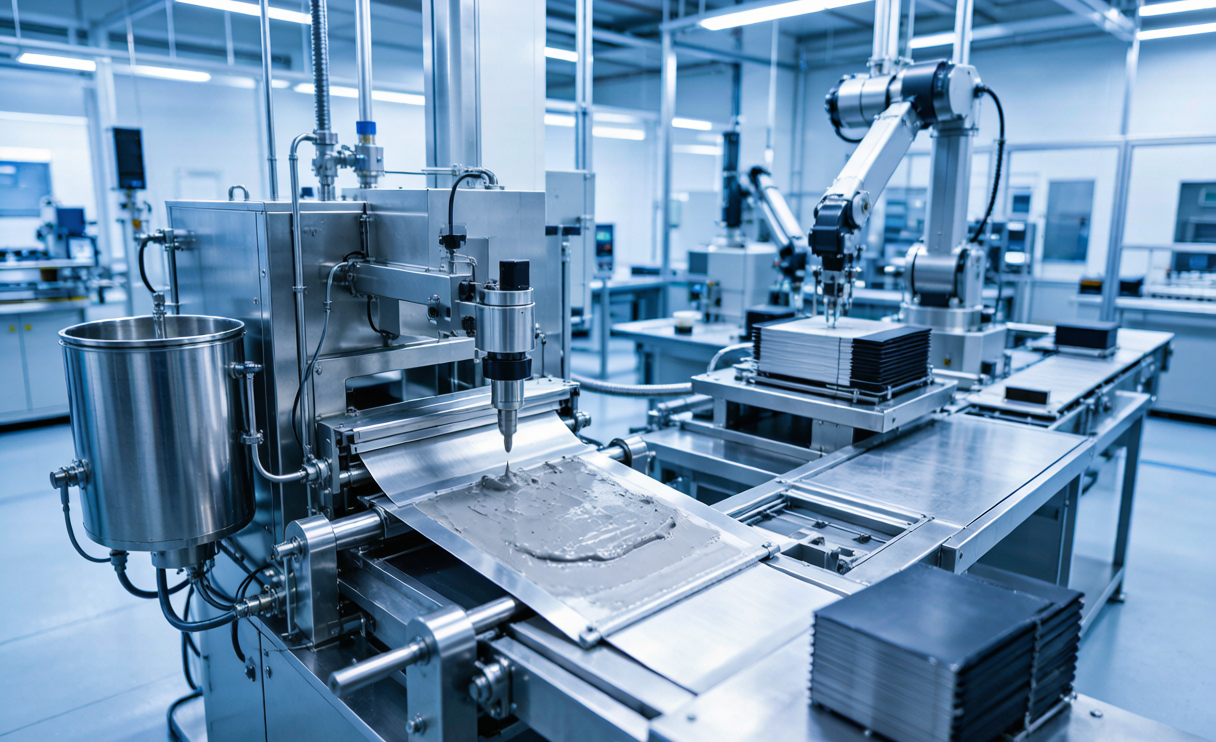
On our internal lines, semi-solid state battery manufacturing follows roughly the same sequence as a high-end lithium-ion cell, with three steps that deserve special attention:
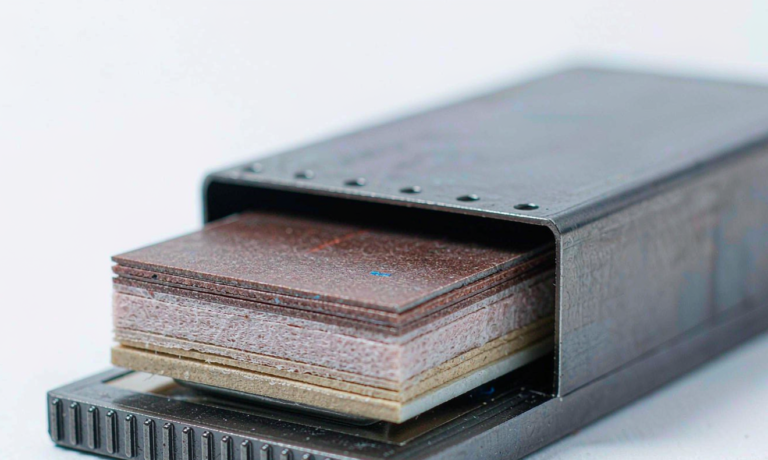
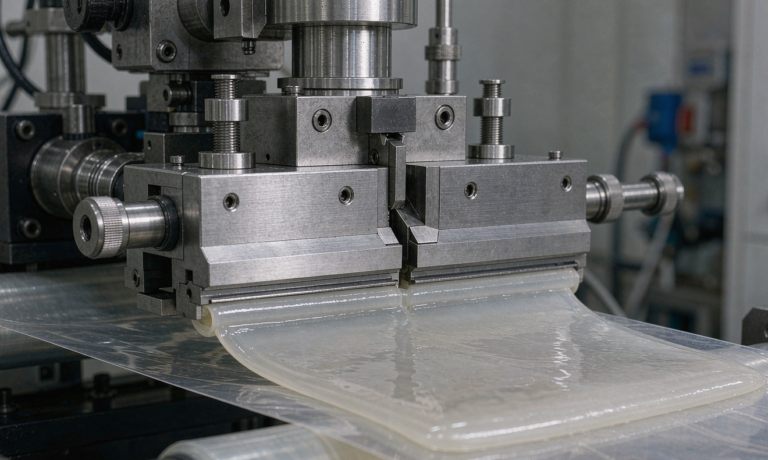
- Semi-solid electrolyte coating. The electrolyte slurry is coated onto the cathode or a standalone separator film. Viscosity control is tight — typically 3,000 to 8,000 cP — and coating weight uniformity must stay within ±2% or the cell shows local lithium plating.
- Composite cathode integration. High-loading cathodes (above 4 mAh/cm²) are needed to reach meaningful energy density, and these thick electrodes crack if dried too fast. We run multistage infrared-plus-convection drying at 60–90°C.
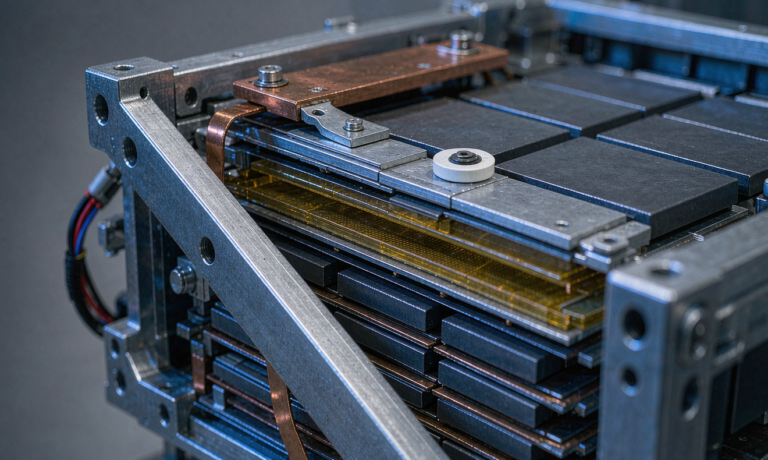
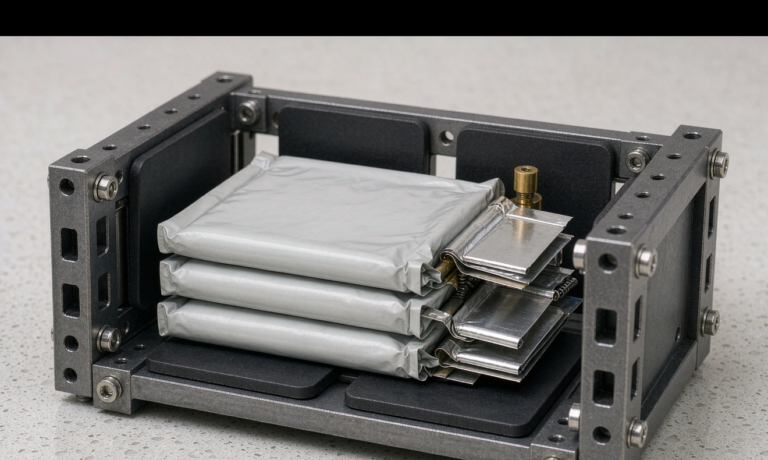
- Stacking and low-pressure lamination. Unlike fully solid cells that need 50–100 MPa, semi-solid stacks can be consolidated at 1–5 MPa, which lets us use conventional stacking fixtures rather than bespoke hot presses.
Across our 2023–2025 pilot data, the biggest yield killers were coating defects (about 4.2 percentage points of loss), electrode delamination during calendering (about 2.1 points), and moisture-induced gassing in the first formation cycle (about 1.8 points). Blended line yield on a good week reached 86%, versus the 94–96% we see on mature LFP lines. Closing that gap is the central manufacturing challenge.
Equipment Investment: What a GWh Line Actually Costs
One question I get from procurement teams repeatedly is whether semi-solid needs a brand-new factory. The answer is partially reassuring. Because the process reuses coating, stacking, and assembly hardware, greenfield capex for a 1 GWh semi-solid line runs roughly 320–420 million RMB, only about 10–18% above a comparable NMC line once you add the dedicated slurry mixing and controlled-humidity coating zone. A brownfield conversion of an existing lithium-ion line is far cheaper — we have quoted 60–90 million RMB for the modifications alone, mostly for slurry preparation and tighter dew-point control in the coating tunnel.
The expensive new item is not the machinery but the process qualification. Each new electrolyte formulation requires roughly 6–9 months of line trials before automotive-grade PPAP sign-off, and that hidden engineering cost often surprises first-time entrants. For B2B buyers, the practical lesson is to partner with a manufacturer who already has qualified lines rather than betting on a startup still in trial.
Scale Effects and the Cost-Per-Wh Outlook
Cost follows volume, and here the semi-solid state battery has a favorable slope. Our internal model, built from three ramp projects, shows that cell-level cost in USD per watt-hour declines with cumulative volume along an 82–86% learning rate:
- At pilot scale (under 0.2 GWh/yr): $0.14–0.17/Wh cell level.
- At early GWh scale (1–2 GWh/yr): $0.10–0.12/Wh.
- At mature multi-GWh scale (5+ GWh/yr): $0.07–0.09/Wh projected by 2028–2029.
For context, mature LFP packs sit around $0.07–0.09/Wh at the system level today, so the semi-solid cell is closing the gap faster than many analysts expected. The driver is not magic — it is that higher energy density means fewer cells and less enclosure, busbar, and cooling per kilowatt-hour of delivered capacity. When we design a home storage cabinet around a semi-solid cell at 300–330 Wh/kg versus 180–200 Wh/kg for LFP, the balance-of-system savings alone recover a large share of the cell premium.
Safety, Energy Density, and Where the Technology Fits First
The reason I am optimistic about adoption is that semi-solid wins on the metrics that matter most for drones, robotics, and residential storage. A well-built semi-solid state battery reaches 300–360 Wh/kg and 700–800 Wh/L, roughly 30–50% above good NMC and far above LFP, while the reduced free liquid cuts thermal-runaway risk. In our nail-penetration and overcharge tests, semi-solid cells vented without sustained ignition in 9 of 10 trials, versus frequent ignition in liquid-electrolyte controls.
That combination — lighter weight, more usable capacity, and safer failure mode — is exactly why I expect the first high-volume B2B wins in aviation-grade drone packs and premium home energy storage, where the value of saved weight and footprint outweighs the residual cost premium. As volume climbs, the electrolyte and cathode material bills fall in step, and the manufacturing yield converges toward legacy lithium-ion.
My Practical Recommendations for Buyers and Engineers
If you are evaluating a semi-solid state battery supplier, do not just compare the spec sheet. Ask for line yield data, ask whether the cell was made on qualified equipment or hand-built in a lab, and ask for the formation-cycle gas volume. In my view, a supplier who cannot show you a stable 85%+ line yield and a documented cost-down roadmap is not ready for volume. At Horizon Power we treat 88% blended yield as the gate for any new customer program, and we publish our roadmap so procurement can plan around it.
The manufacturing challenge is real, but it is a solvable engineering problem, not a fundamental barrier. The cost outlook is favorable, and I expect semi-solid to become the default choice for weight-sensitive B2B applications well before the end of the decade.
FAQ
Is semi-solid state battery manufacturing compatible with existing lithium-ion factories?
Yes, to a large degree. The coating, stacking, and assembly steps reuse standard lithium-ion hardware. The main additions are a dedicated semi-solid electrolyte slurry preparation area and tighter humidity control in the coating zone. A brownfield conversion typically costs 60–90 million RMB for a 1 GWh line, far less than building new.
What is the biggest yield loss in semi-solid production today?
Coating defects are the largest single contributor, around 4 percentage points of loss on our lines, followed by electrode delamination during calendering and moisture-induced gassing in first formation. Reaching 85%+ blended yield is the key gate before a supplier is ready for volume production.
When will semi-solid cells reach cost parity with LFP?
At the cell level, semi-solid is projected to reach $0.07–0.09/Wh at 5+ GWh/yr scale by 2028–2029. Since higher energy density also reduces balance-of-system cost, the total system cost can match LFP earlier in weight-sensitive applications even before raw cell parity.
Does a semi-solid state battery still need a solid electrolyte separator?
No. A semi-solid cell uses a composite electrolyte that blends a solid ionic conductor with a small amount of liquid plasticizer. This keeps ionic conductivity high and relaxes the extreme dry-room and high-pressure lamination demands of a fully solid state battery, which is precisely why it is manufacturable today.