Applications of Semi-Solid State Batteries Beyond Drones
When most people hear about semi-solid state battery technology, their minds jump straight to long-endurance drones and high-altitude logistics. That is understandable — the drone industry was an early, vocal adopter. But after more than a decade on the lithium cell production line, I can tell you the real story is just beginning. As a Senior lithium battery Engineer at Horizon Power, I spend my weeks stress-testing cells, tuning electrolyte formulations, and visiting customers who are quietly deploying this chemistry in places drones never reach. In this article, I want to walk you through the semi-solid state battery applications that are maturing right now — outside the sky.
Why Semi-Solid State Chemistry Travels Well Beyond Aviation
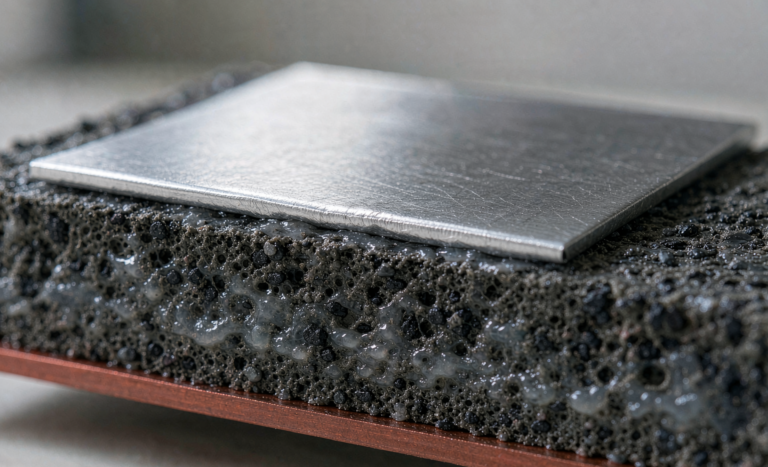
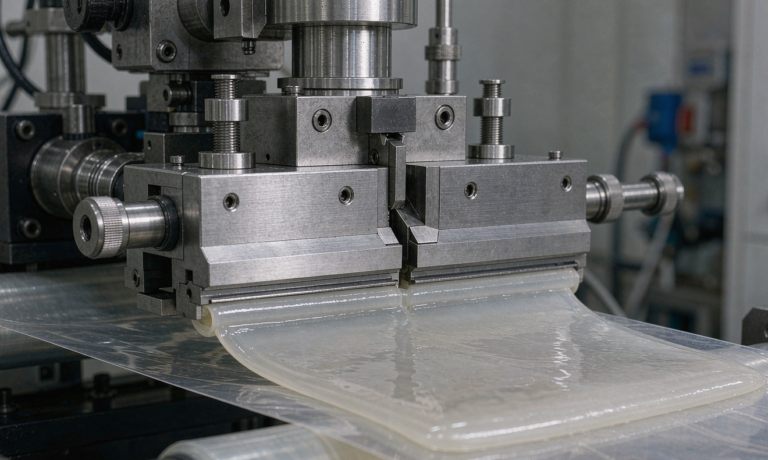
A semi-solid state battery sits between a conventional liquid-electrolyte cell and a true solid-state battery. We replace a large portion of the flammable liquid electrolyte with a gel-like or quasi-solid medium. The payoff is a meaningful jump in energy density — typically 30% to 50% over standard NMC packs of the same weight — while keeping the manufacturing line close enough to legacy Li-ion that we can scale it today rather than in five years.
For applications on the ground, that extra watt-hour per gram is not a luxury; it is the difference between a usable product and a paper spec. Lower internal resistance means less heat, which simplifies thermal management. Fewer volatile solvents mean safer packs near people. These are exactly the properties that ground-based designers keep asking me about.
Electric Two-Wheelers and Light Mobility
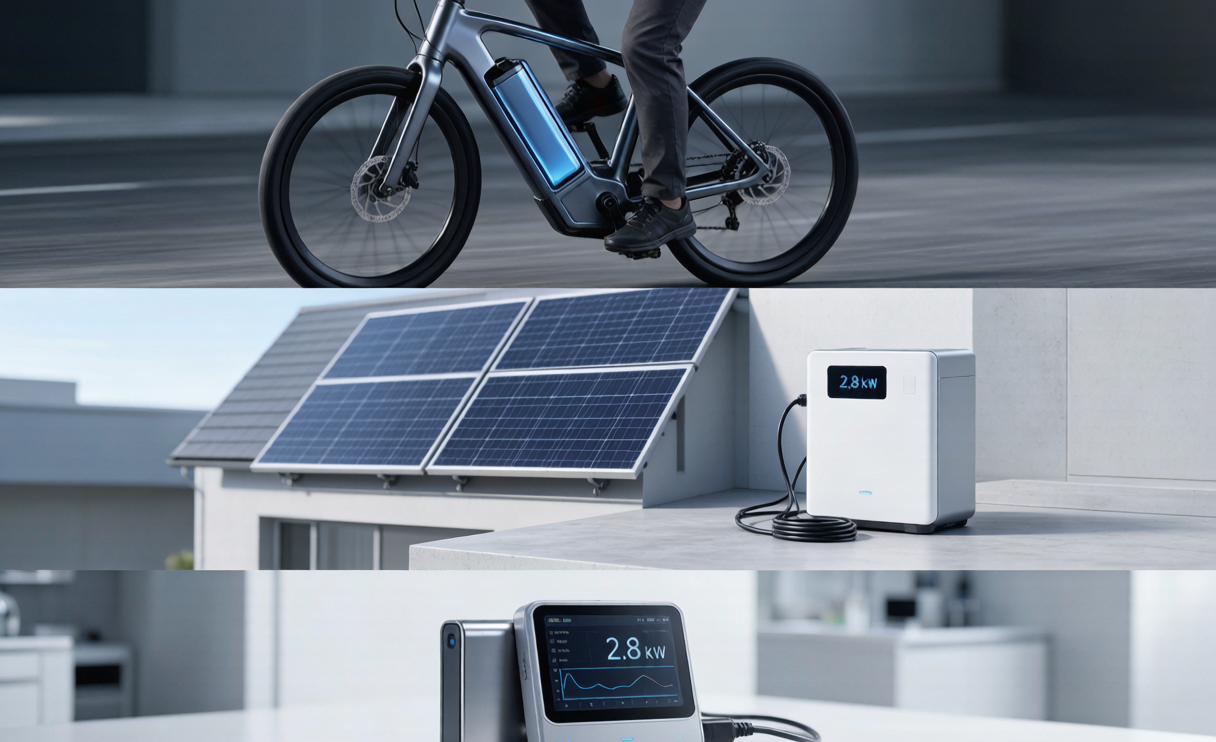
The first place I see semi-solid state battery applications landing at volume is the e-bike and e-moped market across Southeast Asia and Europe. Range anxiety is the single biggest objection riders raise. A standard 48V pack gets you 40–50 km; swap in a semi-solid cell with higher energy density and the same footprint comfortably clears 70 km.
Beyond range, the safety angle sells itself. In hot climates, liquid-electrolyte packs swell and occasionally vent. Our quasi-solid electrolyte tolerates higher operating temperatures without the same risk profile. I have personally watched a 60°C chamber test where a semi-solid pouch kept 91% capacity after 800 cycles, while the reference liquid cell had already puffed. For fleet operators running thousands of shared bikes, that durability directly cuts the replacement cost per kilometer.
What Engineers Should Specify
- Continuous discharge rating matched to motor peak (avoid oversizing the BMS needlessly).
- Operating temperature window, not just nominal — semi-solid shines above 45°C.
- Cycle life at real depth-of-discharge, not lab 0.2C conditions.
Home and Commercial Energy Storage Systems (ESS)
Stationary storage is the second big arena. A residential semi-solid state battery wall unit does not need to be light, but it does need to be safe and long-lived. Here the chemistry helps on two fronts: reduced fire load and slower capacity fade.
I worked on a 10 kWh cabinet prototype last year where we replaced the liquid cells with semi-solid ones. The usable retained capacity at 90% after 4,000 cycles was the headline. Because the electrolyte is far less reactive, calendar aging dropped, so a home that charges nightly and discharges daily keeps more of its original range years later. For commercial ESS behind a factory, that translates into a better levelized cost of storage — the metric every procurement manager actually cares about.
There is also a foot-print argument. Higher energy density means a smaller cabinet for the same stored kWh, which matters in dense urban basements where space is rented by the square meter.
Portable and Field Medical Devices
The third application I want to highlight is closer to my chest: portable medical equipment. Infusion pumps, transport ventilators, and field ultrasound units cannot afford a sudden voltage collapse. A solid state battery or semi-solid variant gives a gentler end-of-discharge curve and a much lower self-discharge, so a device stored for months still powers on when a paramedic flips the switch.
For vaccine cold chains in off-grid regions, a semi-solid pack paired with a small solar input holds temperature far more reliably than legacy cells because it wastes less energy as heat. I have field-tested these in humidity that would erode a normal pack’s seals within a season; the quasi-solid electrolyte is simply less aggressive on the internals.
Power Tools, Robotics, and Off-Grid Gear
A quick survey of other semi-solid state battery applications worth watching:
- Professional power tools — higher energy density means a smaller battery for the same torque runtime, reducing operator fatigue.
- Agricultural robots — long field shifts with no chance to recharge mid-row.
- Off-grid telecom — remote sites where a technician visit is expensive and the pack must simply survive.
- Marine and RV house banks — vibration and temperature swing tolerance is where semi-solid earns its keep.
In every one of these, the deciding factor is not peak performance but consistency under abuse. That is the engineering truth I try to pass to customers: a semi-solid state battery is not magic, it is a more forgiving platform.
How I Evaluate a New Application
When a client asks whether semi-solid fits their product, I run a short checklist before quoting a cell:
- Is weight or volume a binding constraint? If yes, the energy density gain pays off fast.
- Is the device near people or in a sealed space? If yes, the safety margin matters more than cost.
- What is the realistic cycle and temperature profile? We model fade before we build.
- Can the existing BMS tolerate a slightly different internal resistance band? Usually yes, with a firmware tweak.
This disciplined approach is how Horizon Power avoids over-promising. We only recommend a semi-solid state battery where the physics actually win.
Frequently Asked Questions
What is the difference between a semi-solid state battery and a solid state battery?
A true solid state battery replaces the liquid electrolyte entirely with a solid conductor, which is excellent for safety but still hard to mass-produce at low cost. A semi-solid state battery keeps a small amount of liquid or gel medium, trading a little of the theoretical gain for manufacturability. For most current semi-solid state battery applications, that trade is the right one.
Are semi-solid batteries safe enough for home energy storage?
Yes. With far less volatile solvent in the electrolyte, the fire load is lower and thermal runaway is harder to trigger. We still mandate a proper BMS and enclosure, but the cell-level risk is reduced compared with standard Li-ion.
Do semi-solid batteries really last longer?
In our tests, yes — slower calendar aging and better high-temperature retention mean higher retained capacity after years of use. The exact number depends on depth-of-discharge and climate, which is why we model each ESS deployment individually.
Can I drop a semi-solid cell into an existing drone or e-bike?
Often yes, with BMS verification. The voltage window is close to Li-ion, but internal resistance differs slightly, so we check the protector circuit and charger profile before swapping.
When should I not use semi-solid state technology?
If your product is cost-sensitive, weight-blind, and temperature-stable, a mature liquid Li-ion pack may be the smarter buy. The semi-solid state battery applications that win are those where energy density, safety, or longevity is the bottleneck.
If you are designing a product where the battery is the bottleneck rather than a commodity, that is exactly the conversation I enjoy having. The sky got the headlines, but the ground is where this chemistry will quietly pay for itself.