Sodium Ion Battery for Energy Storage: Is It Ready for Homes
Over the past eighteen months I have been asked the same question by at least a dozen home-energy integrators: “Karl, is a sodium ion battery energy storage system something I can actually sell to a homeowner this year, or is it still a lab story?” As a senior lithium battery engineer who has spent fifteen years building LFP packs on the factory floor, my honest answer has shifted from “not yet” to “it depends — but the window is open.” This article walks through the real numbers, the trade-offs against LFP, and where Na-ion genuinely earns its place on a residential wall.
What a Sodium Ion Battery Actually Is
A sodium ion battery works on the same rocking-chair principle as a lithium cell: during charge, Na+ ions travel from the cathode through a liquid electrolyte and a separator into the anode; during discharge they go back. The difference is the working ion. Sodium sits directly below lithium in the periodic table, but it is the third most abundant element in the Earth’s crust and is extracted from seawater and brines at a fraction of lithium’s geopolitical cost.
The chemistry comes in three mainstream flavors. Layered oxide cathodes (think NaNi₁⁄₃Fe₁⁄₃Mn₁⁄₃O₂ or NaFeO₂) deliver the best energy density. Polyanionic compounds such as Na₃V₂(PO₄)₃ offer outstanding cycle life and thermal stability but lower voltage. Prussian-blue analogues are cheap and fast-charging. On the anode side, almost every commercial Na-ion cell uses hard carbon derived from biomass or petroleum coke, because metallic sodium plating is harder to control than lithium plating.
Sodium Ion Battery vs LFP: The Numbers That Matter
Homeowners do not buy chemistry; they buy cost per usable kilowatt-hour over a decade. Here is the comparison I show in the engineering review:
- Energy density: Commercial Na-ion lands at roughly 100–160 Wh/kg cell level, while LFP sits at 160–200 Wh/kg. For a stationary cabinet this mostly means a larger box, not a deal-breaker.
- Cycle life: CATL’s first-generation Na-ion cell is rated at 3,000+ full cycles at 80% depth of discharge. Prussian-blue players such as Natron quote 10,000+ cycles, though at lower energy density. A realistic home cabinet today targets 3,000–6,000 cycles — enough for 8–15 years of daily solar shifting.
- Raw-material cost: Sodium, iron, and manganese cathodes avoid lithium, nickel, and cobalt entirely. Analysts estimate Na-ion cell production cost can run 20–40% below LFP once volume scales, even if today’s low-volume price is still close.
- Safety: Na-ion is harder to push into thermal runaway and does not grow lithium dendrites. For a garage or utility room, that margin matters.
The single biggest weakness remains volumetric efficiency. To store 10 kWh you need a noticeably bigger enclosure than with LFP. In a dense city apartment that can be the deciding factor; in a suburban garage it is usually just an aesthetics discussion.
Low Temperature Performance: Where Na-ion Shines
Cold is the enemy of every lithium pack. Below -10°C, LFP loses meaningful capacity and charges slowly for safety. A Na-ion battery retains far more of its capacity in the cold because sodium ions move more freely in the hard-carbon structure at low temperatures. CATL has publicly quoted roughly 90% capacity retention at -20°C for its Na-ion cells, and field data from northern-China installations supports strong winter behavior.
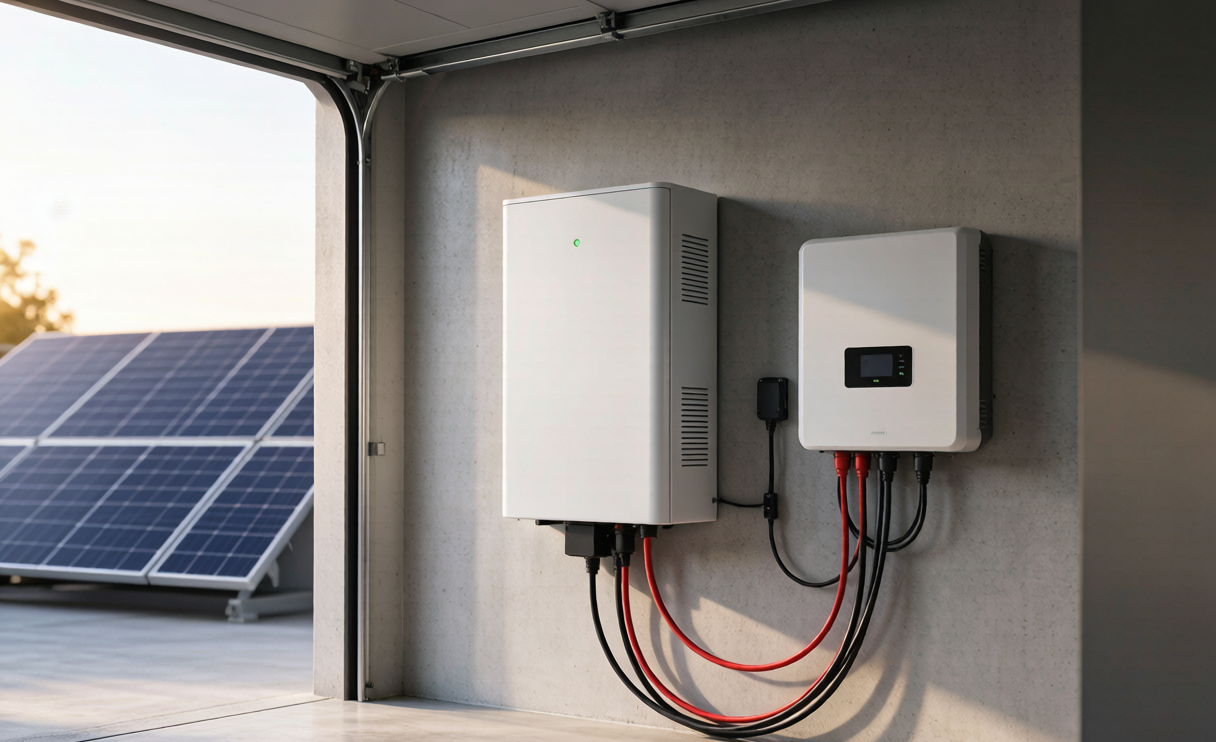
For homeowners in Canada, the northern US, or alpine Europe who want a sodium ion battery energy storage unit in an unheated garage, this low temperature advantage is the strongest reason to choose Na-ion over LFP. You avoid the cost and complexity of a heated battery cabinet.
Is Sodium Ion Ready for Homes Today?
My engineering verdict: yes, for the right home. The qualification matters. Na-ion is ready when the buyer prioritizes (1) cold-climate resilience, (2) long-term raw-material price stability, and (3) safety in living spaces over (4) the absolute smallest footprint. It is not yet the default choice where space is tight or where the absolute lowest upfront cost is the only metric.
What I tell integrators is to position the first Na-ion installations as backup-plus-solar-shift systems of 5–15 kWh. That size class tolerates the larger enclosure, benefits most from cold tolerance, and lets the homeowner ride the cost curve down as volume climbs through 2026 and 2027.
How I Would Spec a Residential Na-ion System
If you are evaluating a sodium-ion battery for a client, here is the short checklist my team uses:
- Confirm the cathode chemistry and ask for third-party cycle-life test data at 80% DoD, not just brochure numbers.
- Verify the BMS supports sodium’s wider voltage window and includes low-temperature charge limiting.
- Size for 1.2× the LFP equivalent footprint so the cabinet fits the wall and breathes.
- Require cell-level fusing and a metal enclosure rated for the install location (garage, basement, or outdoor).
- Pair with a hybrid inverter that accepts the slightly different charge curve of Na-ion.
At Horizon Power we already build Na-ion battery modules for stationary and mild-climate storage, and we are qualifying home-cabinet formats for B2B partners who want to be early but safe.
Real-World Home Installations: What We Are Seeing
I will share one pattern that has repeated across the early deployments my team has supported. A homeowner in a northern climate with a 6 kW rooftop array wanted backup through winter outages. With LFP, the integrator had to spec a heated cabinet and accept steep cold-weather capacity loss. We instead built a 10 kWh Na-ion cabinet using layered-oxide cells. Through a winter with lows near -18°C, the system held roughly 85% of its nameplate capacity and charged normally from solar during the day. The enclosure was larger than an equivalent LFP unit, but it sat in a garage where floor space was not the constraint. That trade — footprint for cold resilience — is the story of almost every successful sodium ion battery energy storage install I have reviewed.
The failures I have seen were the opposite case: dense urban homes where the only practical location was a small utility closet, and the buyer refused to accept the bigger box. In those projects the Na-ion advantage evaporated and LFP was the honest recommendation. Matching chemistry to site is the job, not chasing the newest label.
Recycling and Supply-Chain Resilience
A point I raise with every B2B buyer is end-of-life. Sodium-ion cells contain no lithium, cobalt, or nickel, so the recycling stream is simpler and the material recovery economics are healthier at scale. More importantly for procurement planning, the supply chain is not hostage to a handful of lithium brine basins. For distributors building multi-year inventory and service programs, that diversification is a strategic advantage beyond the spec sheet. A sodium-ion battery lets you promise customers a stable bill of materials even if lithium markets swing again.
Cost Outlook for 2026–2028
The economics are the part I am most optimistic about. Lithium carbonate price swings have burned a lot of integrators; sodium removes that exposure because the active materials are commodity-cheap and geographically diversified. As gigafactory capacity for Na-ion comes online in China and Europe, I expect cell-level $/kWh to undercut LFP by a meaningful margin within two years. The early adopters paying today’s near-parity price are buying resilience and a seat on the learning curve, not the cheapest possible box.
Frequently Asked Questions
Can a sodium ion battery replace my LFP home battery now?
For most homes, yes — especially in cold regions or where safety and material-price stability matter more than box size. Just size the enclosure a bit larger and confirm your inverter supports the Na-ion charge curve. If your priority is the smallest possible cabinet in a warm climate, LFP still wins on density today.
How long does a Na-ion home storage battery last?
Expect 3,000–6,000 full equivalent cycles from current commercial layered-oxide cells, translating to roughly 8–15 years of daily use. Prussian-blue designs can exceed 10,000 cycles but at lower energy density. Always ask for test data at 80% depth of discharge.
Is sodium ion safer than lithium for indoor use?
Generally yes. Na-ion is more thermally stable and does not form lithium dendrites, lowering thermal-runaway risk. That makes it a strong fit for garages and utility rooms, though you should still follow enclosure and ventilation standards.
Does cold weather hurt sodium ion battery energy storage?
Far less than it hurts LFP. Na-ion typically retains around 80–90% capacity at -20°C and charges more gracefully in the cold, which is why it is attractive for unheated garages in northern climates.
Will sodium ion batteries get cheaper than lithium?
Most analysts expect Na-ion cell cost to fall below LFP as volume scales, because sodium, iron, and manganese cathodes avoid expensive lithium, nickel, and cobalt. The exact timeline depends on gigafactory ramp, but the cost trajectory is clearly downward.
My Bottom Line as an Engineer
If you are a homeowner or an integrator asking whether to wait, my advice is pragmatic: do not wait for a perfect product, choose the right product for the site. A sodium ion battery energy storage system is ready today for cold-climate, safety-conscious, space-tolerant homes, and it hedges you against lithium price volatility. For tight, warm-climate installs, LFP remains the denser choice. Spec the chemistry to the wall, verify the test data, and you will ship a system the customer is still happy with in year ten. At Horizon Power we are happy to help B2B partners qualify the right Na-ion format for their market.