Na-ion Battery Limitations Buyers Should Understand
I have spent the last decade on the factory floor and in the test lab building lithium battery packs, and over the past three years my team at Horizon Power has been running hard validation cycles on sodium-ion cells. Buyers keep asking me the same question: “Should we switch to Na-ion?” My honest answer is always “It depends, and you should understand the limits first.” This article walks through the real Na-ion battery limitations we have measured, not the brochure version, so you can make a specification decision with your eyes open.
Before we dive in, a quick disclaimer on who is writing this. I am Karl Huang, a senior lithium battery engineer, and I have no incentive to trash sodium. We sell both lithium and emerging sodium solutions, so my job is to tell you which chemistry fits your duty cycle. The points below are drawn from cell teardowns, climate-chamber cycling, and full pack builds, not from vendor slide decks. Treat them as field notes from someone who has shipped both.
Lower Energy Density Compared With Lithium Chemistries
The single biggest constraint of the sodium ion battery is gravimetric and volumetric energy density. Sodium is heavier than lithium (about 23 vs 6.9 g/mol) and its standard reduction potential is higher, so a sodium-ion cell simply cannot store as much energy per kilogram as a good lithium-ion cell. In our bench data, mature hard-carbon / layered-oxide Na-ion cells land around 90-160 Wh/kg at the cell level, while the LFP lithium packs we ship routinely sit at 160-200 Wh/kg and NMC packs push well beyond 220 Wh/kg.
For a B2B buyer this is not a rounding error. If your product is weight-sensitive, a Na-ion pack of equal watt-hours will be heavier and you will lose flight time, payload, or runtime. I tell drone and portable-equipment clients plainly: do not spec Na-ion where every gram is billed. The Na-ion battery limitations around energy density are physics, not a manufacturing gap that will close next quarter. You can improve cathode formulation and cell engineering, but you cannot change the periodic table. Sodium will always carry a heavier atomic weight than lithium, and that ceiling is permanent.
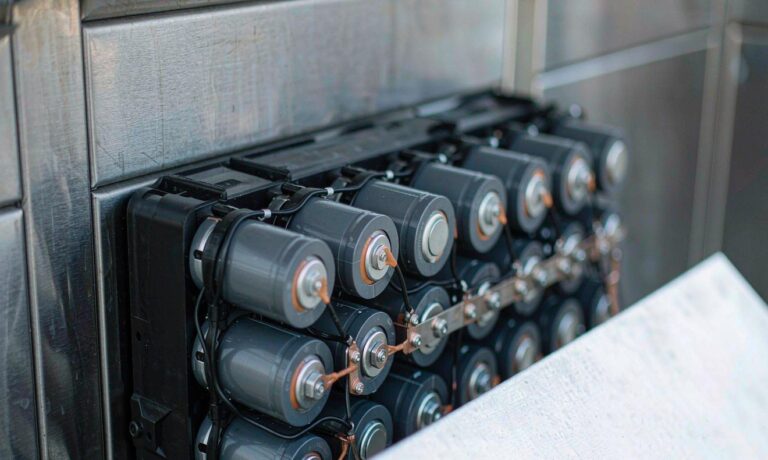
There is a second, subtler effect. Because each cell holds less energy, you need more cells in series and parallel to hit a target pack voltage and capacity. More cells mean more interconnects, more welds, and a larger chance of a single weak cell dragging the string. So the energy-density gap is not just about mass; it also raises pack complexity for the same delivered watt-hours.
Larger Footprint and Heavier Weight for Equal Capacity
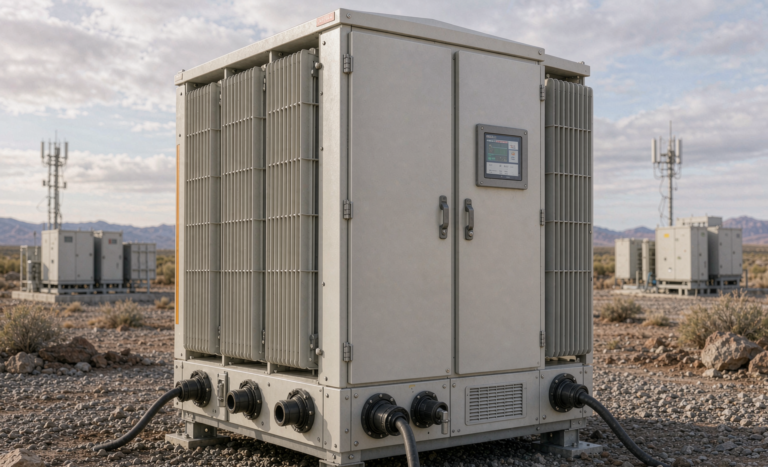
Because the cathode and anode materials are less energy-dense, the volume penalty follows directly. To deliver the same usable capacity as an LFP pack, a sodium ion battery needs roughly 20-40% more space. We learned this the hard way on a stationary storage mock-up where the Na-ion enclosure grew from a tidy wall cabinet to a floor-standing rack. For tight enclosures, that footprint alone can kill the design.
Weight and volume also ripple into logistics. Heavier cells mean higher shipping mass and more structural support in the end product. When you compare total cost of ownership, the “cheaper per kWh” story of sodium can shrink once you price the extra enclosure steel, the larger shipping crate, and the handling labor. These are the Na-ion battery limitations buyers rarely see on the first quotation. A procurement manager who compares only the cell price per kWh will miss the enclosure, freight, and rack costs that follow the bigger pack.
I have watched rooftop and balcony-storage projects lose their economic case purely because the Na-ion unit was too bulky to ship through a standard elevator or fit the allocated meter cupboard. If your installation space is fixed, model the volume first and the chemistry second.
Low Temperature Is a Strength, but the Power Window Is Narrow
Here is where the marketing and the lab disagree. It is true that a sodium ion battery keeps most of its capacity at -20C far better than LFP, and that is a genuine advantage for cold-climate storage and outdoor equipment. We measured strong capacity retention where lithium chemistries would have limped. So far, so good.
The limitation is on the power side. Sodium’s charge-transfer kinetics are better than lithium in the cold, but the usable power window at low temperature is still narrower than many buyers assume. At -20C you may retain capacity, yet the sustainable discharge current and especially the safe charge current drop. If your application needs high pulse power in the cold, not just energy availability, Na-ion can still let you down. The “cold weather” headline hides a narrower power envelope, and that nuance is one of the Na-ion battery limitations I always flag in spec reviews.
Charging is the sharpest edge of this problem. Even if a sodium ion battery holds its capacity in the cold, pushing a high charge current into a cold cell accelerates side reactions and plating-like degradation on the hard-carbon anode. In the field that means your BMS must clamp charge current aggressively below zero, which quietly reduces the power your system can actually use. Buyers who spec Na-ion for a cold-weather solar charge cycle sometimes find the pack takes all day to refill instead of a few hours. Understanding the low temperature power window is essential before you promise a fast-recharge spec.
Cathode and Anode Material Maturity Still Lags
The cathode landscape for sodium is still sorting itself out. Layered oxides, polyanionic compounds, and Prussian-blue analogues each trade off energy, cycle life, and thermal behavior differently, and no single chemistry has achieved the decade of field-proven consistency that LFP enjoys. The hard-carbon anode supply is improving, but precursor quality and tap density vary between batches more than we would like.
In practice this means wider cell-to-cell variation and a shorter track record for long-term fleet reliability. As a lithium battery engineer I trust LFP for a ten-year stationary asset; for Na-ion I currently recommend conservative derating and longer qualification before committing a large fleet. Material maturity is among the Na-ion battery limitations that time, not hope, will resolve. The good news is that every new gigafactory line tightens the distribution, but you should not assume today’s sample cells represent next year’s production spread.
We also watch the cathode for transition-metal dissolution and moisture sensitivity. Several promising Na-ion cathode families are sensitive to humidity during manufacturing, which raises the bar for dry-room capability at the cell plant. If your supplier’s process control is weak, you will see it as early capacity fade. This is another reason to qualify the factory, not just the datasheet.
Supply Chain and Standardization Gaps
Lithium battery manufacturing benefits from a massive, standardized supply base: electrode lines, tab welders, BMS firmware, and safety certifications are all mature. Sodium-ion is newer, so cell formats, terminal definitions, and test standards are less uniform across suppliers. We have had to re-qualify BMS settings and enclosure vents when switching Na-ion vendors because the cells did not follow a common mechanical or electrical convention.
For a B2B buyer this translates to switching costs and supply risk. Fewer qualified second-source suppliers means a single vendor hiccup can stall your line. These Na-ion battery limitations are operational rather than electrochemical, but they matter just as much to your production plan. I advise any buyer committing volume to qualify at least two cell sources up front and to lock the mechanical drawing, because a “drop-in replacement” rarely is one across Na-ion vendors today.
Certification is the other friction point. UN38.3 and IEC paperwork exist for sodium, but not every test house has tuned its procedure to the chemistry, and some insurers still price Na-ion storage as an emerging risk. Budget extra lead time for compliance, especially if you ship across multiple regions.
Cycle Life and Calendar Aging Are Still Being Proven
Vendors quote impressive cycle numbers for Na-ion in press releases, but the verified, independently cycled datasets at scale are thinner than for LFP. Our own 1C cycling on representative cells shows promising mid-life behavior, yet we lack the ten-year, high-temperature, partial-state-of-charge field history that lets me sign off on a sodium ion battery for a 10-year rooftop warranty with the same confidence I give LFP.
Calendar aging is the quieter risk. A stationary pack spends most of its life resting, not cycling, and sodium cell self-discharge and passivation behavior over five to ten years of idle time are not yet as documented. If your business model depends on a long, warrantied service life, treat Na-ion cycle-life claims as provisional until multi-year fleet data accumulates. Among the Na-ion battery limitations, this is the one most likely to surprise a buyer who compares only the headline cycle count.
Where Na-ion Still Makes Sense
None of this means Na-ion is a bad choice. For stationary storage where weight and volume are cheap, for entry-level mild-climate systems, and for applications that value raw material abundance and lower cost over energy density, the sodium ion battery is compelling. Its cold-capacity retention is a real win for certain outdoor and backup scenarios. The point of listing these Na-ion battery limitations is to match the chemistry to the duty cycle instead of chasing a trend.
My rule of thumb: if your product is bolted to a wall or sits on the ground, Na-ion deserves a serious look; if it flies, wears on a body, or fights for every gram, stay on lithium for now. And even for ground systems, run a full total-cost model that includes enclosure, freight, certification, and second-sourcing before you commit. We are happy to run that comparison with you on real cells from your shortlist.
Frequently Asked Questions
Is the sodium ion battery safe in cold weather?
Yes for capacity, with a caveat on power. A sodium ion battery retains far more usable capacity at low temperature than LFP, which is a genuine safety and reliability advantage. However, the sustainable charge and pulse-discharge power at -20C are reduced, so size the pack with a conservative power margin rather than assuming full-rate performance in the cold. Plan your charge current clamp carefully to protect the hard-carbon anode.
Will Na-ion replace lithium-ion soon?
Not in weight- or space-constrained applications. The Na-ion battery limitations around energy density and volume keep it out of drones, phones, and most EVs for the foreseeable future. It will grow fastest in stationary storage and cost-driven, mild-climate use cases where its abundance advantage outweighs the density penalty. Lithium will remain the default for anything that moves.
How much heavier and bigger is a Na-ion pack really?
For equal capacity, expect roughly 20-40% more volume and a meaningful mass increase versus LFP. The exact number depends on the cathode chemistry and pack design, but you should budget enclosure space and structural support up front rather than discovering the size penalty during prototyping. Run the volume model before the chemistry decision.
Can a sodium ion battery use the same BMS as lithium?
Often yes at the topology level, but the thresholds differ. Sodium’s voltage window, low-temperature charge limits, and balancing behavior are distinct enough that you should re-tune the BMS firmware and re-validate protection logic rather than assume a lithium profile will transfer. Using an unmodified lithium BMS is a common cause of premature Na-ion pack failures we see in the field.