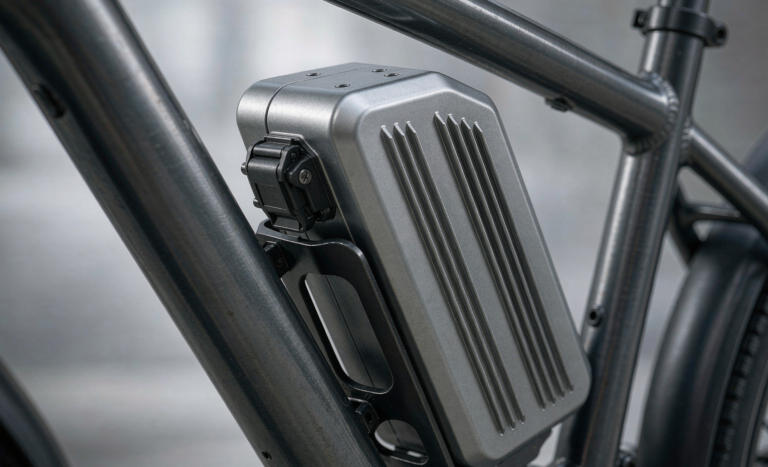
Lithium Battery for ESS Rack Systems: Modular Build
Why Modular Builds Win in ESS Rack Systems
When I started designing stationary storage back in 2014, most installations were monolithic boxes: one big enclosure, one BMS, one point of failure. Over the last decade I have come to insist on a modular rack architecture for almost every energy storage system (ESS) we ship. A lithium battery pack that is built as small, swappable modules inside a standard 19-inch or 21-inch rack is simply easier to certify, easier to service, and easier to scale. If a single module degrades, you replace one tray, not the whole bank. That is the core reason modular ESS racks now dominate commercial and industrial deployments.
In this guide I will walk through how we at Horizon Power specify a lithium battery ESS rack modular system from cell chemistry all the way to a multi-rack container. I will cover cell selection, module sizing, BMS architecture, thermal behavior, the certifications that actually matter for stationary storage, and how to grow from one rack to forty. The goal is practical: give you the engineering decisions I make on the bench, not marketing fluff.

Cell Chemistry: LFP vs NCM for Stationary Racks
The first decision is chemistry. For stationary ESS racks, I almost always recommend LFP (LFP battery, lithium iron phosphate) over NCM. The reason is simple: thermal runaway onset in LFP sits around 270°C versus roughly 150–180°C for NCM nickel-cobalt-manganese cells. In a dense rack with thousands of cells, that ~100°C buffer is the difference between a contained fault and a fire. LFP also gives you 3,000–6,000 cycles at 80% depth of discharge, which maps cleanly onto a 10–15 year ESS lifetime.
NCM (NCM battery) still has a place where energy density and weight matter — think mobile or aerospace — but for a floor-standing rack where volume is cheap and safety is non-negotiable, LFP wins. We reserve NCM for niche high-energy-density projects and always pair it with aggressive liquid cooling, which I do not recommend for a first ESS build.
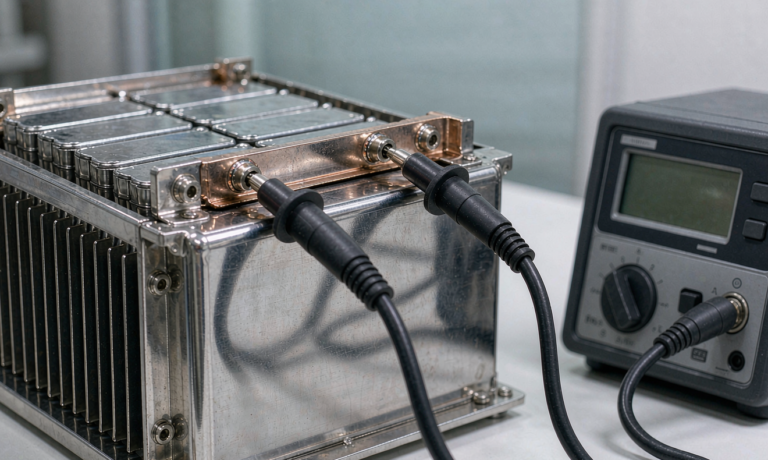
A lithium-ion battery cell for rack use should also be prismatic rather than cylindrical for most commercial systems. Prismatic cells simplify module framing, reduce inter-cell busbar count, and improve pack-level volumetric efficiency. We routinely use 100Ah–280Ah prismatic LFP cells as the building block of a module.
Sizing the Module: Capacity, Voltage, and String Configuration
Once chemistry is fixed, we size the module. A typical rack module is a lithium battery pack of 1P16S or 1P15S using 3.2V LFP cells, giving a nominal 48V or 51.2V string — the sweet spot that matches most hybrid inverters without a bulky step-up transformer. We rate each module at 5kWh–14kWh depending on cell capacity.
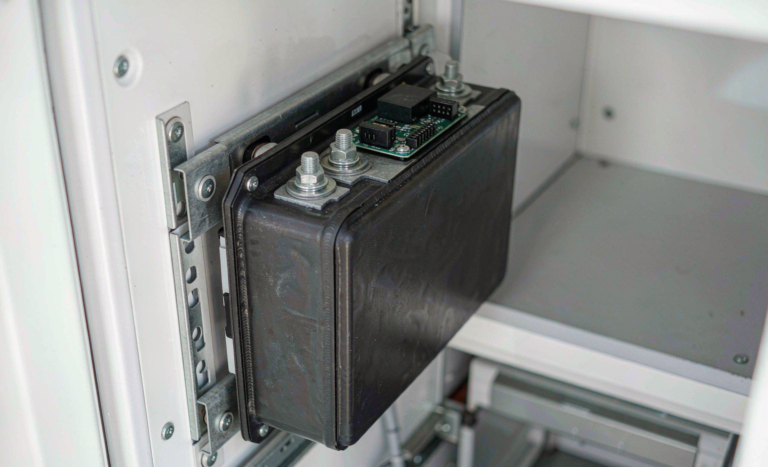
For a rack, you parallel modules rather than building one giant series string. Paralleling at the module level keeps individual BMS domains small and isolates faults. A standard cabinet might hold 3–6 modules in parallel to reach 30–80kWh per rack. When a customer asks for a custom battery solution, the first question I ask is not “how many kWh” but “what is your inverter’s max continuous current and voltage window” — that defines the string count and module count far more than the headline capacity number.
I also insist on a usable state-of-charge window of 10%–90% for daily cycling. Pushing to 100% or down to 0% accelerates calendar aging. For a 12v lithium battery sub-module used in control or comms backup inside the rack, we derate even further because those strings cycle less predictably.
BMS Architecture for Rack-Level Monitoring
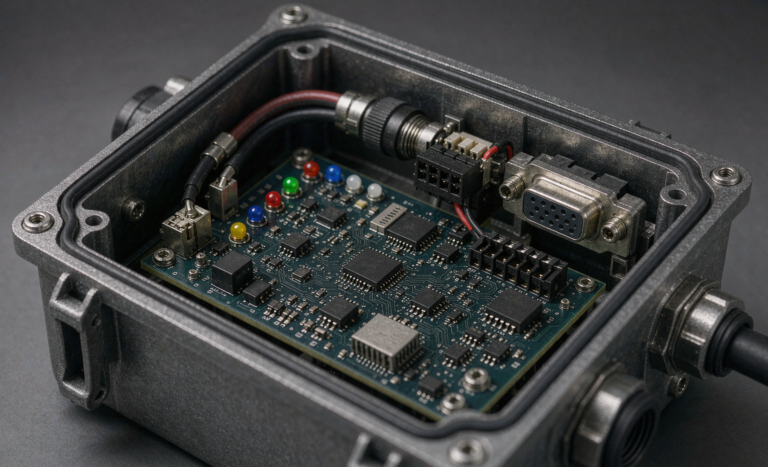
The BMS solution is where a modular rack lives or dies. I design a two-tier topology: each module carries a slave board (cell voltage, temperature, balancing), and a rack-level master aggregates module data over RS485 or CAN and talks to the inverter and the site controller over Modbus TCP or CANopen.
Key parameters I monitor per module: per-cell voltage (resolution ≤1mV), at least two temperature points (top and bottom of the module), pack current via a hall sensor, and insulation resistance for the high-voltage DC bus. The master enforces protection: over-voltage at 3.65V/cell, under-voltage at 2.5V/cell, charge/discharge over-current, and short-circuit cutoff within a few milliseconds.
A good BMS solution also does active or passive balancing. For LFP in a 16S string, cell mismatch after 500 cycles can reach 30–50mV; passive balancing at 50–100mA is adequate for most ESS, while active balancing pays off only in high-throughput or mixed-age fleets. I always log cell-level data to the cloud so we can watch divergence trend before it becomes a failure.
Thermal Management and Cell Balancing in a Rack
LFP is forgiving, but a rack is still a heat source. At 0.5C continuous discharge a 100kWh rack dissipates roughly 1–2kW of loss. We design for natural convection in climate-controlled rooms (19–25°C) and add forced-air fans above 30°C ambient. The design rule I use: keep cell temperature spread within a module under 5°C. Hot spots above 45°C permanently damage LFP capacity.
Spacing matters. We leave at least 10mm air gaps between modules and never stack more than the cabinet’s rated thermal load. The balancing logic in the BMS keeps weaker cells from over-charging, but it cannot fix a rack that is baking itself because of poor airflow. In one field retrofit I diagnosed, a customer had packed modules back-to-back with zero gap; cell temperatures hit 52°C and cycle life halved. Re-spacing alone recovered most of the lost performance.
Safety, Certifications, and Installation Rules
Stationary storage has its own certification ladder, and I treat it as non-negotiable. The cell-level baseline is UN38.3 for transport and IEC 62133 for portable safety, but for rack ESS you must also meet IEC 62619 (industrial stationary cells and batteries) and, for the North American market, UL 1973 for the battery and UL 9540A for system-level fire propagation testing. Many municipalities now require UL 9540A pass before issuing an occupancy permit.
On the install side, I require: dedicated battery room or compartment with fire-rated separation, smoke detection tied to forced ventilation cutoff, and a disconnect that is mechanically accessible within one meter of the rack. The rack frame must be grounded, and the DC bus must carry an isolation monitor that trips the contactor on >100kΩ leakage to chassis. These are the details that separate a compliant lithium battery installation from a liability.
For projects that also touch aviation-adjacent or maritime logistics, we reference FAA and EASA transport guidance for the shipped modules, even though the installed system is stationary. It keeps the supply chain clean and the paperwork audit-ready.
Scaling From a Single Rack to a Multi-Rack Array
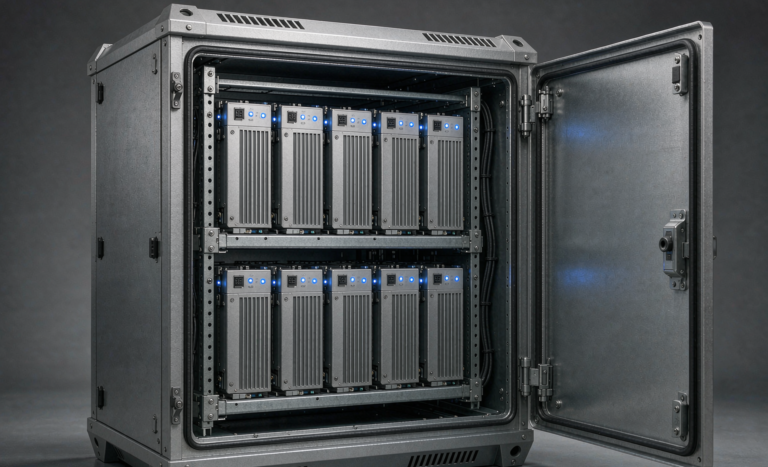
The beauty of a modular build is linear scaling. Start with one 50kWh rack validated against IEC 62619 and UL 1973. To reach 500kWh, you parallel ten identical racks behind a common DC bus and a single site controller. Because every module is the same SKU, spare parts are trivial and commissioning scripts are reusable.
When a client wants a custom battery solution spanning multiple megawatt-hours, we move from racks to containerized ESS: 10–20 racks in a 20ft or 40ft enclosure with integrated HVAC, fire suppression, and a PCS. The engineering inside each rack does not change — only the envelope does. That is the whole point of going modular from day one.
For fleet operators, I add a single telemetry layer that aggregates every rack’s BMS into one dashboard. State-of-health, throughput, and fault logs feed predictive maintenance. In our own deployments, this cuts unplanned downtime by catching a weak module weeks before it would trip the rack.
Commissioning Checklist I Use on Every Rack
Before a rack goes live, I run a fixed checklist: verify cell voltages across all modules are within 20mV at rest; confirm insulation resistance >1MΩ; exercise the contactor and BMS protection trips with a controlled fault; validate balancing by logging cell spread after a full cycle; and pressure-test the thermal model against a 2-hour peak-load run. Only then do I sign off the lithium battery ESS rack modular system for revenue service.
This discipline is what lets a modular ESS deliver its rated 6,000-cycle life instead of failing at 1,500. The hardware is mature; the difference is in the engineering discipline around it.
Total Cost of Ownership: Where Modular Pays Back
The headline price per kWh of a lithium battery rack is only part of the story. The real win of modular construction shows up in OPEX. Because a failed module costs a few hundred dollars and ten minutes to swap, mean-time-to-repair stays low and availability stays above 99%. A monolithic pack that fails can take the whole site offline for weeks and a five-figure repair.
When I build the business case for a custom battery solution, I model levelized cost of storage over the warranted 6,000 cycles. Modular LFP racks typically land at $0.05–$0.12 per kWh-throughput depending on depth of discharge and ambient conditions. The assumptions that move that number most are ambient temperature control and how aggressively you cycle — both of which a well-designed BMS solution and airflow plan protect. Skimp on cooling and you quietly double your true cost.
Frequently Asked Questions
What cell chemistry is best for an ESS rack?
For stationary racks I recommend LFP (LFP battery) almost exclusively. Its higher thermal-runaway threshold and long cycle life fit floor-standing, safety-critical storage better than NCM, and it avoids cobalt supply-chain and thermal headaches. NCM is reserved for weight-sensitive mobile use.
How many modules go in one rack?
It depends on your inverter’s voltage and current window. A typical 48V/51.2V rack holds 3–6 parallel lithium battery pack modules at 5–14kWh each, landing around 30–80kWh per cabinet. We size the string count from the inverter spec, not the marketing capacity number.
Do I need active or passive balancing?
For most LFP racks, passive balancing at 50–100mA is enough because cell mismatch stays small. Active balancing only pays off in high-throughput or mixed-age fleets. A solid BMS solution with logging matters more than the balancing hardware choice.
Which certifications are mandatory for rack ESS?
Start with UN38.3 and IEC 62133 at cell level, then IEC 62619 for stationary industrial batteries, and UL 1973 plus UL 9540A for the North American market. Many authorities will not permit occupancy without a UL 9540A fire-propagation pass.
Can I add racks later to grow capacity?
Yes, that is the main advantage of a modular build. Parallel identical racks behind a common DC bus and site controller. Because each module is the same SKU, scaling from one rack to a multi-rack array or even a containerized ESS is straightforward with a custom battery solution design.
How hot can the rack get?
Keep cells between 19–25°C ideally, never above 45°C, and maintain less than 5°C spread within a module. Above 45°C you permanently lose LFP capacity. Design for natural convection in controlled rooms and add forced-air fans above 30°C ambient.