Lithium Battery Welding
Why the Weld Matters More Than Most Buyers Realize
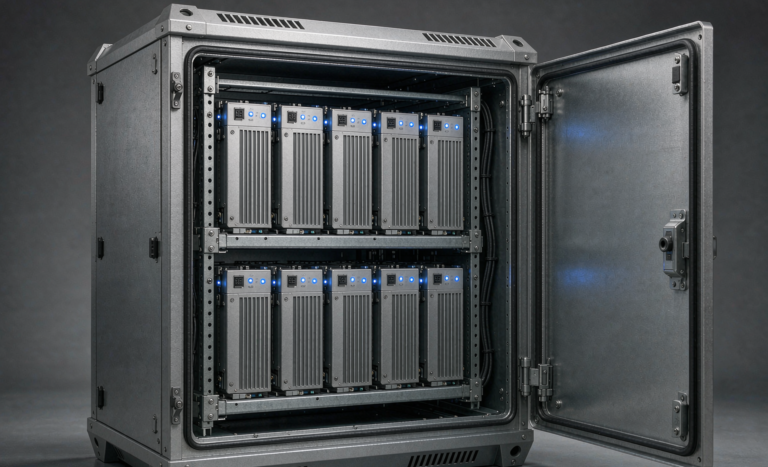
As a senior lithium battery engineer, I have personally signed off on thousands of welded packs over the past fourteen years, from small consumer modules to 200 kWh industrial cabinets. One lesson keeps repeating itself: the electrical joint between a cell and its busbar is where a lithium battery pack either earns its rated cycle life or quietly begins to fail. A weak weld does not announce itself on day one. It creeps — higher resistance, localized heating, and eventually a hot spot that no BMS solution can fully compensate for once the cell tab has oxidized underneath.
When buyers ask me how to cut cost on a lithium battery pack, my first instinct is never to cheapen the cells. It is to make the joining process repeatable. A well-welded pack with Grade B cells will outlast a poorly joined pack built from premium Grade A cells. The two dominant joining methods in our industry are resistance spot welding and ultrasonic welding, and choosing between them is an engineering decision, not a purchasing afterthought.

Resistance Spot Welding: The Workhorse of the Industry
Resistance spot welding (RSW) is what most people picture when they think of lithium-ion battery assembly. Two electrodes clamp a nickel or nickel-plated steel strip against the cell terminal and push a short, high-current pulse through the contact. The heat is generated right at the interface (I²R), melting a tiny nugget of metal that freezes into the joint. For cylindrical cells — 18650, 21700, 26650 — this is still the default method across the globe.
In my own lines, I run inverter-based spot welders capable of 1,500–6,000 A pulses as short as 2–4 ms. The reason for the speed is simple: you want enough energy to form a nugget, but not enough dwell time to cook the cell. A lithium battery cathode does not forgive sustained heat. We monitor weld energy per shot and reject any pulse that drifts outside a ±8% band.
Spot welding shines for nickel strips up to roughly 0.3 mm thick and for the vast majority of consumer and light-industrial lithium battery pack builds. It is fast, cheap per joint, and easy to automate with rotary indexing tables. The trade-off is consistency: the result depends heavily on electrode condition, surface cleanliness, and pressure. A dirty electrode is the number one cause of cold welds I see during factory audits.
There is also a real skill component that amateur builders underestimate. The same welder set to identical parameters will produce a perfect nugget on a fresh 21700 cell and a weak joint on one with a slightly oxidized terminal. That is why we qualify every cell lot with a small batch weld and a peel check before a full run begins. A lithium battery line that skips lot qualification is rolling the dice on every pack it ships, and the cost of a field return dwarfs the few minutes spent qualifying the material.
Ultrasonic Welding: The Clean, Cold Alternative
Ultrasonic welding takes a completely different path. Instead of resistive heat, it uses 20–40 kHz mechanical vibration to rub two metal surfaces together under clamping pressure. The friction disperses surface oxides and interlocks the materials at a microscopic level — all below the melting point. For a lithium-ion battery, that “cold” nature is the headline benefit: essentially zero thermal stress on the cell.
I reach for ultrasonic welding when the application is sensitive. Aluminum cell tabs, multi-layer foils, and high-value automotive modules are the classic cases. Ultrasonic joints on aluminum are also far stronger and more reliable than what spot welding can achieve on that metal. When a custom battery solution calls for an NCM chemistry with thin aluminum tabs, ultrasonic is often the only viable route.
The downside is capital cost and tuning. An ultrasonic weld head is 3–5× the price of a good spot welder, and the sonotrode (the vibrating tip) wears out and must be dressed or replaced on a strict schedule. Get the amplitude or pressure wrong and you shear the tab instead of joining it. This is why ultrasonic tends to live in higher-volume, higher-margin production rather than hobbyist benches.
Spot Welding vs Ultrasonic: A Direct Comparison
Let me put the two side by side the way I explain it to procurement teams:
- Heat input: Spot welding introduces real thermal energy into the cell; ultrasonic introduces almost none. For thermally fragile cells, ultrasonic wins.
- Metals: Spot welding works best on nickel and nickel-plated steel; ultrasonic handles nickel, copper, and especially aluminum far better.
- Joint resistance: Both can hit <0.5 mΩ when done well, but ultrasonic is more forgiving of thin foils.
- Throughput: Spot welding is faster per joint on small packs; ultrasonic catches up on automated foil-heavy lines.
- Cost: Spot welding has low capital and operating cost; ultrasonic carries higher upfront and tooling maintenance.
- Failure mode: Spot welding fails mostly from cold welds and electrode wear; ultrasonic fails from improper tuning and sonotrode wear.
For an LFP battery built from cylindrical cells with nickel strips, I almost always recommend spot welding — it is economical and proven. For pouch or prismatic cells with aluminum tabs, ultrasonic is the safer engineering choice. A good custom battery solution provider will tell you this honestly rather than pushing the machine they happen to own.
Process Controls That Keep Welds Consistent
Method selection is only half the battle. The other half is process control, and this is where most factories lose quality. In our workshops I enforce a handful of non-negotiables:
- Surface prep: Every cell terminal is cleaned and verified oxide-free. Oil from handling is the silent killer of weld quality.
- Electrode/sonotrode management: Spot welding electrodes are dressed every 5,000 shots; ultrasonic sonotrodes are inspected weekly for micro-cracks.
- Real-time monitoring: We log weld current, voltage, and energy for spot welding, and amplitude/power for ultrasonic. Out-of-band shots trigger automatic rejection.
- Destruction testing: A peel test on nickel strip welds and a shear test on ultrasonic joints is run on the first article and at fixed intervals — typically every 2 hours of a production run.
- Climate stability: Both processes drift with humidity and temperature. Our welding cells sit in a controlled 22±3 °C, <50% RH environment.
These controls are exactly what separate a serious lithium battery manufacturer from a bench assembler. When I audit a new supplier, I do not look at their cells first — I look at their weld data logs.
Safety, Standards, and When to Bring in a Custom Partner
Welding is where cell safety incidents most often originate in assembly, so the standards matter. Any welded lithium-ion battery pack we ship must clear UN38.3 transit testing (T.1–T.8, including the altitude, thermal, vibration, shock, and external short sequences) and comply with IEC 62133 for cell and pack safety. For aviation-linked programs, FAA and EASA guidance on lithium battery transport and installation shapes how we design, label, and document the pack. A weld that looks fine but raises internal pressure during UN38.3 altitude simulation is a failed pack, full stop.
My advice to buyers is pragmatic. If you are building a straightforward lithium battery pack from cylindrical cells, spot welding with disciplined process control will serve you well and keep cost down. If your design uses aluminum tabs, pouch cells, or sits in a safety-critical application, invest in ultrasonic or work with a partner who already runs it. Either way, the joint is not a detail — it is the backbone of the pack.
When the geometry is unusual or the volumes are high, that is the moment to engage a custom battery solution provider who can model thermal and mechanical stress, validate the weld process, and carry the certification burden with you. A competent BMS solution layered on top will catch abnormal resistance trends over time, but it cannot fix a bad weld made on day one.
Frequently Asked Questions
What thickness of nickel strip should I use for spot welding?
For most cylindrical lithium battery packs I recommend 0.15–0.2 mm pure nickel for low-current builds and 0.25–0.3 mm for high-discharge packs. Thicker than 0.3 mm usually exceeds what a bench spot welder can nugget reliably and pushes you toward ultrasonic or laser.
Can you spot weld aluminum cell tabs?
Not well. Aluminum’s oxide layer and high thermal conductivity make resistance spot welding unreliable on bare aluminum. For aluminum tabs, ultrasonic welding is the correct method and gives a far stronger, lower-resistance joint.
How do I verify weld quality without destructive testing?
Use real-time energy monitoring plus periodic peel and shear tests. A stable, in-band weld signature across thousands of shots is your best non-destructive indicator. We keep a running control chart for every weld head on the line.
Is ultrasonic welding better for an LFP battery pack?
For cylindrical LFP cells with nickel strips, spot welding is usually the better value. Ultrasonic earns its place when the LFP design uses aluminum busbars, prismatic cells, or pouch formats where thermal stress must be minimized.
What certifications apply to a welded lithium battery pack?
At minimum, UN38.3 for transport and IEC 62133 for safety. Depending on the market, you may also need UL 1642/UL 2054, IEC 62619 for stationary storage, or regional transport approvals referenced by FAA and EASA for aviation-linked use.
When should I switch from spot welding to a custom battery solution partner?
When your geometry is non-standard, your volumes justify automation, or your application is safety-critical. A qualified partner brings validated weld processes, inline monitoring, and the documentation needed to pass certification without repeated trial and error.