Lithium Battery Marine Corrosion and Safety
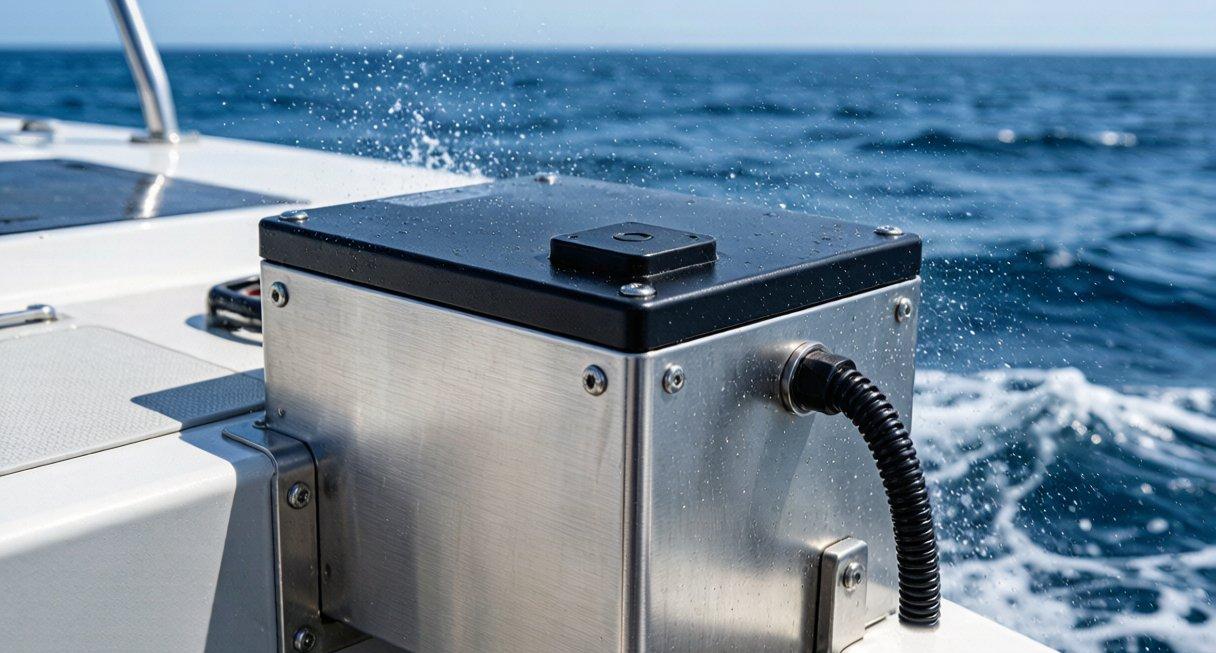
I have spent the better part of a decade as a lithium battery engineer watching packs come back from the field, and if there is one environment that separates a properly engineered lithium battery from a lucky one, it is the marine world. Saltwater is a relentless electrolyte. It finds every seam, every exposed terminal, every cheap fastener, and it turns a 3,000-cycle pack into a corroded brick within a single season. When I brief an OEM on a lithium battery pack for a boat, my first slide is never about capacity or weight — it is about corrosion and safety, because that is what actually keeps the product alive and the customer out of trouble.
In this guide I will walk through the failure modes I see most often on the water, the material and design decisions that stop them, why LFP chemistry dominates marine use, and the certification chain (UN38.3, IEC 62133, ABYC, ISO 8846) that a credible supplier should be able to show you. If you are specifying a custom battery solution for a vessel, treat the next sections as your pre-RFQ checklist.
Why the Marine Environment Is the Harshest Test for a Lithium Battery Pack
A boat is not a warehouse. It is a vibrating, humid, salt-laden platform where the battery can sit inches above bilge water and a few feet from a continuous source of conductive spray. Three forces act on the pack at once:
- Galvanic corrosion — dissimilar metals in an electrolyte create a battery of their own, eating the less noble metal. I have pulled stainless 304 enclosures off boats where the screws had dissolved into red powder because someone paired them with an aluminum frame.
- Crevice corrosion — salt migrates into the tiny gap between a gasket and a housing and stays there, wet and oxygenated, slowly consuming the edge.
- Condensation and thermal cycling — a pack swings from a cold night at 8°C to a sun-baked 55°C engine bay, and every cycle breathes moist air in and out through any imperfect seal.
For reference, a standard salt-spray test to ASTM B117 runs coils of steel for 96 hours before they show red rust. A marine lithium-ion battery housing I approve for production typically survives 500–1,000 hours of neutral salt spray before we accept the coating. That 10x margin is not vanity — it is what a three-year warranty actually costs.
Corrosion Pathways: What Actually Kills Marine Packs
When a marine pack fails, it is rarely the cells. In my teardown logs, fewer than 15% of field returns are cell-related. The rest trace back to the support structure:
- Terminal corrosion — the #1 cause. Tinned copper lugs resist it; bare copper does not. I spec nickel-plated or tinned connectors on every marine build.
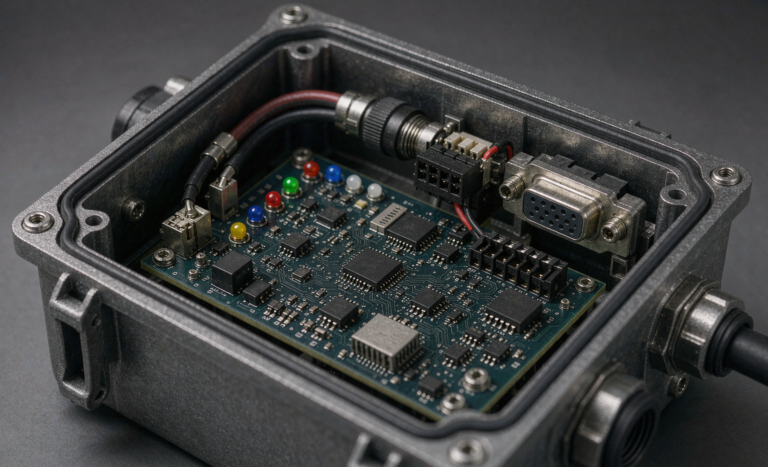
- Enclosure seam leaks — a poorly seated IP-rated gasket lets capillary water in. Once inside, the BMS board corrodes and the first symptom is a dead comms bus, not a fire.
- Mounting hardware — zinc-plated bolts are a countdown timer. I insist on 316 stainless or coated titanium for anything below deck.
- Vent and drain paths — sealed boxes that trap humidity rot from the inside. A proper marine enclosure manages pressure equalization with a breathable, water-blocking membrane.
Material and Sealing Decisions That Survive Salt Spray
The difference between a pack that lasts and one that fails is usually decided in the bill of materials, not the assembly line. My default marine stack-up:
- Housing — 316 stainless or powder-coated marine-grade aluminum (ISO 9227 certified coating), never raw steel.
- Sealing — minimum IP67 for below-deck, IP66 acceptable only for fully enclosed, ventilated compartments. Gaskets are closed-cell silicone, not open-cell foam.
- Conformal coating — the BMS PCB gets a urethane or parylene conformal coat. I have measured a 6x improvement in humidity-withstand time after coating.
- Connectors — tinned copper busbars, IP67-rated Anderson or proprietary sealed connectors, with dielectric grease on mating surfaces.
A BMS solution is only as good as the board it lives on. On the water, I add potting around the balancing resistors and use gold-flash contacts on the communication header so the SMBus or CAN link does not brown out in fog.
Cell Chemistry for Marine: Why LFP Leads
For marine, I steer almost every client to lithium iron phosphate (LFP, LiFePO4). The reasons are concrete:
- Thermal stability — LFP has a decomposition threshold around 270°C versus roughly 150°C for NCM. In a hot engine bay, that margin matters.
- Cycle life — a quality LFP lithium battery pack delivers 3,000–5,000 cycles at 80% depth of discharge. NCM gives you maybe half that in the same duty.
- Safety on a moving platform — LFP is far more forgiving of overcharge and physical abuse, which matters when the pack is bolted to something that pitches and rolls.
- Voltage window — a 12V LFP nominal (4S, ~12.8V) and 24V (8S) drop straight into existing boat electrical layouts without inverter rework.
There is a weight penalty versus NCM, but on a vessel stability favors a heavier, safer pack low in the hull. I only consider NCM for weight-critical racing craft, and even then I add extra structural and thermal containment.
BMS and Electrical Safety on the Water
The single most important safety device on a marine lithium pack is the BMS solution, and it has to do more than balance cells. My marine BMS spec includes:
- Redundant over-current and short-circuit protection — disconnection in under 200 ms on a hard short.
- Ground-fault detection — because a wet bilge is a perfect path to chassis ground. A floating pack with a detected leak should alarm before it arcs.
- Temperature-rated charge cutoff — LFP charges poorly below 0°C and can plate lithium. The BMS must block charge under freezing, a common overnight problem on moored boats.
- CAN or RS485 telemetry — so the helm display shows state of charge, cell delta, and fault codes instead of a dumb voltage light.
I also require a manual emergency disconnect (e-switch or knife switch) within arm’s reach of the battery, per ABYC E-13 guidance. A pack you cannot physically isolate is a pack I will not ship.
Installation, Ventilation and Thermal Realities
Even a perfect pack fails if installed wrong. The mistakes I correct most:
- No airflow — LFP is efficient but still sheds heat at high C-rate. A sealed locker with no ventilation becomes a 50°C oven that ages cells fast.
- Poor strain relief — vibration loosens terminals. I spec lock washers and regular torque checks at 500-hour service intervals.
- Shared bilge space — batteries should never sit where bilge water pools. Minimum 150 mm standoff and a drip tray below.
- Mixed chemistries — do not parallel a new LFP bank with old lead-acid on the same bus without an isolating DC-DC. The lead-acid will drag it down and the BMS will trip.
Certification and Compliance You Should Demand
A marine lithium battery crosses three regulatory boundaries: transport, cell safety, and vessel installation. The documents I ask for on every audit:
- UN38.3 — mandatory for air and sea transport of lithium cells; covers altitude simulation, thermal, vibration, shock, external short, impact, overcharge, and forced discharge.
- IEC 62133 — the baseline cell and pack safety standard (short circuit, overcharge, forced discharge, temperature abuse).
- IEC 62619 — industrial secondary cell safety, increasingly the bar for stationary and marine energy storage.
- ABYC E-13 / ISO 8846 — the marine electrical installation and ignition-protection standards that decide whether the pack is legal below deck.
- UL 2580 — the electric-propulsion battery standard, useful for electric outboards and thruster banks.
If a supplier cannot produce UN38.3 and IEC 62133 at minimum, I walk away. For shipping the pack to a boatyard by air, FAA and EASA dangerous-goods rules apply, and the pack must travel at under 30% state of charge with the proper lithium battery handling label. That is a logistics detail, but it is one more reason to work with a supplier who has done it before.
Building a Corrosion-Resistant Marine Pack: My Checklist
When a client asks for a custom battery solution for a vessel, here is the short list I send back before I quote a single cell:
- Operating profile: continuous amps, peak amps, typical depth of discharge, cycles per week.
- Mounting location: below deck, engine bay, or sealed locker — and the worst-case temperature and humidity.
- Required ingress rating (I push for IP67 below deck).
- Communication need: simple voltage, or full CAN/RS485 to the helm.
- Compliance envelope: where will the boat be flagged, and how will the pack be shipped to the yard?
Answer those, and a good lithium battery pack design falls out naturally. Skip them, and you get a pack that looks fine in the catalog and dissolves by the second season.
Frequently Asked Questions
Can I just swap my lead-acid marine battery for a lithium battery pack?
Electrically, a 12V LFP pack drops into most layouts, but you should not do it blind. Check the alternator’s charge profile (many overheat charging LFP), confirm the BMS blocks sub-zero charging, and verify the compartment is ventilated and dry. I treat it as a system change, not a drop-in.
How do I stop terminal corrosion on a marine lithium battery?
Use tinned or nickel-plated copper lugs, apply dielectric grease to mating surfaces, and torque the connections at every 500-hour service. If you see green or white powder at a terminal, that is galvanic corrosion and the connection is already compromised — clean, re-tin, and re-seal.
Is IP67 really necessary below deck?
For anything that can see bilge splash or constant humidity, yes. IP66 survives spray but not temporary immersion; a boat finds ways to immerse things. I treat IP67 as the floor for below-deck marine packs and add conformal coating on the BMS regardless.
Why does my BMS cut charging on cold mornings?
LFP cannot be safely charged below roughly 0°C — lithium plates onto the anode and permanently damages the cell. A correct BMS solution blocks charge in freezing conditions and resumes automatically when the pack warms. If yours does not, it is a safety gap, not a feature.
What certifications prove a marine lithium battery is safe?
At minimum UN38.3 for transport and IEC 62133 for cell/pack safety, with IEC 62619 for storage-grade packs. For vessel installation, ABYC E-13 and ISO 8846 govern legality below deck. UL 2580 matters for electric propulsion banks.
How long will a marine LFP battery actually last?
In realistic boating duty — partial cycles, moderate temperatures — a quality LFP lithium battery pack delivers 3,000–5,000 cycles to 80% capacity, which is typically 8–12 years of seasonal use. Corrosion, not cell wear, is usually what ends the pack’s life first, which is exactly why the enclosure matters as much as the chemistry.