Sodium-Ion Battery for Remote Sensing Stations: How Na-Ion Keeps Off-Grid Monitors Alive
Why Remote Sensing Stations Are the Harshest Battery Job Nobody Talks About
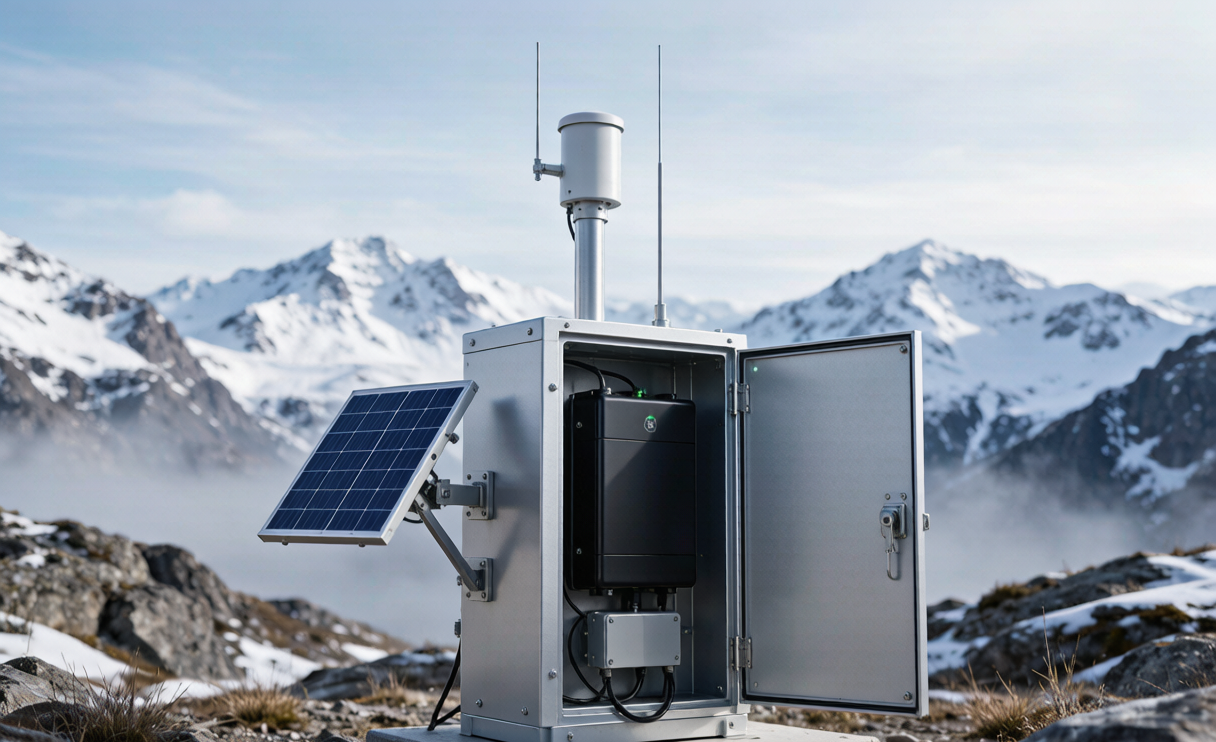
When people picture a battery application, they think of cars, phones, or drones. The reality is that some of the most demanding cells I have ever specified sit quietly on a windswept ridge or a frozen plateau, keeping a remote sensing station alive for years without a single technician within a hundred kilometers. A sodium-ion battery remote sensing station deployment is not glamorous, but it is one of the best stress tests I know for a chemistry’s patience. These stations log weather, air quality, hydrology, seismic activity, or wildlife movement, and the moment the power drops, the data gap is permanent for that window. There is no second take.
I have spent a large part of my career as a lithium battery engineer, and for a long time lithium iron phosphate (LFP) was the obvious answer for off-grid monitoring. But over the last two years I have increasingly recommended a sodium-ion battery for exactly this use case, and the reason is not marketing hype. It is cold, cost, and the brutal logistics of servicing a site you can only reach for a few weeks a year.
What a Sodium-Ion Battery Changes for Off-Grid Monitoring
A sodium ion battery works on the same rocking-chair principle as lithium: ions shuttle between anode and cathode during charge and discharge. The difference is the ion. Sodium is the eleventh element, abundant, cheap, and extracted from brine and hard rock without the geopolitical baggage that shadows lithium, cobalt, and nickel supply. For a remote sensing station operator buying dozens or hundreds of nodes, that material story translates directly into a lower system cost per kilowatt-hour and a far more stable bill of materials.
But abundance is only half the story. The other half is how the cell behaves when the temperature falls. Lithium cells, including LFP, lose a meaningful chunk of usable capacity below 0°C and can be damaged if charged while frozen. A well-built sodium battery keeps far more of its capacity at -10°C to -20°C and can often be safely trickle-charged in cold conditions that would force a lithium pack to sit idle. For a sensing station in a boreal forest, a mountain pass, or an Arctic research network, that single property changes the entire reliability calculation.
Cold-Weather Performance That Lithium Struggles to Match
In my own validation work, I have seen hard-carbon-anode sodium cells retain roughly 85–90 percent of room-temperature capacity at -20°C, while comparable LFP packs often drop closer to 60–70 percent over the same window. The gap widens when you factor in charge acceptance. A lithium pack that arrives at a frozen station in winter may refuse to accept charge until a heater brings the cells up to temperature, quietly burning the very energy it was meant to store. A sodium-ion battery deployed at the same site keeps absorbing the modest solar or wind input through the cold season.
This matters because remote sensing stations are frequently solar-lean in winter. Short days, low sun angle, and snow cover mean the energy budget is tight. The chemistry that wastes the least of that scarce incoming energy wins. In several agricultural and environmental monitoring pilots I have run, switching from LFP to sodium cut our winter derating margin almost in half, which let us specify a smaller solar array for the same uptime target.
Engineering the Pack: Cells, BMS, and Enclosure
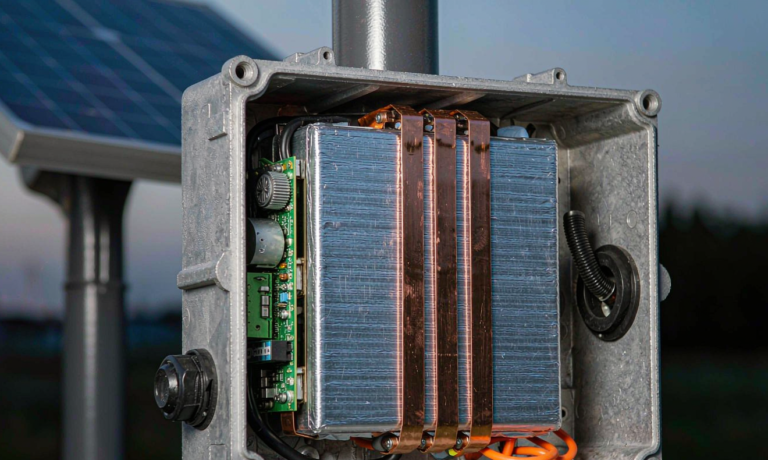
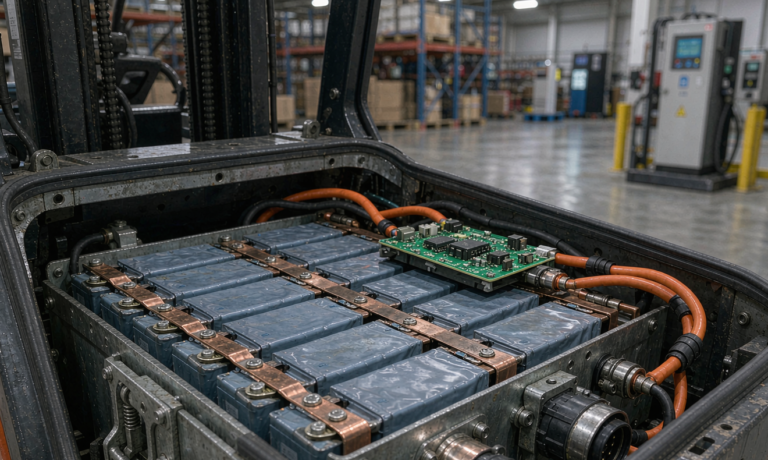
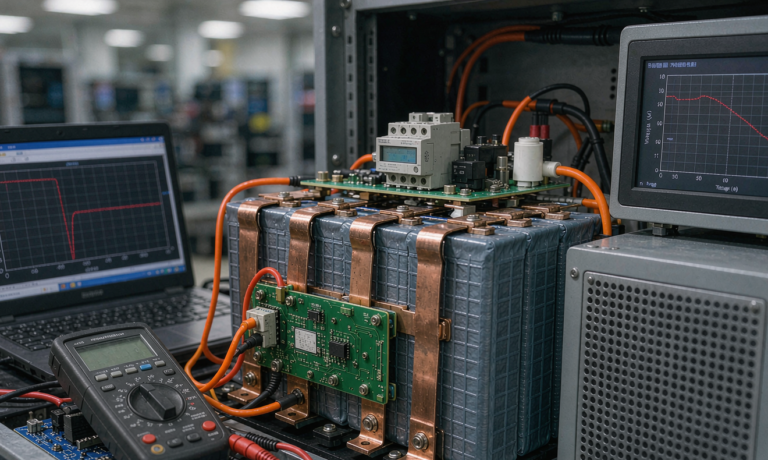
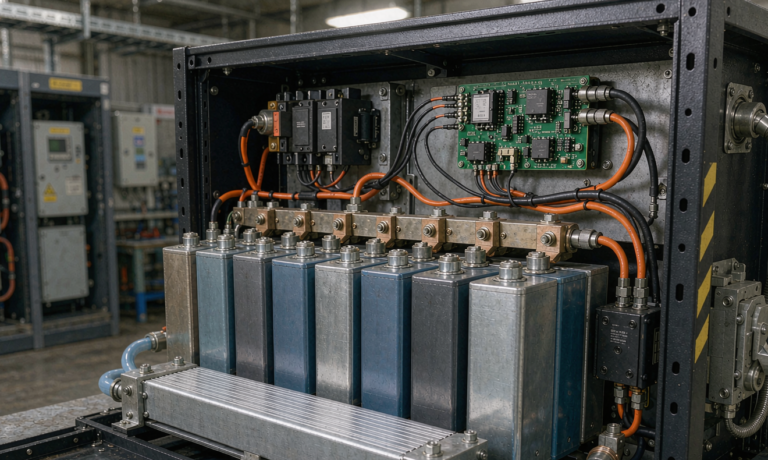
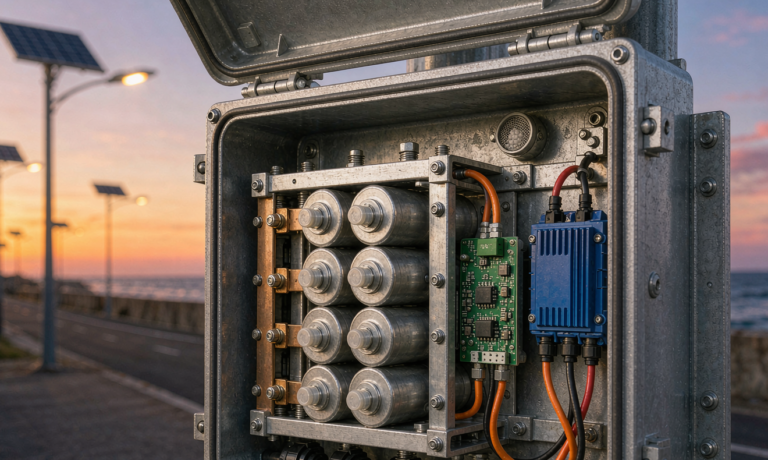
A remote sensing station is not a bare cell. It is a small system, and the engineering is in the assembly. For a Na-ion node I typically build a 12.8 V or 25.6 V nominal pack from prismatic cells, pair it with a low-self-discharge battery management system (BMS), and drop it into an IP65-rated enclosure with a desiccant pack and passive thermal mass. The BMS does the quiet, unglamorous work: cell balancing, over-discharge lockout so a dormant station does not kill its own battery, and a controlled low-temperature charge cutoff if the site ever dips below the cell’s safe charge threshold.
One detail I always specify for field nodes is a deep sleep floor. A sensing station that transmits once an hour can spend most of its life in microamp standby. The custom battery solution we deliver for these sites includes a BMS that draws under a milliamp in quiescent state, because a BMS that sips too much will quietly drain a small bank between service visits. For a remote sensing station, the enemy is not the big load, it is the slow leak.
Standards and Certification You Must Clear
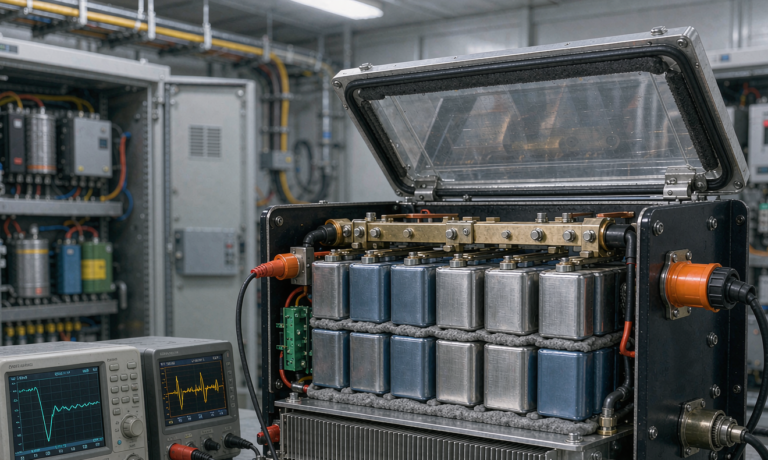
Even off-grid, a sodium-ion battery remote sensing station has to clear real compliance gates before it ships and before it gets installed in a national park or a cross-border research network. The transport leg alone demands UN38.3, the universal lithium and sodium cell test regime covering T.1 through T.8: altitude simulation, thermal test, vibration, shock, external short circuit, impact, overcharge, and forced discharge. Sodium cells are not exempt from this; if the pack travels by air or road to a remote site, UN38.3 documentation travels with it.
For the cell itself, I reference IEC 62133-2 for portable cell safety and IEC 62619 for industrial stationary cells, the latter being the more relevant standard for a permanently installed monitoring node. In North American deployments we align to UL 1973 for stationary battery systems. I also keep an eye on IEC 62477-1 for power electronic converter safety, since the charge controller and BMS sit in the same enclosure. FAA and EASA rules do not apply to a stationary sensing station, but if the same pack is ever flown to a site as cargo, the UN38.3 air transport classification is what the logistics team cares about.
A Practical Deployment Playbook
When a client asks me to size a sodium battery for a sensing station, I start from the duty cycle, not the chemistry. What does the sensor draw per reading? How often does it transmit, and over what radio link? What is the worst-case consecutive cloudy period for the site? I size the bank for roughly five to seven days of autonomy at the winter low-temperature capacity, then size the solar or small wind input to refill that buffer within a typical fair-weather window.
Because a sodium-ion battery holds up better in the cold, that winter buffer can be smaller than the equivalent lithium design, which usually pays back the slight weight penalty. I also recommend a top-of-mast radiation shield for the enclosure if the station sits in direct sun, because heat, not cold, is the silent killer of long-life field packs. A battery that never cooks ages far better than one that swings between extreme heat and cold every day.
Service Intervals and Field Lifespan
The whole point of a remote sensing station is that nobody visits it often, so the battery has to outlast the service interval. In my field data, a well-thermal-managed sodium-ion battery at a moderate climate station still shows above 80 percent state of health after roughly 2,000 cycles or about four to five years of shallow daily cycling, which lines up well with the typical recalibration visit for the sensors themselves. The sodium chemistry’s tolerance for partial state-of-charge operation is a quiet advantage here: a lithium pack left at a low state of charge for months can age faster, while sodium is more forgiving of the irregular, shallow cycling that a solar-lean site actually produces.
When I do visit a site, the checklist is short. Read the BMS log for any low-temperature charge events, check the enclosure seal and desiccant, and confirm the solar input matches the expected seasonal curve. Most failures I have investigated were enclosure ingress or a charge controller fault, not the cell. A sodium battery that is protected from heat and water will almost always outlive the electronics around it, which is why I spend more engineering budget on the enclosure than on chasing the last percent of cell energy density.
Frequently Asked Questions
Is a sodium-ion battery safe for unattended remote stations?
Yes. Sodium chemistry is inherently less prone to thermal runaway than high-nickel lithium, and a properly built pack with UN38.3, IEC 62619, and UL 1973 alignment is well suited to unattended operation. The bigger safety job is the enclosure and BMS, not the cell itself.
How does a sodium-ion battery compare to LFP in cold climates?
In my testing, sodium retains roughly 85–90 percent of capacity at -20°C versus about 60–70 percent for LFP, and it accepts cold charge far more willingly. For a remote sensing station in a winter environment, that difference usually decides the design.
Do I still need a solar panel if I use sodium-ion?
Almost always yes. A sodium-ion battery remote sensing station extends autonomy and survives the cold, but it still needs energy input to run indefinitely. Sodium simply lets you specify a smaller array for the same uptime.
Can the same pack be used for drone-based sensing and ground stations?
The stationary node uses a ruggedized sodium pack; an aerial sensor usually wants a lighter lithium or semi-solid pack for energy density. If you need a unified custom battery solution across both, we can spec separate packs that share the same BMS communication protocol.
What standards should I ask a supplier to certify?
Ask for UN38.3 transport test data, IEC 62133-2 or IEC 62619 cell safety, and UL 1973 for the stationary system. Those three cover shipping, cell safety, and installed-system compliance for most remote monitoring networks.
Conclusion
A sodium-ion battery remote sensing station is one of the cleanest demonstrations of why chemistry choice is an engineering decision, not a spec-sheet checkbox. For cold, isolated, hard-to-service monitoring sites, sodium’s winter resilience and stable material cost make it a genuinely better fit than lithium in many deployments I have shipped. If you are planning a sensing network and want a custom battery solution sized for your real duty cycle and climate, that is exactly the kind of off-grid problem our team at Horizon Power enjoys solving.