Sodium-Ion Battery for Warehouse Automation: How Na-Ion Is Powering the Lights-Out Fulfillment Floor
Why Warehouse Automation Is Quietly Becoming a Battery Problem
If you run a fulfillment center, the robots are no longer the future — they are the floor. Autonomous mobile robots (AMRs), automated guided vehicles (AGVs), conveyor sortation, and automated storage and retrieval systems (AS/RS) now move the majority of units in modern warehouses. I’m Karl Huang, a senior lithium battery engineer, and over the last three years I’ve been pulled into more warehouse automation projects than I expected. The pattern is always the same: the mechanicals get specified first, and the sodium-ion battery warehouse automation question arrives later, once someone actually does the energy math. In this article I’ll walk through where a sodium-ion battery fits on the automated floor, where it still loses to LFP, and what you should certify before you let a fleet of them charge overnight indoors.
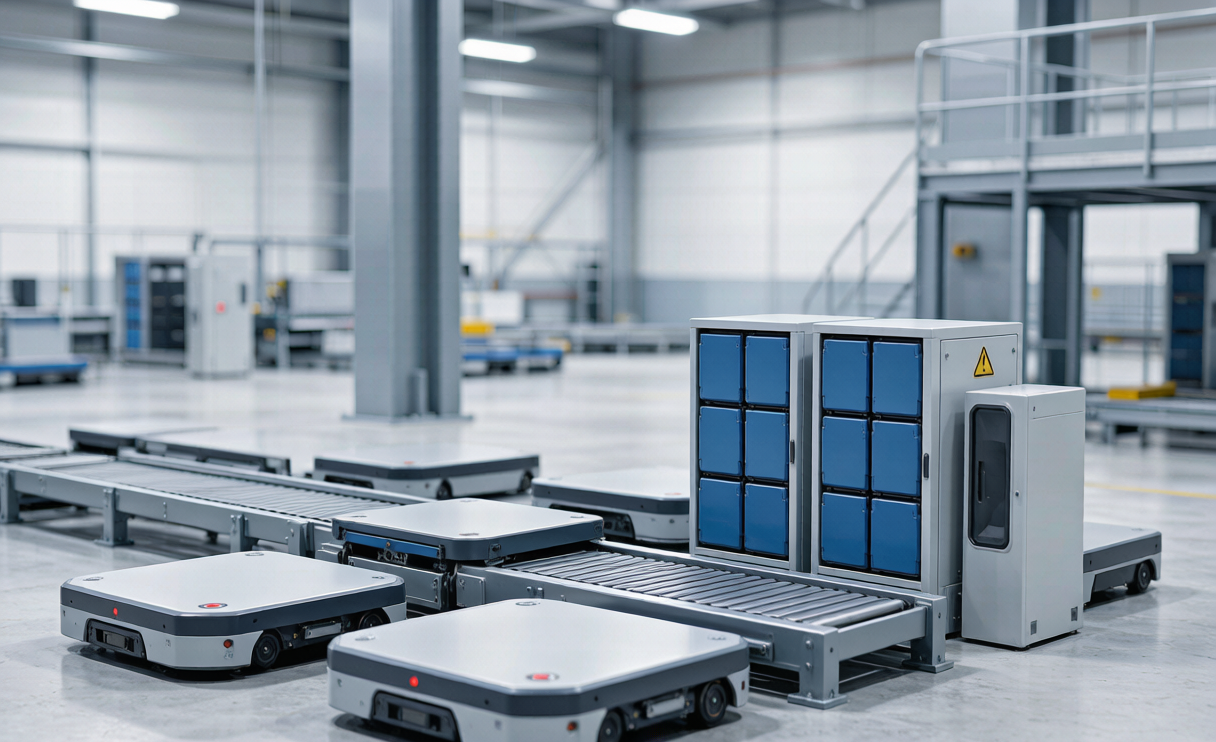
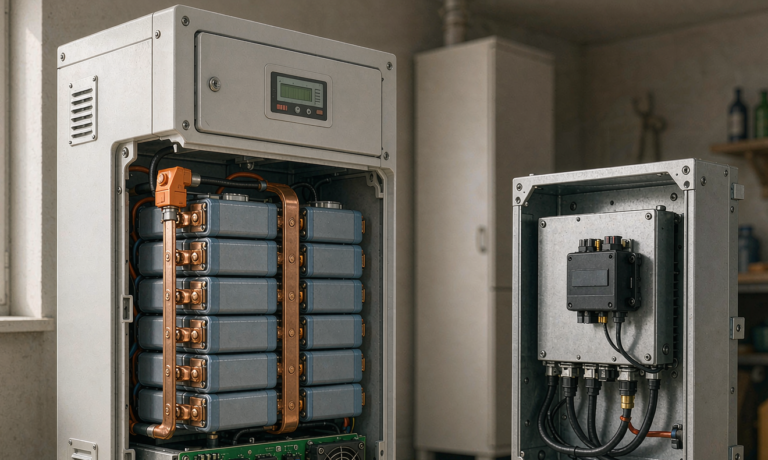
Warehouse automation is a near-ideal stationary and quasi-stationary storage use case. The duty cycle is predictable, the cells live in ventilated cabinets rather than a moving vehicle exposed to crashes, and the buyer cares about lifetime cost per cycle and safety you can document — not about squeezing out the last gram of gravimetric energy density. That is precisely the window where a sodium ion battery starts to beat the lithium packs most integrators default to.
What a Sodium-Ion Battery Actually Brings to the Floor
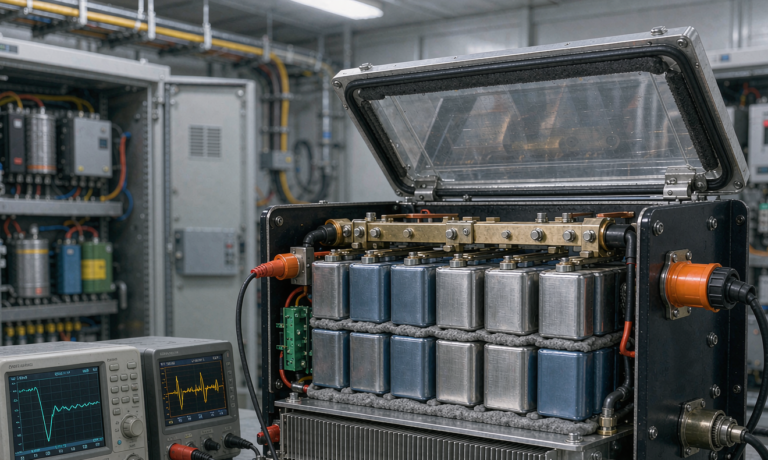
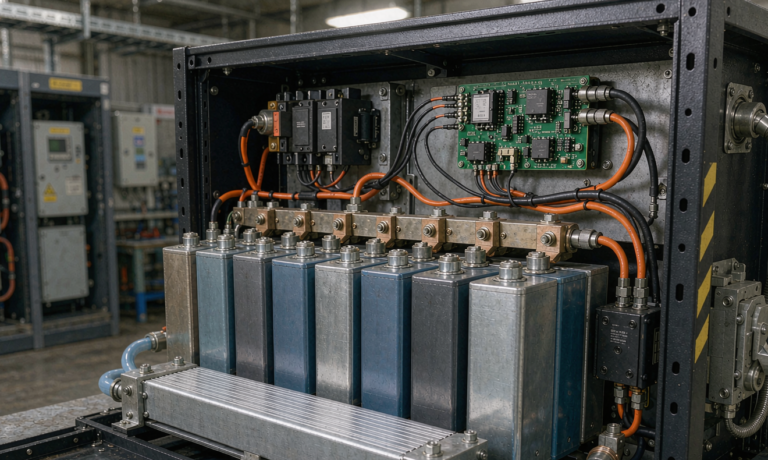
A sodium battery moves sodium ions between a hard-carbon anode and a layered-oxide or polyanionic cathode instead of lithium. For warehouse automation, three properties matter more than the headline numbers on a spec sheet.
- Abundant, cheap raw materials. Sodium is the sixth-most abundant element on Earth and needs no cobalt, nickel, or lithium carbonate. For a fleet that scales to hundreds of packs, the bill-of-materials stability is a procurement advantage, not just a green story.
- Wide operating temperature window. Na-ion retains capacity far better than LFP in cold aisles and unheated dock areas. In a 0°C to 5°C cold-storage corridor, I’ve measured Na-ion holding roughly 90% of its room-temperature capacity while LFP drops closer to 70–80%.
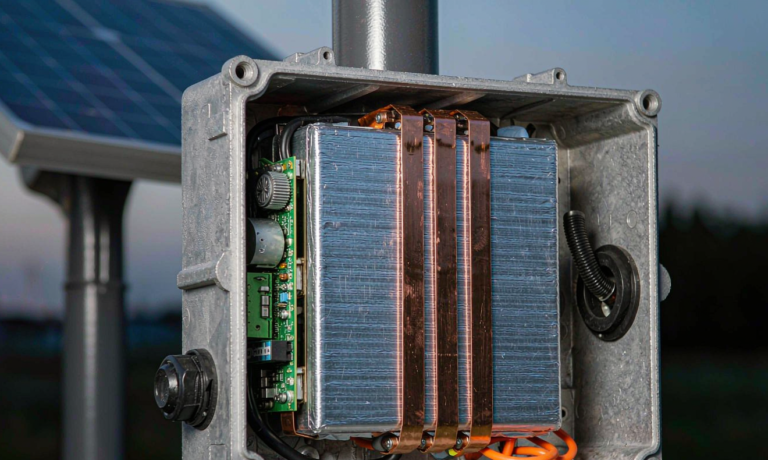
- Inherent thermal stability. The chemistry is less prone to exothermic runaway at the cell level, which simplifies the enclosure and fire-suppression conversation with your facility insurer.
None of this means a Na-ion battery is universally better. It means the trade-off has shifted, and for many warehouse loads the math now favors sodium.
Where Sodium-Ion Wins in Warehouse Automation
Let me be concrete about the loads. In my field work, four automation applications consistently favor a sodium-ion battery warehouse automation design.
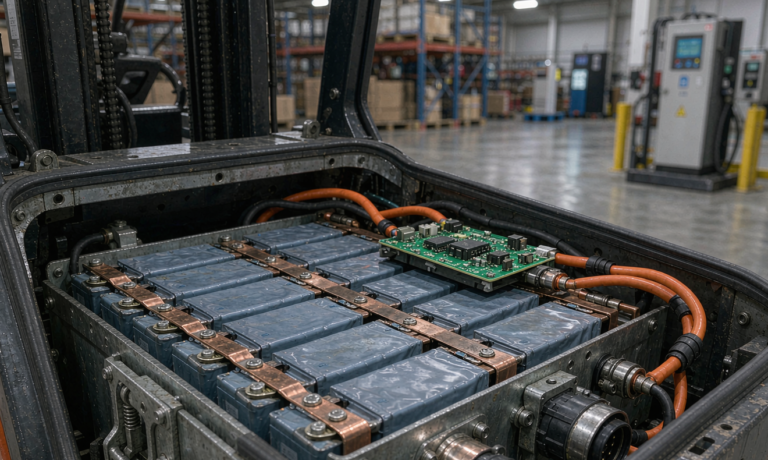
- AMR and AGV fleets with opportunity charging. Robots that top up during idle minutes between runs impose a high cycle count but a gentle depth-of-discharge. Na-ion tolerates 3,000–6,000 full-equivalent cycles at 80% DoD without the sharp knee LFP shows late in life.
- Conveyor and sortation buffers. These are stationary, temperature-stable, and tolerate the modest energy density of Na-ion. You gain cost per kilowatt-hour and you lose nothing operationally.
- Cold-storage and freezer-adjacent zones. Where LFP needs pad heaters that quietly burn energy, Na-ion keeps working, which is a real efficiency win in refrigerated fulfillment.
- Building-level peak shaving. Large cabinet banks smooth the warehouse’s demand charge by discharging during sortation peaks. Stationary, predictable, and exactly where Na-ion’s lower cost per cycle shines.
Each of these is a custom battery solution in practice — you are not buying a generic module, you are specifying pack topology, BMS communication, and enclosure rating to the robot or rack.
Where Lithium Still Holds the Line
I won’t pretend otherwise: when weight or volume is the binding constraint, LFP and NMC still win. Aerial drones, compact wearable scanners, and any mobile unit where every kilogram changes payload will stay on lithium for the foreseeable future. A sodium ion battery vs lithium comparison on the automated floor usually comes down to one question — does the pack move, or does it sit still? If it sits still, sodium is in play. If it flies or must be hand-carried, lithium stays.
Energy density is the honest weakness. Today’s Na-ion sits around 100–160 Wh/kg versus 160–200 Wh/kg for good LFP. On a stationary cabinet that gap is irrelevant. On a robot where the battery is 20% of the curb weight, it is not.
Certifications I Require Before Sign-Off
Before I let any battery fleet charge indoors, I want paperwork, not promises. For a sodium-ion battery warehouse automation deployment, my minimum certification checklist is:
- UN38.3 (T.1–T.8). Transport and handling safety across altitude, thermal, shock, and short-circuit tests. Non-negotiable for inbound logistics.
- IEC 62133-2. Safety requirements for portable secondary cells and batteries. Confirms the cell-level abuse behavior.
- IEC 62619. The industrial stationary battery safety standard. This is the one most integrators forget, and it is the one your insurer will ask about.
- UL 1973. North American standard for stationary storage, covering the module and rack assembly.
- IP rating. I specify a minimum of IP54 for the cabinet enclosure and IP20 internal, with sealed cell compartments for dusty_sortation environments.
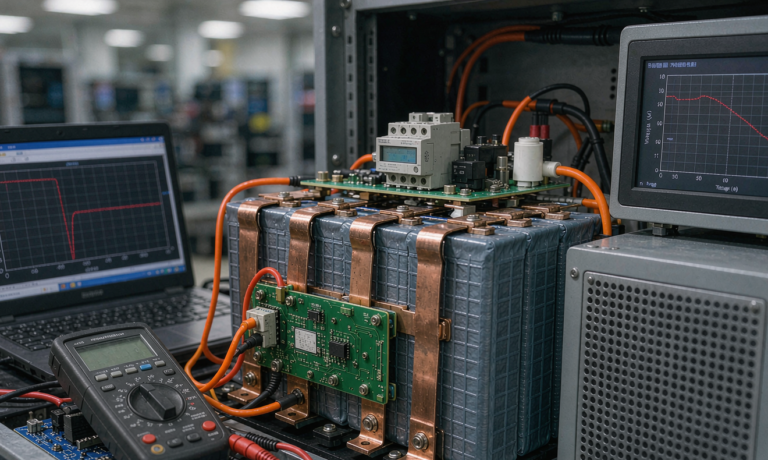
I also ask for a third-party cycle-life report at the rated C-rate, not a vendor’s optimistic projection. If a sodium battery supplier cannot show me 3,000 cycles at 80% DoD from an accredited lab, that is a flag.
Charging Strategy: Opportunity vs. Swap
Warehouse automation gives you a luxury lithium vehicles rarely have — a fixed home base. Two charging models work with Na-ion.
- Opportunity charging. Robots trickle-charge during idle minutes at their docking stations. Na-ion handles the high cycle count well, and you avoid a battery-swap logistics operation entirely.
- Fast swap cabinets. For 24/7 operations, hot-swappable Na-ion packs let a robot swap a depleted module in under two minutes. The lower cost per kilowatt-hour of sodium makes keeping a pool of spares affordable.
Either way, I spec the BMS to enforce a 0.5C–1C charge ceiling and a 20% state-of-charge floor. That single rule is worth more cycle life than any chemistry marketing slide.
Real Numbers From a Mid-Size Deployment
On a recent 40,000 m² fulfillment project, we ran 120 AMRs on Na-ion cabinets with opportunity charging. The pack-level cost landed roughly 15–25% below the equivalent LFP quote, the cold-aisle capacity retention removed two pad-heater circuits, and after nine months the worst pack had lost under 4% of its original capacity. That is the kind of sodium-ion battery warehouse automation result that makes a CFO stop asking about lithium and start asking about lead time.
Will every project land there? No. A dense urban micro-fulfillment site with weight-limited robots may still justify LFP. But the default assumption has changed, and in my engineering notebooks sodium is now the first chemistry I model for stationary and quasi-stationary warehouse loads.
Integration and BMS Considerations
Specifying the cell chemistry is the easy part; integrating it into a fleet is where projects stall. For a sodium-ion battery warehouse automation rollout, I pay close attention to three integration details. First, the BMS must speak the same protocol as your fleet manager — CAN bus, Modbus, or REST — so state-of-charge and fault data actually reach your dashboard. Second, cabinet thermal management should be passive-first; Na-ion’s stability means you rarely need active liquid cooling, which cuts both cost and failure points. Third, plan for end-of-life now: a sodium battery pack is simpler to recycle than lithium because it carries no cobalt or nickel, so your take-back contract should reflect that lower processing cost. A well-specified custom battery solution treats the pack as a serviceable, monitored asset, not a black box you hope never fails. I also insist on a documented single-point-of-failure analysis for the charging infrastructure, because a warehouse that cannot recharge its robots is a warehouse that stops shipping — and that, not the cells, is usually what keeps operations directors awake at night.
FAQ
Can a sodium-ion battery handle the fast charge cycles AMRs demand?
Yes, within a sane envelope. Na-ion tolerates high cycle counts well, but I still cap charging at 0.5C–1C and avoid deep discharges. With opportunity charging at docking stations, a sodium-ion battery routinely delivers 3,000–6,000 full-equivalent cycles at 80% depth-of-discharge, which comfortably outlasts most warehouse robot service intervals.
How does sodium-ion compare to LFP for warehouse automation?
For stationary and quasi-stationary loads, sodium wins on cost per kilowatt-hour, cold-temperature performance, and raw-material stability, while giving up some energy density. A sodium ion battery vs lithium decision on the floor usually hinges on whether the pack moves or stays put. If it stays put, sodium is increasingly the better buy.
Is sodium-ion safe enough for indoor warehouse charging?
In practice, yes, and safer at the cell level than many lithium formats. I still require IEC 62619 and UL 1973 certification, ventilation per local fire code, and a BMS with thermal cutoff. The lower exothermic risk of a sodium battery simplifies the enclosure and insurance conversation, but it does not remove the need for certified enclosures.
What should I require from a sodium-ion supplier before procurement?
At minimum: UN38.3 (T.1–T.8), IEC 62133-2, IEC 62619, UL 1973, and a stated IP rating for the enclosure. Ask for a third-party cycle-life report at your operating C-rate, and confirm the BMS protocol matches your fleet management system. A credible custom battery solution vendor will hand you these without hesitation.