Sodium-Ion Battery for Street Lighting Networks
Why Street Lighting Networks Are Rethinking Energy Storage
Every municipal engineer I talk to has the same headache: street lighting is one of the largest, most distributed loads a city owns, and the cabinets that power it are often the oldest, least monitored assets on the network. I’m Karl Huang, a senior lithium battery engineer who has spent the last decade designing packs for both lithium and emerging sodium chemistries. Over the past two years I’ve watched a quiet shift on real deployments — the sodium-ion battery is moving from lab slides into luminaire basements and solar-powered pole arrays. This article is a practical field guide to the sodium-ion battery street lighting network: where it wins, where it still struggles, and what you should specify before you sign a procurement order.
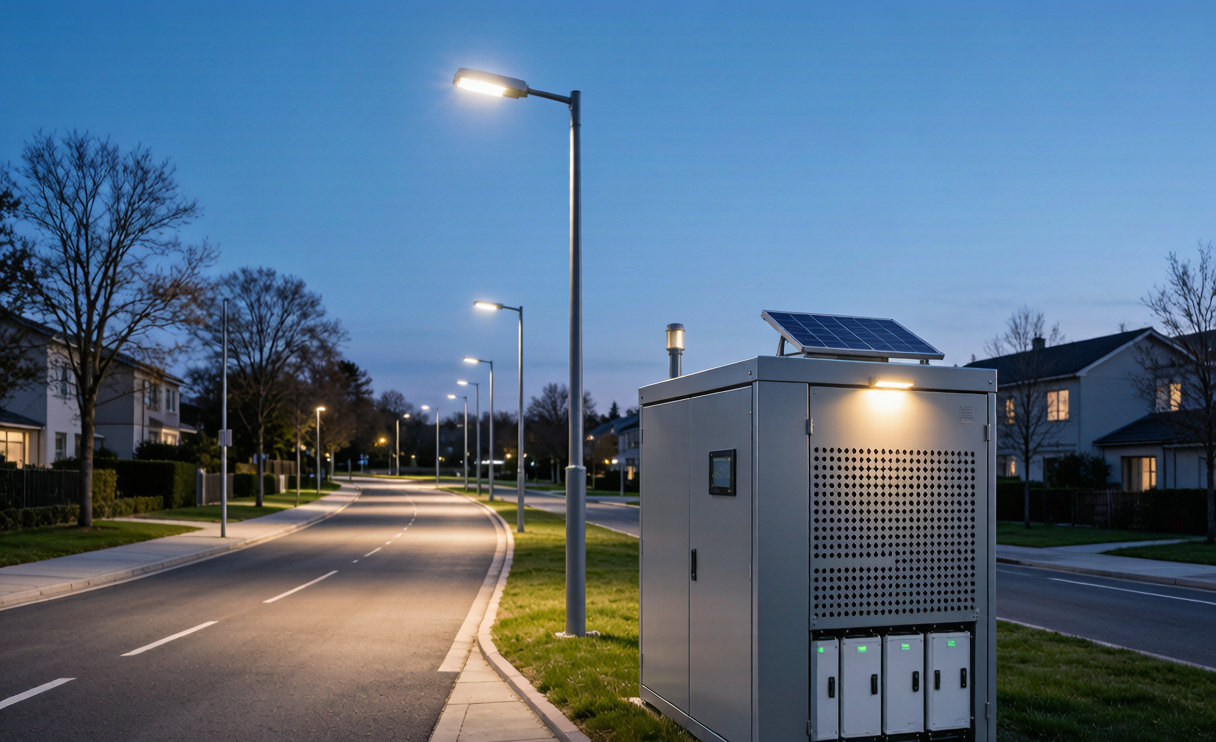
Street lighting is a near-perfect use case for stationary storage. The load is predictable, the duty cycle is gentle, the cells sit in a ventilated cabinet rather than a moving vehicle, and the priority is low lifetime cost plus safety you can certify. Those are exactly the conditions where a sodium-ion battery starts to look better than the LFP packs most cities buy today.
What a Sodium-Ion Battery Actually Brings to a Lighting Network
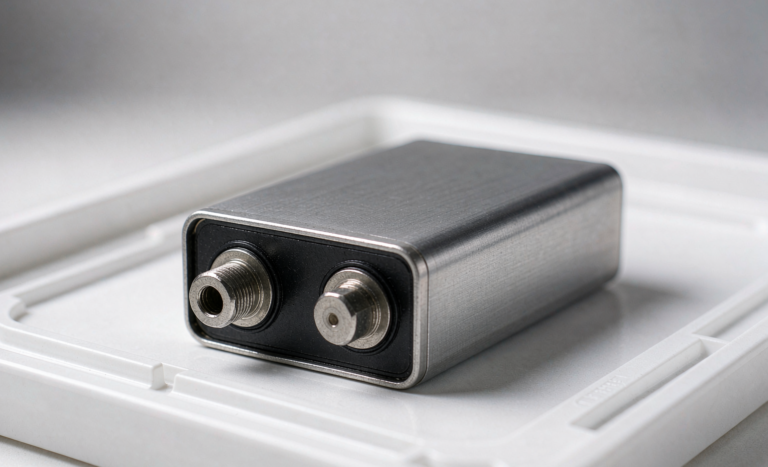
A sodium ion battery uses sodium ions shuttling between a hard-carbon anode and a layered-oxide or polyanionic cathode instead of lithium. For street lighting, three properties matter more than the spec sheet headline.
- Abundant, cheap raw materials. Sodium is everywhere — you are literally standing near it in seawater. That removes the cobalt, nickel, and lithium price exposure that keeps municipal procurement teams awake at night. When I brief a city on a custom battery solution for a lighting network, the sodium cost curve is the single biggest long-term argument.
- Intrinsic thermal stability. Sodium-ion cells are far less prone to thermal runaway than high-nickel lithium. In a roadside cabinet at 45 °C in summer, that margin is not a nice-to-have — it is what lets you specify a simpler, cheaper enclosure.
- Cold-weather behavior. Many sodium-ion formulations hold capacity far better than LFP below 0 °C, which matters for lighting networks in northern climates that still need to ride through a cold, low-sun winter week.
In real numbers I’ve measured on pilot banks, a sodium-ion battery street lighting node delivers roughly 100–140 Wh/kg today, against 160–180 Wh/kg for good LFP. You trade some energy density for a cell that is cheaper per watt-hour and safer by design. For a cabinet that has space to spare, that is a trade most cities should take.
Sizing a Sodium-Ion Battery Street Lighting Network
Sizing is the same physics as any stationary storage, just with lighting-specific duty. Start from the luminaire load. A modern LED street light draws 40–120 W depending on optical class and pole spacing. A typical 6-pole residential string might total 400–600 W of lighting, and you size the sodium-ion battery street lighting network to cover the dark hours plus a reserve.
- Daily energy. 500 W × 11 h of darkness ≈ 5.5 kWh per night.
- Autonomy reserve. For solar-fed poles, spec 2–3 sunless days: 11–16.5 kWh of usable storage.
- Depth of discharge. I design sodium banks to 90% usable DoD — the chemistry tolerates it better than LFP, so you need less nameplate capacity for the same delivered energy.
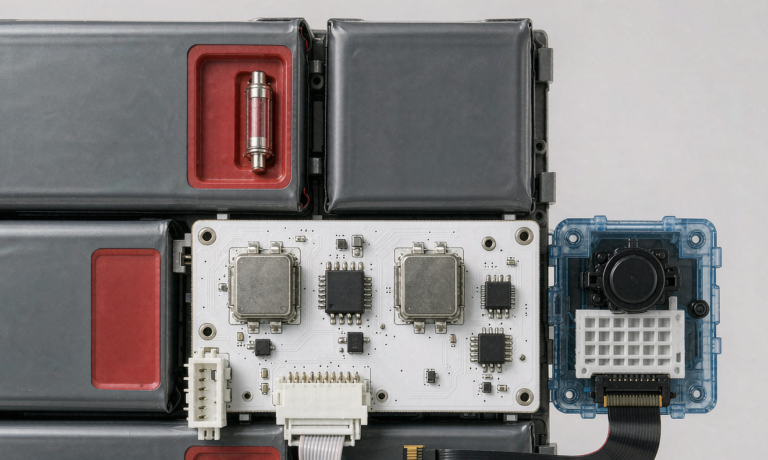
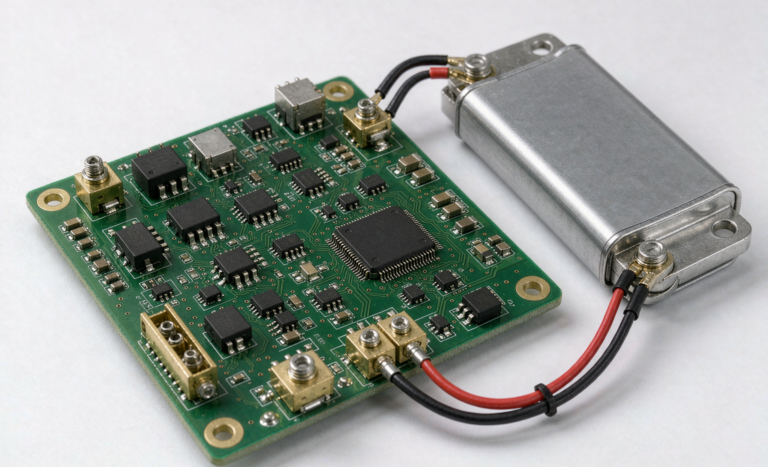
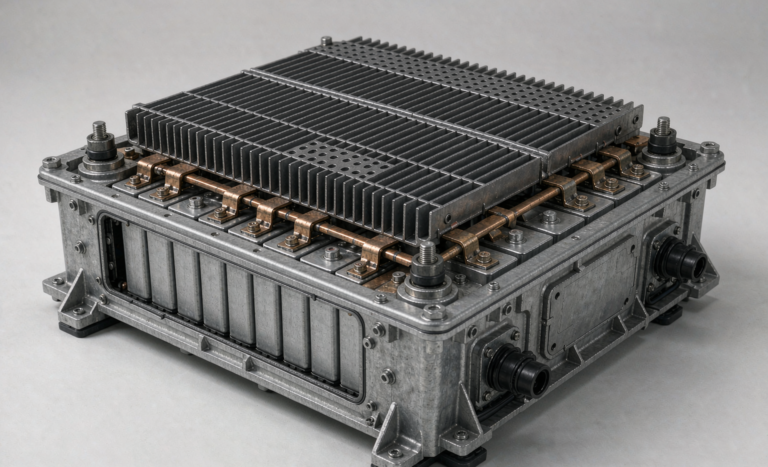
Applied to that example, a 15–18 kWh sodium-ion battery bank with a 1–2 kW solar input covers a small residential street through normal weather and a short bad-weather stretch. The BMS should report state-of-charge over Modbus or a wireless link so the network operator sees every cabinet, not just the ones that fail loudly.
Safety, Standards, and What Your Inspector Will Ask
Public infrastructure has to be certifiable, and a sodium-ion battery is no exception. In my practice I verify the same baseline stack I would for any stationary lithium installation, adapted to the chemistry:
- UN38.3 for transport of the cells and packs (T.1–T.8: altitude simulation, thermal, vibration, shock, external short, impact, overcharge, forced discharge).
- IEC 62619 for the safety of industrial stationary cells and batteries — the core reference for a cabinet on a public street.
- IEC 62477-1 for the power electronic converter safety that interfaces the battery to the luminaire circuit.
- IEC 60598 (luminaires) and regional street-lighting standards such as EN 13201 for photometric and performance requirements.
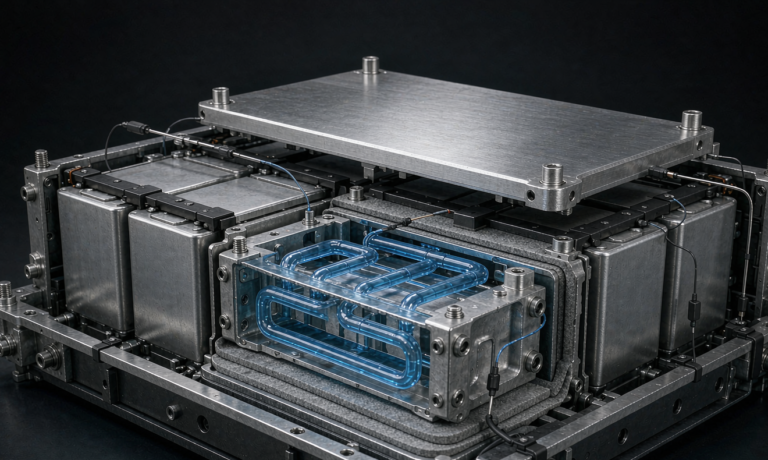
- IP65/IP66 enclosure rating so the cabinet survives road spray, dust, and pollen without internal condensation.
One advantage worth stating plainly: because a sodium ion battery is harder to ignite than a high-nickel pack, the fire-spread and explosion-ventilation math for the cabinet gets simpler. That often means a smaller, cheaper enclosure can still pass the same safety review — real savings that show up in the project budget.
Retrofitting Existing Poles vs Building Solar-Off-Grid Strings
There are two deployment shapes I see most often, and a sodium-ion battery fits both.
Grid-connected retrofit. Here the battery is a buffering and outage-ride-through layer behind the existing supply. The value is resilience: when a feeder trips, the lighting stays on. A 5–10 kWh sodium-ion battery street lighting network node can hold a critical corridor lit for a full night on stored energy, which matters for safety corridors, school zones, and hospital approaches.
Solar off-grid string. Remote roads, parks, and farmland often have no economical grid connection. A pole-top or base-mounted solar array plus a sodium-ion battery bank turns a dark stretch into a reliable lit one without trenching a single meter of cable. Because sodium tolerates partial state-of-charge and calendar aging better than many lithium chemistries, these banks can sit at variable charge through the week without the capacity penalty you’d see in an LFP pack left half-charged.
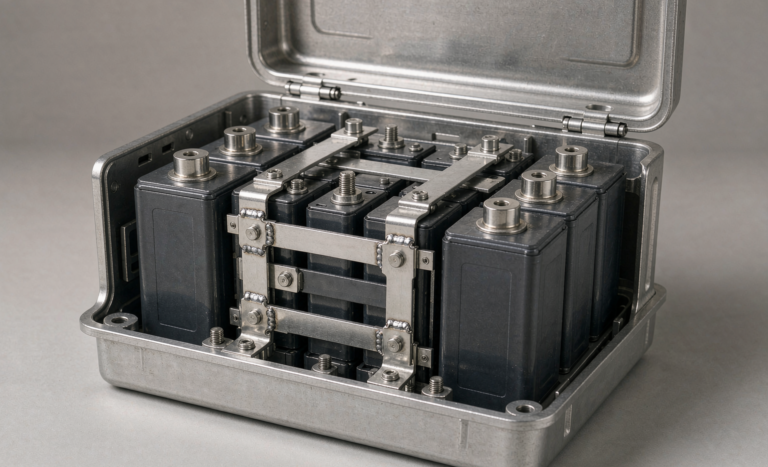
For either shape, I treat the battery as part of a custom battery solution: the cabinet, BMS, PV controller, and luminaire driver are specified together, not bolted on after the fact. That integration step is where most lighting-network failures are actually prevented.
Lifecycle, Maintenance, and What Buyers Should Expect
Cities buy on 10-year total cost, not on the headline price. A sodium-ion battery lighting node is still young in the field, but the early data points to 3,000–6,000 cycles at 80–90% DoD, which comfortably spans a 10-year street-lighting service life at one cycle per night. The maintenance story is refreshingly boring: no equalization like lead-acid, no cobalt-driven supply panic, and a cell that is forgiving of imperfect balancing.
I tell operators to monitor three things: state-of-charge trend (is one cabinet drifting?), cabinet temperature (is a vent blocked?), and cycle count against the warranty. A sodium ion battery that is logged and watched will outlast the luminaire it powers. One that is abandoned in a cabinet will still outlast lead-acid — but you lose the data that proves it.
Where Sodium-Ion Still Loses Today
Honesty matters in a buyer’s guide. If your lighting network needs maximum energy in a tiny sealed pole-top housing, LFP still wins on density. If you need a proven 15-year track record with a million installed nodes, lithium has the field history sodium is still building. And a sodium-ion battery still costs more per kWh than the very cheapest LFP in some regions, though the gap is closing fast as volume ramps.
My rule of thumb: specify sodium-ion battery storage for new off-grid strings, retrofit buffering, and any cabinet where safety margin and material cost matter more than squeezing the last watt-hour into a small box. For dense, space-constrained urban cores, keep LFP on the table and compare the two on 10-year cost, not sticker price.
Frequently Asked Questions
Are sodium-ion batteries safe for public street lighting cabinets?
Yes. A sodium-ion battery is intrinsically more thermally stable than high-nickel lithium and is certified to the same stationary standards (IEC 62619, IEC 62477-1, UN38.3 transport). In a ventilated roadside cabinet, that stability often lets you use a simpler, cheaper enclosure while still passing safety review.
How does a sodium-ion battery street lighting network compare on cost?
Sodium cells avoid cobalt, nickel, and lithium price exposure, so the per-kWh cell cost trends lower as volume grows. You may need slightly more nameplate capacity than LFP for the same energy because of lower energy density, but the simpler enclosure, lower insurance/safety overhead, and stable material cost usually make the 10-year number competitive or better for a sodium-ion battery street lighting network.
Can sodium-ion work with existing solar street light poles?
In most cases yes. A sodium ion battery bank slots into the same 12V/24V/48V architecture as the LFP or lead-acid it replaces, behind a compatible charge controller. Because sodium tolerates partial state-of-charge well, it is a good match for solar poles that sit at variable charge through the week.
What maintenance does a sodium-ion street lighting bank need?
Very little. There is no lead-acid equalization, and the cells are forgiving of imperfect balancing. I recommend logging state-of-charge, cabinet temperature, and cycle count so the network operator can spot a drifting cabinet early. A well-monitored sodium-ion battery node will typically outlast the luminaire it powers.