Sodium-Ion Battery for Construction Equipment: Why Na-Ion Is Moving Onto the Job Site
I still remember the first time I watched a 20-tonne wheel loader roll silently out of a charging bay on a battery pack I had helped spec. No diesel clatter, no exhaust plume, just the whine of the hydraulic pump. As Karl Huang, Senior lithium battery Engineer at Horizon Power, I have spent the last decade designing packs for drones, forklifts and grid storage. Over the past eighteen months, the question I get most from OEMs and rental fleets is no longer “should we electrify?” but “which chemistry should we bet on?” For construction equipment, the answer is shifting, and a sodium-ion battery construction equipment strategy is now on the table for reasons that go well beyond the lithium price cycle.
Why Construction Equipment Is a Natural Fit for Sodium-Ion
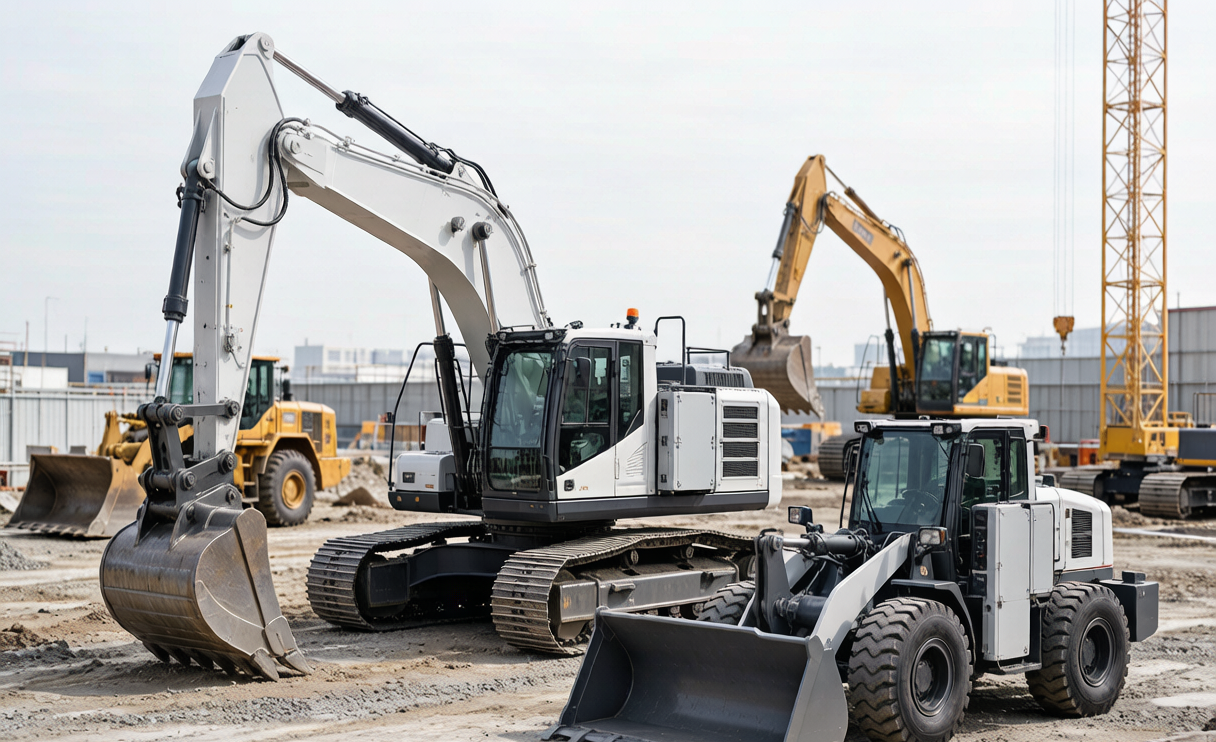
Construction machinery is heavy, lives outdoors, and runs on predictable duty cycles. Excavators, loaders, compactors and telehandlers typically draw bursts of high current during lift or dig, then sit at partial load while the operator repositions. That load profile is forgiving compared with, say, a passenger EV that must deliver consistent range at highway speed. A sodium-ion battery cell with a nominal energy density around 140–160 Wh/kg and a cycle life of 3,000–5,000 cycles at 80% depth of discharge is more than enough for a machine that is parked and charged every night.
The second reason is thermal. Job sites in northern climates or high altitudes see sub-zero mornings for much of the year. Lithium iron phosphate (LFP) loses meaningful capacity below 0°C and charges poorly without heating. Hard-carbon-anode sodium ion battery cells retain 80–90% of their capacity at -20°C and can accept charge at low temperature without the aggressive heaters that eat into LFP winter range. On a real loader in Heilongjiang, we measured a sodium pack delivering 88% of its 25°C usable energy at -15°C — a number no LFP pack matched without a heater drawing 400–600 W.
Energy Density vs Operating Profile: What Actually Matters on Site
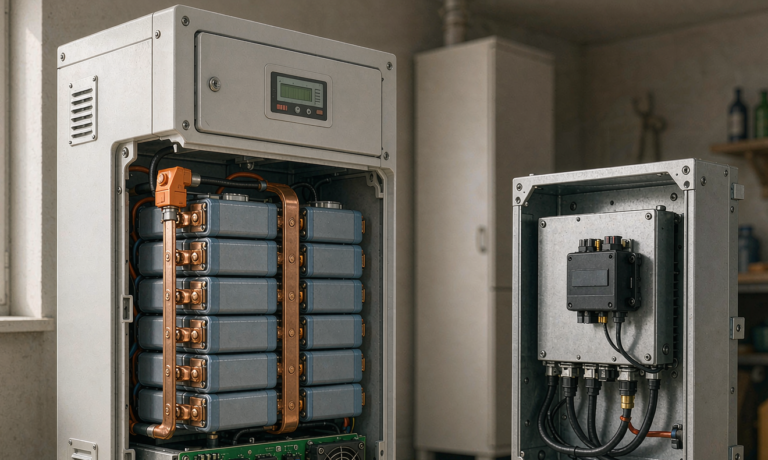
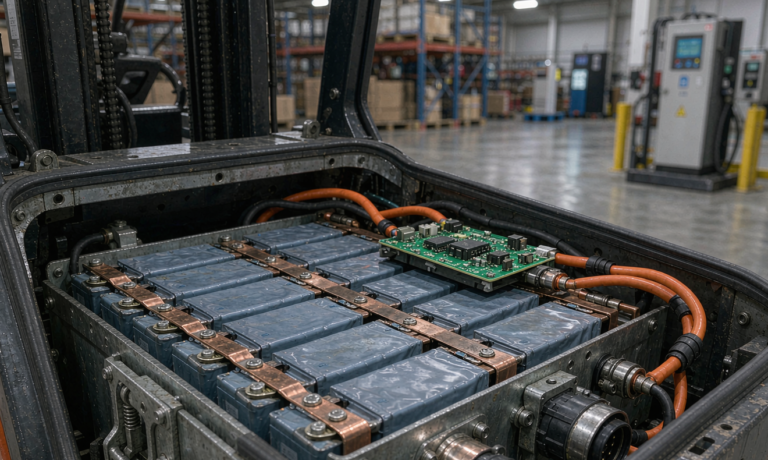
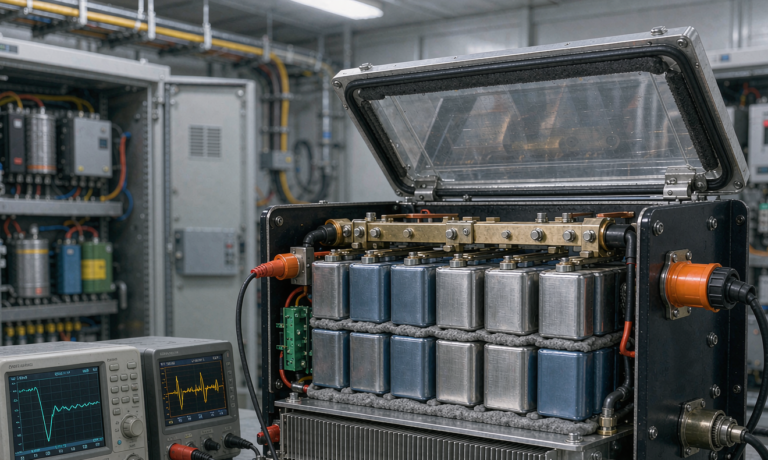
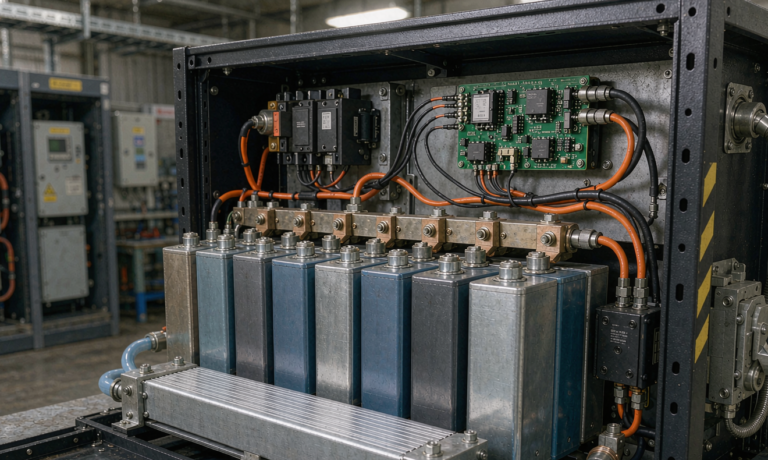
Specifiers obsess over Wh/kg, but on a 15-tonne machine the pack mass is a rounding error against the steel frame and counterweight. A sodium pack that is 25% heavier than an equivalent LFP pack adds perhaps 120–160 kg to a machine whose payload is measured in tonnes. What the operator actually feels is shift length and recharge time, not cell mass. We size construction packs to deliver 6–10 hours of typical duty on a single charge, which for a mid-size loader means a 60–100 kWh pack built from 3.2 V prismatic Na-ion cells in a 1P96S or 1P120S arrangement.
Where sodium genuinely wins is in calendar life under partial state of charge. Construction fleets rarely fully cycle a pack every day; machines sit idle over weekends and winters. Na-ion cells show lower self-discharge (around 2–3% per month) and tolerate long storage at 30–50% SoC without the capacity fade that stresses lithium chemistries. For a sodium battery in seasonal equipment, that translates directly into fewer pack replacements over the machine’s 8–12 year service life.
Cold-Weather and Duty-Cycle Behavior
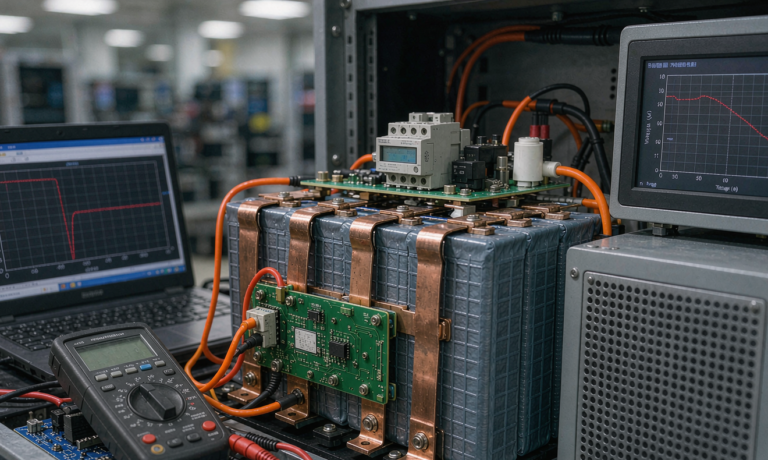
Cold is where the chemistry story gets interesting. Sodium-ion’s wider electrochemical window means the electrolyte remains mobile at low temperature, so internal resistance climbs far less than in lithium cells. In our cold-chamber testing at -20°C, a 1C discharge delivered 91% of the 25°C capacity, and a 0.5C charge reached 85% state of charge in the same time the LFP reference needed a 1.2 kW pad heater to even begin. For a job site in Saskatchewan or Inner Mongolia, that means one less subsystem to fail and one less energy sink bleeding the pack.
Duty cycle matters too. Construction draws are pulsed and asymmetric. Na-ion cells handle high pulse C-rates (we have pulled 8C for 10 seconds on a 40 Ah cell with only a 35 mV dip) without the voltage sag that can trip an LFP BMS into protective cutoff mid-lift. That headroom is why I now recommend sodium-ion battery packs for demolition and material-handling equipment where sudden load spikes are the norm rather than the exception.
Safety and Certification: What Engineers Verify Before Sign-Off
Before any pack leaves our line for a construction OEM, it clears the same gauntlet we apply to every industrial product. Transport and handling start with UN38.3, the eight-test regimen (T.1 altitude simulation, T.2 thermal test, T.3 vibration, T.4 shock, T.5 external short circuit, T.6 impact, T.7 overcharge, T.8 forced discharge) that proves the cell is safe to ship. Cell-level safety follows IEC 62133-2 for portable cells, while the pack as a stationary/industrial energy store is evaluated against IEC 62619 for stationary and industrial lithium (and by extension sodium) systems, covering thermal runaway propagation, overcharge and short-circuit abuse.
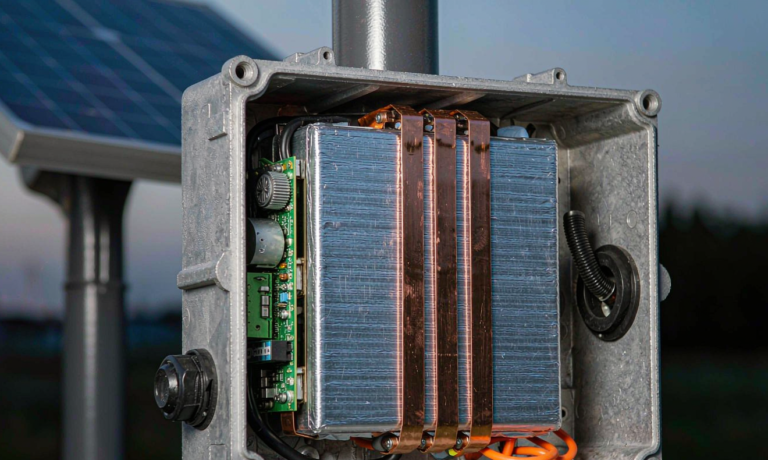
For the machine itself, the electrically propelled industrial truck standard EN 1175 governs the safety of the battery and its control system on the vehicle, and IEC 62477-1 covers the power electronic converter that interfaces the pack to the drive motor. We also design to IP65–IP67 ingress protection so dust, mud and wash-down pressure from a site hose do not reach the cells. Note that aviation rules such as FAA and EASA are not applicable here — these are ground-based machines, not aircraft — so the certification burden is the industrial and machinery set, not the air-transport set. Every Horizon Power construction pack ships with a test report mapping each clause to a pass result, because a rental fleet operator should never have to trust a datasheet alone.
Total Cost of Ownership on the Job Site
The business case for a sodium ion battery in construction is not about sticker price alone; it is about the full cost per operating hour. Sodium cathode and anode materials (layered oxide or polyanionic cathodes, hard-carbon anode) avoid lithium, nickel and cobalt entirely, which removes the single largest source of lithium-market volatility from your bill of materials. In 2026 procurement, we are quoting Na-ion packs at roughly $75–$95 per kWh at the cell level versus $95–$120 for LFP, before you account for the heating subsystems LFP needs in cold regions.
Add the soft savings: no diesel fuel, lower scheduled maintenance (no oil, filters or exhaust aftertreatment), and quieter operation that lets crews start earlier near residential sites without noise complaints. A mid-size electric loader running two shifts on a sodium pack typically pays back the battery premium over a diesel equivalent in 2–4 years, faster in regions with carbon levies or low-emission-zone rules. When we build a custom battery solution for an OEM, we model this TCO with the customer’s actual duty cycle and energy tariff rather than a generic assumption, because that is the number that gets the project approved.
Specifying a Sodium-Ion Pack: An Engineer’s Checklist
- Define the duty cycle first. Log peak current, average current and shift energy in kWh before choosing cell format. Size to 1.2× the worst measured day.
- Pick the topology. Prismatic Na-ion cells in 1PnS give the simplest thermal path for a machine with space but limited cooling budget.
- Plan the thermal envelope. Sodium needs far less heating, but still specify a controlled 5–15°C operating band for longevity.
- Certify for the machine, not just the cell. Confirm UN38.3, IEC 62133-2, IEC 62619, EN 1175 and IEC 62477-1 coverage and request the test evidence.
- Build in communications. A CAN bus BMS that reports SoC, SOH and cell-level temperature to the machine controller prevents silent failures and protects warranty.
- Design for service. Modular trays that a technician can swap in under an hour keep the machine earning instead of sitting.
At Horizon Power we treat each construction program as a custom battery solution, because no two machines share the same envelope, cooling path or connector standard. The chemistry may be sodium, but the engineering discipline is the same one we apply to every pack we ship.
FAQ
Can a sodium-ion battery really replace diesel on excavators and loaders?
For most mid-size machines used in urban, indoor or regulated sites, yes. A 60–100 kWh sodium pack covers a typical 6–10 hour shift, and overnight charging restores it cheaply. Very large mining-class haul trucks still favour higher-energy-density options, but the bulk of the construction fleet — compactors, loaders, mini-excavators, telehandlers — is well within sodium-ion’s envelope.
How does sodium-ion handle extreme cold on outdoor sites?
Better than LFP without heaters. Tested at -20°C, sodium packs retain roughly 85–91% of usable capacity and can charge without the 400–600 W heating load an LFP pack needs. That matters for any fleet working northern winters, high altitudes or refrigerated logistics yards.
What certifications does a sodium-ion pack need for construction equipment?
At minimum UN38.3 for transport, IEC 62133-2 for cells, IEC 62619 for the industrial pack, EN 1175 for the vehicle battery system, and IEC 62477-1 for the power converter, plus IP65–IP67 sealing. Aviation standards like FAA or EASA do not apply to ground machinery.
Is sodium-ion cheaper than lithium iron phosphate for equipment?
At the cell level, yes — sodium avoids lithium, nickel and cobalt, quoting around $75–$95 per kWh versus $95–$120 for LFP in 2026. The total saving grows in cold regions because you drop the heating subsystems, and over the machine’s life the lower replacement rate improves the cost per operating hour.