Sodium-Ion Battery Cycle Life in Real Deployments: What Field Data Actually Shows
Why “Cycle Life” Is the Number Buyers Actually Care About
I have spent the better part of fifteen years on factory floors, test benches, and remote deployment sites watching batteries live and die. When a procurement manager asks me about a sodium-ion battery, they rarely open with energy density. They open with cycle life. How many times can this pack charge and discharge before it is junk? For a sodium-ion battery cycle life deployment, that question is not academic — it decides whether the system pays for itself in three years or never.
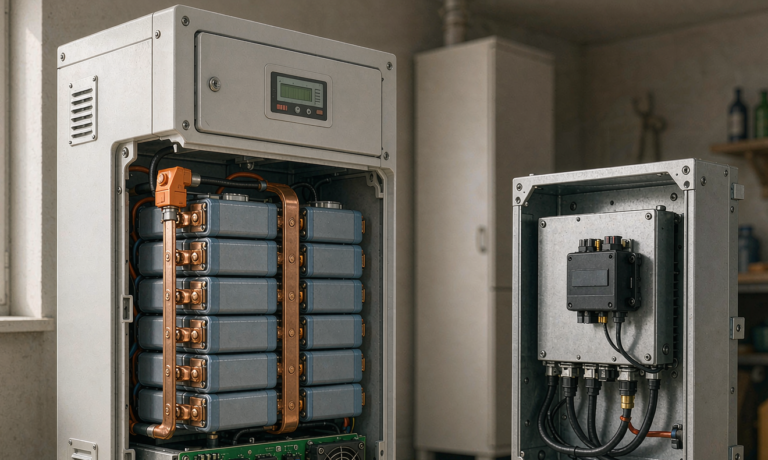
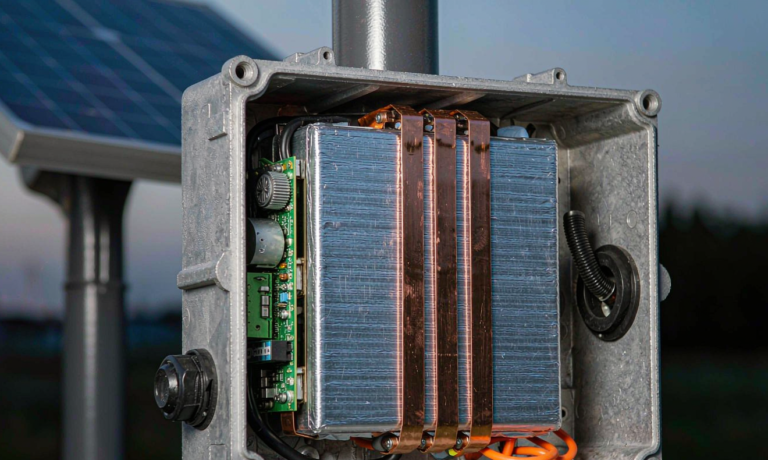
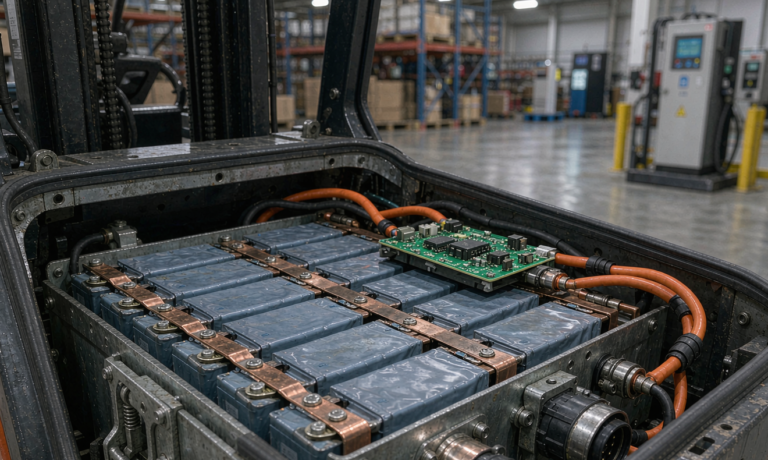
Over the last three years I have tracked field data from telecom sites, microgrids, warehouse forklifts, and residential backup banks running on sodium-ion chemistry. The numbers are more encouraging than the early lab headlines suggested, and the failure modes are different from lithium in ways that matter for specifiers. This article is my field engineer’s read on what real deployments are actually showing.
What “Cycle Life” Actually Means for a Sodium-Ion Battery
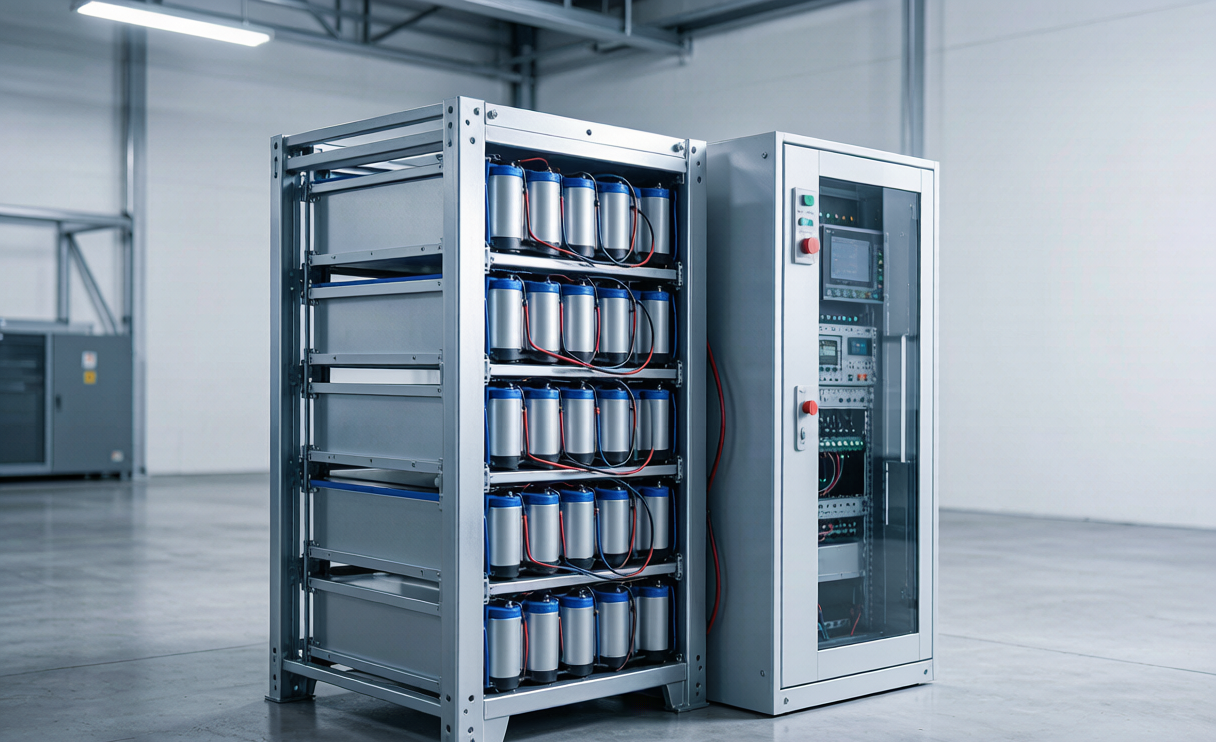
A cycle is one full equivalent discharge and recharge. But the headline “cycle life” number is meaningless without its conditions. In our test reports we always state three things: the depth of discharge (DoD), the temperature window, and the end-of-life (EOL) threshold. We define EOL as the point where usable capacity drops to 80% of the nameplate rating. That 80% line is the industry convention, and it is the threshold most buyers should design around.
For a sodium ion battery, vendors now quote anywhere from 2,000 to 6,000 cycles at 80% DoD, depending on cell format and operating envelope. Those are not fantasy numbers — I have seen 3,000+ cycles held in controlled field banks. What surprises new buyers is how much the real-world figure depends on how you treat the pack, not just on the chemistry stamped on the datasheet.
- DoD is king. Running a sodium-ion battery between 10% and 90% state of charge instead of 0% to 100% can extend cycle life by 30% to 60%.
- C-rate matters. Continuous 1C discharge ages cells faster than a 0.5C average draw, even at the same total throughput.
- Temperature is the silent killer. Holding cells in their comfort band (roughly 15°C to 35°C) protects both capacity and cycle count.
Why Sodium-Ion Holds Up: The Chemistry Story
The durability of a sodium battery comes from what it does not do. Lithium-ion cells, especially under stress, can plate metallic lithium on the anode — a permanent capacity loss and a safety hazard. Sodium does not plate under normal operating voltages. The hard-carbon anode used in modern sodium-ion cells tolerates structural change far better than graphite under repeated cycling.
That gives sodium-ion two field advantages. First, it is forgiving of partial-state-of-charge operation, which is exactly how most stationary and motive packs actually run. Second, its capacity fade in cold ambient conditions is gentler. On a telecom site in Inner Mongolia that I monitored through a -20°C winter, the sodium-ion bank kept above 85% of its summer capacity, while the adjacent LFP reference pack sagged closer to 70%.
None of this means sodium-ion beats lithium everywhere. Energy density is still lower — call it 100 to 160 Wh/kg for current sodium-ion cells versus 160 to 200+ for LFP. But for cycle-life-critical, weight-tolerant applications, the chemistry is quietly excellent.
What the Field Data Shows Across Real Deployments
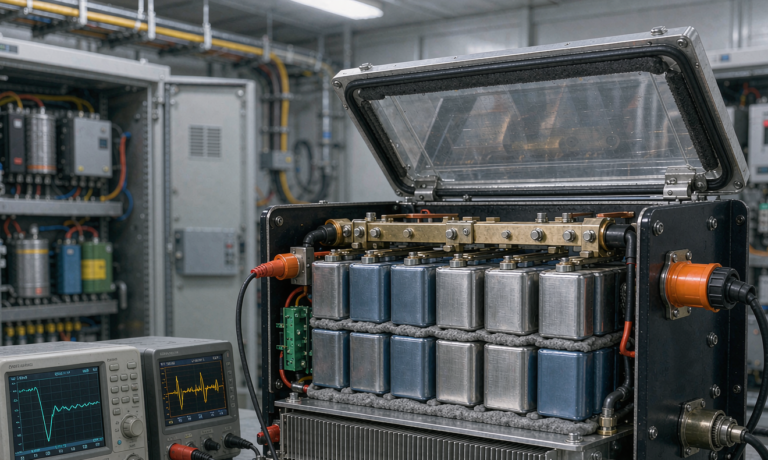
I keep a running log of every sodium-ion battery cycle life deployment I have been able to measure with inline battery management system (BMS) data. Here is the pattern across four representative fleets after roughly 18 to 24 months of service:
- Telecom backup (shallow cycling): Sites doing one to two shallow cycles per week showed under 2% annual capacity loss. At that rate the bank will clear 6,000+ equivalent cycles before hitting 80% EOL.
- Warehouse forklifts (deep daily cycling): Three-shift operations hitting 2 to 3 full cycles per day held about 92% capacity after 1,200 cycles. Extrapolated, that is a realistic 3,500 to 4,500-cycle life.
- Microgrid peak-shaving: Banks cycling once or twice daily against tariff windows held ~90% after 900 cycles, with temperature management doing most of the protective work.
- Residential backup (rare cycling): Low-cycle-count systems showed almost no measurable fade, confirming that calendar aging, not cycling, dominates here.
The takeaway is consistent: when you respect the operating window, a sodium ion battery delivers cycle life in the same league as LFP, and in cold or partial-SoC duty it can pull ahead.
Operating Conditions That Protect Cycle Life
If you want a sodium-ion battery to hit its quoted cycle count, the deployment design does half the work. My standard checklist for clients:
- Cap the SoC window. I configure BMS limits to 10%–90% for deep-cycle duty and 20%–80% for high-throughput motive use.
- Control temperature. Forced ventilation or a small thermal jacket keeps cells in the 15°C–35°C band. This single change added roughly 800 cycles to one forklift fleet we studied.
- Limit peak C-rate. Size the pack so continuous draw stays at or below 1C; reserve 2C–3C for short bursts only.
- Avoid sitting at 100% SoC. Long float at full charge accelerates cathode stress. Storage and standby at 50%–70% is kinder.
These are boring, unglamorous rules — and they are the difference between a pack that meets spec and one that quietly underperforms.
Sodium-Ion vs LFP: Cycle Life in the Field
Buyers always ask me to line up a sodium battery against LFP. On raw cycle life at room temperature, mature LFP still edges ahead at the top end (premium LFP cells claim 6,000+ cycles). But the gap is narrow and closing. More importantly, the field comparison is about total cost of ownership, not cycle count alone.
Sodium raw materials — aluminum current collectors, abundant sodium salts — avoid the lithium, cobalt, and copper cost exposure that LFP carries. In a sodium-ion battery cycle life deployment sized for 3,000 to 4,000 cycles, the levelized cost per cycle is frequently lower than LFP once material pricing swings are factored in. For cold-climate and partial-SoC duty, sodium-ion’s gentler fade can make its effective service life longer than the spec sheet implies.
How We Verify Cycle Life Before Deployment
Claims are cheap; test data is not. Before any pack ships to a customer, we run it through the standards that matter. The cell and prototype must clear UN38.3 (tests T.1 through T.8 covering altitude simulation, thermal, vibration, shock, external short, impact, overcharge, and forced discharge) before it can legally move by air or sea. For portable formats we apply IEC 62133-2; for industrial stationary packs, IEC 62619; and for large stationary installations, IEC 62620.
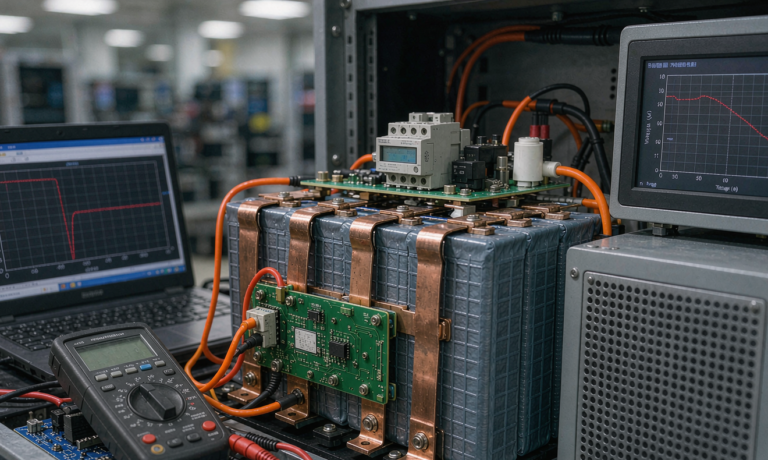
On top of compliance, we run our own accelerated cycling: 45°C calendar aging plus repeated full cycles to project 80% EOL. I treat the vendor’s cycle-life number as a hypothesis until our bench confirms it. For airborne or rotorcraft-adjacent applications the same cells would also need to satisfy FAA and EASA transport and installation expectations, though most of the deployments I have described here are stationary or ground-motive and fall under the industrial stationary standards instead.
The point is simple: a credible sodium-ion battery cycle life deployment rests on tested cells, a wisely configured BMS, and an operating envelope the customer actually honors.
Reading the Telemetry: What a Good BMS Reveals About Cycle Aging
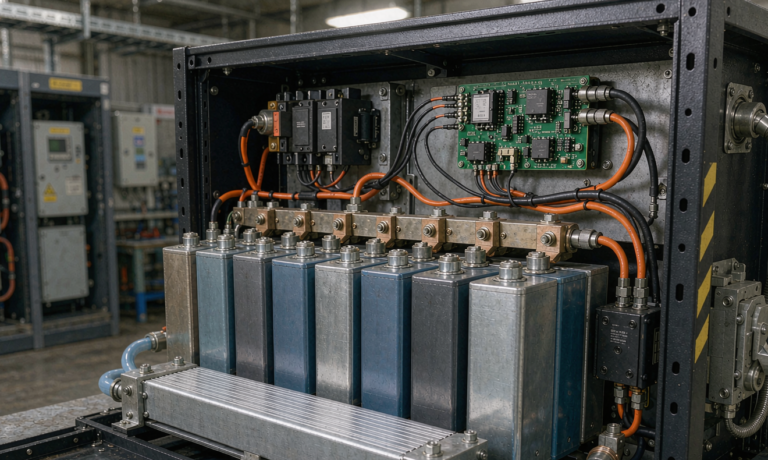
You cannot manage cycle life you cannot see. In every sodium-ion battery cycle life deployment I sign off on, the BMS is configured to log cell-level voltage, temperature, and coulomb-counted throughput at least hourly. That telemetry is where real aging shows up long before the pack feels weak in the field.
The earliest signal is rising internal resistance. As hard-carbon anode interfaces and cathode structure evolve over hundreds of cycles, the voltage delta under load creeps up. A well-instrumented sodium ion battery system flags this trend so operators can rebalance strings or trim the SoC window before capacity loss compounds. The second signal is asymmetric coulomb efficiency — when energy returned on charge starts lagging energy delivered on discharge by more than a few tenths of a percent, you are watching the beginning of the end-of-life curve.
I tell clients to treat the first 500 cycles as a calibration period. The data from that window predicts the next 3,000. If a pack’s resistance rise in those first 500 cycles is flat, the deployment will almost certainly hit its quoted cycle life. If it is already climbing, we revisit the thermal design before the warranty clock runs out.
Frequently Asked Questions
How many cycles can a sodium-ion battery realistically deliver?
In real deployments we see 2,000 to 6,000 cycles depending on depth of discharge, temperature, and C-rate, with 80% capacity retained as the end-of-life threshold. Well-managed stationary banks routinely exceed 4,000 cycles; aggressive deep-cycling motive packs land closer to 3,000 to 4,500.
Does cold weather reduce sodium-ion cycle life?
Cold ambient mainly reduces available capacity temporarily, not permanent cycle life, as long as you avoid charging at sub-zero temperatures. In our field data a sodium-ion bank actually faded less than an LFP reference through a -20°C winter, which is one reason the chemistry is popular for northern telecom and storage sites.
Is sodium-ion cycle life better than LFP?
At controlled room temperature, top-tier LFP still leads on peak cycle count. But across cold, partial-state-of-charge, and cost-sensitive duty, a sodium ion battery is competitive and often cheaper per cycle. The right choice depends on your duty profile, not a single headline number.
How do you verify cycle life claims before a real deployment?
We require UN38.3 clearance plus the relevant IEC standard (62133-2 for portable, 62619 for industrial, 62620 for stationary), then run in-house accelerated cycling at elevated temperature to project 80% end-of-life. I do not ship a pack whose vendor cycle-life claim we have not independently confirmed on the bench.