Home Energy Storage for Mountain and Remote Cabins
When people ask me what makes a mountain cabin different from a suburban home, the battery is the first thing I point to. I am Karl Huang, Senior lithium battery Engineer at Horizon Power, and over the last decade I have spec’d, field-tested, and repaired home energy storage systems in places where the nearest utility pole is two hours away and the temperature drops below -20°C for weeks at a time. A remote cabin is not just an off-grid house — it is a reliability problem wrapped in a logistics problem. If your home energy storage fails up there, you do not just lose Netflix. You lose heat, water pump, lighting, and sometimes your only link to the outside world.
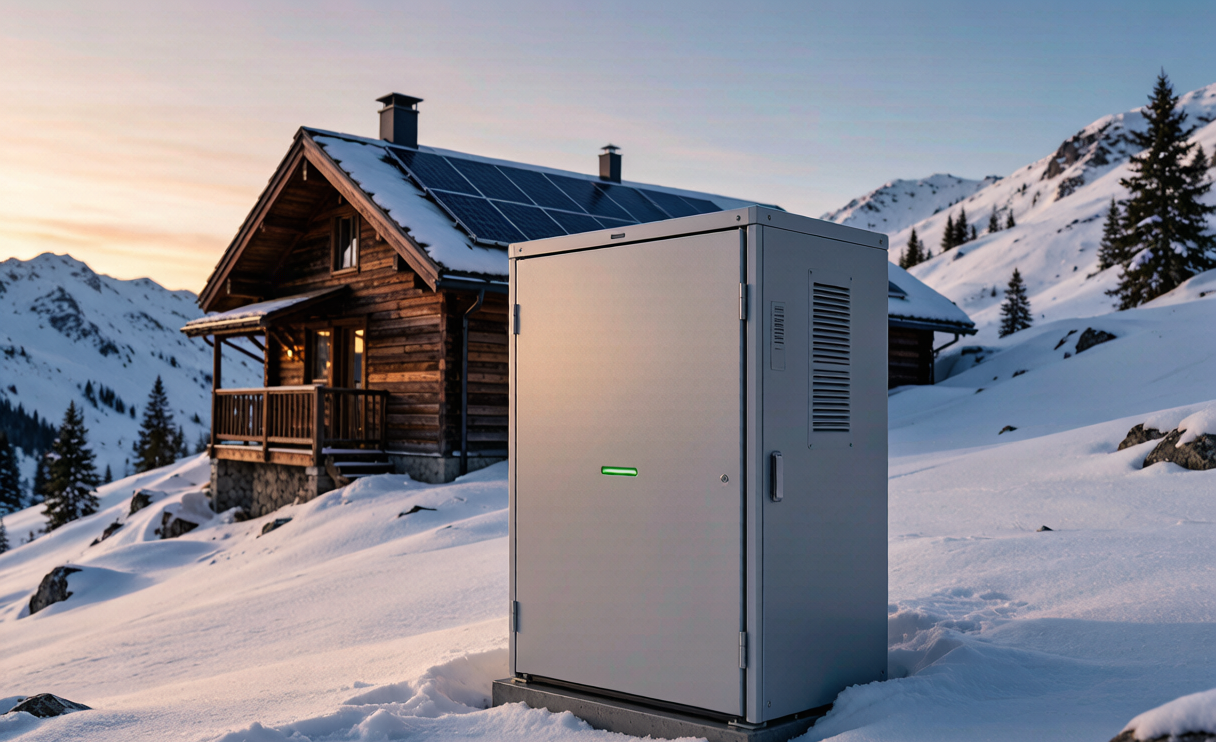
This guide is the field manual I wish every cabin owner had before they bought their first battery. It covers sizing, chemistry, cold-weather behavior, solar pairing, and the maintenance habits that keep a remote system alive for ten years instead of three.
Why Mountain Cabins Demand a Different Storage Strategy
A typical home energy storage project in the city is designed around time-of-use arbitrage and backup for the occasional outage. A cabin is the opposite. The system is the primary source of power, not a supplement. That single difference changes every decision downstream.
Three realities dominate the engineering. First, the depth of discharge cycle is irregular — a cabin used only on weekends sees long idle periods punctuated by bursts of heavy load. Second, ambient temperature swings are brutal: a lithium battery that is comfortable at 25°C may deliver 40% less capacity at -15°C. Third, serviceability is poor. You cannot call an electrician in January when the road is closed. The home battery has to be forgiving by design.
In my experience, the cabins that fail are almost always the ones that copied a grid-tied residential design and assumed it would survive alpine conditions. It will not.
Sizing the Battery for a Remote Cabin
Sizing is where most projects go wrong, so let me be precise. Start with daily energy consumption in watt-hours. A modest weekend cabin — LED lighting, a small fridge, a water pump, phone and laptop charging — typically lands between 3 kWh and 6 kWh per day. Add electric heating or a well pump with a high starting surge and you can easily double that.
Next, decide your days of autonomy. For a mountain site, I recommend a minimum of three days of autonomy at 80% depth of discharge, and preferably five if the cabin is used in winter. Here is the formula I use:
- Daily load (kWh) × days of autonomy = usable capacity needed
- Usable capacity ÷ allowable depth of discharge = nameplate capacity
- Apply a 1.15–1.25 temperature derate if the battery sits below 0°C
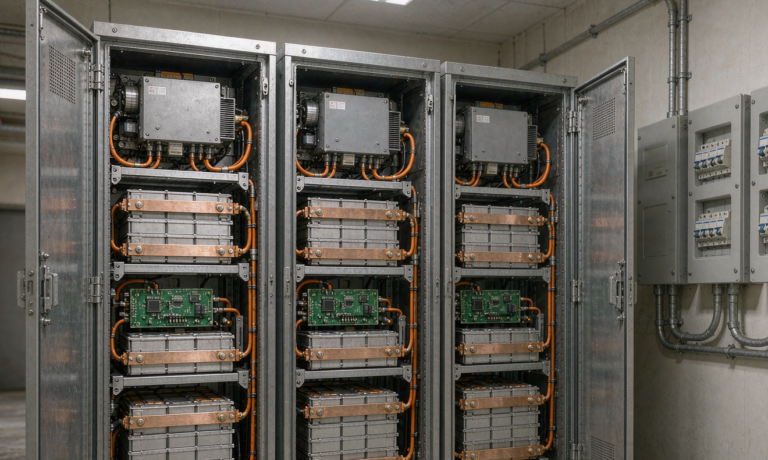
For a 5 kWh/day cabin wanting three days of autonomy at 80% DoD, that is 15 kWh usable, or roughly 19 kWh nameplate. After a cold-weather derate you are looking at a 22 kWh home energy storage bank. That is a very different animal from the 10 kWh units sold to city homeowners, and it explains why so many cabin systems feel undersized.
Chemistry Choice: Why LFP Dominates Cold and Remote Sites
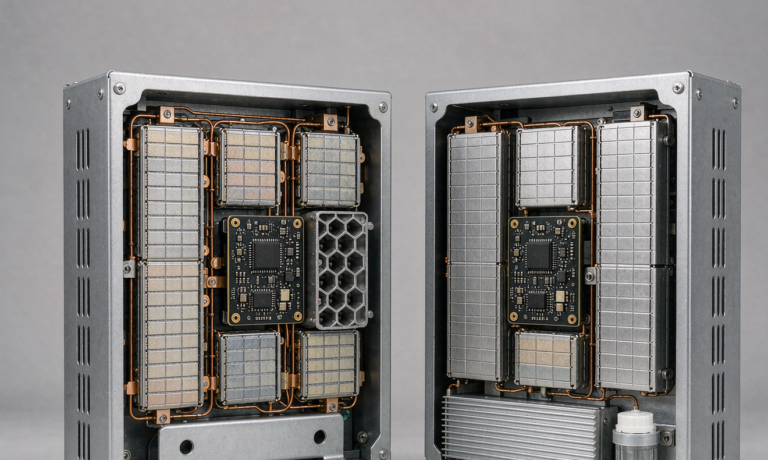
If you are buying a home battery for a cabin, the chemistry question is essentially settled. Lithium iron phosphate (LFP, or LiFePO4) is the right answer for almost every remote deployment, and I say that after watching nickel manganese cobalt (NMC) packs age poorly in exactly these conditions.
The reasons are concrete. LFP has a thermal runaway threshold above 270°C, compared to roughly 150°C for NMC, which matters when the cabin is unattended for months. It tolerates a higher sustained state of charge during long idle periods without the calendar aging that plagues NMC. It also survives 3,000–6,000 cycles at 80% DoD, nearly double what most NMC cells deliver. For a lithium battery you cannot easily replace, cycle life is the single most important number on the datasheet.
The trade-off is energy density — LFP is heavier per kWh — but in a stationary cabin that penalty is irrelevant. What you gain in safety and longevity pays for itself many times over.
Cold-Weather Performance and Thermal Management
This is the section I wish more buyers read before winter. A lithium battery does not freeze solid, but its usable capacity and charge acceptance collapse as temperature falls. Below 0°C, attempting to charge a lithium cell without internal heating causes lithium plating on the anode — permanent, irreversible capacity loss. I have cut open cells from cabins that were “charged in the cold” and the damage is unmistakable.
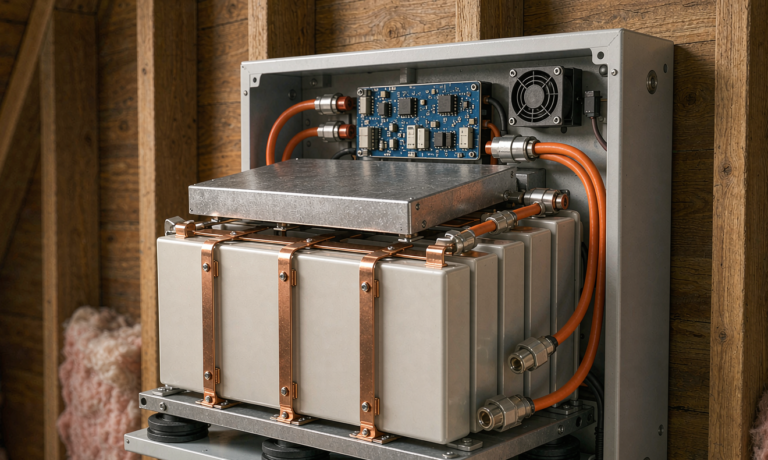
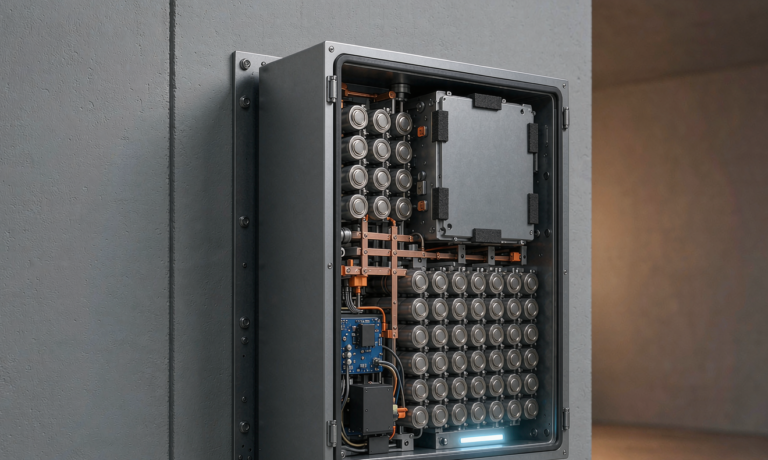
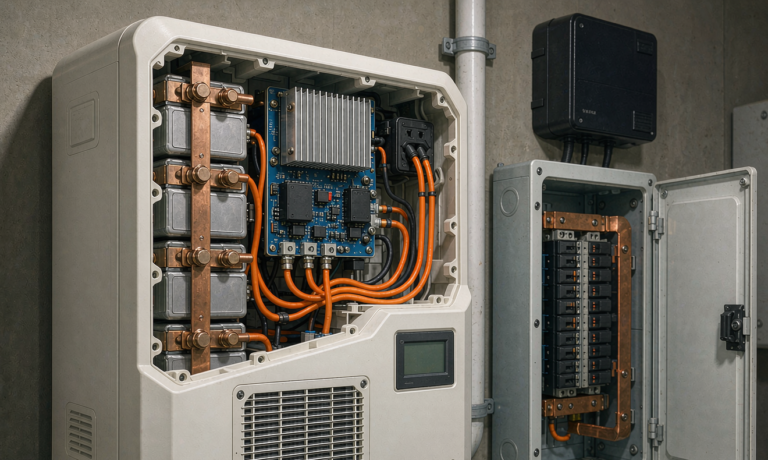
The engineering fix is a self-heating battery management system or a thermally managed enclosure. A good home energy storage cabinet for alpine use includes:
- Internal PTC or resistive heaters triggered below 5°C
- Insulated, weatherproof enclosure rated at least IP54 for outdoor mounting
- A BMS that blocks charge until cell temperature is in the safe window
- Ventilation that still works under snow load
In practice, a heated LFP home battery will deliver close to its rated capacity down to -20°C, while an unheated one may give you half. Do not skip the heating element to save a few dollars — it is the difference between a system that works in January and one that sits dead until spring.
Solar Sizing and the Hybrid Generator Question
Most cabins pair their home energy storage with a rooftop PV array, and sizing that array is its own discipline. In a mountain valley, winter sun hours can drop to two or three per day, and snow coverage on panels is a real loss factor. I typically size for the worst month, not the annual average.
A practical rule: size the array so that on a clear winter day it can fully recharge the battery bank plus cover the day’s load. For the 22 kWh example above, that means roughly 6 kW to 8 kW of panels in a snowy climate, assuming you can keep them clear. Tilt matters — a steeper angle sheds snow and captures low winter sun.
Even with good solar, I still recommend a hybrid generator for remote cabins. Not as a primary source, but as insurance against the multi-day storm that drains the bank. A generator hybrid setup lets the home battery handle 95% of days while guaranteeing you never face a total blackout. The key is automatic start logic tied to state of charge, so the generator only runs when the battery truly needs it.
Safety, Installation and Long-Term Maintenance
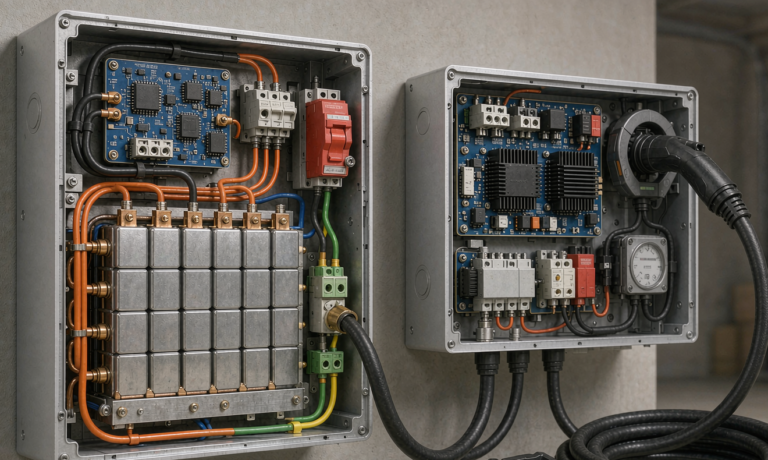
Remote does not mean relaxed on safety. Every home energy storage installation I commission follows the same non-negotiables. Mount the battery on a non-combustible wall, away from living spaces, in a space with passive ventilation. Keep DC conductors short and properly fused — a long undersized cable is a fire waiting to happen. Follow UN38.3 for transport and the local electrical code for the AC side; in North America that means NEC Article 706 for energy storage systems.
Maintenance for a cabin that sits empty for months is mostly about state of charge. I advise leaving the home battery at 50–60% state of charge for long storage, not full and not empty. Check it remotely if you have monitoring — most modern systems report state of health and cell balance to a phone app. Before a long absence, balance the cells and confirm the BMS is in sleep mode that still wakes for fault protection.
When you return after winter, do a capacity check. If the bank holds 80% of nameplate after the sleep, you are healthy. If it has drifted below that, it is time to investigate cell imbalance or a parasitic load you forgot about.
FAQ
How big a home battery do I need for a weekend mountain cabin?
For a basic weekend cabin drawing 3–6 kWh per day, plan on 15–22 kWh of nameplate home energy storage to cover three to five days of autonomy with a cold-weather derate. If you add electric heat or a large well pump, size up accordingly and never trust the city-home calculators — they assume grid backup you will not have.
Can lithium batteries work in freezing temperatures?
Yes, but only if the home battery has a self-heating function and a BMS that blocks charging below the safe temperature window. A heated LFP lithium battery performs well down to -20°C; an unheated one loses half its capacity and risks permanent damage if charged cold.
Do I still need a generator with home energy storage?
For a truly remote cabin, yes — as a backup, not a primary source. A generator hybrid setup guarantees power through multi-day storms when solar cannot recharge the bank. Tie it to automatic start logic so it runs only when state of charge drops to a set threshold.
How do I maintain a cabin battery when it sits idle for months?
Leave the home battery at 50–60% state of charge, balance the cells, and enable fault-protect sleep mode. Use remote monitoring to confirm state of health, and run a capacity check on your return. Avoid storing at 100% or near-empty, both of which accelerate aging during long idle periods.
Building a reliable home energy storage system for a mountain or remote cabin is not about buying the biggest battery — it is about matching chemistry, capacity, heating, and solar to a place where failure is expensive. Get those four right, and the cabin stays warm, lit, and connected no matter what the weather does outside.