Drone Battery Design for Racing Drones: An Engineer’s Field
I have spent the better part of a decade on the test bench watching lithium cells either win a race or cook themselves trying. Racing drones are a different animal from the survey and delivery platforms most people picture when they hear the term drone battery. A mapping quad wants endurance at a gentle 2-4C. A 5-inch FPV racer wants a violent 30-60C burst for the gate punch and then a soft landing two minutes later. When we talk about drone battery design for racing drones, we are not optimizing for flight time alone. We are optimizing for the brutal, repeating stress of maximum power-to-weight under a hard weight ceiling. This is the field guide I hand our new engineers at Horizon Power before they touch a single cell.
Why Racing Drones Break the Rules of Conventional Drone Battery Design
A typical commercial drone lithium battery is built like a marathon runner: balanced chemistry, conservative C-rate, long cycle life, mild thermal load. A racing drone battery is built like a sprinter on a dyno. The entire airframe is weight-budgeted to the gram, and the pack is expected to deliver peak current that would trip the protection of a “safe” pack. The first mistake I see is engineers carrying survey-drone assumptions into a racer. You cannot spec a 10C pack and hope the ESC absorbs the sag. The pack must be designed, from cell selection up, for the burst.
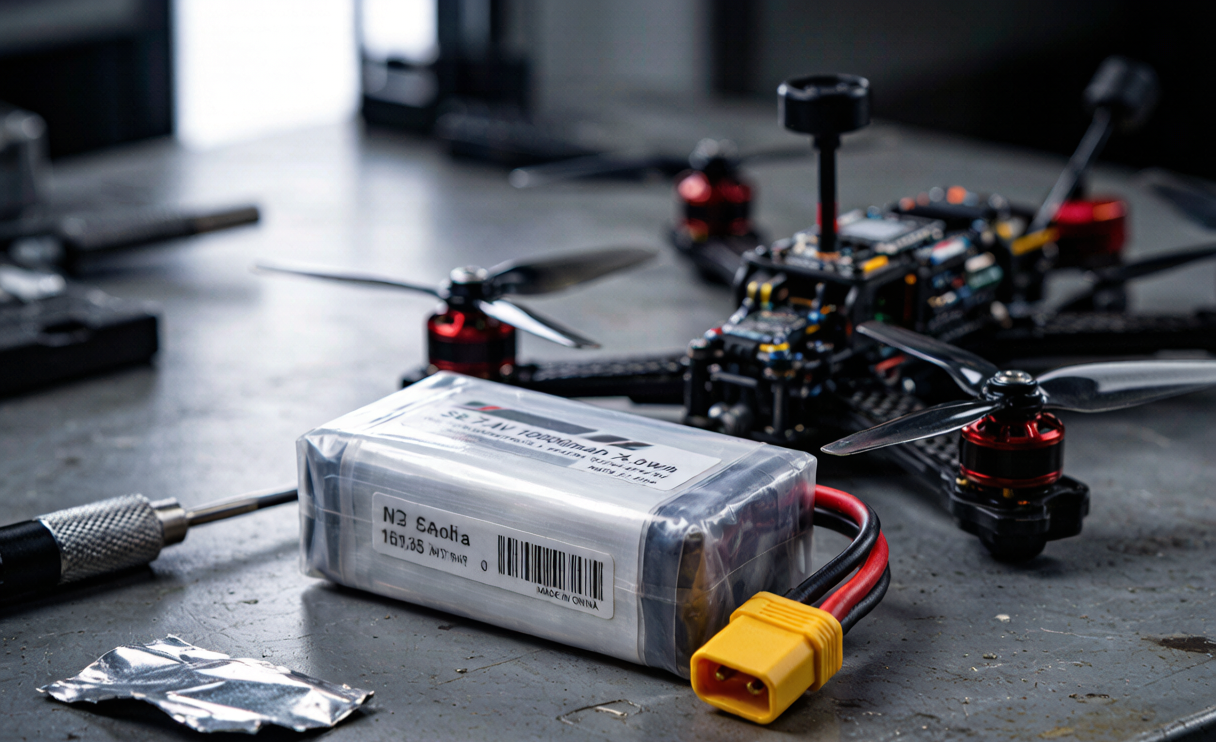
The design envelope is unforgiving: a 6S 1300mAh pack that weighs over 200g gets left on the bench. Pilots want 180-210g. That leaves you roughly 150-170g for cells, and the rest for weld, leads, and enclosure. Every design decision after that is a trade-off against that number.
Power-to-Weight Ratio Is the Only Metric That Matters at the Start Gate
On the start line, specific energy (Wh/kg) of the drone lithium battery is what wins. At the cell level you might see 180-220 Wh/kg for high-rate LiPo and up to 230-260 Wh/kg for LiHV (high-voltage lithium polymer, 4.35V/cell nominal ceiling). But the pack level is what counts, and you lose 8-15% to interconnect, balance leads, and the shrink wrap or hard case.
In our lab we measure the finished pack, not the datasheet. A 6S 1300mAh LiHV pack at 22.8V nominal holds about 29.6Wh. If it weighs 195g, that is 151 Wh/kg pack-level. Push it to 4.35V/cell fully charged (25.2V) and you recover roughly 7-9% more usable energy per flight, at the cost of faster cathode aging. That trade-off is the single biggest lever in racing drone battery design, and we let the pilot choose based on how many heats they fly per day.
Burst Discharge Current: Designing for the Punch-Out
The defining load in FPV racing is the punch-out: full throttle from a hover or a tight turn, pulling 80-120A on a 1300mAh pack. That is a 60-90C instantaneous draw. No single 1300mAh cell does that cleanly, so we parallel cells. Two 650mAh cells in parallel, or three smaller ones, cut the per-cell load and divide internal resistance.
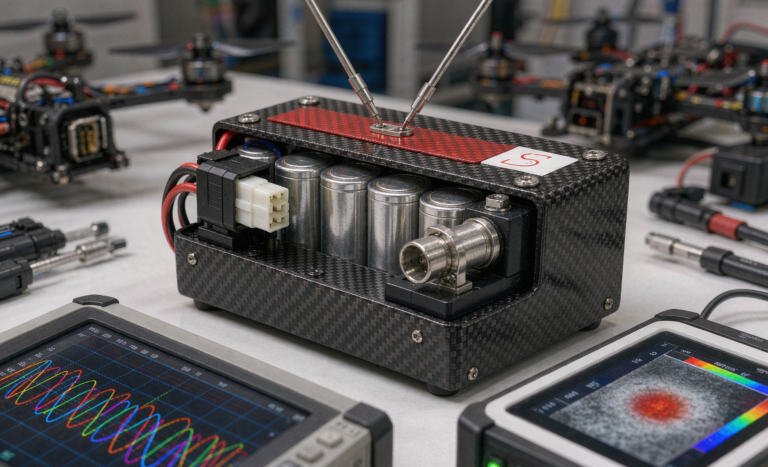
Internal resistance (IR) is the silent killer of performance. A fresh high-rate cell sits around 3-6 mOhm at pack level after spot-weld; as it ages that climbs, voltage sag under load grows, and the drone feels “soft” even at full throttle. We qual each lot with a 30C pulse test and reject packs showing more than 12% IR spread across cells. A custom battery solution for a specific frame often means trading a little capacity for lower IR, because the pilot feels the sag long before they feel the missing 50mAh.
Thermal Runaway Risk When You Pull 40C Repeatedly
Here is the part that gets skipped in marketing copy. When you pull 40-60C burst after burst, the pack core temperature climbs fast. A cell that is fine at 25C can cross into accelerated aging at 45C and into real danger above 60C. Racing packs are rarely actively cooled, so the design defense is passive: low-IR cells, generous copper in the busbar, and a pack layout that lets air move through rather than trapping heat under the flight controller.
In our abuse testing we log pack surface and IR every 10 seconds across a 5-flight heat. Packs that stay under 48C surface between flights keep 90% of their burst capability across a race day. Packs that spike past 60C lose 15-25% of capacity by the third flight. That is why a good lithium battery for racing is not the one with the highest printed C-rating, it is the one whose thermal behavior we have actually measured.
Structural Integration: The Drone Battery Is the Airframe
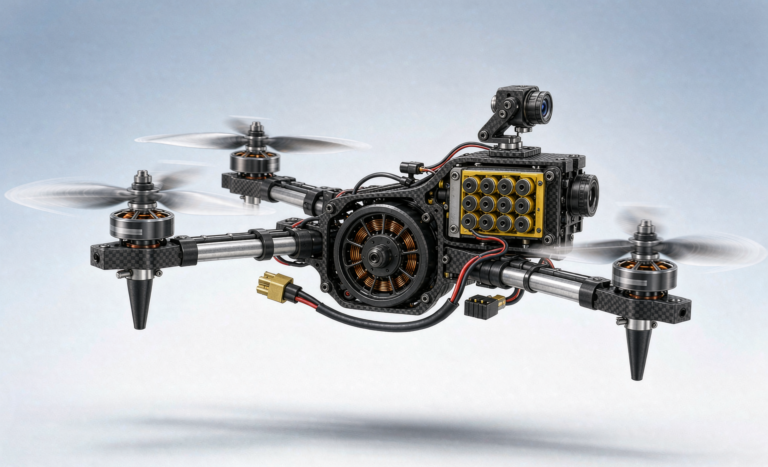
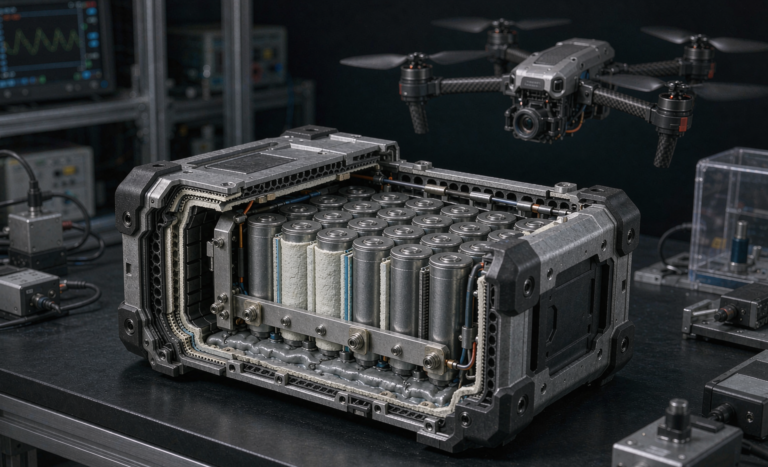
In many racing frames the battery is the bottom plate. It is not a loose component; it is structure. That changes the design rules. The pack must tolerate frame flex, prop-strike vibration, and the occasional cartwheel without the welds cracking. We moved from soft-shrink packs to thin hard-case or carbon-backed layouts for pilots who crash often, accepting a 6-10g weight penalty for the durability.
This is where a custom battery solution pays for itself. We match the pack outline to the frame’s battery bay, taper the lead exit so it does not chafe the antenna, and place the balance connector where the pilot can reach it mid-race without a tool. None of that shows up in a spec sheet, but it is the difference between a pack that “fits” and a pack that “flies.”
Compliance You Cannot Skip: UN 38.3, IEC 62133, FAA and EASA
Even a race pack has to travel, and regulators do not care that it is for a hobby. Any drone battery we ship, sample, or carry must clear UN 38.3 (T.1-T.8: altitude simulation, thermal, vibration, shock, external short, impact, overcharge, forced discharge). Cells and packs bound for the EU reference IEC 62133-2:2017 for safety of portable lithium cells. When pilots or dealers fly with packs, FAA Part 107 and EASA rules govern carriage: spare lithium batteries must be in carry-on, terminals protected, and individual cells over 100Wh need operator approval (most racing packs are well under 100Wh, which is the point of the small form factor).
I treat compliance as a design input, not a sticker at the end. A pack that cannot pass UN 38.3 T.5 (external short) is a pack we do not ship, race or not.
Sizing the Pack: A 6S Racing Drone Walk-Through
Let me make it concrete. A 5-inch racer pulling a 90A peak on 6S (25.2V) needs about 2.27kWh of power at the instant of punch-out, but only for a fraction of a second. The real constraint is sustained draw during a hard climb: say 55A for 8 seconds, or 1.39kW. A 1300mAh pack at 25.2V is 32.8Wh. At an 80% usable depth that is 26.2Wh available. Divide 26.2Wh by 1.39kW and you get roughly 67 seconds of hard climbing, which is realistic for a 2-minute maximum-effort heat. That math is exactly how we tell a pilot whether to drop to 1100mAh for weight or stay at 1500mAh for a longer practice session.
This is the heart of disciplined drone battery design for racing drones: matching the pack’s burst capability and usable energy to the pilot’s actual throttle histogram, not to a marketing C-rating.
Frequently Asked Questions
What C-rating do I need for a racing drone?
For a 5-inch FPV racer, plan for a continuous 25-35C with 60-90C burst capability, measured at pack level, not cell-label claims. We validate every lot with a pulse test rather than trusting the printed number.
How do I extend racing drone battery life?
Land before the low-voltage cutoff bites hard, store at 3.8V/cell (storage charge), keep packs under 48C surface between flights, and avoid leaving them fully charged for days. A well-treated racing drone lithium battery holds burst performance for 150-250 cycles instead of fading by 80.
Are LiPo or LiHV better for racing drones?
LiHV (4.35V/cell) gives 7-9% more usable energy per gram, which matters at the start gate, but ages faster. LiPo is more forgiving and longer-lived. We recommend LiHV for race day and LiPo for practice.
Can I ship racing drone batteries by air?
Yes, as carry-on spares with protected terminals, under the FAA and EASA carriage limits. Most racing packs are under 100Wh per cell, but the pack must still meet UN 38.3. Never check loose lithium packs in hold baggage.
How does Horizon Power approach custom racing drone battery design?
We start from the frame’s weight budget and throttle profile, then select cells for low IR and measured burst, build a pack matched to the battery bay, and pulse-qualify every lot. It is a custom battery solution tuned to how you actually fly, not a catalog part.
Summary
Good racing drone battery design is not about the biggest number on the box. It is about measured power-to-weight, honest burst current, controlled thermal behavior, structural fit, and compliance you can stand behind. Get those right and the lap times take care of themselves. Get them wrong and you get a pack that sags, swells, or fails on the second heat. At Horizon Power we design the pack for the pilot’s real throttle, not the brochure.