Vineyard and Orchard Machine Battery: Sizing and Duty Guide
Vineyard and orchard work is nothing like highway hauling. A grape harvester climbs a terraced row at two kilometers per hour, stops every few minutes, and restarts with a full head of machinery engaged. Sprayers, under-row mowers, and pruning platforms repeat the same stop-and-go pattern in dust, humidity, and crop protection chemicals. I have spent years specifying packs for this class of equipment at Horizon Power, and the recurring lesson is that a generic battery solution fails here for predictable reasons: wrong voltage, too little thermal headroom, and a case that cannot survive washdown. This guide walks through the sizing, environmental, charging, and compliance decisions that decide whether a vineyard machine battery lasts a single season or a decade.
Why Vineyard and Orchard Duty Cycles Are Different
The first mistake buyers make is copying a forklift or golf cart specification. Orchard equipment works at low speed but high torque, with frequent starts and long idle periods between passes. A grape harvester may draw a modest average current yet demand two to three times that figure for a few seconds when the shaking head, conveyor, and fan start together. Size only to the average and the pack will sag on every restart, tripping the controller or dimming the work lights.
Terrain adds a second constraint. Rows on hillside vineyards are often graded between five and fifteen percent, and a loaded machine regenerating down a slope can push charge back into the pack faster than a small Battery Management System accepts it. I specify a BMS with regenerative current limiting and cell-level monitoring for any slope above roughly ten percent.
Seasonality is the third difference. A vineyard may run a machine hard for six weeks during harvest, then park it for ten months. That pattern punishes chemistries that dislike sitting at high state of charge, and it makes storage behavior more important than peak power. The duty cycle here is defined less by daily mileage than by seasonal intensity, and the pack must be comfortable with both extremes.
Matching Voltage and Capacity to the Machine
Most compact orchard machines use a 48 volt nominal platform, while larger harvesters and utility vehicles move to 96 volts to keep cable size and resistive loss down. The choice is not about more power on paper; it is about current. At a given power, doubling the system voltage halves the current, which reduces heat in connectors, contactors, and motor windings. For a machine with a 15 kilowatt peak, a 96 volt pack draws roughly 156 amps where a 48 volt pack draws around 312 amps.
Capacity should be set from the real shift, not the brochure. Log the current draw of a representative pass with a clamp meter, multiply by the number of passes per day, then add a twenty percent reserve for headland turns and unexpected detours. From field data I have collected, a row-end mower often settles between 5 and 10 kilowatt-hours, a pruning platform between 10 and 18, and a self-propelled harvester between 30 and 60 kilowatt-hours depending on row length and duty.
Discharge rate matters as much as capacity. Lithium iron phosphate cells handle the high cycle count and thermal stability that orchard work demands, and they tolerate the frequent partial state of charge that stop-and-go operation creates. If the machine needs a compact, light pack, a nickel manganese cobalt chemistry can reduce weight, but it needs a more conservative thermal design. A custom battery solution lets you match the cell format, series-parallel arrangement, and case geometry to the bay rather than forcing a standard box into a tight chassis.
Sealing, Vibration, and Chemical Resistance
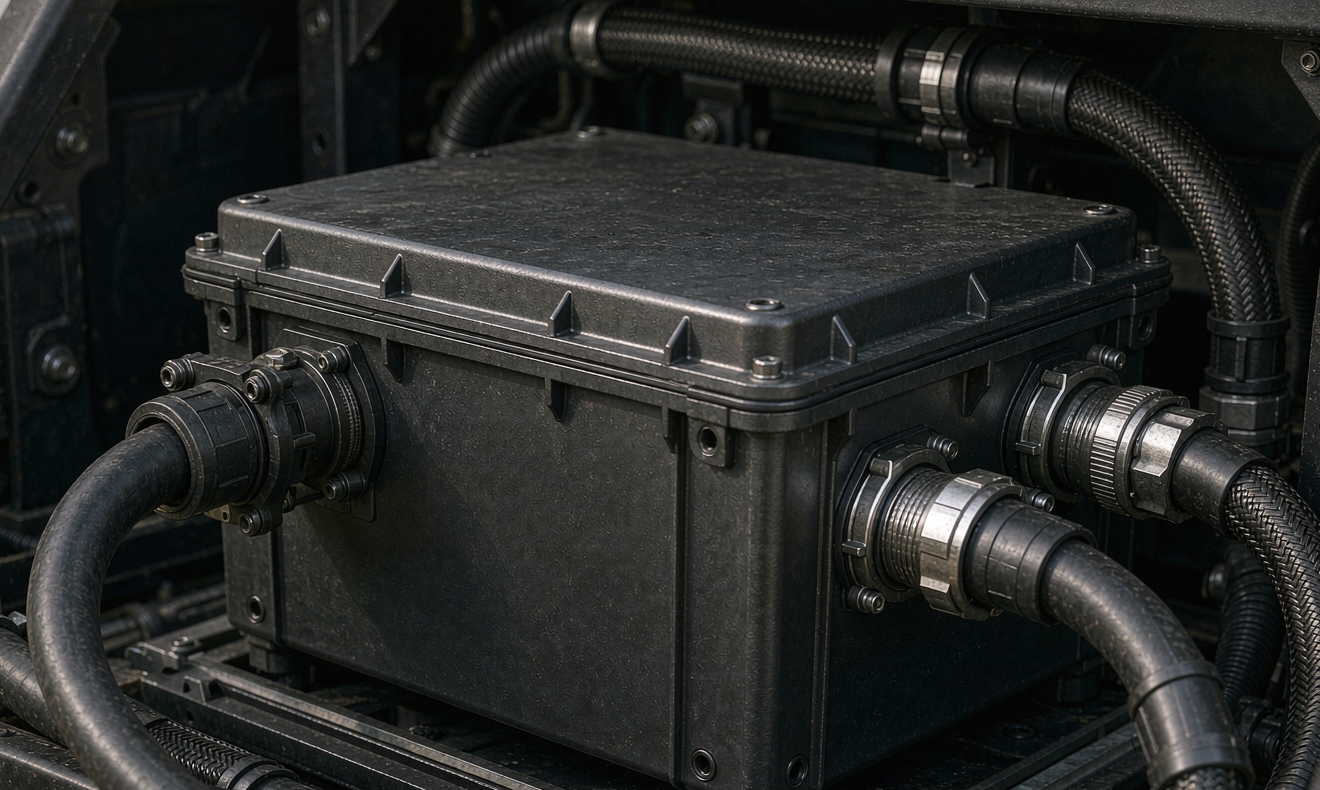
An orchard is a wet, dusty, chemically aggressive place. Spray drift deposits fertilizer and pesticide residue on every surface, and pressure washing is routine at the end of a block. I specify a minimum of IP65 for packs mounted low on a machine and IP66 or IP67 where the case sees direct spray. That rating applies to the whole assembly, so cable glands, breathers, and connector backs are the weak points, not the enclosure walls.
Breathers deserve special attention. A sealed case that heats and cools during a shift will pressure-cycle and pull in moisture through any imperfect seal. A hydrophobic vent membrane equalizes pressure while keeping liquid water out, and it should be sized for the pack’s maximum temperature swing. In humid climates I also specify conformal coating on the BMS PCB and stainless or coated fasteners to resist corrosion.
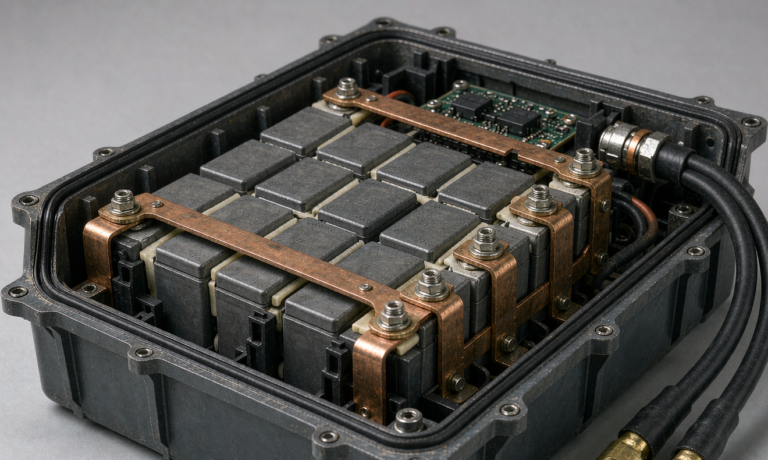
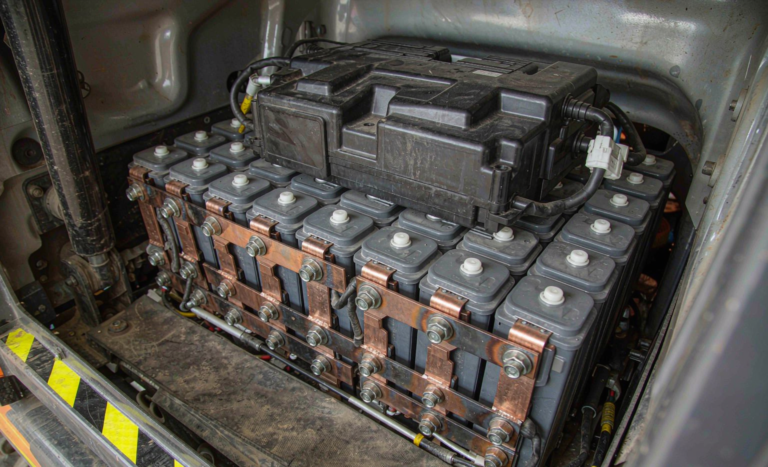
Vibration is the silent killer. Rows with compressed soil and drainage furrows shake a chassis continuously, and loose cell welds or brittle busbars eventually crack. Ask for the pack to be validated against a random vibration profile representative of off-road equipment, then inspect how cells are restrained: compression foam, rigid dividers, and supported cabling all matter. A pack that passes a laboratory drop test but has unsupported busbars will still fail after one harvest season in the field.
Charging Windows and Seasonal Utilization
Charging strategy is where a vineyard battery solution either saves labor or creates it. During harvest, machines often return to the shed with only a short overnight window. A charger sized at roughly 0.2C to 0.5C will refill most packs in two to five hours, which fits an overnight schedule and avoids the heat stress of a fast charge. Opportunity charging between blocks works well if the opportunity is long enough to matter; a ten minute break rarely is.
Cell chemistry sets the fast-charge ceiling. Iron phosphate packs generally accept higher sustained charge current than nickel based packs of similar size, but both need the BMS to taper current as cells approach full and to balance at the top of charge. I recommend scheduling a full balance charge roughly once a week during the season and keeping routine stops between twenty and eighty percent state of charge.
Off-season storage is equally important. Store the pack around fifty percent state of charge in a cool, dry place, and inspect it every two to three months. A smart charger with a storage mode removes the guesswork. Avoid leaving a pack connected to a maintainer that holds it at one hundred percent for months, since high voltage accelerates calendar aging. A simple seasonal checklist does more for service life than any nominal cycle rating on a datasheet.
Safety Standards and Certification
Industrial and traction packs are not covered by IEC 62133, which applies to portable sealed batteries. For vineyard and orchard machines, the relevant safety benchmark is IEC 62619 for industrial secondary lithium cells and batteries, complemented by UN 38.3 transport testing for safe shipment. Ask a supplier for the actual test reports, not just a logo, and confirm the report covers the exact cell and pack configuration you are buying.
Electromagnetic compatibility is another practical concern. Modern orchard machines pack GPS guidance, spray controllers, and telemetry radios into a small space, and a poorly filtered charger or drive inverter can introduce noise that confuses those systems. Require the charging system to meet the applicable EMC directive and verify that the BMS communicates over a protected bus such as CAN with proper termination.
On the mechanical side, look for overcurrent fusing, a contactor rated for the fault current, and a precharge circuit so connecting the pack does not weld the main contacts. Thermal protection should include cell-level sensing and a clear cutoff path to the charger. Finally, make sure the machine’s operator documentation explains emergency isolation, because the person in the cab may not be the person who installed the system.
Retrofit Economics and Total Cost
Replacing a diesel power unit with a battery solution is rarely justified by energy cost alone. The stronger arguments are reduced vibration and noise, zero local emissions in enclosed or semi-enclosed growing areas, and lower maintenance because there is no engine oil, fuel filter, or belt to service. I have seen growers recover the difference mainly through uptime and simpler maintenance rather than through electricity savings.
Start any retrofit with a weight and balance study. Removing an engine and fuel tank changes the machine’s center of gravity, and placing a heavy pack low and central often improves stability on slopes. Fabricate a proper mounting frame rather than reusing engine brackets, and protect the pack from branch contact with a skid plate. Allow clearance for cooling airflow and for a technician to reach the service disconnect without removing other components.
Finally, ask for a warranty that reflects the real duty cycle. A twelve month consumer style warranty is a warning sign for equipment that works in a harsh seasonal environment. Look for a multi-year commercial terms, a defined cycle or energy throughput allowance, and a clear process for field replacement. A supplier willing to discuss failure modes and service logistics openly is usually the one whose pack will still be running at the end of the season.
Frequently Asked Questions
What voltage pack do I need for a vineyard machine?
Most compact orchard equipment uses a 48 volt platform, while larger harvesters and utility vehicles favor 96 volts to reduce current and cable size. Base the decision on peak power and run time rather than voltage alone, and confirm the motor controller and charger are rated for the same platform.
How many kilowatt-hours will a grape harvester need?
Self-propelled harvesters commonly fall between 30 and 60 kilowatt-hours, depending on row length, terrain, and how long the shaking head runs. Log a representative pass with a clamp meter and add a twenty percent reserve before fixing the capacity.
Can a standard lithium pack handle orchard spray chemicals?
Only if it is sealed and built for the environment. Look for IP65 or higher, a hydrophobic pressure-equalizing breather, protected connectors, and conformal coating on the electronics. Chemical drift and pressure washing are what typically kill an under-specification pack.
Is charging overnight better than opportunity charging?
For most vineyards, overnight charging is simpler and gentler on cells because it allows a slow, complete balance cycle. Opportunity charging works during a long midday break but rarely benefits a short ten minute stop. Match charger size to the available window and the pack’s accepted charge rate.
Which safety standards apply to orchard battery packs?
IEC 62619 is the relevant safety standard for industrial lithium batteries, with UN 38.3 transport testing for shipping. IEC 62133 covers portable cells and is not the right benchmark for a traction pack. Always request reports for the exact configuration supplied.
How should I store a vineyard battery between seasons?
Store it near fifty percent state of charge in a cool, dry location and check it every two to three months. Avoid leaving it fully charged on a maintainer for months, since sustained high voltage shortens calendar life. A charger with a dedicated storage mode is the easiest solution.
Further Reading
References