Drone Battery for Wind Turbine Blade Inspection
Why Wind Turbine Blade Inspection Rewrites the Usual drone battery Math
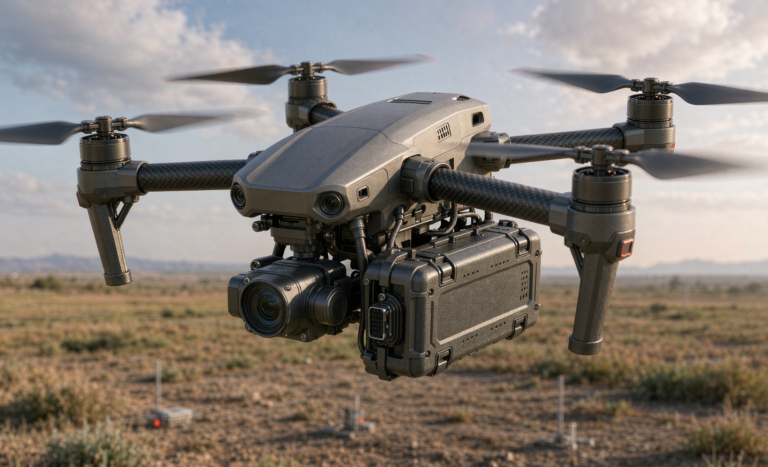
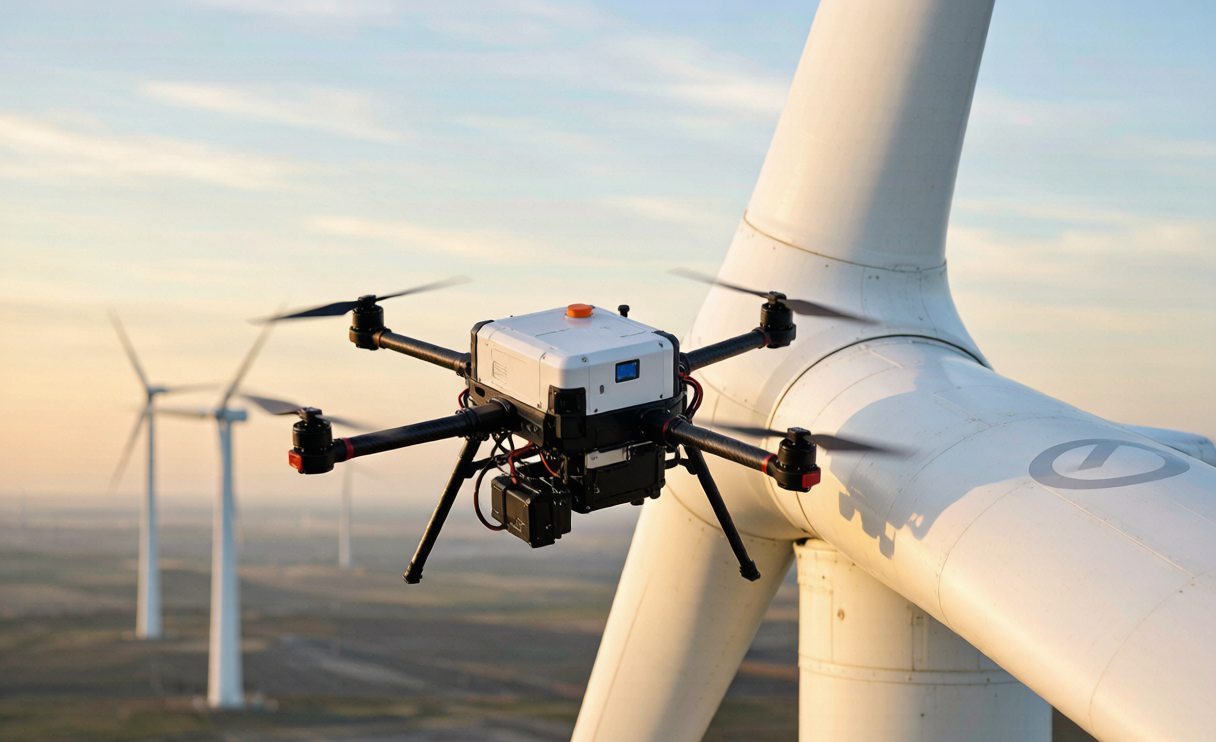
When I first started building packs for rotorcraft inspectors, I assumed a wind-farm mission looked like any other long-flight survey: take off, cruise, come home. Blade inspection taught me otherwise within the first week on a 120-meter onshore turbine. A drone battery here spends most of its energy not cruising but climbing straight up a tower, then holding a dead-steady hover a meter off the blade surface while the camera pulls defects out of the gel-coat. That duty cycle — vertical ascent, sustained hover, descent, repeat across a dozen turbines a day — is brutal on energy density, thermal management, and cycle life in ways a horizontal mapping flight never tests. This is the field engineering playbook I wish I had before our first deployment, and the reason I now treat every drone battery wind turbine blade inspection program as its own power problem rather than a variant of a mapping job.
The Energy Budget of a Single Climb-and-Inspect Cycle
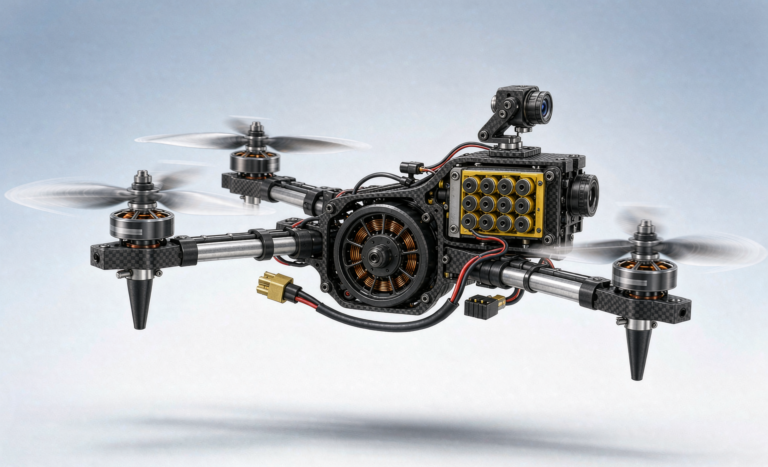
Let’s put real numbers on one turbine. A typical six-rotor inspection airframe carrying a 200-gram payload camera weighs about 5.5 to 7 kilograms all-up. In calm hover it draws roughly 1,500 to 2,200 watts. Climbing at a practical 2.5 to 3 meters per second doubles that transient draw to around 3,000 to 3,500 watts because you are fighting gravity directly, not just rotor drag. Descent recovers almost nothing — at inspection airspeeds you are still motoring to hold position, not free-falling.
A 120-meter hub means roughly 40 seconds of powered climb each way. The ascent alone burns about 0.033 to 0.039 kWh; round-trip climb-and-descend is 0.06 to 0.08 kWh before a single frame is captured. Now add the hover phase: a thorough blade survey of all three blades at two surfaces each can run 6 to 12 minutes of continuous hover, another 0.15 to 0.44 kWh depending on wind. Per turbine, a realistic mission consumes 0.25 to 0.55 kWh of usable energy before you factor in the gust penalties that turn a calm plan into a marginal one.
Wind gusts are the hidden tax. A 120-meter tower sits in undisturbed, accelerated flow, so the airframe constantly corrects attitude and altitude — corrections that pull 10 to 25 percent extra current on top of the hover baseline. I budget that overhead explicitly rather than hoping for a still day. This is why I spec a drone lithium battery with headroom instead of one sized to the cruise average. A 6S 16,000 mAh pack (about 0.355 kWh at the terminals) will limp through one or two turbines before its voltage sag makes the autopilot nervous. For a one-turbine-per-pack workflow I want at least a 12S 22,000 mAh pack (roughly 0.98 kWh) so a single pack completes two to three turbines with reserve.
Cold at Altitude: How Hub-Height Temperature Shrinks Capacity
Hub height is cold. At 100 to 150 meters the air is consistently 5 to 10 °C below ground-level readings on the same morning, and on offshore sites the wind-chill effect is worse. Lithium-ion cells lose usable capacity as temperature drops: a pack rated at 100 percent at 25 °C typically delivers about 85 percent at 0 °C, 70 percent at -10 °C, and only 55 to 60 percent at -20 °C. I have watched a perfectly healthy pack that flew two turbines at 15 °C manage barely one at -12 °C, not because the cells were damaged but because the chemistry simply would not give up its energy at that temperature.
The fix is twofold. First, keep the pack inside its happy window with passive insulation and, on sub-zero sites, a low-wattage pad heater drawing 5 to 15 watts to hold the core between 10 and 25 °C. Second, budget the fade into the mission plan rather than discovering it at 80 meters. I tell crews to derate nominal capacity by the temperature factor before they ever leave the laydown yard, and to re-check it at the base of each tower where local shading can swing the number by several degrees.
Chemistry Choice: NMC vs LFP for Hover-Dominated Duty
Blade inspection is hover-dominated, and hover is a high continuous-discharge load, so chemistry trade-offs matter more than on a cruise mission. A lithium battery choice here narrows to two:
- NMC (nickel-manganese-cobalt): energy density 200 to 250 Wh/kg, lighter for the same watt-hours, which directly extends hover time and climb margin. The cost is cycle life — typically 500 to 1,000 full cycles — and a slightly more heat-sensitive thermal window that demands disciplined charging.
- LFP (lithium-iron-phosphate): energy density 120 to 160 Wh/kg, heavier for equal energy, but 2,000 to 4,000 cycles and a flatter, more stable voltage curve under sustained load. For a fleet doing daily tours, LFP’s cycle life often wins on total cost even though each pack is heavier and you carry more of them.
My default for single-day spot inspections is NMC for the extra hover margin; for contract crews flying the same airframes 250 days a year, I lean LFP because the pack survives the season. Both must pass UN38.3 and IEC 62133-2 before they ever leave the factory, and both need a BMS tuned for the sustained-draw profile rather than the pulsed-load profile of a racing airframe.
Sustained Hover Stability and the Battery’s Role
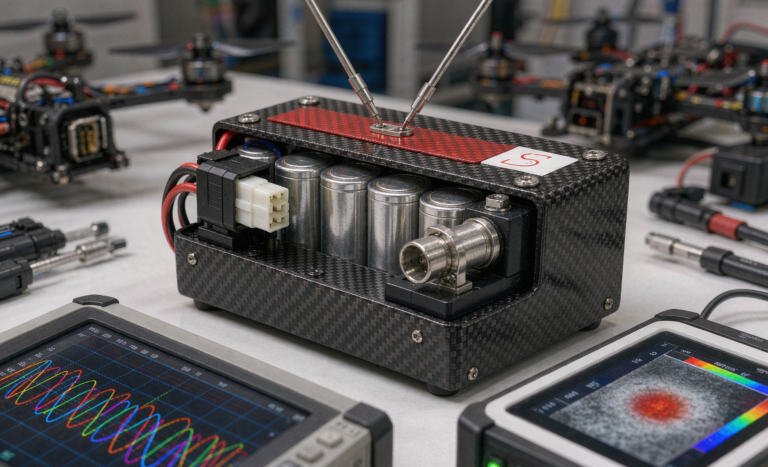
Defect detection on a blade — leading-edge erosion, lightning damage, de-bonding, surface cracking — requires the airframe to hold position within a few centimeters for minutes at a time. That stability is partly the flight controller, but it is also the battery. Under sustained hover draw, cell voltage sags; if one cell sags faster than its neighbors, the BMS trips and the mission ends mid-blade, sometimes with the airframe too close to the surface to recover cleanly. I specify cell-level balancing with a tight 20 to 30 millivolt inter-cell delta limit, and I bench-test every pack at 1.5C continuous for 20 minutes before release. A pack that holds its voltage curve under hover load is worth more than 10 percent extra raw capacity that collapses the moment the rotors spin up.
Running a Full Daily Inspection Tour
A wind farm is not one turbine, it is forty or four hundred. The logistics of a daily tour are where battery planning actually pays off. I stage packs in three zones: charged-and-warm, in-flight, and cooling. A crew inspecting 12 onshore turbines at 0.35 kWh each needs about 4.2 kWh of usable energy plus the 30 percent reserve rule, so roughly six 12S 22,000 mAh packs rotated through two six-channel chargers (~1 kW each) keeps one airframe flying all day. Charging math is unforgiving: a 0.98 kWh pack at 1C takes about an hour, so two chargers running six channels means you are continuously topping the cooling zone to feed the next flight.
FIFO rotation by serial number prevents one pack from being over-cycled while another sits fresh, and it makes the maintenance log honest. Storage discipline matters between tours: I hold packs at 3.80 to 3.85 V per cell, never leaving them full or empty overnight. Puffed cells, a 2x rise in internal resistance over baseline, or a persistent 50 mV delta retire a pack immediately — on a 130-meter tower you do not want the first failure to be yours.
Safety, Transport, and Field Compliance on Wind Farms
Wind sites add compliance layers a normal survey never sees. Packs move by service vehicle across rough access roads and, offshore, by crew-transfer vessel, so mechanical ruggedization and secure containment are non-negotiable. Every pack we ship meets UN38.3 (tests T.1 through T.8) and IEC 62133-2:2017, and for transport we keep state-of-charge at or below 30 percent per IATA rules. Field crews carry packs under FAA and EASA limits of 100 to 160 Wh per cell group, and we label UN3480/UN3481 as applicable. On offshore decks, IP-rated enclosures and corrosion-resistant connectors survive salt spray that would eat a bare pack in a season, and we keep packs out of direct weather during the laydown-to-launch handoff.
A custom battery solution for Blade-Inspection Fleets
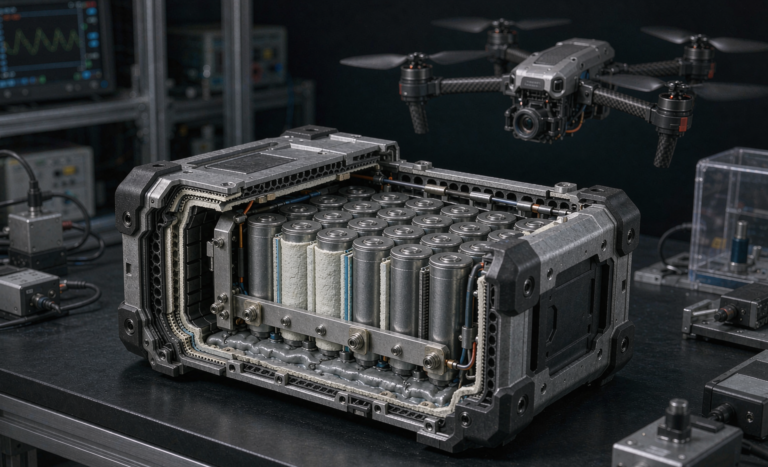
No two inspection programs are identical, and off-the-shelf packs rarely fit both the airframe and the tour rhythm. A proper custom battery solution here starts from the mission profile — hub height, blades per turbine, turbines per day, ambient temperature range, onshore versus offshore — and works backward to cell count, capacity, and thermal design. For a Northern European offshore operator we built 12S NMC packs with integrated pad heaters and IP54 enclosures; for a Highland onshore crew we built LFP packs optimized for 300-cycle seasons with aggressive balancing. The engineering constant is the same across both: match the pack to the climb-and-hover duty, not to a brochure and not to a generic drone specification. When a program scales to a fleet, the pack becomes the constraint that decides how many turbines a day you can honestly promise a client.
Frequently Asked Questions
How many wind turbines can one drone battery inspect?
With a 12S 22,000 mAh pack (~0.98 kWh) and a 30 percent reserve rule, expect two to three onshore turbines per pack in mild weather, dropping to one in sub-zero conditions once capacity fade is accounted for. Plan packs per turbine, not per flight, and add the gust overhead on exposed sites.
Does cold weather really cut drone battery capacity that much?
Yes. Li-ion delivers about 85 percent of rated capacity at 0 °C, 70 percent at -10 °C, and 55 to 60 percent at -20 °C. Hub-height wind-chill makes this the single biggest day-to-day variable on a wind farm, so I insulate or heat the pack and derate capacity in the flight plan rather than relying on ground-level forecasts.
NMC or LFP for blade inspection drones?
NMC for maximum hover margin on occasional single-day jobs; LFP for daily fleet tours where 2,000 to 4,000 cycles beat raw energy density on lifetime cost. Both must pass UN38.3 and IEC 62133-2, and both need a BMS tuned for sustained hover draw.
What safety standards apply to these batteries?
UN38.3 (T.1–T.8) and IEC 62133-2:2017 are the factory baseline; transport follows IATA 30 percent SoC and FAA/EASA 100–160 Wh carry-on limits, labeled UN3480/UN3481 as applicable. Offshore deployments add IP-rated enclosures for salt-spray resistance.
How should packs be stored between inspection tours?
Hold at 3.80 to 3.85 V per cell, rotate FIFO by serial, and retire any pack showing puffing, 2x baseline internal resistance, or a persistent 50 mV inter-cell delta. Keep spares warm and partially charged, never full and never empty, and log every cycle so the maintenance schedule is real.