Drone Battery Safety for Inspection UAVs
Why Inspection UAVs Demand a Different Safety Standard
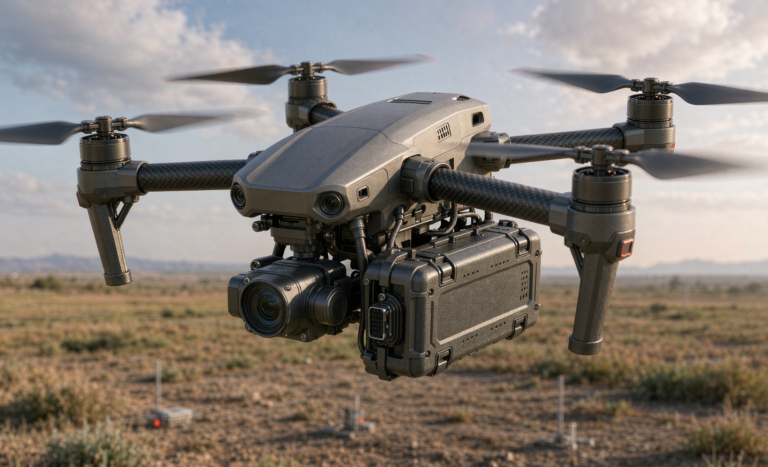
When I started designing power systems for industrial aircraft at Horizon Power, the first lesson I learned was that a consumer quadcopter and an inspection drone are not the same machine. A toy can fall into a bush; an inspection UAV typically operates 40 to 120 meters above live electrical infrastructure, chemical plants, or open water. The moment a cell fails up there, you cannot land gently and swap a pack. That reality is why drone battery safety inspection uavs has become a dedicated engineering discipline rather than a footnote in the user manual.
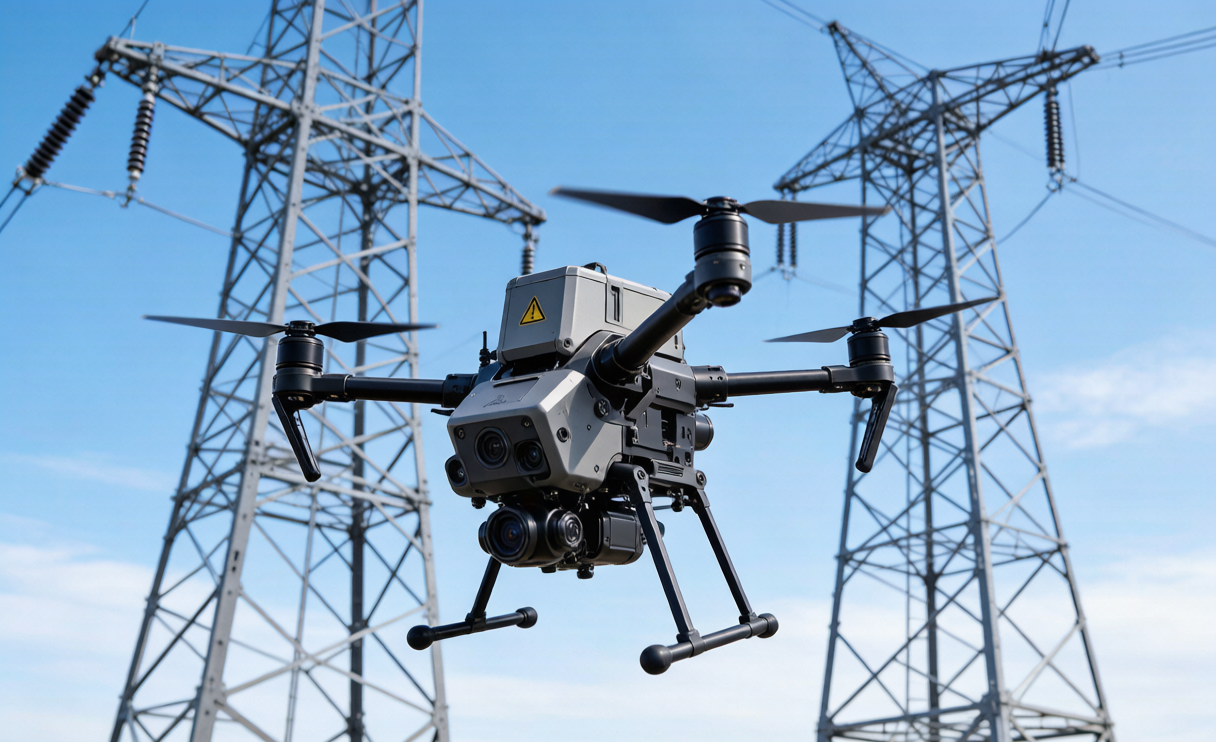
In my field tests with utility clients, the average inspection mission runs 28 to 45 minutes of continuous hover, often in ambient temperatures from -10°C in mountain substations to 48°C on desert pipeline routes. A standard drone lithium battery that performs perfectly on a calm afternoon over a park can degrade unpredictably under those duty cycles. The safety margin has to be engineered in, not hoped for.
The core risk is energy density. We pack 150 to 400 Wh into a pack small enough to lift, and that same energy, if released uncontrolled, is what starts fires. Everything below comes back to one goal: keep that energy exactly where we want it, for the entire mission and every charge cycle after.
Cell Chemistry and Intrinsic Safety: Li-ion vs. LiPo for Drones
Most engineers asking me to spec a lithium battery for an inspection airframe start with the LiPo vs. Li-ion question. Both are lithium-based, but their failure modes differ in ways that matter at altitude.
- LiPo (Lithium Polymer): High discharge capability and excellent power-to-weight, which is why racing and heavy-lift drones love them. The trade-off is a softer pouch that is more vulnerable to puncture and swelling. A swollen LiPo on an inspection drone is a grounded drone.
- Li-ion (cylindrical, e.g. 18650 / 21700): More structurally robust, better cycle life, and a smaller chance of catastrophic rupture. For long-range corridor inspection, this is usually my recommendation.
- LiFePO4: Lower energy density but outstanding thermal stability. For ground-based inspection support equipment and short-hop tethered UAVs, it removes most thermal-runaway risk entirely.
For a typical power-line inspection UAV, I usually settle on high-rate 21700 Li-ion cells with a certified drone battery enclosure. You give up a little pack weight margin but gain a measurable safety cushion that pays for itself on the first hot day.
Thermal Runaway: How It Starts and How We Stop It
Thermal runaway is the boogeyman of every drone lithium battery program. It begins when a single cell exceeds roughly 130°C to 150°C, releasing heat and flammable electrolyte vapor faster than the pack can shed it. One cell ignites its neighbor, and the chain reaction is self-sustaining.
In my lab, the triggers we see most often are:
- Internal short from manufacturing debris or dendrite growth after deep over-discharge.
- External puncture during a hard landing on rough terrain.
- Over-charge beyond 4.25 V per cell, usually from a faulty charger.
- Sustained high C-rate discharge in high ambient heat with poor airflow.
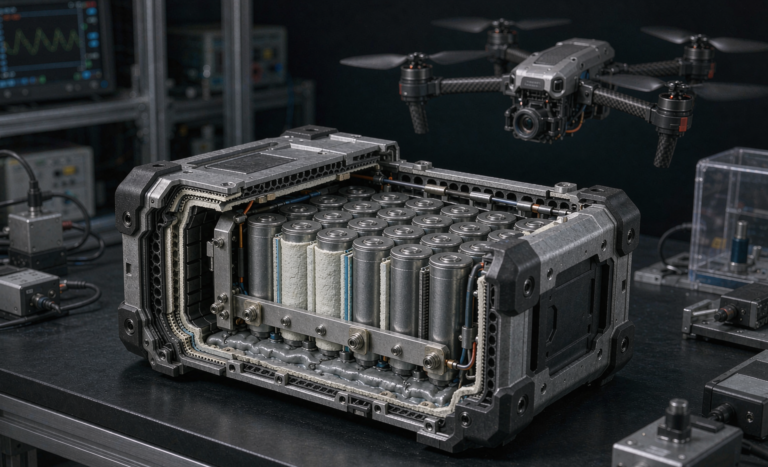
Stopping it is layered. First, we select cells with ceramic-coated separators that resist shrinkage. Second, we build the lithium battery pack with thermal barriers between parallel groups so a single failure does not cascade. Third, the battery management system watches cell temperature continuously and cuts the load the instant a 3°C-per-second rise is detected. For inspection fleets, that trip wire is the difference between a cancelled flight and a fire report.
Certification and Compliance: UN38.3, IEC 62133, FAA and EASA
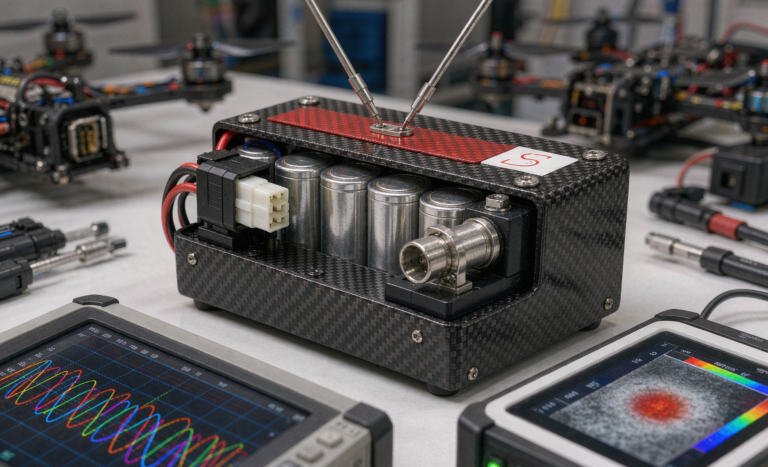
Safety on paper matters as much as safety in the air, especially when inspection drones cross borders with their batteries. Any drone battery we ship must clear UN38.3, the transport simulation that includes altitude, thermal, vibration, shock, and crush testing. Without that test report, an inspector cannot legally carry the pack on a commercial flight to a site.
For the cell and pack design itself, IEC 62133 governs safety requirements for portable sealed secondary cells, covering short-circuit, over-charge, and forced-discharge protection. In the field, aviation authorities set the operational rules: the FAA in the United States and EASA in Europe both treat lithium batteries as hazardous materials subject to Part 107 (FAA) and EU 2019/945 (EASA) constraints on carriage and operation.
I tell every client the same thing: treat the certificate as a design input, not a sticker you buy at the end. When we build a custom battery solution for an inspection airframe, we run the compliance test plan in parallel with the prototyping, so there is never a surprise at certification time.
Battery Management Systems and Real-Time Monitoring
A modern inspection UAV lives or dies by its BMS. The BMS on a professional drone lithium battery is not just a voltage meter; it is a flight-safety computer. At Horizon Power we specify:
- Per-cell voltage monitoring with 10 mV resolution.
- Dual independent temperature sensors, one at the pack center and one near the discharge connector.
- Auto-balancing to keep cell mismatch under 20 mV across the pack’s life.
- Telemetry uplink so the ground station sees battery state, not just the pilot’s estimate.
The single most useful feature for drone battery safety inspection uavs is a conservative state-of-charge (SoC) floor. We program a hard return-to-home at 25% remaining and a forced landing at 15%, calibrated against real hover current, not the manufacturer’s optimistic label. On a windy tower inspection, that buffer has brought more than one drone home that would otherwise have dropped into a substation.
Field Handling, Storage, and Transport Best Practices
Even a perfectly engineered lithium battery fails if handled carelessly on site. After watching dozens of field crews, I reduce safe handling to a short checklist:
- Visually inspect every pack before flight for swelling, punctures, or scorched connectors.
- Charge inside a fire-resistant bag, never unattended, with a balance charger set to the correct cell count.
- Store at 30% to 50% SoC in a cool, dry place; never leave a fully charged pack baking in a vehicle at 60°C.
- Transport by air only in UN38.3-certified packaging with the required hazard marking.
- Quarantine any pack that has been in a crash, even if it still reads voltage, until it is tested or recycled.
For operators running a custom battery solution across a fleet, I also recommend a simple logging habit: record cycle count and internal resistance per serial number. When a pack’s resistance climbs 30% above its birth value, retire it before it retires your drone.
Common Inspection Scenarios and Their Battery Demands
Not every mission stresses a drone lithium battery the same way, and matching the pack to the job is the practical heart of drone battery safety inspection uavs. In my consulting work I group inspection programs into four profiles, each with a distinct power requirement.
- Power-line corridor inspection: Long continuous hover under direct sun. The pack needs generous thermal margin and a BMS tuned for sustained mid-C discharge. This is where cylindrical Li-ion earns its keep.
- Offshore wind and oil & gas: Salt-laden air is corrosive and a ditching means total pack loss. We spec sealed enclosures with conformal-coated electronics and recommend a custom battery solution with redundant vent paths that will not ingest spray.
- Pipeline and railway survey: These are range missions, often 10 km or more of linear flight. Capacity matters more than peak burst, so we raise the Ah rating and accept a slightly heavier pack.
- Solar farm and rooftop checks: Short hops with frequent landings. Lighter, smaller packs are fine here, and the lower_energy duty cycle extends service life substantially.
Choosing the right profile upfront avoids the two most expensive failure modes I see: under-spec packs that overheat on hot corridors, and over-spec packs that add weight the airframe was never designed to lift safely. A lithium battery sized to the actual mission, not to a catalog number, is the safest battery you can fly.
Frequently Asked Questions
What is the safest drone battery chemistry for inspection UAVs?
For most inspection missions, high-quality cylindrical Li-ion (21700) cells offer the best balance of safety, cycle life, and weight. If your flights are short and the airframe is tethered or ground-support, LiFePO4 removes almost all thermal-runaway risk. A racing-style LiPo is the least forgiving choice for critical infrastructure work.
How do I store drone lithium batteries between inspection flights?
Store them at 30% to 50% state of charge, in a cool dry location away from direct sun, ideally in a fire-resistant container. Avoid leaving packs in a hot vehicle or near heat sources. Check charge every few weeks, because a slowly self-discharging pack that drops below the BMS cutoff can develop damaging dendrites.
Can I fly inspection drones with a slightly swollen battery pack?
No. Any visible swelling means the cell has already vented internally and lost its safety margin. A swollen drone battery must be quarantined and recycled through a proper lithium battery disposal channel, never flown and never punctured.
How often should inspection UAV batteries be replaced?
Replace based on condition, not a fixed date. Track internal resistance and capacity; retire a pack when resistance rises about 30% above its initial value or capacity falls below 80% of rated. In heavy daily inspection use, that often means 300 to 500 cycles, but a lightly used backup pack can last years if stored correctly.
Conclusion
Reliable drone battery safety inspection uavs is never a single feature; it is cell selection, pack architecture, certification, BMS intelligence, and disciplined field handling combined. At Horizon Power we engineer each layer so that inspection fleets can keep flying over the infrastructure that matters most. If your program needs a tailored custom battery solution built around your specific airframe and duty cycle, our engineering team can spec, test, and certify a pack that meets both your mission profile and the regulatory standard you operate under.