Drone Battery Design for Inspection UAVs: Sealing,
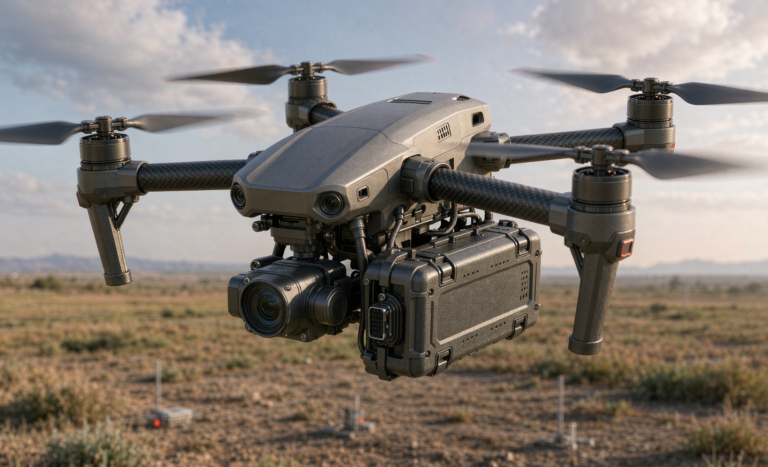
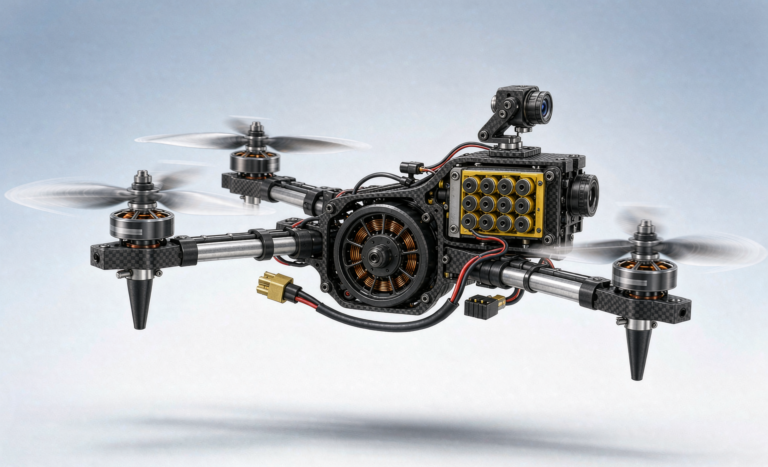
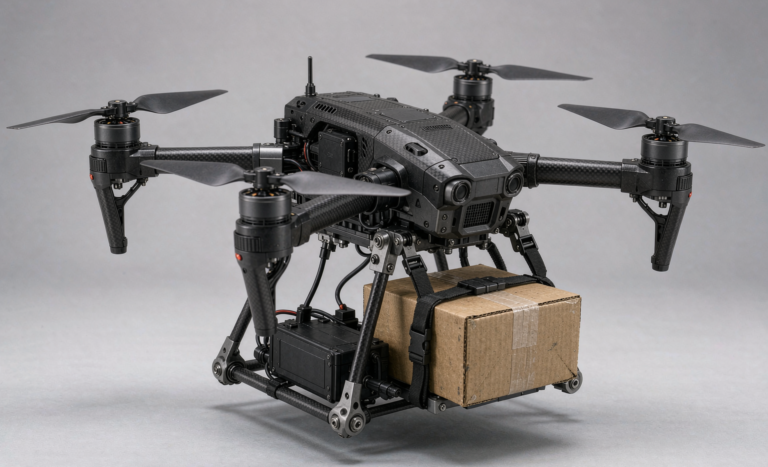
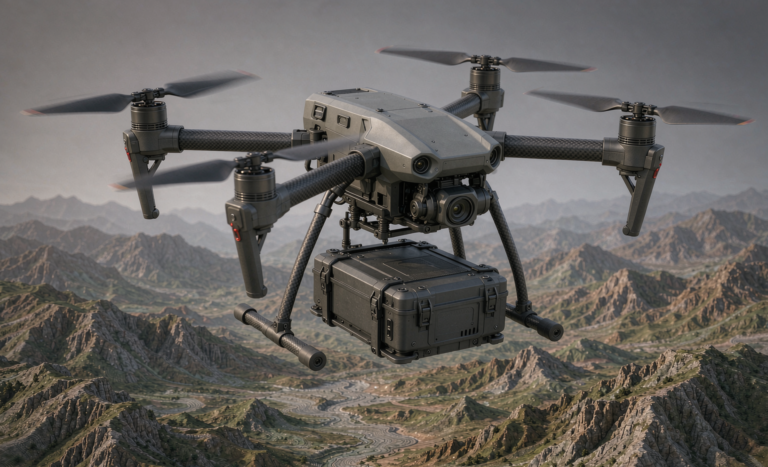
When people picture a drone battery, they usually imagine a clean lab or a smooth race track. In my fifteen years engineering drone lithium battery packs at Horizon Power, the toughest duty cycle I have ever had to design for is the inspection UAV. These aircraft do not fly over manicured fields. They crawl through offshore wind-turbine nacelles, hover inside petrochemical flare stacks, map sewer tunnels, and ride the salt-laden decks of survey vessels. Every one of those environments is actively trying to destroy the lithium battery inside the airframe. The difference between a pack that lasts 400 flights and one that corrodes open in six weeks is almost never the cells themselves. It is the sealing, the corrosion strategy, and the ingress protection wrapped around them. This is the part of drone battery design inspection uavs work that most spec sheets quietly skip.
Why Inspection Sites Are the Harshest Environment a Drone Battery Will Ever See
An inspection UAV is a mobile sensor platform that follows the corrosion it is sent to find. Offshore wind blades and jackets live in a C5-M (marine) atmosphere per ISO 12944-2, where chloride deposition can exceed 500 mg/m²/day. Petrochemical sites layer in H₂S, and sugar or fertilizer plants add acidic dust. Underground and sewer inspection adds permanently saturated, sometimes methane-rich air. A standard consumer drone battery built with a simple shrink-wrap finish and bare busbars will show red rust on its nickel strips within a month in that air.
The failure mode is not dramatic. It is cumulative. Chloride ions migrate through microscopic gaps, condense on cold surfaces during the nighttime cool-down on a ship deck, and initiate crevice corrosion at every seam. Sense wires wick moisture along their insulation. The result is a slow, silent rise in direct-current internal resistance (DCIR) and, eventually, an intermittent open that grounds an expensive inspection mission mid-flight. My job as an engineer is to stop that chain at the enclosure.
The Sealing Strategy: IP Rating, Gaskets, and Continuous Enclosure Seams
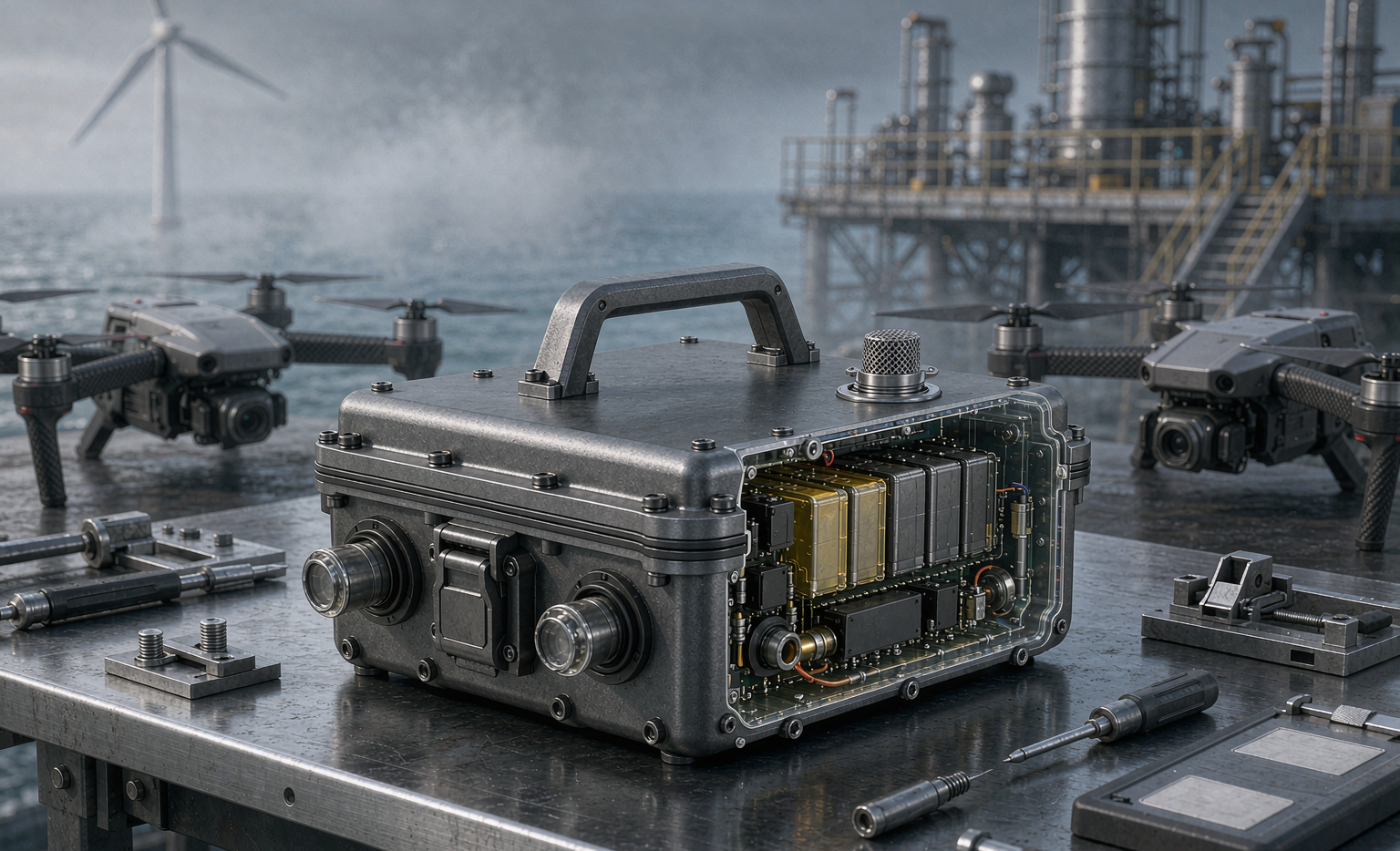
For inspection packs I specify a minimum of IP67 (dust-tight, immersion to 1 m for 30 minutes) and routinely design to IP68 for rotor-wash splash and brief submersion in bilge water. The rating is only as good as the seam that earns it. I use a continuous, compression-molded gasket rather than a cut-and-glued strip, because glued butt-joints are exactly where leaks start. The preferred material is solid silicone or EPDM with a specified compression set under 25% after 70 h at 125°C, so the seal still recovers after years of thermal cycling.
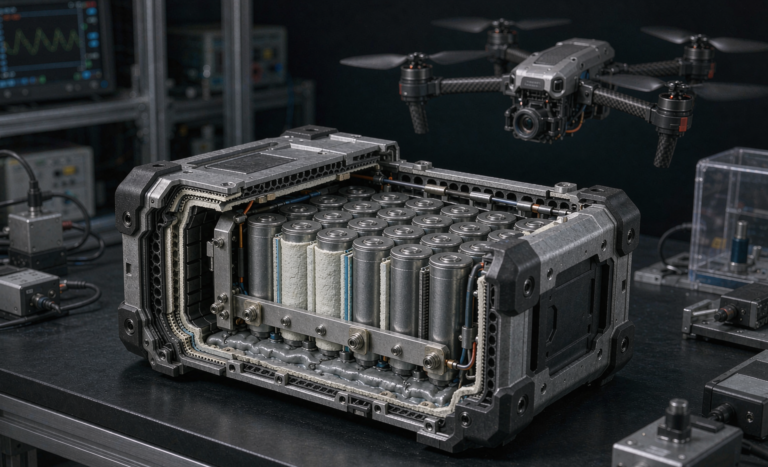
Threaded pass-throughs for the main power connector and the balance/telemetry harness get their own IP-rated glands. I avoid through-bolting the enclosure with exposed internal nuts; every fastener is either blind or sealed with a captive o-ring. The goal is a monocoque shell where the only intentional opening is the hydrophobic vent, and even that is filtered. A well-executed custom battery solution here will pass a 30-minute 1 m immersion test with less than 0.1 g of water uptake measured by weight gain.
Corrosion Resistance: Material Selection and Surface Treatment
Once the shell is sealed, the next front is the metal that remains exposed at connectors and structural hardware. For the housing I use 6061-T6 aluminum with a hard-anodize coating of 25–50 µm (Type III per AMS-A-8625), which resists the salt-fog test of IEC 60068-2-52 severity 4 for 28 days with no white corrosion. All external fasteners are A4-316 stainless or titanium. Nickel-plated copper busbars are specified only when they sit under the sealed cover; any busbar exposed to the airframe interior gets a thin parylene or epoxy edge-coat.
Crevice corrosion is the silent killer, so I eliminate crevices by design. Lap joints are bonded with structural adhesive rather than left as mechanical-only interfaces, and any two dissimilar metals are either isolated by a non-conductive gasket or deliberately chosen to be galvanically compatible. A drone lithium battery that survives a salt-fog chamber but fails at a steel-aluminum lap joint has not actually been designed for the site.
Pressure Equalization and Hydrophobic Venting
A sealed pack is not the same as a pressure-tight pack. Lithium cells breathe slightly with temperature and altitude, and a hard-sealed enclosure will either balloon at altitude or suck moisture in through its weakest seal on the way back down. The standard engineering answer is a pressure-equalization vent built around a Gore-Tex-style ePTFE membrane: it passes air and equalizes pressure, but blocks liquid water and particulates down to its rated pore size. I pair that membrane with a hydrophobic and oleophobic treatment so oil mist from a compressor deck cannot wet it out.
The vent also doubles as a safety relief path during a thermal event, which keeps it inside the UN38.3 T.8 overcharge and T.6 crush envelope logic. Choosing pore size is a trade: too coarse and you lose IP rating; too fine and you restrict equalization. For inspection duty I land at 0.2–0.45 µm pores with a rated ingress of IP67 behind the membrane.
Conformal Coating and Internal Moisture Control
Even a perfect shell sees trace humidity over a multi-year life, so the PCB-assembly side of the pack gets a conformal coat. I use a UV-curable acrylate or parylene-C on the BMS and protection board, applied to a thickness of 25–75 µm and verified to IPC-CC-830 Class 3. The coating is not cosmetic; it is what keeps a single condensed droplet from bridging two sense lines and triggering a false disconnect.
Internal moisture is managed two ways. First, a desiccant pouch sized for the free-air volume is sealed into the shell at build, holding internal relative humidity below 15% for the first service interval. Second, the cell envelope itself is wrapped and edge-sealed so that even if the pack is opened for forensic teardown, the cells carry their own secondary barrier. This layering is why a properly built lithium battery for inspection can be pulled from a flooded-storage case and still cycle.
Validation: Salt-Fog, Dust, and Immersion Testing
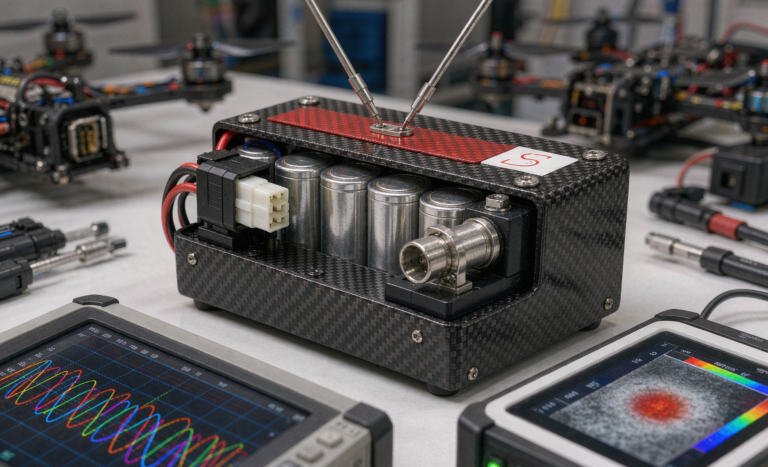
Claims mean nothing without a test plan. My qualification sequence for an inspection drone battery runs the IEC 60529 immersion and dust proofs, the IEC 60068-2-52 salt-fog exposure (severity 4, 28 days, with periodic functional checks), the MIL-STD-810H Method 510.6 blowing-dust and 507.6 humidity profiles, and a 48-hour condensed-water soak at 40°C. After each stress I measure DCIR on a 4-wire Kelvin fixture; a healthy 6S2P 21700 pack reads 6–9 mΩ at the terminals, and I retire packs that drift above 12–14 mΩ. Capacity must stay above 95% of nameplate and there must be zero measurable water ingress by weight.
We also run an accelerated corrosion test borrowed from RTCA DO-160 Section 14.2.1, because aviation-adjacent inspection clients ask for it. The point is not to collect a certificate; it is to find the leak path before the customer does, on a turbine at 90 meters.
Designing the Pack as a Custom battery solution for Site-Specific Duty
No two inspection programs share the same hazard. A sewer-mapping pack needs IP68 and methane-safe electronics; an offshore-blade pack needs C5-M corrosion resistance and a cold-start capability at 0°C deck temperatures; a flare-stack pack needs H₂S-tolerant seals. That is why this work is always delivered as a custom battery solution rather than a catalog SKU. We start from the site’s ISO 12944 corrosivity class and the customer’s immersion and temperature envelope, then select housing, gasket, coating, and vent accordingly.
The commercial logic is simple. A sealed, corrosion-rated pack costs perhaps 18–30% more than a bare pack at the bench, but it converts a 6-week field life into a 2–3 year field life and removes the flight-abort and crash-risk cost of an in-mission failure. For a fleet running ten airframes, that delta pays for itself inside a single quarter of avoided downtime. The drone lithium battery is not a consumable you swap blindly; it is a flight-critical asset that has to be trusted at 90 meters over cold water.
Frequently Asked Questions
What IP rating do inspection drone batteries need?
For most industrial inspection duty I specify a minimum of IP67, and IP68 where rotor wash, bilge splash, or brief submersion is expected. The rating must be earned by a continuous compression gasket and sealed pass-throughs, not asserted by a sticker. A credible drone battery design inspection uavs program validates the rating with a weighted water-immersion and dust test rather than relying on the enclosure drawing.
How do you prevent corrosion in coastal and offshore inspection?
Three layers: a hard-anodized aluminum shell (Type III, 25–50 µm), 316 stainless or titanium external hardware, and the elimination of crevices by bonded rather than mechanical lap joints. We then confirm with the IEC 60068-2-52 salt-fog test at severity 4 for 28 days and watch DCIR for any drift.
Can a sealed drone battery be repaired or serviced?
A truly sealed pack is a closed unit, which is why we build in condition-based retirement instead of field teardown. During the custom battery solution program we assign each pack a DataMatrix genealogy and retire it on DCIR rise or capacity fall rather than opening it. That keeps the ingress barrier intact for the whole service life.
How long does a corrosion-resistant pack last in the field?
In C5-M marine or petrochemical inspection, a properly sealed and coated pack typically runs two to three years of active duty versus six to ten weeks for an uncoated consumer pack. Life is governed by the weakest seal and by the corrosion strategy, not by the cells, which is why the enclosure engineering dominates the design.
What standards apply to sealed inspection drone batteries?
The safety baseline is UN38.3 (T.1–T.8), IEC 62133-2, and the air-transport limits of FAA/EASA at 100–160 Wh. The environmental side adds IEC 60529 for IP rating, IEC 60068-2-52 for salt fog, MIL-STD-810H Methods 510.6 and 507.6 for dust and humidity, and RTCA DO-160 Section 14.2.1 for aviation-adjacent corrosion exposure.