Lithium Battery Safety for Power Tools
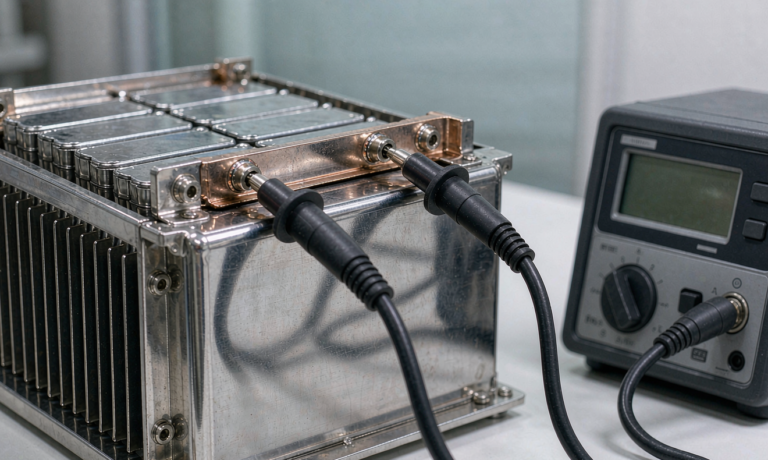
Over the last twelve years as a senior lithium battery engineer at Horizon Power, I have torn down, load-tested, and field-tracked hundreds of cordless tool packs — from compact 12v lithium battery drill drivers to 40V outdoor equipment. The single question I hear most from workshop owners and procurement managers is not “how much runtime do I get”, but “how do I keep this thing from catching fire”. That question sits at the heart of lithium battery safety power tools, and the answer is rarely a single component. It is the combination of cell chemistry, a disciplined battery management system, certified manufacturing, and the daily habits of the person holding the tool.
In this guide I will walk through what actually causes lithium cells to fail inside power tools, why the BMS matters more than marketing specs, which compliance marks prove a pack was built responsibly, and the field rules I personally enforce on every job site. My goal is to give you engineering-grade clarity rather than the usual safety-brochure platitudes.
Why Lithium Cells Actually Fail in Power Tools
A lithium battery does not fail because it is “inherently dangerous”. It fails when energy stored in the cell is released faster than the design can dissipate it — a chain reaction we call thermal runaway. Inside a typical 18650 or 21700 cell, a separator keeps the anode and cathode apart. If that separator is punctured by a dendrite, deformed by a drop, or melted by over-temperature, the cell shorts internally and self-heats. At roughly 130°C the electrolyte begins to decompose, and the reaction feeds itself.
Chemistry choice changes the risk profile dramatically. NCM (nickel-cobalt-manganese) cells deliver high energy density, which is why they dominate cordless tool lines — but they are less forgiving. An LFP battery (lithium iron phosphate) runs at a lower voltage plateau, resists thermal runaway to around 270°C, and tolerates abuse far better, at the cost of roughly 15–20% less energy per kilogram. For most professional tool packs I recommend NCM where weight and power density are critical, and LFP where safety margin and cycle life outrank raw runtime.
- Mechanical abuse: drops, crushed housings, and loose cells that rattle and breach the separator.
- Electrical abuse: over-charge above 4.25V/cell or over-discharge below 2.5V/cell, both of which accelerate dendrite growth.
- Thermal abuse: charging a hot pack straight off a roof in summer, or storing tools in a locked car at 60°C.
The Battery Management System Is the Real Safety Device
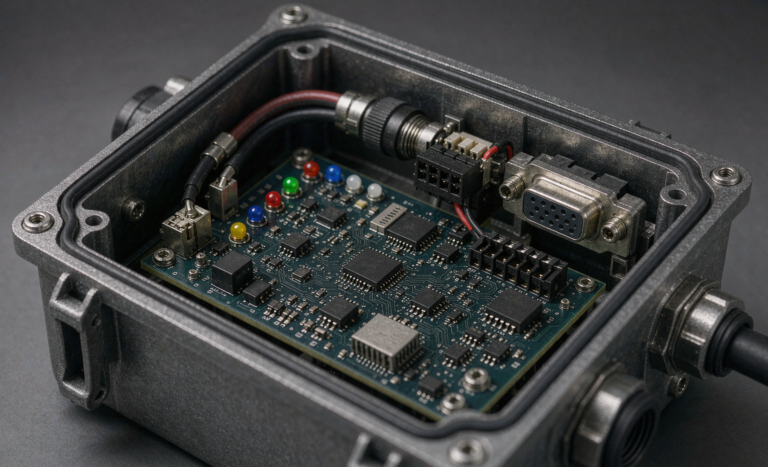
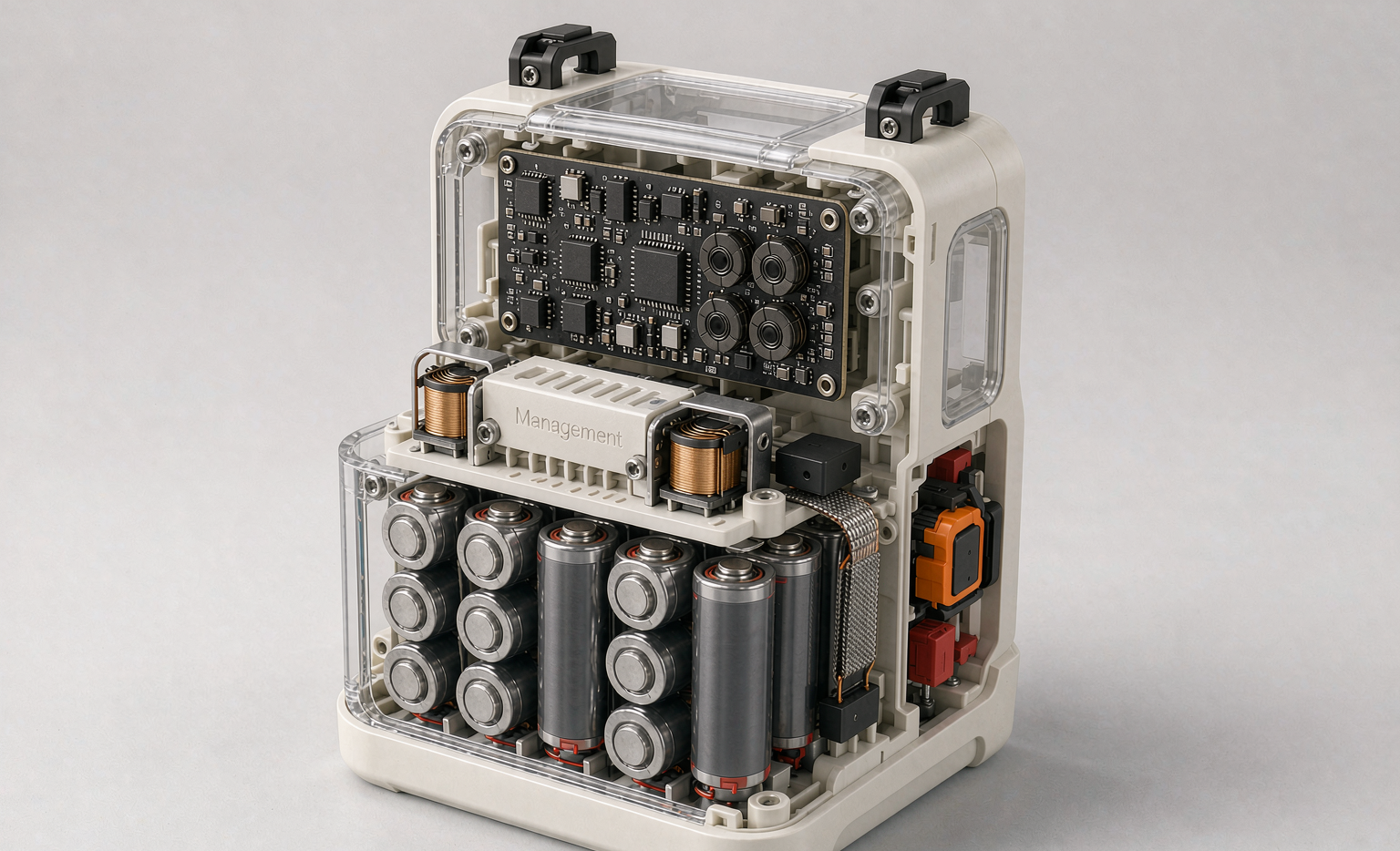
When people ask me about lithium battery safety power tools, I tell them the cell is only half the story. The lithium battery pack‘s brain is the Battery Management System (BMS), a small PCB that monitors every series group. A competent BMS enforces five protections continuously:
- Over-voltage protection (OVP): disconnects the charger before any cell exceeds its safe ceiling.
- Under-voltage protection (UVP): cuts load before deep discharge damages the cell.
- Over-current protection (OCP): opens the path during a stall or short circuit.
- Over-temperature protection (OTP): halts charge or discharge outside the 0–45°C charge / −20 to 60°C discharge window.
- Short-circuit protection (SCP): reacts in milliseconds to a hard fault.
A good BMS also performs passive cell balancing, nudging the highest cells down during charge so the pack ages evenly. In my teardowns, the packs that failed prematurely were almost always the ones where a cost-cutting buyer removed the balancing resistor or used a clone protection IC. As a lithium battery manufacturer, we treat the BMS as a safety-critical component, not a commodity.
Compliance Marks That Prove a Pack Was Built Responsibly
Specifications on a sticker prove nothing. Certification does. When I qualify a new lithium ion battery platform for a client, these are the marks I require before a single unit ships:
- UN38.3: the international transport testing standard. It subjects cells and packs to altitude simulation, thermal, vibration, shock, external short, impact, overcharge, and forced-discharge tests. No UN38.3 report, no shipment — full stop.
- IEC 62133: the safety standard for portable sealed secondary cells and batteries containing alkaline or non-acid electrolytes. It covers short-circuit, overcharge, and forced-discharge resilience.
- UL 2595 / IEC 62619: applicable to battery systems in appliances and industrial stationary use, covering the pack-level safety architecture.
- CE / FCC: confirm electromagnetic compatibility so the BMS is not tripped by tool motor noise.
If a vendor cannot show you a valid UN38.3 and IEC 62133 dossier, walk away. I have rejected entire container loads on the strength of a missing test report alone.
Charging Habits That Extend Life and Prevent Fires
Most pack failures I investigate trace back to charging, not usage. The rules below are what I enforce in our own workshop:
- Use the original charger. Chargers are tuned to the pack’s cell count and chemistry. A mismatched charger is the fastest route to over-voltage.
- Never charge a hot pack. Let a tool that just finished a heavy cut cool to room temperature before docking it. Charging above 45°C permanently stresses the separator.
- Store at partial state of charge. For seasonal tools, leave the pack at 30–60% SOC. A fully charged pack stored for months at 25°C ages faster and is more volatile.
- Do not “trickle” indefinitely. Modern chargers stop, but a pack left docked for weeks still self-discharges and re-topps, adding micro-cycles.
- Quarantine swollen packs. A bulging case means gas generation inside the cell. Stop using it, and follow your local battery recycler’s instructions — never puncture it.
Storage, Transport, and Air-Travel Rules
A lithium battery pack that is safe on the bench can become a hazard in a hot trunk or an aircraft hold. The aviation rules are non-negotiable. Under FAA and EASA regulations, spare lithium batteries must travel in carry-on baggage, never checked. A pack under 100 watt-hours requires no airline approval; between 100 and 160Wh you need the carrier’s permission; above 160Wh, air transport is generally prohibited for passengers. I always tape the terminals or keep packs in their original non-conductive cases, and I never ship a damaged or recalled pack by air under any circumstance.
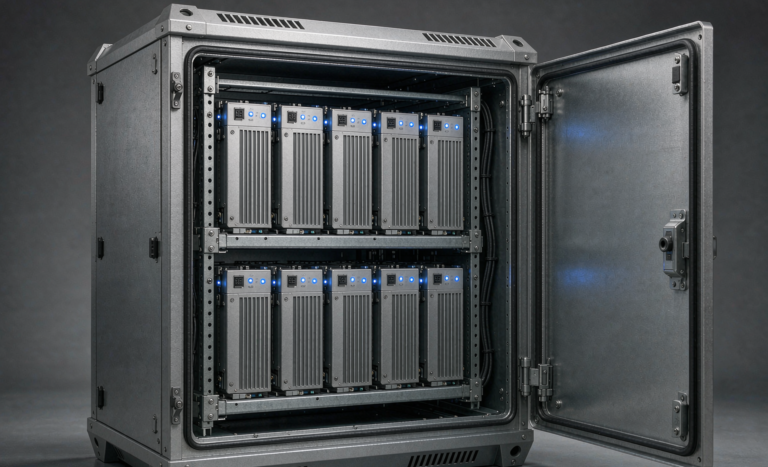
For warehouse storage, I keep inventory at 15–25°C with 45–65% relative humidity, away from heat sources and combustible material. A simple thermal sensor on the racking has saved more than one facility from a silent pack failure escalating overnight.
Choosing a Reliable Lithium Battery Pack
When you spec tools for a crew, the cheapest pack is the most expensive failure you will ever buy. Here is my short checklist for evaluating any lithium ion battery pack:
- Build quality: cells should be spot-welded to nickel strips, not soldered (soldering heats the cell and destroys the seal). Ribbon welds that look like they were done by hand are a red flag.
- Chemistry fit: choose NCM for maximum power-to-weight; choose an LFP battery for longest cycle life and the best safety margin in shared or unmanned sites.
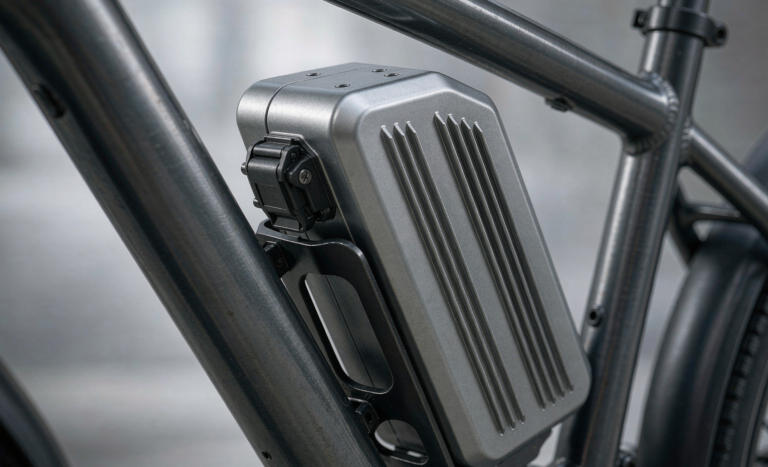
- Voltage class: a 12v lithium battery platform is ideal for light fastening and tight spaces, while 18–21V dominates general trade use and 36–40V serves outdoor and demolition work.
- Traceability: a reputable lithium battery manufacturer will give you batch-level cell traceability and a real test report, not just a logo.
At Horizon Power we build custom lithium battery pack assemblies with certified cells, a protection-grade BMS, and full UN38.3 / IEC 62133 documentation, because for professional users the cost of a single thermal event dwarfs any saving on the bill of materials.
Frequently Asked Questions
Can I leave my power tool battery on the charger indefinitely?
Modern chargers stop at full, but a pack left docked for weeks will micro-cycle as it self-discharges and re-tops. That slowly ages the cells and, in a hot garage, raises risk. I recommend charging to full, then removing the pack and storing it at partial charge.
How do I know a lithium battery pack is starting to fail?
Three early warnings: the pack gets unusually hot during a normal load, runtime drops sharply versus its baseline, or the case shows any swell. Any one of these means you should retire the pack from service and recycle it through a certified channel.
Are LFP tool batteries actually safer than NCM?
Yes, in engineering terms. An LFP battery resists thermal runaway at roughly double the temperature of NCM and tolerates over-charge and deep cycling far better. The trade-off is lower energy density, so LFP suits applications where safety margin and cycle life matter more than minimum weight.
Can I fly with my cordless tool batteries?
Under FAA and EASA rules, spare lithium batteries must be in carry-on luggage with terminals protected. Packs below 100Wh need no approval; 100–160Wh need airline permission; above 160Wh are generally barred from passenger aircraft. Damaged or swollen packs are never allowed on board.