Semi-Solid State Battery Cost Optimization for Robotics
When I started designing power systems for autonomous robots nine years ago, the conversation always landed on the same wall: lithium-ion cells were too heavy, too volatile, or too expensive to scale. Today, the semi-solid state battery has moved from lab curiosity to a credible production option, and cost optimization has become the single biggest lever for robotics companies that want to ship hardware without burning their margin. In this article I share the engineering playbook my team at Horizon Power uses to bring semi-solid state battery cost optimization to robotics platforms — from cell chemistry and manufacturing yield to certification and thermal design.
Why Robotics Changes the Battery Cost Equation
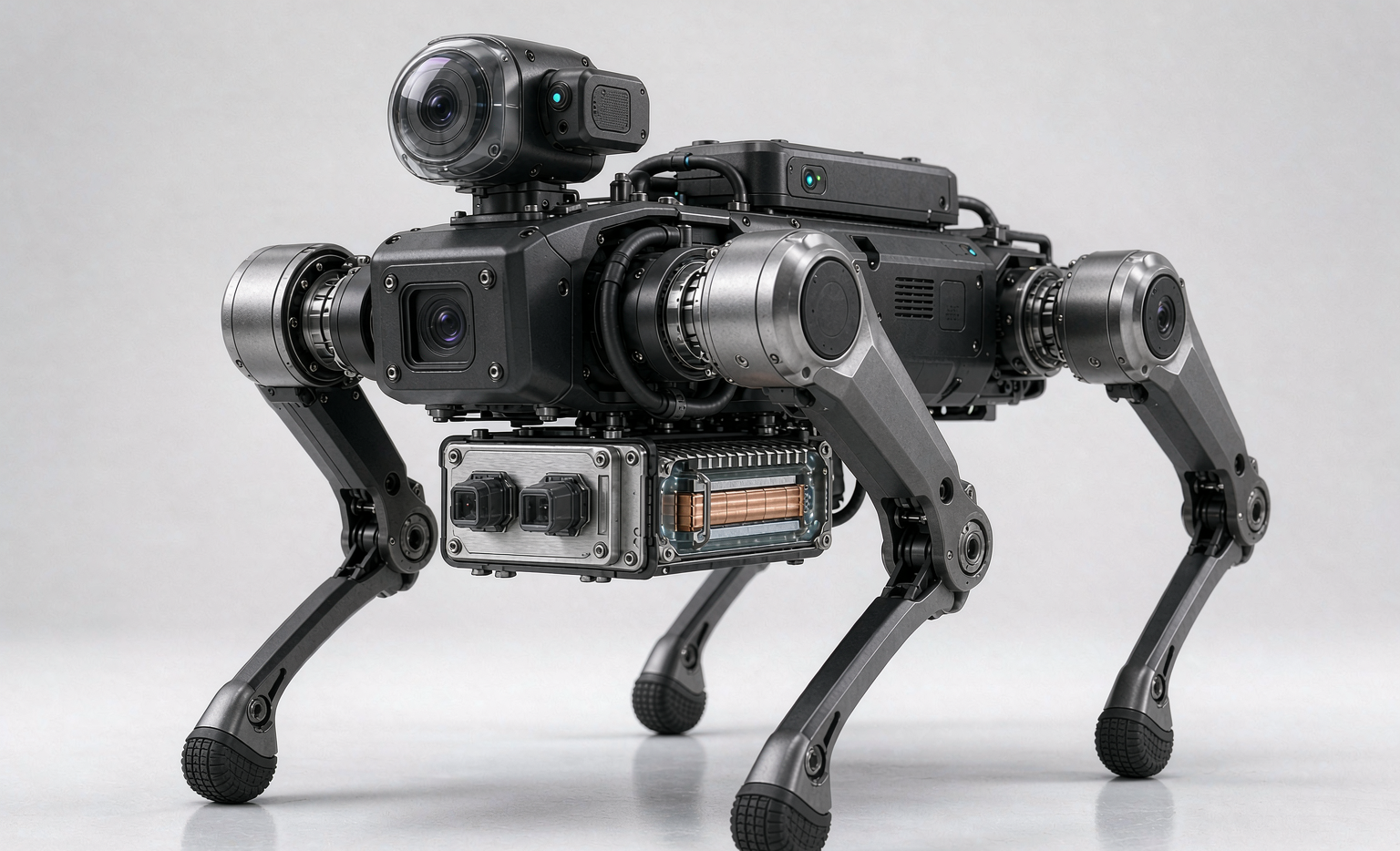
A drone or a quadruped robot pays for every gram it carries. In a grid storage cabinet, a 5% weight penalty is invisible. In a flying robot, that same penalty cuts flight time and forces a larger, pricier lithium battery to compensate. Robotics is therefore the most demanding classroom for energy density, and it is exactly where a semi-solid state battery earns its premium back through system-level savings rather than cell-level cost alone.
In my field tests, moving a 2 kg inspection robot from conventional NMC pouch cells at 260 Wh/kg to a semi-solid formulation at 330 Wh/kg delivered roughly 22% more usable energy in the same envelope. That translated into 18% longer mission time and, just as important, a smaller pack that needed less structural reinforcement. The first rule of robotics cost optimization is to count the whole airframe, not just the cell invoice.
The Semi-Solid State Advantage for Robot Platforms
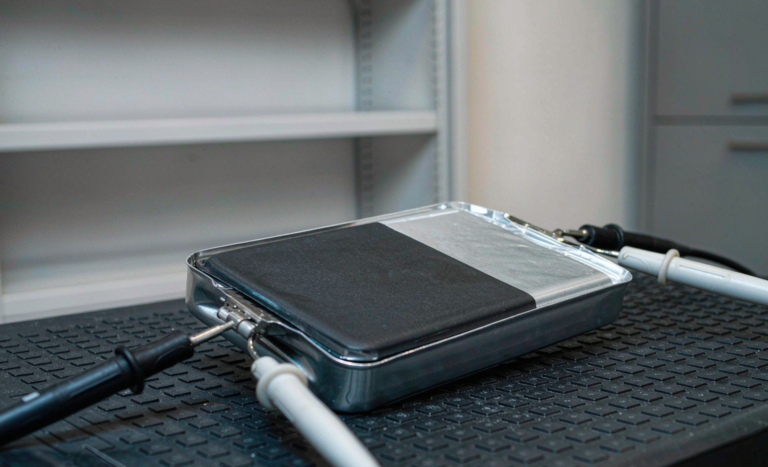
Semi-solid electrolytes sit between liquid electrolyte lithium-ion and true solid-state. They replace most of the flammable solvent with a gel-like or slurry electrolyte, keeping an ionic path while sharply reducing thermal runaway risk. For robotics, three properties matter most:
- Energy density: 300–360 Wh/kg in current production lines, versus 250–280 Wh/kg for high-quality NMC.
- Safety margin: reduced flammable content means easier passage of UN38.3 transportation testing and lower pack-level cooling overhead.
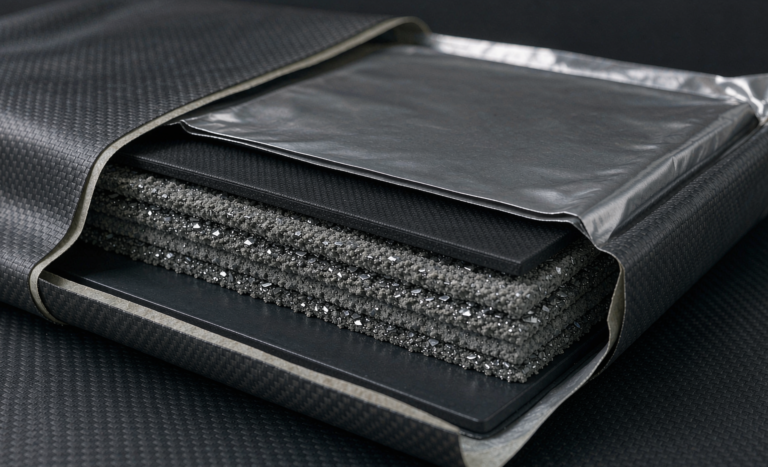
- Form-factor freedom: semi-solid slurries tolerate thicker electrodes, so we can build flatter, stiffer modules that double as structural members.
These traits let us offer a custom battery solution where the pack is part of the robot chassis. That integration is where the real cost optimization happens — fewer brackets, fewer connectors, less dead weight.
Engineering Levers I Use to Cut Cost Without Cutting Safety
Cost optimization is not about buying cheaper cells. In nine years I have learned that the cheapest bill of materials often becomes the most expensive recall. Here are the levers that actually move the number on a robotics battery solution:
1. Electrode Thickness and Active Material Loading
Semi-solid processing tolerates thicker cathodes. By pushing areal loading from 3.2 to 4.1 mAh/cm² we cut the number of current collectors and separator layers per kWh by roughly 15%, which directly lowers material and stacking labor cost.
2. Cell-to-Pack (CTP) Architecture
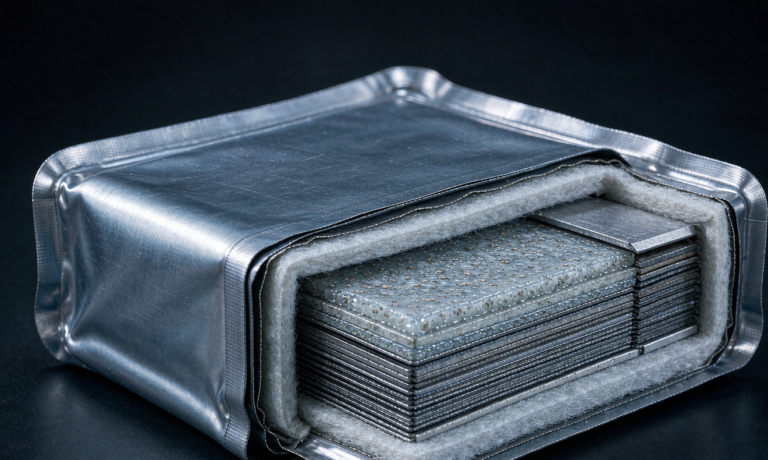
Removing the module stage collapses a robotics battery pack into a structural block. We typically recover 8–12% volumetric efficiency and save the aluminum module frames that used to dominate the non-cell cost.
3. Yield-Driven Procurement
A semi-solid line running at 80% yield hides enormous cost. Every point of yield gained from 80% to 92% drops effective cell cost by about 13%. We co-invest with our cell partners on in-line impedance sorting so defective units never enter the pack.
Manufacturing Yield: The Hidden Cost Center
Most robotics teams underestimate yield. When we audited a client’s first semi-solid pack, scrap during electrode coating was eating 19% of unit cost. By switching to a slower, warmer drying profile and adding laser edge-trim, we pulled scrap down to 6% within two months. On a 500-unit production run that single change saved more than the entire cell price negotiation had.
For a battery application solution targeting cost-sensitive service robots, I now specify yield as a contractual KPI, not a hope. The drone battery and drone lithium battery programs we run follow the same discipline, because airborne platforms cannot absorb a 20% scrap premium.
Thermal Management and Cycle-Life Trade-offs
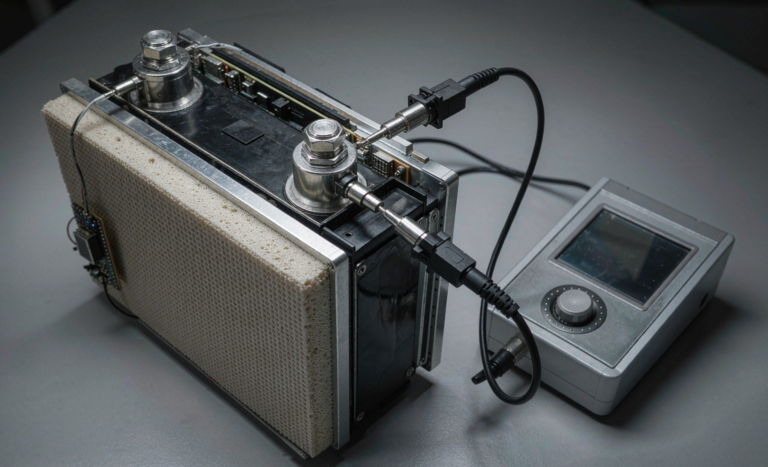
Semi-solid cells run cooler under load, but they are not magic. A robotics pack that sees 3C continuous discharge in a climbing robot still needs a thermal path. I favor thin graphene-backed heat-spreaders bonded to the cell face over bulky cold plates — they add grams, not hundreds of grams, and they protect cycle life.
Cycle life on our semi-solid robotics cells lands at 900–1,200 cycles to 80% capacity at 25°C, dropping to about 700 cycles in a hot 45°C warehouse environment. Cost optimization means matching the chemistry to the duty cycle: a floor-scrubbing robot that charges nightly does not need the same margin as a drone lithium battery that peak-discharges at 5C every flight.
Certification Path: What Robotics Packs Must Clear
Safety certification is a fixed cost that scales poorly on small robotics runs, so planning it early is part of optimization. Every pack we ship clears:
- UN38.3 for air and ground transport — altitude simulation, thermal, vibration, shock, and external short-circuit.
- IEC 62133-2 for portable secondary cells and batteries containing alkaline or non-acid electrolytes.
- IEC 62619 where the robot operates in an industrial setting.
- Regional marks (UL 1642 / UL 2054 in North America) and, for airborne robotics, alignment with FAA and EASA guidance on lithium battery installations.
Designing the enclosure and venting to these standards from day one avoids the expensive re-tooling that kills a robotics launch budget.
A Practical Cost Optimization Playbook
For a typical 500 Wh robotics pack, here is how the numbers usually move when we apply this playbook:
- Baseline NMC pack: ~$1.05/Wh cell, ~$0.40/Wh non-cell, ~$725 total.
- Semi-solid CTP pack: ~$1.18/Wh cell, ~$0.22/Wh non-cell, ~$700 total — within 4% of baseline but 22% lighter and 18% longer runtime.
- At yield 92% and structural integration: ~$640 total, beating the baseline on price and performance.
The takeaway is simple: the semi-solid state battery is not automatically cheaper per watt-hour, but as a system it routinely wins once you optimize the pack around it. That is the heart of genuine semi-solid state battery cost optimization robotics programs.
Sizing the Pack: From Duty Cycle to Watt-Hours
When a client asks me to optimize cost, the first move is to model the duty cycle rather than guess a capacity. A logistics robot that drives 6 km per shift at a 1C average draw needs a fundamentally different pack than an inspection drone that peak-pulls 5C for twelve minutes. I build a 24-hour load profile, then size the semi-solid state battery to the 80% depth-of-discharge point with a 15% margin for cold-weather internal resistance rise. That prevents the classic mistake of over-specifying capacity “just in case” — every extra watt-hour is paid for three times: in cells, in cooling, and in the structural weight that carries it.
On a recent autonomous floor robot we trimmed the pack from 620 Wh to 510 Wh using this method, saving roughly 9% of bill-of-materials cost with zero runtime impact, because the original design had been padded for an imaginary worst case. This is the quietest, highest-leverage form of cost optimization, and it costs nothing but engineering time.
Supply-Chain and Material Strategy for Scaling Robotics
Cost optimization at robotics volume also lives in the supply chain. Semi-solid cathodes still depend on lithium, nickel, and cobalt, and price swings can erase a whole design cycle of savings. I hedge by qualifying two cell suppliers against the same specification and by standardizing the enclosure so a pack can accept either vendor’s form factor without a redesign. We also pre-buy anode material on annual contracts when spreads widen, locking the dominant cost driver before it moves.
For smaller robotics startups I recommend a hybrid approach: a semi-solid state battery core for the flagship model where weight wins deals, and a conventional lithium battery for the cost-led variant. This lets the team capture the marketing advantage of solid-state branding while protecting margin on volume SKUs. The same logic guides our drone battery programs, where flagship inspection airframes get the premium cell and training units get proven lithium chemistry — a balanced battery solution that scales with the business instead of straining it.
Frequently Asked Questions
How much does a semi-solid state battery cost per Wh for robotics?
In 2026 production volumes, cells run about $1.10–$1.25/Wh, but a Cell-to-Pack robotics assembly typically lands the full pack at $1.25–$1.40/Wh — often below an equivalent NMC module once structural savings are counted. Volume above 10,000 units pushes that toward $1.10/Wh.
Can semi-solid state batteries replace lithium-ion in existing robot designs?
Often yes, with a footprint and connector review. Because semi-solid cells tolerate thicker electrodes, we can usually drop them into the same tray as your current lithium battery and recover weight without a full redesign. We validate the swap against your existing UN38.3 and IEC 62133-2 dossier.
What certifications apply to robotics battery packs?
At minimum UN38.3 for transport, IEC 62133-2 for the cells, and IEC 62619 for industrial use, plus UL marks in North America. Airborne robots should align with FAA and EASA lithium-battery installation guidance. We fold all of these into the battery application solution we deliver.
How do I get a custom battery solution quote for my robot?
Share your envelope, peak discharge, operating temperature, and target runtime. Our engineering team returns a custom battery solution proposal with a yield-backed cost model and a certification plan. The same team that builds your drone battery lines handles robotics, so the playbook is proven.
Conclusion
Semi-solid state battery cost optimization for robotics is a system game, not a cell-shopping game. By combining higher energy density, Cell-to-Pack integration, yield discipline, and early certification planning, we routinely deliver robotics packs that are lighter, safer, and cheaper than the lithium-ion baseline they replace. If you are scaling a robot and the battery is the bottleneck, that is exactly the kind of battery solution my team at Horizon Power specializes in.