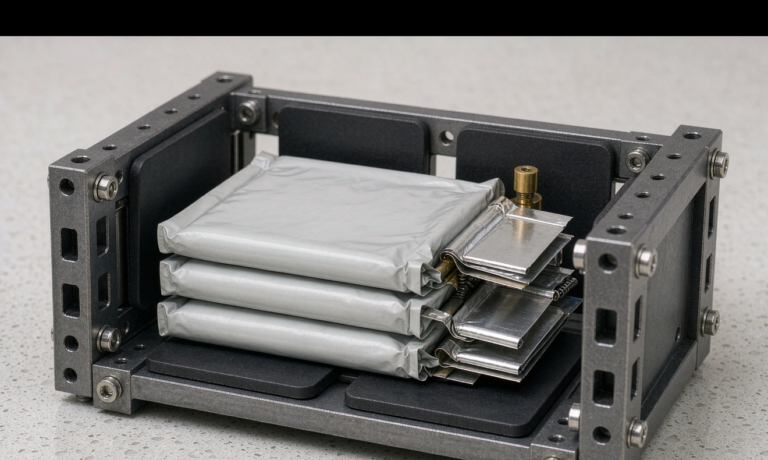
Semi-Solid State Battery Supplier Qualification Checklist
As a senior lithium battery engineer who has qualified more than a dozen cell suppliers across Asia and Europe, I have learned one hard lesson: a semi-solid state battery looks identical on a spec sheet but behaves very differently on the line. The semi-solid gel electrolyte sits between a conventional liquid cell and a true solid-state cell, which means the supplier’s process discipline, not just the chemistry, decides whether your packs survive three years in the field. This guide is the exact checklist I use when auditing a semi-solid state battery supplier before a mass order.
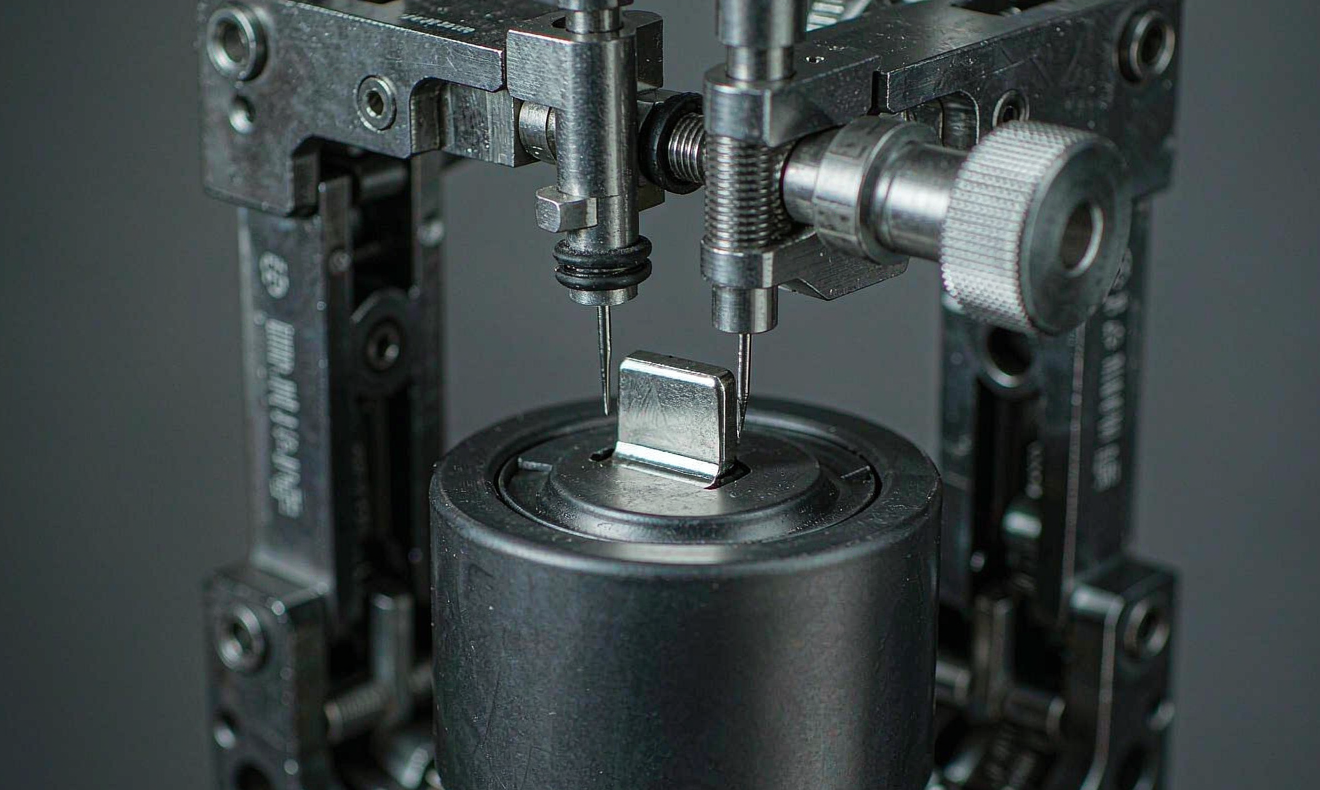
Why Semi-Solid State Cells Need a Tighter Audit
The semi-solid format reduces free liquid electrolyte, which lowers leakage and improves abuse tolerance, but it also raises the cost of a process slip. A thin gel layer is sensitive to moisture and to coating uniformity, so a supplier that is excellent at cylindrical lithium-ion may still ship inconsistent semi-solid cells if its dry room and coating line are not matched to the chemistry. In my experience the failure modes move from “cell vents” to “silent capacity spread,” where every cell passes incoming test yet the pack ages unevenly. That is why qualification must go deeper than a certificate folder.
Quality System and Traceability Requirements
Start with the quality system. I require ISO 9001:2015 as a baseline and IATF 16949 for any supplier touching automotive or drone programs. Ask to see the certificate, the scope, and the last audit report, not just the logo. Beyond the certificate, I look for a manufacturing execution system that records each cell’s coating lot, formation profile, and test results against a serial or batch code. For a semi-solid state battery supplier qualification, traceability is not paperwork; it is the only way to contain a field return. I also check whether the supplier can export per-cell data in a format your BMS or second-life screening can ingest.
On the floor I watch the incoming quality control for cathode and anode rolls, the coating thickness uniformity reported by statistical process control, and whether the line runs a clean, documented changeover between chemistries. A supplier that blends semi-solid and wet-line production on the same coater without a validated cleanout is a risk I will not accept. I also ask for the corrective-action backlog: how many non-conformances were opened and closed last quarter, and what the top three root causes were. Mature suppliers answer this without hesitation.
Electrolyte Handling and Dry-Room Controls
Semi-solid gel electrolytes still contain enough solvent that moisture control is the single biggest driver of long-term internal resistance growth. During the audit I walk the electrode coating and cell assembly rooms and read the dew point logger. A credible line runs at or below minus 40 degrees Celsius dew point, ideally minus 45 to minus 50, with redundant dehumidification and a documented alarm escalation. I ask for a week of continuous dew-point records, not a screenshot. I also check how the gel electrolyte is received, stored, and weighed: sealed containers, short exposure windows, and glovebox or isolator transfer for critical steps. If the supplier cannot show moisture trend data, that is a stop sign.
Formation Yield and Capacity Grading Evidence
Formation is where semi-solid cells prove themselves. I ask for the supplier’s formation recipe, the number of formation cycles, and the yield at each stage. A healthy line posts formation yield above 95 percent with capacity spread inside plus or minus 3 percent across a lot. I request the actual histogram from a recent production lot and the grading bins they use before shipment. Capacity grading by internal resistance and capacity, not just voltage, is what keeps pack balancing sane. If the supplier grades only by voltage, I treat the pack as unbinned and add my own incoming sort, which raises cost.
Sample Validation, PPAP, and Pilot Lots
Never skip sample validation. My standard is a sample lot of 20 to 50 cells built on the production line, not a hand-built prototype, followed by a 3 to 5 cycle formation and a calendar-aging hold of at least 14 days at elevated temperature to surface weak cells. For volume programs I require a PPAP package at level 3: design records, process flow, control plan, capability studies, and a dimensional report. A pilot lot of several hundred cells run through your own pack line is the cheapest insurance you will ever buy. I have killed two supplier relationships at this stage because the pilot lot showed a 5 percent capacity cliff after 200 cycles that the sample report had hidden.
Certification Stack and Common Red Flags
The certificate stack for cross-border shipping is non-negotiable. I verify UN38.3 test summary covering T1 through T8, IEC 62133-2 for the cell, and the transport documentation for air and sea, including the state-of-charge limit for air freight. For the EU market I check battery passport readiness and REACH documentation. Now the red flags. Watch for a supplier that refuses on-site audit, that shows only selective lot data, that cannot explain its formation yield, or that quotes lead times shorter than its own raw-material qualification window. Another red flag is a “semi-solid” claim with no gel electrolyte composition data; some vendors relabel a wet cell. Ask for the solids content and the ionic conductivity curve.
What documents should a semi-solid state battery supplier provide first?
I ask for ISO 9001 or IATF 16949 certificate with scope, UN38.3 test summary, IEC 62133-2 report, a recent lot formation-yield histogram, and a dew-point trend log from the dry room. These five items tell you most of what you need before a visit.
How many sample cells are enough for validation?
For a design check, 20 to 50 production-line cells are enough. For a volume commitment I add a pilot lot of several hundred cells run through your own pack process, plus a 14-day calendar-aging hold at elevated temperature to expose weak cells early.
Why is the dry room more important for semi-solid cells?
The gel electrolyte still carries solvent, so moisture drives internal resistance growth and capacity fade. I want a dew point at or below minus 40 degrees Celsius with trend records, not a one-time reading.
Is IATF 16949 required for every supplier?
Not for every program, but I require it for automotive, drone, and aerospace applications where traceability and a mature quality system are contractually expected. ISO 9001:2015 is my minimum baseline for all others.
What is the biggest red flag during a factory audit?
A supplier that refuses on-site access or shows only cherry-picked lot data. I also stop when a “semi-solid” cell has no gel composition or ionic-conductivity data, because that often means a relabeled wet cell.
Do I still need UN38.3 if the cell is semi-solid?
Yes. UN38.3 applies to all lithium cells regardless of electrolyte form, and airlines enforce a state-of-charge limit for air transport. I verify the T1 through T8 test summary and the transport documents before any shipment.
Further Reading
References