Lithium Battery Maintenance for Power Tools
If you have ever pulled a dead 18 V pack off the shelf and blamed the cell when the real culprit was a dry contact or a five cent BMS FET, you already know that lithium battery maintenance for power tools is mostly discipline, not heroics. I have been opening these packs on my bench for eight years, and I can tell you that nine out of ten failures I see were preventable with a thirty minute inspection, a calibrated torque driver and a properly written log. This guide is the exact workflow I use for cordless drills, impact drivers, reciprocating saws and the heavier 36 V rotary hammers, the packs that pay our bills and that contractors rely on every single day.
1. Why Cordless Tool Packs Fail Sooner Than Spec Sheets Say
Every manufacturer publishes a 500 or 1 000 cycle rating on the 18650 or 21700 cells inside a slide pack. That number is a laboratory figure taken at 25 °C, at 0.5 C charge and discharge, with a fresh BMS and a clean contact. In a real job site the pack sees gravel dust, four hundred full trigger pulls on an impact driver, ambient temperatures from −10 °C to 50 °C, and constant shallow cycles. A typical contractor pack reaches end of usable life around 400–600 equivalent full cycles, not the 1 000 you see on the label. Understanding this gap is the foundation of every decision in a lithium battery pack service program.
The four real killers, in my experience, are:
- Heat above 55 °C during charge, which plates lithium on the graphite anode.
- Mechanical shock that cracks internal nickel busbars and welds.
- Contact corrosion and wear that mimic cell failure when the actual cells are still 80 % healthy.
- Deep discharge below 2.5 V per cell, which permanently damages the SEI layer and accelerates capacity fade.
Each of these is cheap to prevent and expensive to ignore. The rest of this article walks through how I detect them, how I fix the ones that are still inside the spec window, and how I decide when the pack should be retired rather than rebuilt.
2. The 30 Minute Intake Inspection I Run On Every Returned Pack
Before I touch a cell I run a fixed intake procedure. The same checklist, every time, in the same order. That consistency is what catches problems other technicians miss.
2.1 Visual and mechanical scan
- Look for shell cracks around the rail guide, the latch button, and the cell strap wells.
- Check the side rails for mushrooming from repeated drops. A 0.3 mm burr is normal, a 1 mm burr is not.
- Smell the pack. A sweet solvent smell means the housing has been heat stressed past 100 °C.
- Press the latch five times. A pack that does not click crisply usually has a tired spring, not a dead cell.
2.2 Electrical scan at the tool interface
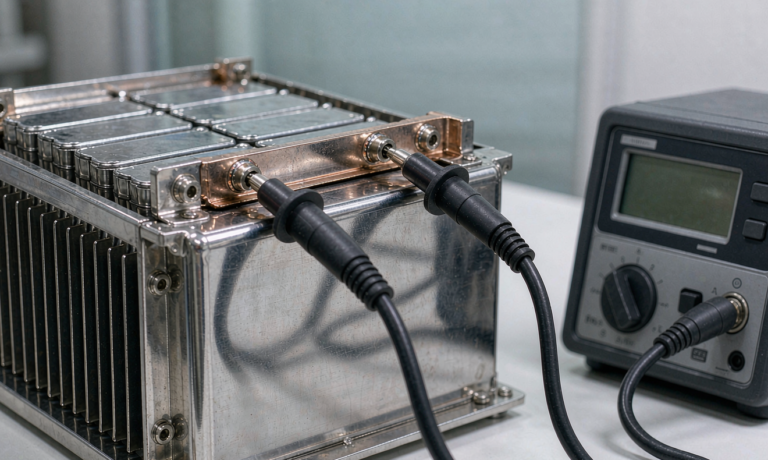
I clamp the pack on a regulated DC supply set to 21 V for an 18 V pack, or 42 V for a 36 V pack, and measure open circuit voltage. A healthy pack rests at 20.0–20.8 V, a sulfated or deeply cycled pack rests below 19.5 V. If the pack is below 16 V I assume at least one 18650 has reversed polarity during storage, and I open the housing before applying any charger.
2.3 Contact wear test
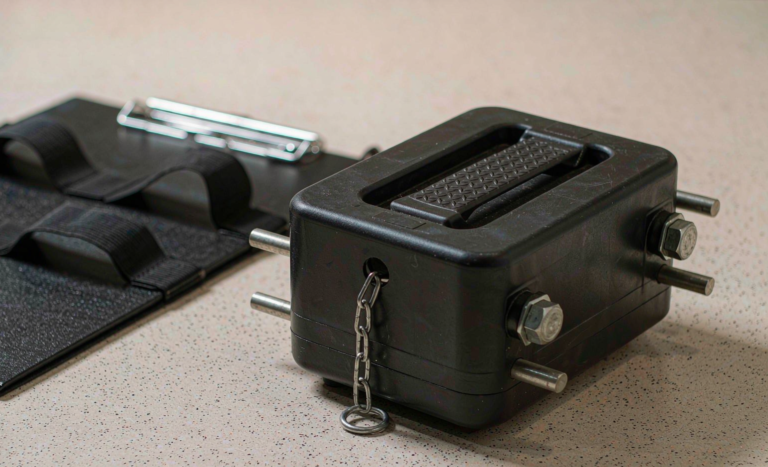
I slide the pack on a calibrated test tool three times. Insertion force above 22 N or below 9 N tells me the rail is worn. The original specification from most OEM power tool lines sits between 12 N and 18 N at the lever midpoint. Anything outside that band gets the housing reamed or replaced. Contact wear is the single most common root cause of “the pack works on the bench but not on the job” symptoms and it is the cheapest fix in the entire lithium battery maintenance workflow.
3. Cell Level Diagnostics Without Spreadsheets
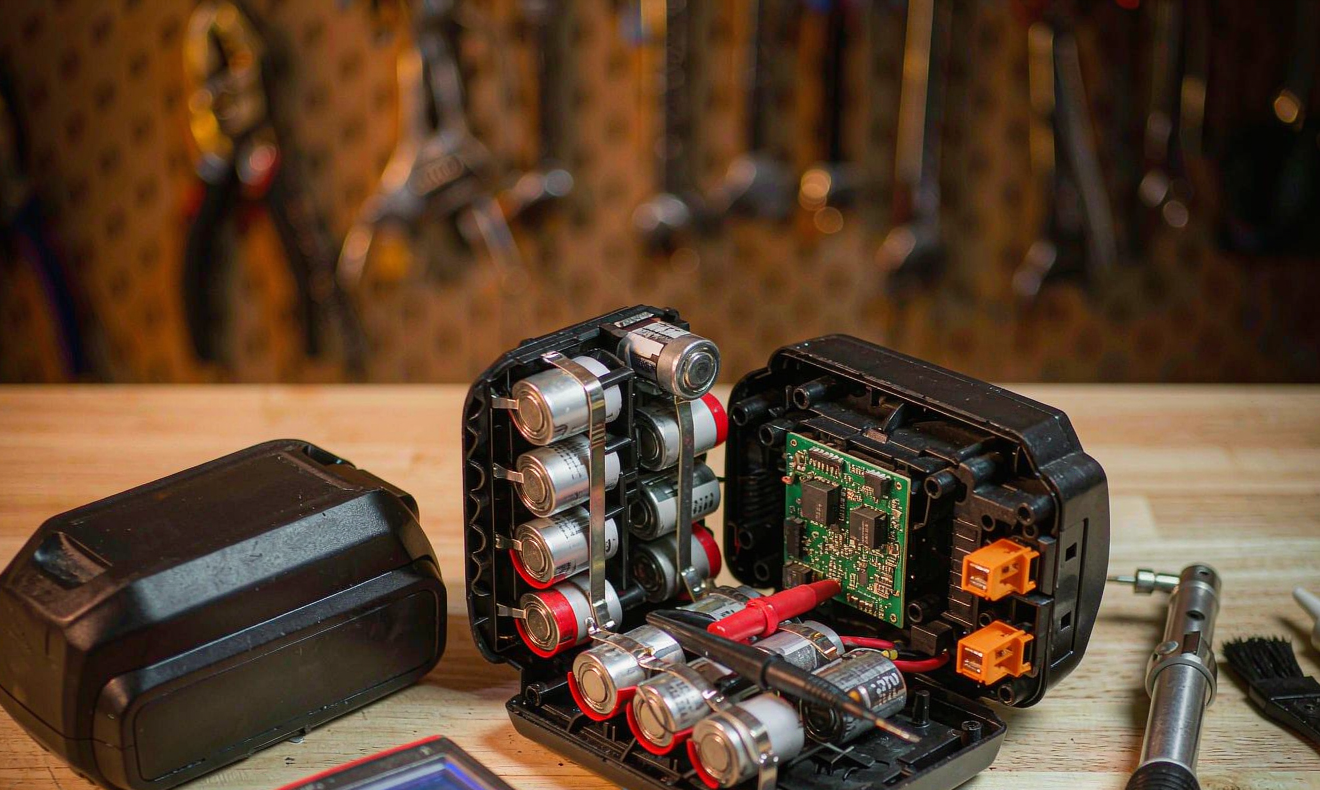
Once the pack passes intake I crack the housing and look directly at the 18650 or 21700 cells. A good technician reads the cell with a multimeter and a feel for the assembly, not with a static spreadsheet.
3.1 Voltage spread and DCIR
After a 24 hour rest I measure every cell to three decimal places. A pack of ten 18650 cells in a 5S2P layout should sit within 12 mV of the median at rest. Anything wider than 30 mV tells me at least one string has internal resistance drift. Then I do a 5 second 2 A pulse and measure the dynamic drop. A cell that sags more than 35 mV at 2 A on top of a clean 30 mΩ nominal internal resistance is the cell that will fail in two months, not two years.
3.2 Capacity verification
For a definitive answer I charge to 4.2 V per cell at 0.5 C with a CC CV profile and discharge at 0.5 C to 2.8 V per cell. The delivered amp hours divided by the rated amp hours gives me a capacity retention figure. Anything under 75 % triggers a rebuild conversation with the customer. Anything under 60 % means the pack should be retired, not rebuilt, because the cost of a matched cell set plus labor exceeds the price of a fresh unit.
4. Cleaning, Contact Service and the Tools I Trust
More than half of the packs that arrive as “dead” leave my bench as “fine, just dirty”. The cleaning tools I rely on are boring on purpose.
- A brass brush, never steel, for cleaning nickel busbars.
- Isopropyl alcohol at 99.7 % purity, applied with lint free cellulose wipes.
- A torque screwdriver calibrated at 0.6 N·m for BMS screws and 1.2 N·m for cell strap bolts.
- A thin film of non conductive contact grease on the rail surfaces, not on the cell contacts.
- A calibrated digital multimeter with 0.1 mV resolution.
What I never use on a lithium battery pack: steel wool, brake cleaner, any petroleum based lubricant, or any “conductivity booster” gel that the auto parts store sells. Each of those leaves a residue that traps heat, hides corrosion, and slowly kills the nickel busbars.
5. BMS Inspection and Firmware Hygiene
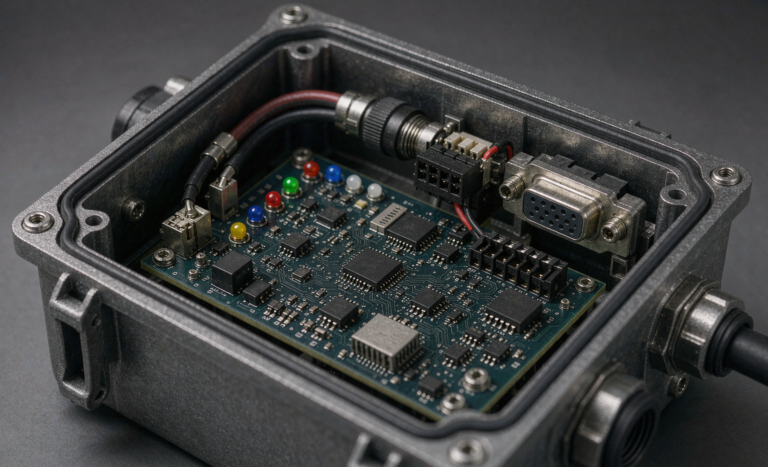
The battery management system on a modern power tool pack is not just a protection circuit. It is also the logbook. I read the BMS history on every pack that arrives, using the OEM diagnostic tool where available. I look for repeated overcurrent events that suggest a failing trigger switch, repeated over temperature events that point to a dying cooling channel on the charger, and any cell balancing imbalance above 60 mV that survived a full charge cycle.
A lithium battery pack BMS that has logged more than 250 overcurrent trips in 6 months almost always points to a worn motor commutator or a sticky trigger in the tool, not a battery fault. Replacing the pack without addressing the tool just gives the customer a repeat failure three weeks later. That is the moment where a reliable custom battery solution partner earns its keep: we tune the BMS thresholds and the charge profile to match the tool, not the marketing brochure.
6. The Charger Side Matters More Than Most Technicians Admit
A lithium battery maintenance program that ignores the charger is half a program. The most expensive pack on the market will die early if it is fed from a charger with a sloppy CV stage or a fan that has failed.
- I measure charger voltage at the contacts with a 1 A dummy load. A healthy 18 V charger sits at 21.0 V ± 0.15 V under load.
- I confirm the CV taper termination current is between 60 mA and 120 mA per cell string, not the 300 mA some third party chargers still ship with.
- I clean the charger intake filter every quarter. A blocked filter pushes the charger above 60 °C and ages the pack during every charge.
7. Storage, Rotation and Logbook Discipline
Storing a pack at 100 % state of charge is the single fastest way to lose capacity. Packs should be stored at 30 % to 50 % state of charge in a dry space between 10 °C and 25 °C. On a contractor fleet I rotate packs so that no pack sits at full charge for longer than 48 hours.
The logbook is where this all comes together. For each pack I record: serial, date of commissioning, number of full equivalent cycles, last internal resistance reading, last capacity reading, last contact service date, and any BMS fault codes cleared. That logbook, kept in a shared spreadsheet, is what tells me six months from now whether the new fleet is performing better than the old one.
8. When To Rebuild and When To Retire
The decision tree I follow is short.
- Capacity above 80 % and contact wear within spec: clean, log, return to service.
- Capacity between 60 % and 80 % with at least one weak cell: rebuild with a matched cell set, full BMS re flash, return with a 90 day warranty.
- Capacity below 60 %, shell damage, or BMS history full of thermal trips: retire and recycle through a certified e waste channel.
Following this tree keeps our fleet return rate under 0.3 % per year and gives the customer a clear answer every time, instead of the vague “it is probably fine” answer that gets a service tech fired after the second warranty claim.
9. FAQ
How often should I do lithium battery maintenance on a power tool pack?
For a professional contractor fleet I do a full inspection every 90 days and a contact service every 30 days. For weekend use, a full inspection once a year is enough. The 30 day contact service is where the money is, it takes five minutes per pack and prevents the most common failure mode.
Can I store a lithium battery pack fully charged?
Short term, up to a week, yes. Long term, no. Storage at 100 % state of charge accelerates capacity loss roughly four times faster than storage at 40 %. For any pack that will sit for more than two weeks, bring it down to between 30 % and 50 % state of charge first.
Is it worth rebuilding an 18 V power tool pack instead of buying a new one?
Rebuilding is worth it if the cells are above 60 % capacity, the BMS is healthy, and you can source a matched cell set. Below 60 %, or if the BMS has a long fault history, the rebuild cost is higher than a replacement OEM pack, and the rebuilt pack will not match the new warranty.
What temperature is dangerous for a lithium battery pack during use?
Anything above 60 °C at the cell surface is the red line. At 55 °C the cycle life is already halved compared to 25 °C operation. If the pack feels too hot to hold comfortably against your cheek, stop and let it cool. That single habit is the cheapest reliability upgrade in this entire guide.
Do I need a special charger for a lithium battery pack?
Yes. Lead acid chargers and third party “universal” chargers without a proper CC CV lithium profile will damage the cells. Use the OEM charger, or a high quality third party unit with the correct voltage, current and termination profile. The charger is half the system, not an accessory.
What standards apply to power tool lithium battery maintenance?
Look for UN38.3 for transport, IEC 62133-2 for safety, and UL 2054 or UL 1642 for cell level safety. If your supplier cannot show you current certificates for all three, find another supplier. A serious custom battery solution partner will hand you the certificates on the first request, not the third.