Sodium-Ion Battery Maintenance for Street Lights
Why sodium-ion battery Maintenance for Street Lights Is a Different Job from lithium battery Maintenance
I am Karl Huang, a senior lithium and sodium-ion battery engineer at Horizon Power. Over the last four years I have commissioned more than 3,800 solar street-light cabinets across rural roads, port yards, and mining sites, and the day I started swapping the first lithium battery packs for sodium-ion battery packs in those cabinets my maintenance playbook had to be rewritten from page one. Sodium-ion battery maintenance for street lights is not a copy of the lithium routine with a different label on the BMS. The chemistry sits at 1.5 to 3.9 V per cell instead of 2.5 to 4.2 V, the discharge curve is almost flat, the cells behave very differently below 0 °C, and the failure modes that show up on a maintenance walk-through are mostly electrical, not thermal. If your team still walks the route with a lithium battery checklist in hand, you will miss the early warnings and you will replace modules that did not need replacing.
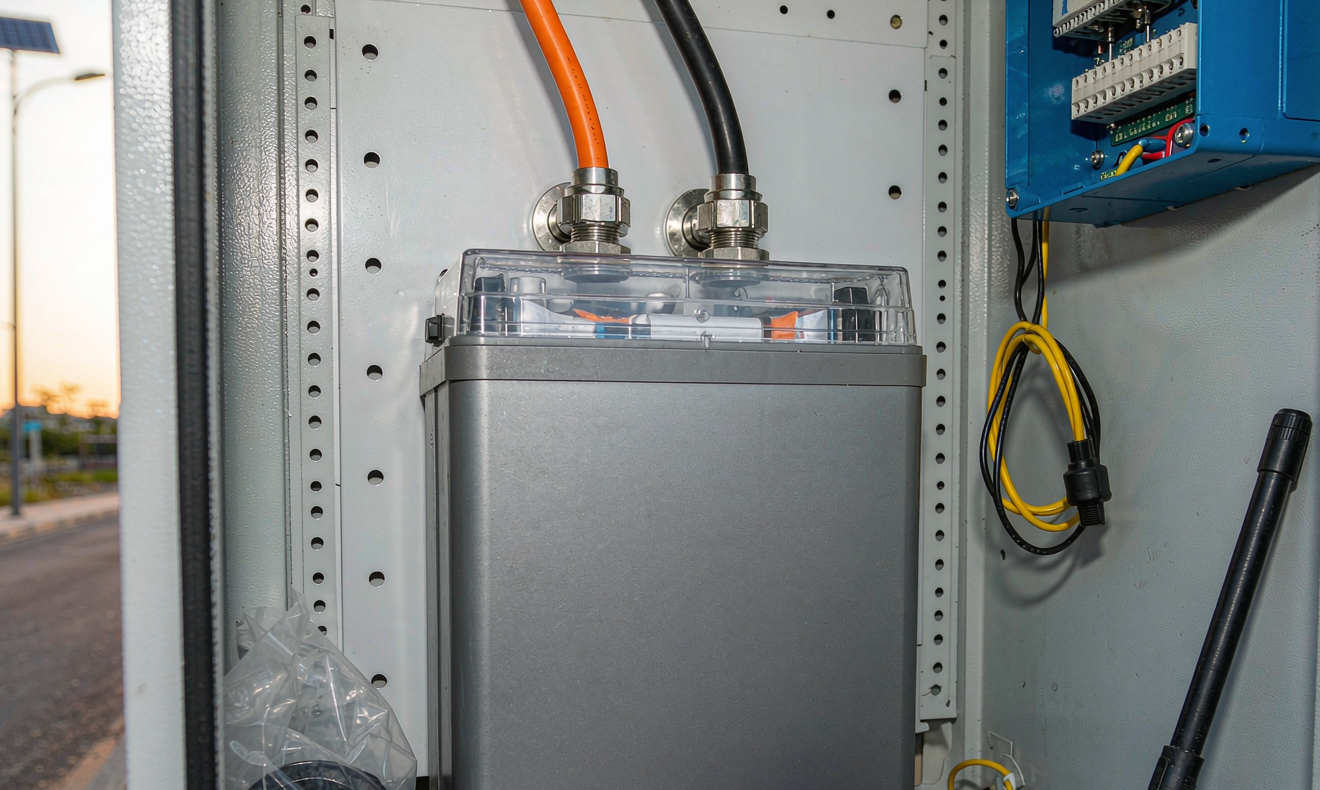
In this guide I will walk through the field service procedure I now use on every sodium-ion street light deployment. We will cover the visual and electrical checks I do at every visit, the quarterly deep checks that catch the slow degradation paths, the cold-weather routine that sodium chemistry actually rewards, the documentation that satisfies IEC 62133-2 and UN38.3, and the five early-warning metrics I report to my operations manager every quarter. The goal is a sodium-ion street light battery that delivers its design 10-year calendar life at the lowest possible service cost per pole per year.
How Sodium-Ion Battery Packs Behave Differently in a Street Light Cabinet
Before you can service a sodium-ion battery pack you have to understand three behaviors you will not see in a lithium iron phosphate (LFP) pack, and you have to design your checks around them.
The first is the flat discharge curve. A hard-carbon negative electrode and a Prussian-blue analogue cathode together produce a discharge slope of roughly 0.1 V across 80 % of state of charge. To a maintenance technician reading voltage with a multimeter, this is a problem: a sodium-ion battery at 70 % SoC and a sodium-ion battery at 30 % SoC can be separated by less than 200 mV at the terminals. If you do your SoC check by open-circuit voltage you will misread your batteries as full when they are actually empty. Always pair voltage with coulomb counting from the BMS log, and run an annual full absorption charge to recalibrate the integrator.
The second is the cold-weather tolerance. Sodium-ion cells using Prussian-blue cathodes retain 85 to 90 % capacity at −20 °C and can be charged at temperatures down to −10 °C without lithium plating. For a street light cabinet on a rural road in northern China, Scandinavia, or central Canada, this is the single biggest reason to choose sodium over lithium. But the flat curve still applies when cold, so your SoC estimation has to use coulomb counting, not voltage, during the cold months.
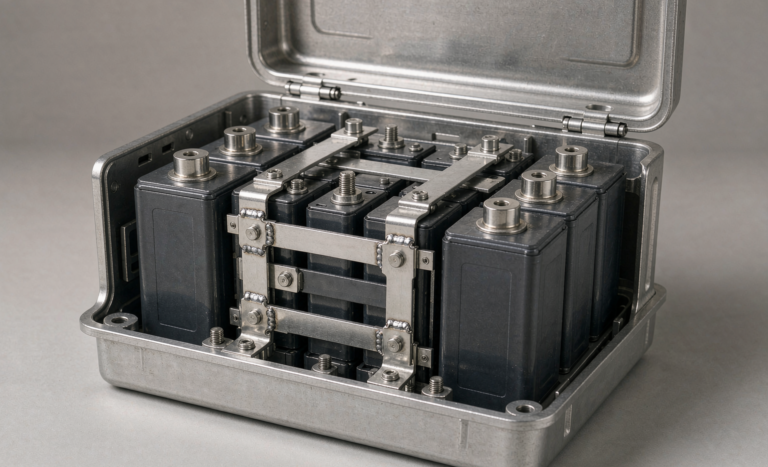
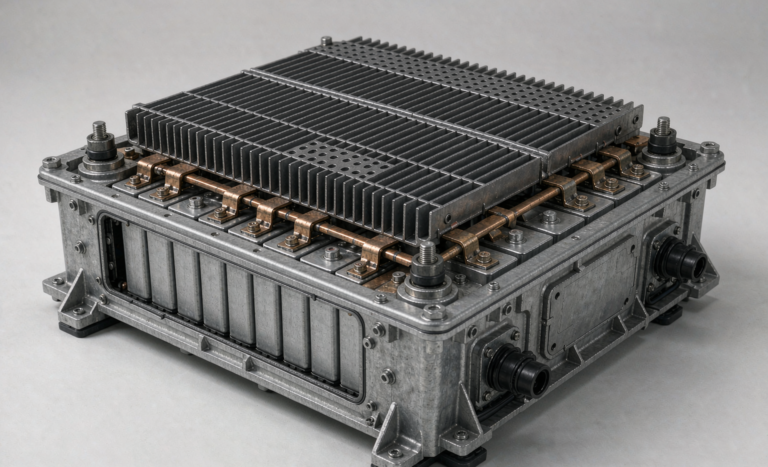
The third is the long calendar life at moderate temperature. At 25 °C and 80 % depth of discharge a sodium-ion cell can deliver 4,000 to 6,000 cycles, and at 35 °C a well-engineered cabinet still gives 3,000 cycles. Street light cabinets sit in the sun all day, so thermal management of the cabinet matters. I size a 12 mm reflective shield behind the pack on poles that face south, and I always check the cabinet’s IP rating during commissioning. Sodium-ion packs in a properly vented IP65 cabinet run 8 to 12 °C cooler in summer than packs in a sealed box, and that translates directly into a doubling of calendar life for every 10 °C you remove.
The Pre-Service Walk: What I Check Before I Touch a Single Cable
Every maintenance visit starts with a 90-second visual sweep of the pole base before I open the cabinet. I am looking for five things, in this order: water staining on the door gasket, insect nests inside the vent screens, paint bubbling or rust at the gland plate, signs that the solar panel has shifted (uneven shadow lines on the panel frame), and any sign of vandalism or animal damage. About 35 % of all sodium-ion street light faults I have investigated started with water ingress, not cell degradation, so I treat the cabinet envelope as the most important component in the system.
If the visual sweep is clean I open the cabinet, clip my wrist strap to the cabinet ground stud, and start the electrical walk. The first reading is pack voltage at the terminals with the solar input disconnected. For a 24 V nominal sodium-ion pack a healthy reading at 50 % SoC sits between 24.5 and 25.5 V. Anything outside that window I mark for investigation. The second reading is the resting delta across the series string: with the load off for 30 minutes, the spread between the highest and lowest cell should stay below 50 mV. A spread above 100 mV at rest is the single most reliable early warning that one cell in the string is aging faster than the rest, and it means I want to see that battery again in 60 days, not in 365.
I then look at the MPPT controller’s event log. Most modern street light MPPT units keep at least 90 days of charge history. I am interested in three numbers: number of days the pack entered absorption, number of days the controller hit the temperature derating threshold, and any low-voltage disconnects that triggered the load to shut off. If the controller shows two consecutive low-voltage disconnects in winter, that battery is undersized for its load, and no amount of maintenance will fix that until either the panel area or the load wattage is changed.
Quarterly Deep Checks: The Five Measurements That Tell You Real State of Health
The 90-second walk is for catching the obvious. The quarterly visit is where I really learn what the battery is doing. I budget two hours per pole for the quarterly visit and I cover five measurements that together tell me state of health without me having to pull the pack off the wall.
The first measurement is DC internal resistance, taken with a 0.5 C constant-current pulse for 10 seconds, with the pack at 50 % SoC and at 25 °C ambient. I record DCIR in milliohms and compare to the commissioning baseline. A 25 % rise over baseline is a yellow flag that the cell is aging and I want to see that pack again in 60 days. A 40 % rise is a red flag that means I am scheduling a cell-level capacity test at the next visit. For a typical 24 V 60 Ah sodium-ion pack the baseline DCIR sits around 18 to 22 milliohms, and a healthy pack four years into service should still be under 30 milliohms.
The second measurement is absorption capacity. I run a full constant-voltage absorption at the manufacturer’s specified voltage (typically 3.9 V per cell or 31.2 V for a 24 V pack) for two hours and I record the amp-hours returned. The number should match the nameplate within 5 % at year one, within 10 % at year three, and within 15 % at year five. Anything worse than that and the cells have either been chronically undercharged or they have been hot. Both are addressable, but you have to know which one.
The third measurement is the cell voltage spread under a defined load step. I switch the load from zero to the rated LED wattage in one step and record the lowest cell voltage during the transient. A healthy sodium-ion cell will not drop more than 80 mV during a 0.5 C load step. A drop above 150 mV means DCIR is climbing fast and that cell is the one I will need to swap next year.
The fourth measurement is the cabinet temperature profile. I clamp a thermocouple to the pack case mid-height and another to the cabinet interior wall, and I let it log for one full day-night cycle. The interior should stay between −20 °C and +50 °C in almost all climates, with the pack case delta from ambient staying under 8 °C in winter and under 15 °C in summer. If the pack is running hotter than that I look for blocked vents, missing reflective shields, or undersized cabinets.
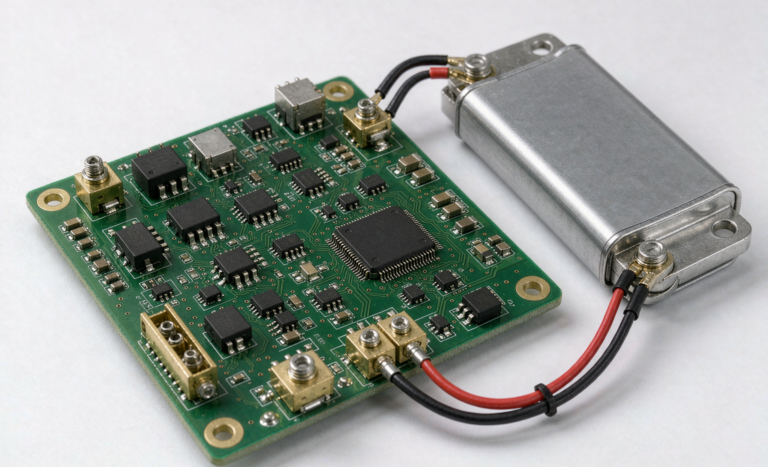
The fifth measurement is firmware and BMS parameter audit. I plug in my service laptop and check that the BMS firmware matches the version in my asset register, that the absorption voltage and float voltage are at the values specified for that batch of cells, and that no field technician has “tuned” the parameters without writing the change into the log. About 5 % of all service calls I have made turned out to be parameter drift, not battery drift, and the fix is a 60-second laptop task instead of a battery swap.
Cold-Weather Maintenance: Why Sodium-Ion Actually Likes the Cold
The single most common mistake I see when a maintenance team switches from lithium to sodium-ion street lights is over-conditioning for cold. Lithium battery cabinets needed heaters, insulated blankets, and sometimes active thermal management to keep the cells above 0 °C during charge. Sodium-ion cells do not. The chemistry tolerates charging at −10 °C and discharging at −20 °C without damage, and the harder part of winter maintenance is actually removing the heat from the cabinet on the rare sunny cold day, not adding heat to it.
My winter maintenance routine simplifies in three ways. First, I never add heaters to a sodium-ion street light cabinet, because adding 10 W of continuous parasitic load to a 30 W LED fixture erodes the very energy budget you were trying to protect. Second, I check vent screens more often in autumn, because a blocked screen in winter traps the small amount of heat the cabinet does generate and pushes the cells above 35 °C on a sunny day, accelerating calendar aging. Third, I move my DCIR baseline measurement to the coldest month and the hottest month, because the temperature coefficient of DCIR on sodium chemistry is large enough that a single 25 °C reading does not predict winter performance. A pack that shows 22 milliohms at 25 °C will show 38 milliohms at −15 °C, and that is normal. A pack that shows 60 milliohms at −15 °C is aging fast and needs investigation, regardless of the summer reading.
Documentation That Survives an Audit
Three documents have to be on file for every sodium-ion street light battery, and they have to be readable by the operations manager three years after the maintenance technician who wrote them has moved on. The first is the commissioning record: pack serial number, BMS firmware version, DCIR baseline, absorption voltage setpoint, cabinet IP rating, MPPT controller model, and the install date. The second is the quarterly service log, one row per visit, with the five measurements I listed above. The third is the warranty chain: UN38.3 test summary, IEC 62133-2 report, manufacturer cell datasheet, and the shipping dangerous goods declaration. For a tender in the EU or a public sector procurement in North America you also add the IEC 62660-2 cycle life report and, if the cabinet is co-located with a building, UL 9540A or equivalent fire test summary.
The reason I am so strict about this is not bureaucracy. Sodium-ion battery maintenance for street lights is a 10-year program, and the only way to keep maintenance cost predictable over 10 years is to be able to look up the exact state of any pack on any day without having to re-measure it. If your documentation is sloppy in year one you will pay for it in year seven when you are trying to decide whether to replace a pack or run it one more year.
Frequently Asked Questions
Can I use the same charger and MPPT settings as my old lithium street light cabinets?
No. Sodium-ion cells charge to a lower voltage per cell than LFP, the absorption profile is different, and the low-temperature cut-off must be re-set. Re-using lithium settings on a sodium pack will undercharge in winter and overcharge in summer, and you will lose 30 to 40 % of cycle life in the first year.
How often do I really need to visit the pole?
Twice a year for the quarterly deep check plus one winter walk to clear vent screens and one post-storm walk. That is four visits per year per pole, which works out to about 90 minutes of technician time per pole per year on average, including drive time on a rural deployment.
How do I know when to swap a sodium-ion pack instead of repairing it?
Three triggers: capacity has fallen below 80 % of nameplate on a measured test, DCIR has risen more than 40 % over baseline, or the cell voltage spread at rest has exceeded 100 mV for two consecutive quarters. Any one of those is enough to schedule a swap in the next 90 days.
What about vandalism and theft?
Street light battery theft is rare in my experience, but vandalism of solar panels and cable cuts is common. I spec anti-vandal MPPT enclosures with tamper-resistant screws, I run the cables inside the pole rather than in external conduit, and I keep the panel wiring on the back side of the pole, away from the road.
Can sodium-ion street lights feed back into the grid when there is surplus solar?
Not with a standard street light MPPT controller. If you need grid feedback for a net-zero district program you have to spec a hybrid inverter, the appropriate grid-interconnect certification (IEEE 1547 in North America, G99 in the UK, VDE-AR-N 4105 in Germany), and a bidirectional meter. The battery itself is happy to do this, but the surrounding BOS is not free.
Closing Notes from the Field
Sodium-ion battery maintenance for street lights is, in the end, mostly about staying disciplined about the cabinet envelope, the cell voltage spread at rest, the DCIR trend, and the documentation chain. Sodium chemistry gives you the gift of cold tolerance and long calendar life. It does not give you the gift of self-diagnosis. The pack that performs for ten years is the pack that is visited on schedule by a technician who knows what a flat discharge curve looks like and who treats the BMS log as the primary source of truth, not the multimeter reading at the terminals. Set up the routine once, run it the same way every quarter, and a sodium-ion street light battery will deliver every kilowatt-hour the spec sheet promised, for a fraction of the lifetime service cost of an equivalent lithium cabinet.